
1. Background
In recent years, the incidence of cancer has increased significantly, and the number of new cancer cases is predicted to increase in Iran from 112,000 recorded cases in 2016 to an estimated 160,000 in 2025 (1). Cancer affects the health of the family and caregivers due to its high mortality rate, the debilitating and chronic nature of the disease, and the high costs of hospital care in the long term. Caregivers play a vital role in the process of caring for cancer patients (2). Caregivers use psychosocial skills to improve patients’ health, and continuously monitor and control their health (3). However, the relatives of cancer patients, as informal caregivers who are usually not trained, face emotional challenges regarding the patient’s imminent death and the deterioration of his/her condition, and practical challenges regarding learning new skills and taking on new responsibilities (4). As a result, most caregivers are not prepared to provide care and meet the needs of their loved ones (5), and this creates a caregiver burden.
Caregiver burden is defined as caregivers’ level of perception of their own physical or mental health, as well as their financial and social lives considering the suffering caused by caring for their relatives (6). Due to their role, caregivers are at risk of a range of physical disorders, such as fatigue, sleeping disorders, poor immune system function, cardiovascular diseases, and a 63% increase in mortality (7). In addition, these caregivers have a high level of psychological distress, and more than half of them experience the clinical symptoms of anxiety and depression, which will increase over time if left untreated (8). Caregiver burden is a problematic issue for both the family and the patient, and since it has a hidden nature and is not recognized as a disease, it causes suffering and pain for both the caregiver and the patient (9). High caregiver burden is associated with consequences such as abandonment of the patient, insufficient care of the patient, loss of hope from social support, family isolation, and disruption of family relationships (10).
Relaxation is one of the most common complementary treatment methods (11). The most common relaxation methods are mental imagery relaxation, Benson Relaxation Technique, progressive muscle relaxation, deep relaxation (deep breathing), meditation, hypnosis, and massage (12). Benson Relaxation Technique was presented by Herbert Benson in 1970 and cited by Pishgooie et al. as a behavioral and non-pharmacological method (13), which is more common than other relaxation methods thanks to its being easy to teach and to learn, simplicity, safety, low cost, managing stress and psychological, physical, and social aspects of a person (14). This technique reduces the level of catecholamine and reduces the activity of the sympathetic nervous system, which ultimately leads to the relaxation of the muscles, the reduction of depression, anxiety, and tension, and the improvement of self-confidence. Through concentration, people can reduce their own blood pressure and heart rate, regulate breathing, and eliminate many negative physiological reactions to stress (15). In addition, this method is effective in increasing family communication and social functioning, reducing pain, and promoting quality of life, health (16), and activities of daily living (17).
Examining the muscular relaxation technique effect on fatigue of parents having children with leukemia under chemotherapy treatment showed that Benson relaxation significantly reduces fatigue in parents of children with leukemia (18). The results of randomized controlled trials in the Republic of Cyprus and Greece showed that relaxation intervention (progressive muscle relaxation and guided imagery techniques) reduced anxiety and improved the mood of parents of hospitalized children with malignancies (19). On the other hand, relaxation exercises reduced the burden of care for the caregivers of patients with cancer, stroke, and dementia (20).
The studies conducted so far have investigated the effect of Benson relaxation on variables such as stress, anxiety, depression, and fatigue, and there has not been a study that can evaluate the effect of Benson relaxation on the care burden of caregivers of cancer patients who have a set of these symptoms during care. On the other hand, most studies have investigated the effect of relaxation methods on caregivers of other patients, such as dementia and stroke and contradictory results have also been reported in some studies that have examined these methods in patient caregivers. The result of progressive muscle relaxation with and without music on the anxiety, fatigue, and quality of life of family caregivers of hospice patients showed that there was no statistically significant difference between the caregivers in the control and intervention groups (21). Also, a systematic review reported that the majority of studies that have implemented relaxation methods in patients have methodological weaknesses (22).
Based on the findings, the effectiveness of relaxation techniques in patients and their caregivers are not convincing, and more research is needed to investigate the interventions on caregiver burden.
2. Objectives
In this study, we evaluated the effect of the Benson Relaxation Technique on caregiver burden in the informal caregivers of cancer patients.
3. Methods
This study is a randomized clinical trial with a control and an intervention group, which was conducted from July 20, 2021, to June 4, 2022, on the informal caregivers of cancer patients, who visited the radiotherapy and chemotherapy departments of Vasei Hospital in Sabzevar, Iran. The inclusion criteria consisted of being in charge of caring for a patient with cancer for at least 6 months, being 18 to 67 years old, obtaining a total caregiver burden score of X ≥ 48 based on the score obtained from the questionnaire, not being a professional caregiver, and not having participated in any classes or programs affecting stress (such as relaxation, yoga, and meditation). The exclusion criteria of the study consisted of being unwilling to continue the cooperation, the occurrence of severe stressful events during the study (such as the death of loved ones or patients, separation, etc.), the death of the caregiver, and not completing the questionnaires by the caregiver.
3.1. Sample Size Determination
To determine the sample size of this project, Aliakbarian et al.’s article (23) was used; considering an attrition rate of 10% and a significance level of 0.05, the sample size obtained for each group was 62.
3.2. Intervention
The eligible caregivers were divided into intervention and control groups with a ratio of 1: 1, using permutation blocks of 4, randomly and without blinding. In this way, the two letters a represent the control group and the two letters b represent the intervention group, and the number of possible permutations was 6; then, 31 blocks of states were completed from the table of random numbers, using R software. For example, the first block was baba, where the first person was placed in the intervention group (b), the second person in the control group (a), the third person in the intervention group (b), and the fourth person in the control group (a).
Benson Relaxation Technique was taught to the participants in the intervention group individually in a room separated from chemotherapy and radiotherapy rooms, and they were asked to do the exercises in the presence of the researcher to ensure that they were done correctly. A CD was also provided to the research units to use at home. Then, the participants were asked to use the relaxation technique twice a day, in the morning and the afternoon, with an interval of at least 2 hours, for 20 minutes (24) each time, and to continue this procedure for 4 weeks. Three days after the training, the participants were followed up by phone regarding doing the relaxation exercises, and their questions were answered. This process continued with an interval of 7 days (the 10th, 17th, and 24th days). The control group did not receive any intervention. They were only followed up regarding the occurrence of stressful events, not participating in the class, or using other programs effective on stress based on the mentioned times; they were promised that if the intervention was effective, the training would be given to the control group, too. To prevent the exchange of information, the intervention group was trained on even days, and they were asked not to share the training with others. After 4 weeks, the caregiver burden questionnaire was completed again by both groups.
3.3. Outcome-assessment of Caregiver Burden and Demographic Characteristic
To check the caregiver burden, the Novak and Guest Caregiver Burden Inventory was used, which consists of 24 items and 5 subscales, including time-dependent care burden, developmental care burden, physical care burden, social care burden, and emotional care burden (25). The caregivers’ responses were scored on a 5-point Likert scale (from totally disagree = 1 to totally agree = 5). Thus, the scores obtained from this questionnaire range from 24 to 120: 24 to 47, mild caregiver burden, 48 to 71, moderate caregiver burden; 72 to 95, severe caregiver burden; and 96 to 120, very severe caregiver burden (26). This questionnaire has good reliability with a Cronbach’s alpha coefficient of 0.80 for the whole questionnaire and 0.69 to 0.87 for the subscales (27). The reliability of the Iranian version of this questionnaire was 0.90 for the whole questionnaire and 0.76 to 0.82 for the subscales with Cronbach’s alpha coefficient (28). In this study, Cronbach’s alpha was 92% for the caregiver burden questionnaire.
Demographic characteristics include the age of caregivers, duration of patient care, distance to hospital, gender, marital status, education level, employment status, use of government aid, financial dependence, access to alternative care, relationship with the patient, type of cancer, stage of the disease, type of treatment received by the patient, and side effects caused by the treatment.
3.4. Statistical Analysis
The quantitative and the qualitative variables were described by mean ± standard deviation, and frequency (percentage), respectively. After checking the normality of the variables using the Kolmogorov-Smirnov test, an independent t test was used to compare the mean total score and the mean score of each caregiver burden subscale. Moreover, the paired t test was used to compare the mean caregiver burden and its subscales in the two groups. Data analysis was done, using SPSS software version 22. The statistical significance level was 0.05.
3.5. Ethical Considerations
The study protocol was approved by the regional Ethics Committee of Sabzevar University of Medical Sciences with the code number IR.MEDSAB.REC.1400.058 and also was registered at the Iranian Registry of Clinical Trials (ID number: IRCT20210712051849N1). No name and identification was defined in the questionnaire and also each subject was assigned a unique identification code, with all data remaining confidential and anonymous. Before conducting the research, the participants completed the written informed consent form.
4. Results
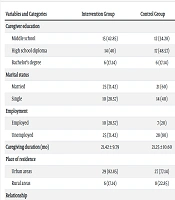
In this study, 113 out of 124 participants completed the study; 8 caregivers were excluded from the study due to the death of their patient, and 3 due to unwillingness to continue the study. The mean age of the caregivers was 40.21 ± 12.4 and 54.9% (n = 62) were women. Girls took care of patients more than others (29.2%), and most patients were in stage II (45.1%). Other demographic information of the caregivers and the patients are shown in Table 1.
Table 1.
Baseline Demographic and Clinical Characteristics of Caregivers and Patients a
| Variables | Groups | P Value b | |
|---|---|---|---|
| Control | BRT | ||
| Age (y) | 42.64 ± 12.75 | 37.78 ± 11.08 | 0.034 |
| Duration of patient care (mo) | 21.79 ± 22.72 | 23.00 ± 26.56 | 0878 |
| Distance to the hospital (min) | 37.20 ± 34.90 | 37.33 ± 34.24 | 0.862 |
| Gender | 0.630 | ||
| Male | 27 (47.36) | 24 (42.86) | |
| Female | 30 (52.64) | 32 (57.14) | |
| Marital status | 0.323 | ||
| Married | 46 (80.7) | 49 (87.5) | |
| Single | 11 (19.3) | 7 (12.5) | |
| Educational level | 0.093 | ||
| Elementary | 21 (36.84) | 10 (17.86) | |
| Middle school | 11 (19.3) | 14 (25.0) | |
| Diploma | 11 (19.3) | 19 (33.93) | |
| Above diploma | 14 (24.5) | 13 (23.21) | |
| Occupational status | 0.195 | ||
| Retired | 6 (10.71) | 2 (3.57) | |
| Employer | 19 (33.93) | 26 (46.43) | |
| Unemployed | 31 (55.36) | 28 (50.0) | |
| Use of government aids | 0.938 | ||
| Yes | 8 (14.03) | 8 (14.29) | |
| No | 49 (85.97) | 47 (85.71) | |
| Financial dependency | 0.182 | ||
| Dependent | 31 (56.36) | 24 (43.63) | |
| Independent | 24 (43.64) | 31 (56.37) | |
| Access to alternative caregivers | 0.560 | ||
| Yes | 32 (59.26) | 29 (53.7) | |
| No | 22 (40.74) | 25 (46.3) | |
| Relation to the patient | 0.488 | ||
| Parent | 7 (12.28) | 5 (8.93) | |
| Son | 13 (22.81) | 9 (16.07) | |
| Daughter | 12 (21.05) | 21 (37.5) | |
| Brother | 1 (1.75) | 3 (5.36) | |
| Sister | 2 (3.51) | 2 (3.57) | |
| Spouse | 14 (24.56) | 11 (19.64) | |
| Others | 8 (14.04) | 5 (8.93) | |
| Type of cancer | 0.121 | ||
| Breast | 13 (22.81) | 22 (39.29) | |
| Stomach | 3 (5.26) | 7 (12.5) | |
| Colorectal | 7 (12.28) | 6 (10.71) | |
| Lung | 3 (5.26) | 1 (1.79) | |
| Prostate | 2 (3.51) | 0 (0.0) | |
| Others | 29 (50.88) | 20 (35.71) | |
| Disease stage | 0.171 | ||
| I | 0 (0.0) | 3 (5.36) | |
| II | 30 (52.63) | 21 (37.5) | |
| III | 18 (31.58) | 23 (41.07) | |
| IV | 9 (15.79) | 9 (16.07) | |
| Type of treatment received | 0.507 | ||
| Radiotherapy | 2 (3.51) | 4 (7.14) | |
| Chemotherapy | 18 (31.58) | 17 (30.36) | |
| Surgery | 3 (5.26) | 0 (0.0) | |
| More than a type of treatment | 33 (57.9) | 33 (58.93) | |
| Others | 1 (1.75) | 2 (3.57) | |
| Side effects of treatment | 0.564 | ||
| No side effects | 4 (7.02) | 2 (3.57) | |
| Mild | 10 (17.54) | 7 (12.5) | |
| Moderate | 32 (56.14) | 31 (55.36) | |
| Severe | 11 (19.3) | 16 (28.57) | |
Abbreviation: BRT, Benson relaxation technique.
a Values are expressed as mean ± SD or No. (%).
b Independent t-test and chi-square
Based on Table 2, the independent t test showed that the mean score of total caregiver burden in the intervention group was significantly lower compared to the control group (P = 0.000). The results of the paired t test showed a significant difference in the mean total caregiver burden score before and after the intervention in the intervention group (P = 0.000). The mean total caregiver burden score in the control group was higher than that of the intervention group before the implementation of the intervention (P = 0.342), which indicated the homogeneity of the two groups. The mean total caregiver burden score in the intervention group significantly decreased after the intervention compared to the control group.
Table 2.
Comparison of Mean Score of Total Caregiver Burden Between Intervention and Control Groups a
| Total Caregiver Burden | Groups | P Value b | |
|---|---|---|---|
| Control | BRT | ||
| Before | 74.47 ± 15.60 | 71.16 ± 14.42 | 0.342 |
| After | 75.47 ± 13.95 | 57.21 ± 14.67 | 0.000 |
| P value c | 0.519 | 0.000 | |
a Values are expressed as mean ± SD.
b Independent t-test
c Paired t-test
Based on Table 3, the results of the independent t test showed a significant difference in the mean score of the time-dependent, evolutionary, physical, social, and emotional care burden subscales between the two groups (P = 0.006, 0.002, 0.000, 0.000, 0.000, respectively). The result of the paired t test showed that the mean scores of all caregiver burden subscales in the intervention group had significantly decreased after the intervention; this decrease has been greater in the emotional subscale (P = 0.000).
Table 3.
Comparison of Mean Scores of Caregiver Burden per Dimension Between Intervention and Control Groups a
| Variables | Groups | P Value b | |
|---|---|---|---|
| Control | BRT | ||
| Time-dependence burden | |||
| Before | 19.32 ± 4.61 | 19.41 ± 4.25 | 0.977 |
| After | 19.18 ± 4.64 | 16.86 ± 4.66 | 0.006 |
| P value c | 0.836 | 0.000 | |
| Developmental burden | |||
| Before | 15.61 ± 4.38 | 15.03 ± 4.30 | 0.481 |
| After | 15.51 ± 3.90 | 13.07 ± 4.03 | 0.002 |
| P value c | 0.791 | 0.000 | |
| Physical burden | |||
| Before | 12.36 ± 3.59 | 11.48 ± 3.95 | 0.160 |
| After | 12.51 ± 3.74 | 8.59 ± 3.53 | 0.000 |
| P value c | 0.704 | 0.000 | |
| Social burden | |||
| Before | 12.40 ± 4.07 | 11.13 ± 3.42 | 0.074 |
| After | 12.40 ± 3.82 | 9.50 ± 3.29 | 0.000 |
| P value c | 1.000 | 0.000 | |
| Emotional burden | |||
| Before | 14.77 ± 4.15 | 13.84 ± 4.27 | 0.241 |
| After | 15.81 ± 4.31 | 9.68 ± 4.22 | 0.000 |
| P value c | 0.083 | 0.000 | |
Abbreviation: BRT, Benson relaxation technique.
a Values are expressed as mean ± SD.
b Independent t test
c Paired t test
5. Discussion
This study was conducted to investigate the effect of the Benson Relaxation Technique on the care burden of the informal caregivers of cancer patients. Caregivers experience different challenges in different stages of cancer, which can affect their quality of life and performance (29, 30).
The results of the study showed that most of the caregivers in this study were women, which was consistent with the results of other studies (20, 31, 32). This shows the prominent role of women in caring for cancer patients in most societies. In Iran, due to the prevailing culture in society, women and girls have the responsibility of caring for the disabled, the elderly, patients, and children as part of household chores (33).
The results of this study showed that using Benson relaxation technique (BRT) for 4 weeks reduces the total caregiver burden score and all its different dimensions in the caregivers belonging to the intervention group compared to the control group. Gradual muscle relaxation reduces caregiver burden in the caregivers of severe brain stroke survivors (34), which is consistent with the results of the present study. Caregivers are faced with a series of problems such as anxiety, depression, fatigue, pain, and low quality of life, and the Benson Relaxation Technique has a positive effect on these items and, in general, reduces care burden in caregivers.
Consistent with the results of the present study, several studies reported the beneficial effects of Benson relaxation or other relaxation techniques on patient caregivers (35, 36). The results of a study showed that Benson relaxation can be significantly effective in religious adaptation, sense of coherence, and quality of life of family caregivers (37). Also, in another study, it was shown that relaxation can reduce the average anxiety in parents of children with leukemia (38). Relaxation reduces the secretion of catecholamines, the activity of the sympathetic nervous system, lactic acid, and musculoskeletal stress, which ultimately reduces anxiety and increases the quality of life and adaptability to the surrounding environment.
In the study of online mindfulness meditation on the caregiver burden of elderly people, it was shown that online mindfulness meditation significantly reduces the caregiver burden in caregivers of elderly patients. Mindfulness meditation is a moment-to-moment practice of non-judgmental awareness, focused meditation in one’s presence, and a cognitive state of self-awareness that induces emotional regulation and perspective change, which reduces stress and anxiety (39). The similarity of the results of this study can be attributed to the similar intervention and meditation, which is the basis of Benson relaxation because, in Benson relaxation, individuals focus on their breathing and saying the word "one" and from this, they block negative thoughts.
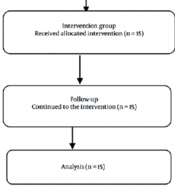
The results of the study by Szczepanska-Gieracha et al., which investigated the effect of non-pharmacological forms of therapy to reduce the burden on caregivers of patients with dementia, showed that relaxation does not significantly reduce the caregiver burden of caregivers of patients (40). The reasons for not being consistent with our study can be pointed to the small sample size (15 people in the intervention group); in studies with larger sample sizes, it is possible to include more people with different demographic characteristics, which may affect the results, the short duration of relaxation which was 2 weeks, caregivers of patients with dementia provide long-term care, so relaxation techniques may be more effective if used regularly and over a longer time, and the use of a different questionnaire that measures other dimensions and their scoring is different.
Among the 5 care burden dimensions, the time-related care burden dimension obtained a higher score compared to other dimensions, which is confirmed by other studies conducted on the other caregivers of chronic and acute patients (33, 41, 42). This dimension shows the time duration spent daily by caregivers to take care of their patients, which shows the dependence of cancer patients on caregivers to commute to receive treatment, manage the symptoms and the complications of the disease and the treatment, provide medicine, receive spiritual, emotional, and social support, and do household duties.
The potential and actual complications of the disease, frequent hospitalizations, and reduction of social activities due to full-time participation in patient care and lack of socio-economic support increase anxiety and the burden of care in caregivers (43). Therefore, the use of low-cost and easy methods can be effective in reducing the caregiver burden of caregivers of cancer patients.
Some of the limitations of this study include the reduction of the number of referrals, and caregivers’ reluctance to participate in the study due to the conversion of the chemotherapy department into an inpatient and outpatient department for COVID patients, as well as using a single treatment center for data collection. The results of the study may have been affected by these limitations.
5.1. Conclusions
In conclusion, this is the first study, which evaluated the effect of the Benson Relaxation Technique on the care burden of the Informal caregivers of cancer patients. The results showed that Benson Relaxation Technique reduces the care burden for the caregivers of cancer patients. Since this technique is a cheap, non-pharmacological method, and easy to use, it is recommended that the nurses in oncology-related departments try to learn it, and train and encourage caregivers to use this technique to reduce their care burden.
It is recommended to compare the effect of Benson relaxation with other relaxation methods in future studies and also to compare the face-to-face training method with virtual training of Benson relaxation on caregiver burden in informal caregivers of cancer patients.