
1. Background
Cancer remains a major global public health challenge and a leading cause of mortality, substantially reducing life expectancy worldwide (1). For individuals with cancer, continuity of care is a critical component of disease management (2). This care is predominantly provided by informal family caregivers, who often assume complex, long-term responsibilities that impose substantial psychological, physical, social, and financial burdens (3). In contexts such as Iran, where home-based care is common, these burdens frequently lead to increased stress, anxiety, and depression among caregivers.
Caregiver burden refers to the multifaceted strain experienced as a result of providing care and affects all aspects of a caregiver's life. Its prevalence among caregivers of patients with cancer is substantial and has been reported to range from 30.7% to 50%. This burden has a direct, negative impact on caregivers' quality of life, health status, and psychological well-being. Psychological well-being is a multidimensional construct that encompasses self-acceptance, environmental mastery, positive relations, purpose in life, personal growth, and autonomy (4). High caregiver burden is strongly associated with psychological distress and inversely correlated with psychological well-being.
Furthermore, caregivers of patients with cancer often face severe psychosocial challenges and may experience higher levels of depression and anxiety than patients themselves because of the relentless demands and financial stresses of caregiving. Anxiety, a common reaction to physical illness and chronic stress, is among the most prevalent mental health conditions globally (5).
In the realm of psychological interventions, CBSM therapy is a structured, evidence-based, short-term approach that is effective in reducing anxiety, depression, and stress while enhancing coping abilities (6). CBSM works by identifying and restructuring maladaptive cognitions, modifying ineffective behavioral patterns, and teaching practical stress-management strategies (7). Previous research indicates that cognitive behavioral therapy (CBT)-based interventions can significantly reduce caregiver burden, anxiety, and depression among various caregiver groups (8). Furthermore, by strengthening cognitive-behavioral skills and emotional regulation, such interventions play a key role in improving life satisfaction and enhancing psychological well-being (9).
Although cognitive-behavioral interventions have been widely studied, limited research has specifically examined the effectiveness of CBSM among caregivers of patients with cancer in Iran, particularly using follow-up assessments. Therefore, evidence regarding the sustained effects of CBSM in this population remains limited.
Given the pivotal role of caregivers in the support system for patients with cancer and the profound negative impact of caregiver burden on caregivers' mental health, further investigation of CBSM therapy in this population is warranted.
2. Objectives
This study aimed to evaluate the effectiveness of CBSM in reducing caregiver burden, improving psychological well-being, and reducing anxiety. We hypothesized that caregivers receiving CBSM would demonstrate (1) reduced caregiver burden and anxiety and (2) improved psychological well-being at posttest and follow-up, compared with the control group.
3. Methods
3.1. Design, Participants, and Procedure
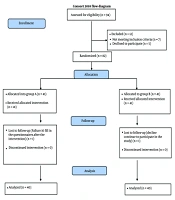
This randomized controlled trial used a pretest–posttest design with a control group and a 2-month follow-up period. The study population comprised all family caregivers of patients with cancer residing in Ardakan and Meybod in 2024 who had attended Imam Jafar Sadegh (AS) Hospital in Meybod for treatment services. From this population, 30 eligible caregivers were selected using convenience sampling and then randomly assigned, using a random number table, to either the experimental group (n = 15) or the control group (n = 15). All randomized participants completed the posttest and 2-month follow-up assessments. No participants withdrew after randomization, and no data were lost during follow-up. The sample size was determined based on prior studies and participant availability.
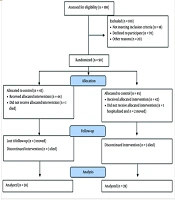
Allocation concealment was maintained throughout the randomization process. The allocation sequence was generated independently, and the researcher responsible for participant enrollment was blinded to the allocation sequence until participants had been assigned to their groups. Blinding procedures were implemented to minimize potential bias. Outcome assessors and the researcher responsible for statistical analysis were blinded to participants’ group assignments throughout the study. Participant flow throughout the study, including enrollment, randomization, follow-up, and analysis, is presented in Figure 1.
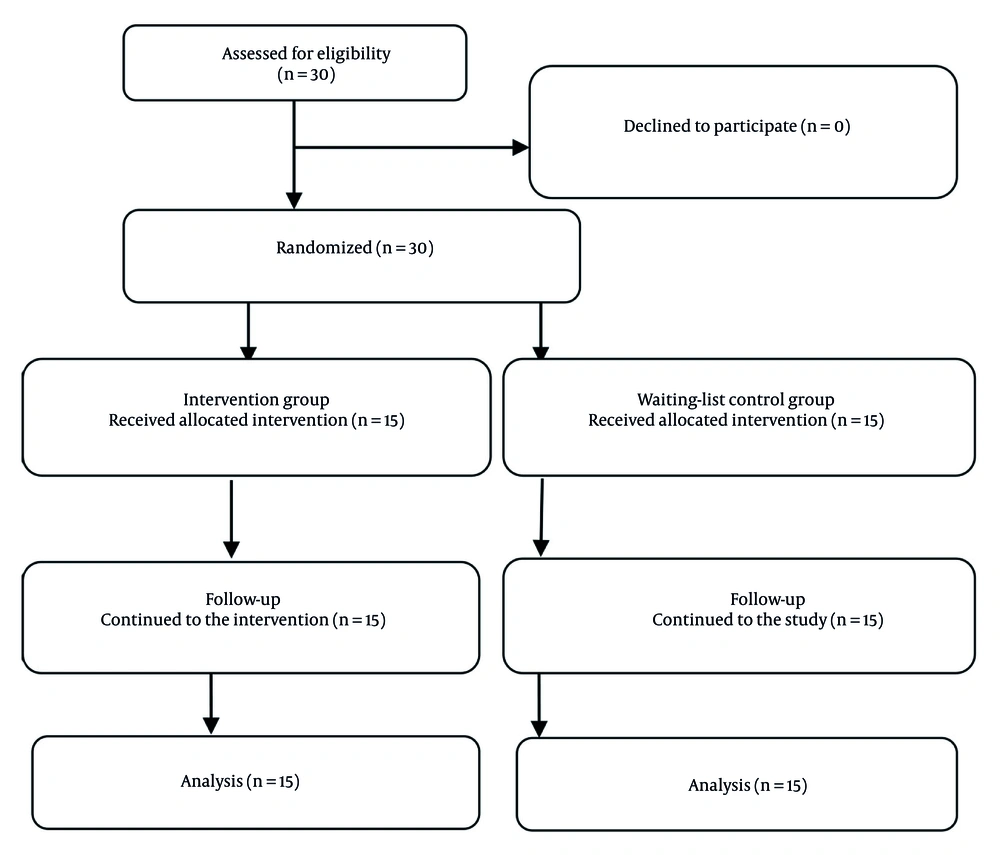
Figure 1.
Study flowchart
Inclusion criteria were as follows: providing care for at least one family member diagnosed with cancer, being literate, providing informed consent to participate, having no specific physical illnesses, and not concurrently receiving counseling services or psychopharmacological treatment. Exclusion criteria included absence from more than two intervention sessions, the death of the patient with cancer under the participant’s care, or withdrawal from the study. The study protocol was approved by the ethics committee of Ardakan University (Approval Code: IR.ARDAKAN.REC.1404.059). The study was retrospectively registered in the Iranian Registry of Clinical Trials (IRCT) under registration number IRCT20260106068570N1. Participant recruitment had commenced before trial registration. Written informed consent was obtained from all participants before participation, and the confidentiality of participants’ information was ensured.
Data were collected at 3 time points: before the intervention (pretest), immediately after the intervention (posttest), and 2 months after the intervention had concluded (follow-up). The experimental group received an 8-session, 90-minute CBSM therapy program delivered in a structured group format. The intervention protocol was adapted from the practical guide developed by Anthony et al. The control group did not receive the CBSM intervention during the study period and continued to receive routine care and support services available to caregivers. No additional psychological intervention was provided to this group during the study period. The detailed content of the 8 CBSM sessions is presented in Table 1. The CBSM sessions were delivered by a psychologist with a master’s degree in rehabilitation counseling, who had received formal training in cognitive-behavioral interventions and had experience working with caregivers and individuals experiencing psychological distress. To ensure intervention fidelity, all CBSM sessions were delivered according to a standardized treatment protocol. Session content was implemented as specified in the intervention manual, and adherence to the planned session structure and therapeutic components was monitored throughout the intervention period.
Table 1.
Content of the Cognitive-Behavioral Stress Management Therapy Sessions
| Sessions | Session Titles | Session Contents |
|---|---|---|
| 1 | Program Introduction, Basic Stress Concepts, and Relaxation Practice | Welcome and overview of the program, administration of the pretest for initial assessment, introduction of group members and the facilitator, explanation of group rules, definition of stress, review of different reactions to stress, introduction to the cycle of thoughts, emotions, and physical responses, and instruction and practice in progressive muscle relaxation involving 16 muscle groups. |
| 2 | Relaxation and the Connection Between Thoughts and Emotions | Practice of progressive muscle relaxation in the 8 muscle-group format, exploration of the link between thoughts, emotions, and behavioral reactions, practice of analytical thinking ability, and understanding of the cognitive appraisal process. |
| 3 | Relaxation and Cognitive Distortions | Teaching diaphragmatic breathing for tension reduction, practicing progressive muscle relaxation in the 4 muscle-group format, practicing mental imagery, introducing common cognitive distortions, and teaching identification of negative and maladaptive thoughts. |
| 4 | Relaxation and Replacement With Rational Thoughts | Practicing diaphragmatic breathing with mental imagery, practicing passive muscle relaxation, distinguishing between rational and irrational self-talk, and teaching the skill of replacing ineffective thoughts with realistic and adaptive ones. |
| 5 | Autogenic Training and Effective Coping | Introducing the autogenic training technique involving the induction of warmth and heaviness sensations, teaching various effective coping styles, and focusing on cognitive-behavioral strategies for confronting stress. |
| 6 | Autogenic Training and Anger Management | Practicing autogenic training with mental imagery and self-induced calm, teaching the concept of anger as a natural emotion, and introducing strategies for controlling and regulating anger with emphasis on cognitive-behavioral interventions. |
| 7 | Meditation and Assertiveness Training | Teaching mantra meditation as a stress-reduction strategy, strengthening assertiveness skills in interpersonal interactions, identifying barriers to effective assertiveness, and practicing assertive behavior. |
| 8 | Meditation and Social Support | Comprehensively reviewing relaxation techniques taught in previous sessions, examining the importance of social support in stress reduction, analyzing obstacles to using social support, and teaching strategies for maintaining and strengthening effective supportive relationships. |
3.2. Measures
3.2.1. Caregiver Burden Questionnaire
The 22-item Caregiver Burden Questionnaire (CBQ) by Zarit et al. (10) was used. Responses are recorded on a 5-point Likert scale. The total score ranges from 0 to 88, with higher scores indicating greater burden. In the present study, Cronbach’s alpha was 0.75.
3.2.2. Psychological Well-Being Scale
The short 18-item form of Ryff’s Psychological Well-Being Scale (PWB) was used (11). It measures 6 dimensions of well-being. In this study, Cronbach’s alpha was 0.70.
3.2.3. Hospital Anxiety and Depression Scale
The anxiety outcome in this study was based on the anxiety subscale score of the Hospital Anxiety and Depression Scale (HADS). HADS, developed by Zigmond and Snaith (12), is a 14-item instrument comprising anxiety and depression subscales. Montazeri et al. (13) validated the Persian version and reported good reliability. In the current study, Cronbach’s alpha coefficient for the anxiety subscale was 0.87.
3.3. Data Analysis
Data analysis included descriptive and inferential statistics using SPSS version 27. Statistical assumptions, including normality, homogeneity of variance, and sphericity, were assessed. To test the main hypotheses, RM-ANOVA was conducted, with the Greenhouse-Geisser correction applied whenever sphericity was violated. The significance level was set at P < 0.05. A post hoc power analysis conducted using G*Power indicated that, with a total sample size of 30, 3 measurement occasions, and observed large effect sizes (η2p = 0.34 - 0.56), statistical power ranged from 0.80 to 0.95.
4. Results
4.1. Sample Characteristics and Baseline Comparability
The demographic characteristics of the 30 participants (15 in the experimental group and 15 in the control group) were analyzed. In the experimental group, the mean age was 40.27 years (range, 28 - 65 years); 6 participants were employed (40.0%) and 9 were unemployed (60.0%). Regarding education level, 3 participants had primary education (20.00%), 4 had middle school education (26.67%), 4 had a high school diploma (26.67%), and 4 had a bachelor's degree (26.67%). In terms of kinship with the patient, 3 were spouses (20.00%), 4 were children (26.67%), 6 were siblings (40.00%), and 2 were parents (13.33%). In the control group, the mean age was 42.87 years (range, 25 - 63 years); 7 participants were employed (46.67%) and 8 were unemployed (53.33%). Education levels included 1 participant with middle school education (6.67%), 6 with a diploma (40.00%), 4 with a bachelor's degree (26.67%), and 4 with a master's degree (26.67%). Regarding kinship with the patient, 4 were spouses (26.67%), 7 were children (46.67%), 2 were siblings (13.33%), and 2 were parents (13.33%).
Chi-square and independent-samples t-test analyses showed no statistically significant between-group differences in employment status, education level, kinship, or mean age (P > 0.05). However, given the small sample size (n = 15 per group), nonsignificant P values should not be interpreted as evidence of equivalence. Descriptive examination indicated acceptable baseline comparability between groups, with minor differences in education level (e.g., 26.67% of the experimental group had a bachelor's degree vs. 26.67% in the control group, but 26.67% of the experimental group had a master's degree compared with 0% in the control group) and kinship type (e.g., siblings: 40.00% in the experimental group vs. 13.33% in the control group). These descriptive imbalances, although not statistically significant, warrant cautious interpretation of subsequent findings. Independent-samples t tests showed no significant baseline differences between the experimental and control groups in caregiver burden (P = 0.97), psychological well-being (P = 0.18), or anxiety (P = 0.07).
The means and standard deviations of the study variables, stratified by test stage and study group, are shown in Table 2. The normality of the data distribution for the main study variables was assessed using the Shapiro-Wilk test. Although the results indicated violations of the normality assumption for some subcomponents of psychological well-being and anxiety at specific measurement points (P < 0.05), examination of skewness and kurtosis indices showed that all values were within the acceptable range (± 2). Therefore, the normality assumption was considered acceptable for proceeding with parametric analyses.
Table 2.
Descriptive Statistics of Research Variables at Pretest, Posttest, and Follow-Up for the Experimental and Control Groups
| Source of Variations and Time Points | Control Mean | Control SD | Experimental Mean | Experimental SD |
|---|---|---|---|---|
| Caregiver Burden | ||||
| Pretest | 42.13 | 6.24 | 42.00 | 10.15 |
| Posttest | 43.60 | 6.10 | 33.63 | 10.09 |
| Follow-up | 46.27 | 6.02 | 34.00 | 9.60 |
| Psychological Well-Being Total Score | ||||
| Pretest | 65.57 | 8.64 | 61.76 | 6.13 |
| Posttest | 64.92 | 7.62 | 74.56 | 8.83 |
| Follow-up | 62.07 | 7.90 | 69.52 | 6.77 |
| Autonomy | ||||
| Pretest | 11.40 | 1.99 | 11.28 | 3.20 |
| Posttest | 10.40 | 2.10 | 13.28 | 2.98 |
| Follow-up | 10.07 | 2.09 | 12.01 | 2.14 |
| Personal Growth | ||||
| Pretest | 11.19 | 3.17 | 10.40 | 2.80 |
| Posttest | 11.79 | 3.10 | 13.47 | 1.60 |
| Follow-up | 10.93 | 3.41 | 12.31 | 3.23 |
| Environmental Mastery | ||||
| Pretest | 10.84 | 2.98 | 11.00 | 3.21 |
| Posttest | 10.80 | 2.93 | 12.40 | 3.04 |
| Follow-up | 10.13 | 2.88 | 11.00 | 2.78 |
| Positive Relations | ||||
| Pretest | 11.48 | 2.30 | 10.42 | 2.93 |
| Posttest | 11.47 | 2.80 | 11.55 | 1.64 |
| Follow-up | 10.73 | 2.81 | 11.27 | 2.05 |
| Purpose in Life | ||||
| Pretest | 9.53 | 2.53 | 9.33 | 1.84 |
| Posttest | 9.80 | 1.74 | 12.13 | 2.70 |
| Follow-up | 9.67 | 2.02 | 11.67 | 2.09 |
| Self-Acceptance | ||||
| Pretest | 11.13 | 3.11 | 9.33 | 2.66 |
| Posttest | 10.67 | 3.27 | 11.73 | 2.52 |
| Follow-up | 10.53 | 3.20 | 11.27 | 2.25 |
| Anxiety Symptoms | ||||
| Pretest | 12.47 | 3.85 | 16.80 | 2.54 |
| Posttest | 14.20 | 3.61 | 11.20 | 3.67 |
| Follow-up | 14.27 | 3.45 | 12.40 | 3.31 |
4.2. Repeated-Measures Analysis
RM-ANOVA was used to examine the effects of time (pretest, posttest, and follow-up), group (experimental and control), and their interaction on the dependent variables of caregiver burden, psychological well-being, and anxiety. Before the main analysis, underlying assumptions were evaluated. Mauchly's test indicated that the sphericity assumption was violated for caregiver burden and anxiety (P < 0.05) but was met for psychological well-being (P = 0.786). Accordingly, the Greenhouse-Geisser correction was applied to the degrees of freedom for the burden and anxiety analyses (Table 3).
Table 3.
Mauchly's Test of Sphericity for Caregiver Burden, Psychological Well-Being, and Anxiety
| Source of Variations | Mauchly's W | Chi-Square | df | P-Value | Greenhouse-Geisser Epsilon |
|---|---|---|---|---|---|
| Caregiver Burden | 0.633 | 12.334 | 2 | 0.002 | 0.732 |
| Psychological Well-being | 0.982 | 0.482 | 2 | 0.786 | 0.983 |
| Anxiety | 0.500 | 18.741 | 2 | 0.001 | 0.666 |
RM-ANOVA results revealed a statistically significant time-by-group interaction for all 3 dependent variables (P < 0.01), indicating that changes in scores over time differed significantly between the experimental and control groups (Table 4). The main effect of time was also significant for all variables (P < 0.01). Post hoc pairwise comparisons using the Bonferroni test were conducted to clarify the nature of these within-group changes in the experimental group (Table 5).
Table 4.
Results of Repeated-Measures ANOVA for Caregiver Burden, Psychological Well-Being, and Anxiety
| Dependent Variables and Effects | F | df | P-Value | Partial Eta Squared (η2p) |
|---|---|---|---|---|
| Caregiver Burden | ||||
| Time | 8.184 | 1.46 | 0.003 | 0.226 |
| Time × Group | 28.461 | 1.46 | 0.001 | 0.504 |
| Psychological Well-being | ||||
| Time | 10.569 | 2 | 0.001 | 0.274 |
| Time × Group | 14.494 | 2 | 0.001 | 0.341 |
| Anxiety | ||||
| Time | 6.622 | 1.33 | 0.009 | 0.191 |
| Time × Group | 35.779 | 1.33 | 0.001 | 0.561 |
Table 5.
Post Hoc Bonferroni Comparisons for Pretest, Posttest, and Follow-Up Scores in the Experimental Group
| Variables and Comparisons | Mean Difference | Standard Error | P-Value |
|---|---|---|---|
| Caregiver Burden | |||
| Pretest - Posttest | -8.60 | 1.53 | 0.001 |
| Pretest - Follow-up | -8.66 | 1.60 | 0.001 |
| Posttest - Follow-up | -0.07 | 0.28 | 1.000 |
| Psychological Well-being | |||
| Pretest - Posttest | 6.08 | 1.33 | 0.001 |
| Pretest - Follow-up | 2.13 | 1.27 | 0.315 |
| Posttest - Follow-up | 3.95 | 1.42 | 0.029 |
| Anxiety | |||
| Pretest - Posttest | -3.17 | 1.05 | 0.016 |
| Pretest - Follow-up | -1.50 | 0.97 | 0.396 |
| Posttest - Follow-up | 1.67 | 0.48 | 0.005 |
Post hoc analyses showed that caregiver burden scores in the experimental group decreased significantly from pretest to posttest (P < 0.001) and from pretest to follow-up (P < 0.001), with no significant difference between posttest and follow-up (P = 1.000), indicating a sustained reduction. Psychological well-being increased significantly from pretest to posttest (P < 0.001). Psychological well-being improved significantly from pretest to posttest but decreased at follow-up (P = 0.029), indicating that the improvement was only partially maintained. Anxiety scores decreased significantly from pretest to posttest (P = 0.016), whereas the decrease from pretest to follow-up was not significant (P = 0.396). Although anxiety increased slightly from posttest to follow-up, follow-up scores remained lower than pretest scores, suggesting partial maintenance of the intervention effect.
Based on conventional benchmarks, the observed partial eta squared values indicate large effect sizes for all outcome variables.
In contrast, the control group showed no significant changes across the 3 measurement points for any variable. Collectively, these findings suggest that the CBSM intervention led to significant and sustained improvements in caregiver burden and anxiety, while enhancing psychological well-being, among caregivers of patients with cancer in the experimental group.
5. Discussion
This study examined the effectiveness of CBSM therapy in reducing caregiver burden and anxiety and enhancing psychological well-being among caregivers of patients with cancer. The findings supported the research hypotheses, demonstrating that the CBSM intervention led to significant improvements across all 3 outcome measures.
The significant reduction in caregiver burden in the experimental group underscores the efficacy of CBSM in alleviating the multidimensional pressures of caregiving. This finding indicates that the intervention, through training in stress management techniques, emotional regulation, and cognitive restructuring, successfully enhanced caregivers’ capacity to adapt to the demanding circumstances of caring for a patient with cancer (14). The decrease in perceived burden reflects an improved sense of personal capability and greater control over stressful caregiving situations. These results align with prior research. Studies have consistently shown that structured psychological interventions, particularly those based on cognitive-behavioral and mindfulness principles, are among the most effective approaches for reducing caregiver burden (8). Chen et al. (14), in a systematic review and network meta-analysis, found that psychosocial interventions were highly effective in reducing burden among caregivers of older adults with disabilities. Similarly, Eze et al. (15) emphasized the association between caregiver burden and maladaptive coping strategies and the consequent need for targeted psychological support. The present findings are consistent with this body of evidence, supporting CBSM as a practical and effective intervention for mitigating caregiver burden within oncology support systems.
Furthermore, the significant increase in psychological well-being among participants in the experimental group highlights the positive impact of CBSM on core aspects of mental health. The intervention appears to have fostered greater self-acceptance, environmental mastery, positive relations, purpose in life, personal growth, and autonomy, which are key dimensions of Ryff’s model (4). By equipping caregivers with effective coping skills and helping them reframe maladaptive cognitions, CBSM enhanced their psychological resilience in the context of chronic stress. This outcome is consistent with other studies reporting the benefits of cognitive-behavioral and other psychosocial interventions in improving the psychological well-being of caregivers facing various health challenges in their families (16).
The significant reduction in anxiety further supports the therapeutic utility of the CBSM protocol. The intervention’s focus on identifying cognitive distortions, teaching relaxation techniques (e.g., progressive muscle relaxation and diaphragmatic breathing), and promoting effective coping strategies directly targeted sources of anxiety inherent in the unpredictable and stressful role of caregiving. This finding corroborates existing literature demonstrating the efficacy of CBT-based approaches in reducing anxiety and stress among family caregivers (17, 18). For instance, Shen et al. (9) reported that internet-based CBT interventions significantly reduced anxiety, depression, and burden in caregivers of patients with cancer. Although anxiety levels increased slightly between posttest and follow-up, they remained lower than baseline levels, suggesting that the beneficial effects of CBSM were partially maintained over time.
5.1. Conclusions
This study provides preliminary evidence of the effectiveness of CBSM; however, larger randomized controlled trials are needed to confirm these findings, and the results should be interpreted cautiously because of the small sample size and sensitivity to assumptions. By significantly reducing caregiver burden and anxiety while simultaneously enhancing psychological well-being, CBSM addresses critical aspects of caregiver distress. These findings suggest that CBSM may be a feasible supportive care strategy; however, implementation should be further evaluated in larger trials.
From a clinical perspective, CBSM is a brief, structured, and low-cost group intervention that can be integrated into psychosocial oncology services. The program requires minimal resources and can be delivered by trained mental health professionals in hospital- or community-based oncology settings, making it a feasible and scalable supportive care strategy. This randomized controlled trial provides preliminary evidence that CBSM may reduce caregiver burden and anxiety while improving psychological well-being among caregivers of patients with cancer. Given the methodological limitations, including the small sample size and short follow-up, larger trials with longer follow-up periods and active control conditions are needed to confirm these findings.
5.2. Limitations and Future Research
This study has several limitations that should be considered when interpreting the results. First, the use of convenience sampling and the specific demographic composition of the sample in terms of age, employment, and education may limit the generalizability of the findings to other caregiver populations. Second, reliance on self-report measures may introduce bias, including social desirability bias. Third, although positive effects were maintained at the 2-month follow-up, a longer follow-up period would provide a more comprehensive assessment of the long-term stability of cognitive and emotional changes. Fourth, because the intervention was delivered in a face-to-face group format, outcomes may have been influenced by group dynamics, participant characteristics, or therapist style. Fifth, controlling for all external and concurrent variables, such as familial support, economic status, or concurrent therapies, was challenging. Sixth, although baseline between-group differences were not statistically significant, the small sample size (n = 15 per group) limits the interpretability of these P values. Nonsignificant results do not confirm equivalence, and observed descriptive imbalances (e.g., in education and kinship type) may have influenced outcomes. Future studies with larger samples should employ equivalence testing or report standardized differences, such as Cohen’s d, to better characterize baseline comparability.
Finally, the small sample size and the absence of an active control group, which may introduce expectancy effects, represent additional limitations. Given the absence of an active control group, the findings should be interpreted with caution, and future randomized controlled trials should include active control conditions to distinguish intervention-specific effects from potential expectancy effects. Another limitation is that the study was registered retrospectively rather than prospectively. Although ethical approval was obtained before study initiation, prospective trial registration would have enhanced methodological transparency.
Based on these limitations, future research should employ larger and more diverse samples, use randomized controlled trial designs with mixed-method approaches, including in-depth interviews and clinical assessments, implement longer-term follow-ups, and investigate potential moderating factors such as caregiver age, employment status, patient cancer type, and levels of social support to further elucidate the mechanisms and optimal application of CBSM for caregivers.