
1. Introduction
Synchronous primary tumors of the female genital tract are relatively rare. Accurate diagnosis of these malignancies is essential in clinical practice because their prognosis and management differ substantially from those of metastatic disease or a single primary tumor (1-7). Synchronous primary neoplasms are defined as the simultaneous occurrence of two or more independent tumors in the same patient (8, 9). Among gynecologic malignancies, synchronous ovarian and endometrial carcinomas represent the most frequent combination and account for approximately 50% of all synchronous gynecologic cancers (2, 8, 10). They occur in nearly 10% of patients with ovarian cancer and in about 5% of patients with endometrial cancer (11). These tumors are considered independent primary neoplasms when distinct histopathological features are identified.
Importantly, patients with synchronous primary ovarian and endometrial cancers generally have a better prognosis than those with metastatic disease involving both organs (12). Here, we report a rare case of synchronous bilateral ovarian endometrioid adenocarcinoma and endometrial endometrioid adenocarcinoma with endocervical involvement in a 26-year-old woman with no detectable mutations.
2. Case Presentation
A 26-year-old nulligravid woman had been followed for 1 year at an infertility treatment center because of a 1-year history of infertility. The patient underwent laparoscopy, hysteroscopy, and dilation and curettage (D&C) on 02/10/2022 because of bilateral ovarian cysts and an endometrial thickness of 10 mm. Bilateral cystectomy was performed. A polyp was also identified in the uterine cavity and resected. Based on the pathology report, the right ovarian cyst was diagnosed as grade 1 (G1) endometrioid adenocarcinoma, whereas the left ovary showed G1 endometrioid adenocarcinoma with a minor component of papillary borderline serous tumor. Endocervical curettage also revealed endometrioid adenocarcinoma. Consequently, the patient was referred to the Gynecologic Oncology Center for further evaluation and management.
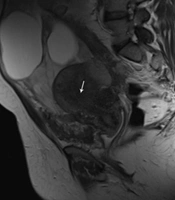
On review of the preoperative magnetic resonance imaging (MRI) images (Figure 1), both ovaries contained large cystic lesions with imaging characteristics suggestive of endometriomas. In addition, solid components were identified bilaterally, measuring 3 mm in the left ovary. On the left side of the uterine cavity, a lesion without myometrial invasion was observed.
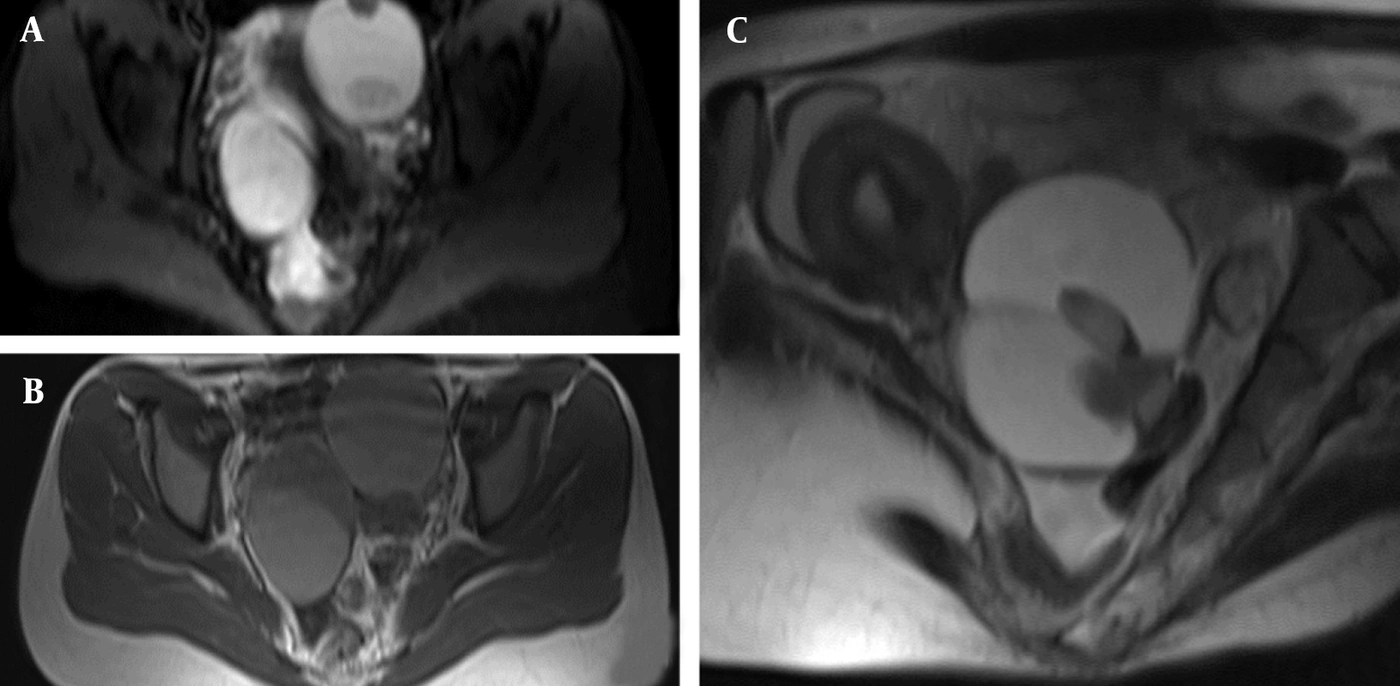
Figure 1.
T1- and T2-weighted MRI images demonstrating high-signal-intensity cystic lesions containing solid components (A, B). Axial T2 fat-saturated MRI image of the uterus showing an endometrial mass lesion on the left side of the uterine cavity without distortion of the junctional zone (C).
Expert pathology review confirmed the initial diagnosis. Immunohistochemical staining for mismatch repair (MMR) proteins (MLH1, PMS2, MSH2, and MSH6) demonstrated intact expression. Subsequent germline genetic testing revealed no pathogenic germline mutations. Microsatellite instability testing and genetic analysis were performed, and both results were negative. To evaluate for distant metastases, a positron emission tomography (PET) scan was performed and showed increased metabolic activity in the endometrial cavity and both ovaries. No metastasis or primary tumoral lesion was identified elsewhere in the body.
Based on the positive endocervical curettage findings, the patient underwent repeat hysteroscopy and D&C for further evaluation. A lesion was observed on the anterior wall of the endocervical canal. In addition, hysteroscopy revealed endometrial hyperplasia involving the posterior uterine wall and a polypoid lesion in the uterine fundus. Histopathological examination confirmed endometrioid adenocarcinoma. Endocervical and endometrial curettage revealed endometrioid adenocarcinoma, and cervical biopsy at 12 o'clock showed high-grade cervical intraepithelial neoplasia (CIN II) with p16 positivity.
After embryo cryopreservation, surgery was performed, and bilateral small ovarian tumors were identified (Figure 2A). The patient underwent radical hysterectomy, bilateral oophorectomy, bilateral pelvic lymph node dissection, and omentectomy. On opening the uterus, a thickened and irregular endometrium was observed (Figure 2B). Final histopathological examination revealed stage IA, G1 endometrioid endometrial carcinoma and stage IB, G1 endometrioid ovarian carcinoma. Figure 3 Based on the multidisciplinary team’s decision, adjuvant chemotherapy was recommended because of synchronous tumors despite their early stage. The patient received three cycles of a paclitaxel-carboplatin regimen. She remained under follow-up and showed no evidence of disease recurrence during 10 months of follow-up.
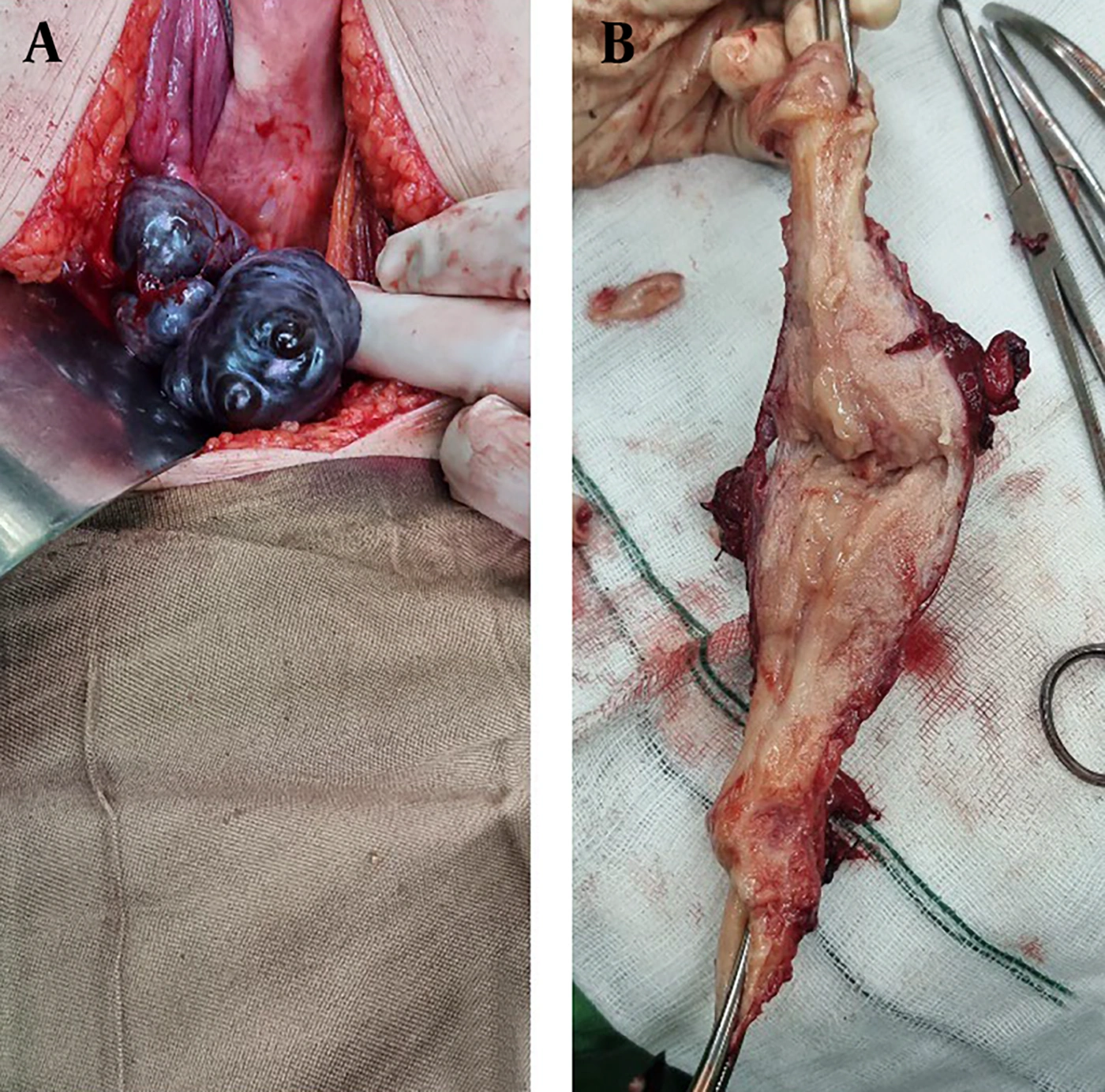
Figure 2.
Macroscopic features of the ovarian (A) and endometrial (B) views.
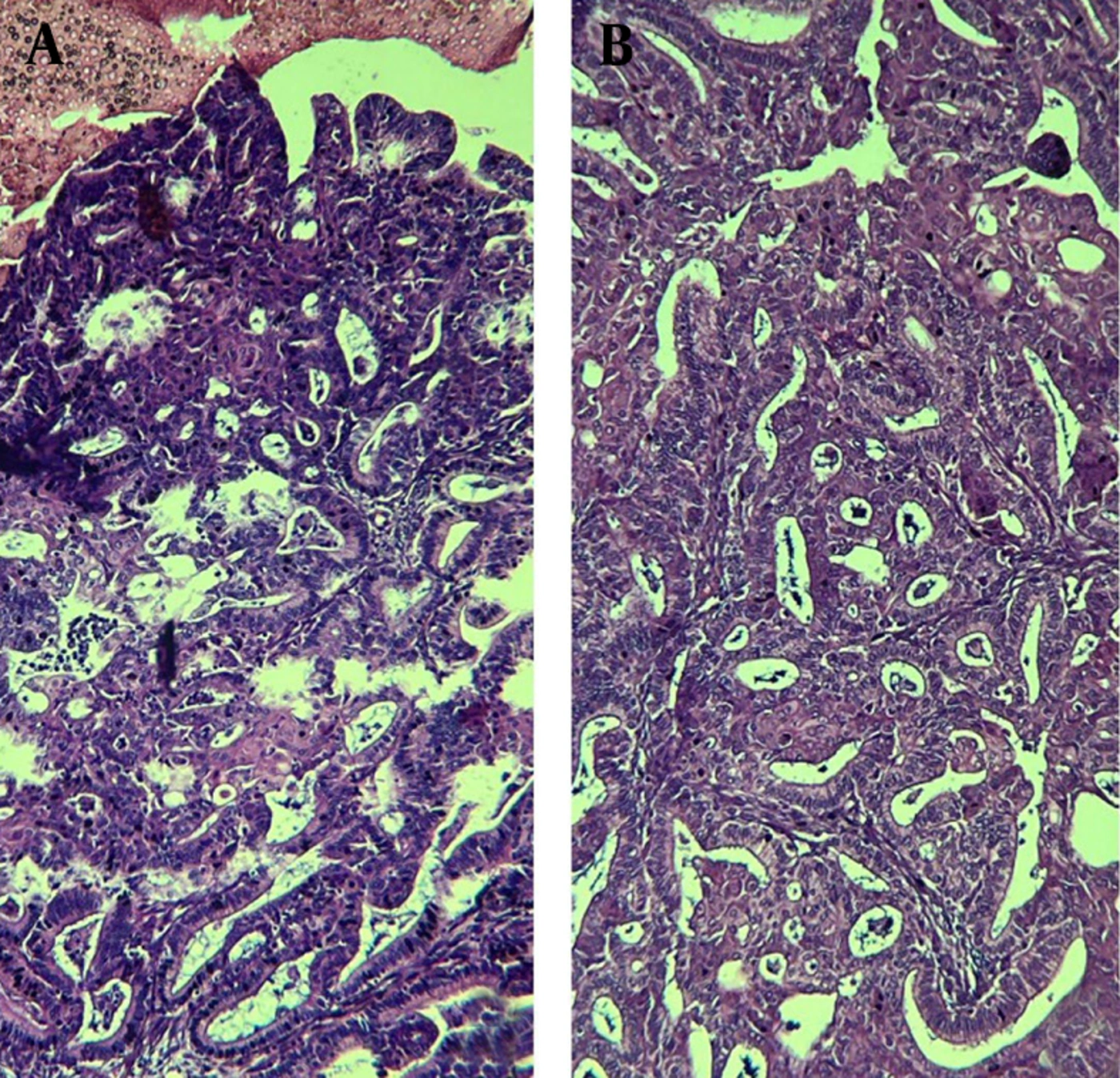
Figure 3.
Microscopic features of endometrial endometrioid carcinoma showing back-to-back glands with squamous metaplasia (A) and endometrioid carcinoma of the ovary showing a similar pattern (B).
Written informed consent was obtained from the patient for publication of this case report and any accompanying images.
3. Discussion
The reported incidence of synchronous primary gynecological malignancies ranges from 0.6% to 5.4% (8). Although uncommon, their clinical importance lies in the need to differentiate them from metastatic disease because treatment strategies and prognosis differ substantially. The etiology remains poorly understood; however, the shared embryologic origin of the endometrium and ovaries, as well as exposure to common hormonal or carcinogenic stimuli, have been proposed as possible mechanisms, particularly in genetically predisposed individuals (8). Rather than being merely coincidental tumors, synchronous neoplasms are increasingly considered a distinct clinical entity. Previous studies have shown that nearly half of synchronous gynecologic malignancies involve the ovary and endometrium (10). Synchronous primary gynecologic neoplasms also have a better prognosis and survival rate than metastatic disease. Because synchronous primary gynecologic neoplasms are rare, management should be individualized based on the patient’s clinical condition and disease characteristics; evidence-based guidelines are limited (8). Gungor et al. assessed 21 patients with synchronous primary gynecological tumors, and almost half had endometrial-ovarian tumors (52.4%). This finding highlights that the ovary and endometrium represent the most frequent tumor pair in synchronous gynecologic malignancies. Because these organs are also common sites of metastasis from one another, careful histopathological assessment is required to differentiate dual primary tumors from metastatic spread (10). In a study by Rijal et al., abnormal uterine bleeding and pelvic pain or a pelvic mass were the most common clinical presentations (13). In contrast, the present case was diagnosed incidentally, demonstrating that synchronous malignancies may occasionally present without typical symptoms (13).
A remarkable feature of the present case is the patient’s young age (26 years). Previous studies have reported higher median ages at diagnosis. Herrinton et al. found that 39% of patients were younger than 50 years (14). Eifel et al. found a median age of 41 years in 29 women with synchronous endometrial-ovarian tumors (15). Sultan Eser et al. studied 4185 women with gynecologic cancer, of whom 55 (1.3%) had synchronous primary malignancies. Among these patients, 43 (78.2%) had synchronous endometrial and ovarian tumors, with a median age of 52.6 years. In a study of 84 patients with endometrial-ovarian synchronous primary cancers, Soliman et al. reported that the median age at diagnosis was 50 years (9). In a prospective study of 74 patients with simultaneously detected endometrial and ovarian carcinoma, Zaino et al. found that the median age was 49 years (16). Williams et al. studied 56986 cases of epithelial ovarian cancer diagnosed between 1973 and 2005. Synchronous cancers represented less than 3% of the 56986 epithelial ovarian cancer cases, and among 1355 synchronous cancers, only six patients were younger than 30 years (0.6%) (3). Therefore, the occurrence of synchronous ovarian-endometrial carcinoma in a 26-year-old woman is exceptionally rare compared with previously reported data. Some studies reported that the mean age of patients with synchronous primary cancers was lower than that of patients with two separate malignancies or primary tumors with metastasis (3). However, cases in patients younger than 30 years remain extremely uncommon in the literature.
In our case, genetic evaluation was performed, and Microsatellite instability was negative. Although this finding may reduce the likelihood of MMR-related hereditary syndromes, it does not completely exclude an underlying genetic predisposition, particularly given the patient’s unusually young age. Consistent with the present case, in a study by Soliman et al. of 84 patients with synchronous primary cancer, only one patient had a family history of hereditary breast-ovarian cancer syndrome, likely indicating that genetics is unlikely to have a major influence on synchronous cancers of the genital tract, although few studies have addressed this issue (9). Although this may suggest a limited role of known hereditary syndromes, available data remain insufficient to definitively exclude genetic contributions, particularly in very young patients. Williams et al. suggested that ovarian-endometrial synchronous primary cancers may have distinct genetic profiles compared with single primary ovarian cancers, given differences in survival outcomes and prognosis (3). Such differences could partially explain early-onset presentations such as the current case. Therefore, although established hereditary syndromes may not predominate in most synchronous tumors, the possibility of unique molecular mechanisms in young patients warrants further investigation. Whether these potential molecular differences translate into distinct therapeutic responses or long-term outcomes in very young patients remains unclear and requires further investigation.
Because of the favorable characteristics of synchronous tumors, including better grade, earlier disease stage, and younger age at diagnosis compared with single primary ovarian cancer, ovarian-endometrial synchronous cancer has shown better survival (12, 15, 17). In a study by Williams et al., patients with synchronous cancer had a better prognosis and survival during 5-year follow-up, with a survival rate of approximately 71%. Moreover, most patients with synchronous cancer were diagnosed at localized and treatable stages and at earlier grades. They also found that, at each stage, patients with synchronous cancers had a better prognosis and survival (3). In a cohort study, Lim et al. reported that age is an important factor for survival in patients with synchronous primary cancer. Survival differed significantly between patients younger than 50 years and those older than 50 years and was better in younger patients (17). According to retrospective data, Zaino et al. found that low histological grade and early stage were associated with a better prognosis, especially in the subtype of concordant endometrioid pathology (16). In addition, some studies showed better survival for concordant endometrioid tumors than for endometrioid tumors with other histologic subtypes (9, 17). Similarly, Eifel et al. found a better prognosis in patients with synchronous cancer with concurrent endometrioid tumors than in patients with stage III endometrial cancers or stage II ovarian cancers (15). However, Caldarella et al. found no significant difference in survival in this regard (18). This discrepancy suggests that favorable outcomes may be influenced more by tumor stage and histology than by synchronicity alone.
Overall, this case emphasizes three important points: 1) synchronous ovarian-endometrial carcinoma can rarely occur in very young women; 2) accurate differentiation from metastatic disease is critical for appropriate management; and 3) concordant endometrioid histology is generally associated with a favorable prognosis.
Synchronous ovarian and endometrial carcinoma is an exceptionally rare entity, particularly in a 26-year-old patient with concurrent endometrioid endocervical involvement and CIN2, accompanied by PET positivity in both ovaries and the endometrium. This case highlights a critical clinical lesson: even in young women, persistent ovarian cysts or suspicious imaging findings should prompt thorough evaluation for rare malignant conditions. Heightened clinical vigilance in such scenarios is essential to facilitate early diagnosis and timely management and may improve oncologic outcomes .