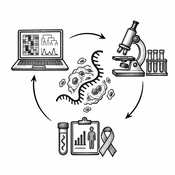
Cover image of the article: Non-coding RNAs in Cancer: From Computational Discovery to Functional Validation and Clinical Translation (AI-generated illustration)

Image Credit:AI-generated illustration

Non-coding RNAs in Cancer: From Computational Discovery to Functional Validation and Clinical Translation

Authors

Majid MokhtariMajid Mokhtari ORCID1,*, Atieh AkbariAtieh Akbari ORCID1
1Cancer Research Center, Shahid Beheshti University of Medical Sciences, Tehran, Iran
*Corresponding Author: Cancer Research Center, Shahid Beheshti University of Medical Sciences, Tehran, Iran. Email: majid.mokhtari65@gmail.com

International Journal of Cancer Management:Vol. 19, issue 1; e175794
Published online:Nov 03, 2026
Article type:Letter
Received:Oct 07, 2026
Accepted:Oct 11, 2026
How to Cite:Mokhtari M, Akbari A. Non-coding RNAs in Cancer: From Computational Discovery to Functional Validation and Clinical Translation. Int J Cancer Manag. 2026;19(1):e175794. doi: https://doi.org/10.5812/ijcm-175794

To the Editor,
The 5 studies recently published in your journal (1-5) collectively address a critical and rapidly evolving area of cancer research: the identification of non-coding RNAs as diagnostic and prognostic biomarkers. Synthesizing their findings reveals several important themes and future directions that merit attention.
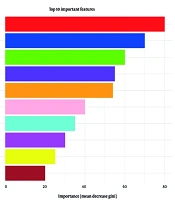
First, the integration of deep learning with high-dimensional transcriptomic data is reshaping biomarker discovery. Kousehlou et al. (1) demonstrated how an autoencoder can reduce 8,900 long non-coding RNAs to 1,000 features, ultimately identifying 4 hub lncRNAs (Lnc-FAM84A-1, LINC01866, Lnc-KCNE4 - 2, and Lnc-NUDT12 - 4) that stratify patients with esophageal squamous cell carcinoma into distinct survival groups. This approach underscores a broader trend: as genomic datasets grow in size and complexity, computational methods that extract meaningful patterns without prior feature selection will become indispensable. Future studies should focus on validating these lncRNA signatures in larger, multicenter cohorts and exploring their functional mechanisms.
Second, the context-dependent nature of ncRNA function presents a recurring challenge. Asadi et al. (2) found that circPVT1 was significantly upregulated in gastric cancer tissues and correlated with higher tumor grades, whereas miR-203a-3p showed no significant difference in expression between tumor and normal tissues. This finding contrasts with the conventional competing endogenous RNA model and suggests that circPVT1 may exert its oncogenic effects through alternative microRNA (miRNA) targets or independent mechanisms. Similarly, Rostamnejad et al. (3) observed that FOXA1, NEAT1, and RMRP were all upregulated in breast cancer, but no promoter mutations were detected, implying that epigenetic or posttranscriptional regulation drives their dysregulation. These findings highlight the need for functional validation, such as CRISPR-Cas9 knockout or overexpression assays, to move beyond correlative observations.
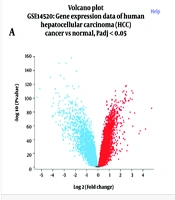
Third, the interplay between ncRNAs and key signaling pathways is emerging as a central theme. Mirzaei-Nasab et al. (4) predicted and partially validated interactions between lnc-LRR1 - 1.2 and MOB1A, as well as between hsa_circ_0001380 and SMARCA2, in hepatocellular carcinoma. These interactions point to a complex regulatory network involving the Hippo pathway, which is critical for cell growth and proliferation. In lung cancer, Yari et al. (5) demonstrated that miR-128, miR-335 - 5p, and miR-1254 were downregulated, whereas VEGF and K-RAS were upregulated, suggesting that these miRNAs may modulate angiogenesis and proliferation through these pathways. Together, these studies support a pathway-focused approach to ncRNA research, shifting the focus from individual molecules to the networks they regulate.
Fourth, the translational potential of ncRNAs as noninvasive biomarkers is increasingly evident. Yari et al. (5) detected differential expression of miRNAs and messenger RNAs (mRNAs) in both peripheral blood and tissue samples from patients with non-small cell lung cancer, supporting the feasibility of liquid biopsy-based diagnostics. Similarly, Asadi et al. (2) highlighted circPVT1 as a promising biomarker, with an area under the curve of 0.84 for distinguishing gastric cancer from normal tissue. However, standardized detection methods, large-scale validation, and integration with existing diagnostic workflows are essential for these biomarkers to achieve clinical utility.
Finally, these studies reveal several gaps and future directions. First, most reported findings are based on relatively small sample sizes (eg, 25 - 60 patients), limiting their generalizability. Second, the functional roles of the identified ncRNAs remain largely unexplored; mechanistic studies are needed to determine how they influence cancer progression. Third, the interplay among different classes of ncRNAs, including lncRNAs, circular RNAs, and miRNAs, and their target genes requires systematic investigation using multi-omics approaches. Fourth, the development of ncRNA-based therapeutics, such as antisense oligonucleotides or miRNA mimics, remains in its infancy and warrants dedicated preclinical research.
In conclusion, the 5 studies (1-5) collectively advance our understanding of ncRNAs in cancer biology while revealing important gaps. Future research must prioritize functional validation, larger cohort studies, and the development of standardized clinical assays. Addressing these challenges is essential to fully realize the potential of ncRNAs as diagnostic, prognostic, and therapeutic tools.
Footnotes

  • AI Use Disclosure:The authors declare that no generative AI tools were used in the creation of this article.

  • Authors' Contribution:All authors contributed equally to this article.

  • Conflict of Interests Statement:The authors declare no competing interests.

  • Funding/Support:No funding was received for this study.

References

  • 1.
    Kousehlou Z, HajiZadeh E, Tapak L, Shalbaf A. Identifying Survival Subtypes of Esophageal Squamous Cell Carcinoma Patients: An Application of Deep Learning in Gene Expression Data Analysis. Int J Cancer Manag. 2024;17(1). e145929. https://doi.org/10.5812/ijcm-145929.
  • 2.
    Asadi S, Mousavi-Niri N, Rejali L, Hashemi M. Investigating the Expression Level of circPVT1 and miR-203a-3p in Tissue Samples of Patients with Gastric Cancer. Int J Cancer Manag. 2025;18(1). e160277. https://doi.org/10.5812/ijcm-160277.
  • 3.
    Rostamnejad E, Rashidi R, Akbari Z, Maghsoudloo M, Hashemi M, Emami Razavi A, et al. Evaluation of the Expression Level of Some Coding and Non-coding Genes in Breast Cancer Samples Based on Bioinformatics and Laboratory Studies. Int J Cancer Manag. 2024;17(1). e138413. https://doi.org/10.5812/ijcm-138413.
  • 4.
    Mirzaei-Nasab F, Hashemi M, Seyedena Y, Hosseinkhan N, Majd A. Integrative Analysis of Non-coding RNAs and Hippo Signaling Pathway in Hepatocellular Carcinoma Using Bioinformatics and Experimental Approaches. Int J Cancer Manag. 2025;18(1). e157228. https://doi.org/10.5812/ijcm-157228.
  • 5.
    Yari E, Mohamadnia A, Bahrami N, Salahshourifar I. Expression of Five Important Biomarkers in Non-small Cell Lung Cancer: MicroRNAs-128, miR-335 - 5p, miR-1254, VEGF, and K-RAS. Int J Cancer Manag. 2024;17(1). e151012. https://doi.org/10.5812/ijcm-151012.

Copyright

Copyright © 2026, Mokhtari and Akbari. This open-access article is available under the Creative Commons Attribution 4.0 (CC BY 4.0) International License (https://creativecommons.org/licenses/by/4.0/), which allows for unrestricted use, distribution, and reproduction in any medium, provided that the original work is properly cited.

Similar Articles

14
Feb
2026
Integrating Bioinformatics and Machine Learning for Gastric Cancer Biomarker Discovery and Diagnostic Modelling

Integrating Bioinformatics and Machine Learning for Gastric Cancer Biomarker Discovery and Diagnostic Modelling

Hassan Nosrati Nahook,
Leila Safabakhsh

Nosrati Nahook H, Safabakhsh L. Integrating Bioinformatics and Machine Learning for Gastric Cancer Biomarker Discovery and Diagnostic Modelling. Zahedan J Res Med Sci. 2026;28(2):e168999. doi: https://doi.org/10.5812/zjrms-168999

11
Jan
2025
Integrative Analysis of Non-coding RNAs and Hippo Signaling Pathway in Hepatocellular Carcinoma Using Bioinformatics and Experimental Approaches

Integrative Analysis of Non-coding RNAs and Hippo Signaling Pathway in Hepatocellular Carcinoma Using Bioinformatics and Experimental Approaches

Farzin Mirzaei-Nasab,
Mehrdad Hashemi,
Yousef Seyedena,
Nazanin Hosseinkhan,
Ahmad Majd

Mirzaei-Nasab F, Hashemi M, Seyedena Y, Hosseinkhan N, Majd A. Integrative Analysis of Non-coding RNAs and Hippo Signaling Pathway in Hepatocellular Carcinoma Using Bioinformatics and Experimental Approaches. Int J Cancer Manag. 2025;18(1):e157228. doi: https://doi.org/10.5812/ijcm-157228

27
Mar
2022
Role of Non-coding RNA as a Biomarker of Response to Therapeutic Agents in Colorectal Cancer

Role of Non-coding RNA as a Biomarker of Response to Therapeutic Agents in Colorectal Cancer

Roghayeh Mahmoudi,
Elham Salem,
Saedeh Khadempar,
Alireza Rastgoo Haghi,
Zahra Keshtpour Amlashi,
Sahar Saki
,et al.

Mahmoudi R, Salem E, Khadempar S, Rastgoo Haghi A, Keshtpour Amlashi Z, et al. Role of Non-coding RNA as a Biomarker of Response to Therapeutic Agents in Colorectal Cancer. Jentashapir J Cell Mol Biol. 2022;13(1):e122461. doi: https://doi.org/10.5812/jjcmb.122461

30
Jun
2009
Regulatory Roles of Non-Protein-Coding RNAs in Cardiovascular and Hematopoietic Disorders

Regulatory Roles of Non-Protein-Coding RNAs in Cardiovascular and Hematopoietic Disorders

MA Faghihi

Faghihi M. Regulatory Roles of Non-Protein-Coding RNAs in Cardiovascular and Hematopoietic Disorders. Int Cardiovasc Res J. 2009;3(2):e68399. doi:

6
Jan
2026
Unraveling Pain Through Epigenetics

Unraveling Pain Through Epigenetics

Guive Sharifi,
Saeid Safari,
Khatere Mokhtari

Sharifi G, Safari S, Mokhtari K. Unraveling Pain Through Epigenetics. Interv Pain Med Neuromod. 2026;5(1):e166498. doi: https://doi.org/10.69107/ipmn-166498

More by these authors

Majid MokhtariPubMedScholar
Atieh AkbariPubMedScholar
Share
Cited by
Metrics