
1. Background
Cancer is one of the major health problems in many parts of the world (1). The rate of cancer in the world is 182 people in 100000; this rate in Iran is 132 per 100000 people, which indicates the high incidence of this disease (2). Cancer is one of the diseases that greatly affects the various aspects of physiological, psychological, social, and spiritual health. Stigma is one of the psychosocial issues faced by people with cancer. Stigma is usually referred to a situation, where other people in the community consider a person different (3). This psychosocial concept is a social tagging process, a mark or a sign of scandal or disgrace, and also a set of negative attitudes, beliefs, thoughts, and behaviors toward a person experiencing different situations (4, 5). These negative and different attitudes can lead to fear, rejection of the goodness of others, avoidance of communication with others, the feeling of distinction, the exacerbation of disability, and the lack of feeling (5). Sometimes patients feel that they should stay away from others as soon as the cancer is diagnosed. The fear of stigma can be a barrier to revealing a diagnosis of cancer (6). Stigma affects the mental and social health of patients by hiding the diagnosis of cancer from a patient or their relatives (7). People with cancer find irrational beliefs that lead to poor cooperation with the stressful conditions of the disease. These individuals are not comfortable in interpersonal relationships because of apparent changes; they experience social anxiety and are reluctant to communicate with others (8). Consequently, stigma in cancer is a serious problem and an obstacle to achieving the goals of the individual’s life during the diagnosis and treatment of the disease and, thereafter, during rehabilitation or return to normal life (5).
Cancer - induced stigma can be more difficult and even more debilitating than the disease itself and the cancer treatments. It can affects and disrupts the management of the disease and adaptation to a normal life. Individuals with cancer may experience different types of stigma due to the long duration or severity of the disease, the conditions associated with the disease, or its consequences, or because of long - standing beliefs about the disease (5). Stigma can have different levels in different societies and cultures (4). In Asian countries, cultural beliefs about cancer screening tests, chastity and shame, lack of encouragement by family members and doctors, belief in fate, the fear of facing stigma in girls suffering from social exclusion, and the fear of social exclusion are major barriers that delay referral to medical - therapeutic centers (9).
The stereotypes and beliefs about cancer affect the quality of life of the individual and his/her family, as well as the social and occupational health of the affected people. The stigma of cancer also interferes with the process of the disease (10-14). The treatment of the socio - psychosocial problems caused by cancer is less prevalent in Iran. Therefore, the patients and their family have many challenges with these issues. We did not find any quantitative or qualitative study in Iran that specifically examined stigma in this population. We could not find a study from the perspective of the affected people, who have experienced the consequences of these beliefs, attitudes, and stigma; hence, the need for this study was felt. Given that qualitative studies offer a deeper and broader understanding of the subject. Moreover, the patients, family, and therapeutic team members are directly involved with the effects of the stigma and face the problems that it has caused. So, this study was done to explain the concept of stigma and its dimensions and effects on cancer.
2. Methods
The present study was conducted by the qualitative approach and through the conventional content analysis method. In this way, the knowledge generated from the content analysis is based on the unique participant’s view of the actual data of the text (15). The participants were selected through purposive sampling. In this method, the researcher was looking for people, who had a rich experience in the subject and were able to express this experience. Contributors included patients with cancer (any kind of cancer), their family, and healthcare providers. Before the interview, the participants agreed with the researcher on the time and place of the interview. The interview location was a private and quiet place in the hospitalization unit for the patient and family or the office of the therapeutic team members with a pre - concert. The research area included the affiliated centers of Shahid Beheshti University of Medical Sciences ShohadaTajrish, and Imam Hossein (AS) Hospitals in Tehran, and Shahid Beheshti Hospital of Kashan, Cancer Research Center of Shahid Beheshti University of Medical Sciences of Tehran. The interviews were performed until the data reached the saturation level. A telephone interview was conducted on one of the interviews to complete it and resolve the ambiguity after the interview was completed. The average interview time was 25 minutes.
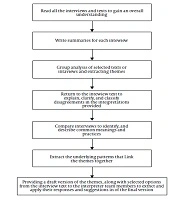
The focus of the interview questions was the experiences of patients with cancer. They were initially asked a general question, “what happened when you found you have cancer? What are the changes in your life and communications that have been created by cancer?” The family members were asked, “What was your reaction when your family member was diagnosed with cancer? What changes were made to your life and communications?” The healthcare providers were asked, “What changes have you seen in the lives of people with cancer and their associations?”, and “What is your experience with the stigma of cancer?” Then, in order to obtain more information and clarify the contributions of the participants, follow - up questions were also asked. The responses of the participants were the guidance of these questions. The interviews were recorded and, then, typed at the first opportunity with notes in the field. The transcripts of the interviews were broken up into the smallest units of meaning and encoded after reviewing several times. The initial codes were re - read several times to be replaced by the semantic similarity in the proper subcategory and categories. For managing the data while encoding the interview texts, we used the MAXQDA version 10 software. To ensure the accuracy of the qualitative data, the Lincoln and Guba criteria were considered. In order to increase the credibility of the data, the researcher took time to immerse him/herself in the data, to study the subject, and engage with the participants. The data obtained from the interviews were reviewed and investigated by the supervisors and counselors after the implementation and coding. In addition, after analyzing the data, two participants were contacted, and the full text and interviewing coding were provided to determine their proportionality with experiences. Furthermore, during the supplementary interview with one of the participants, the items from the initial code with the contributor were controlled. In order to provide data dependability, an external observer familiar with qualitative research helped to analyze the data that was in agreement with the process of the work and the findings. To enhance the confirmability of the research, the methodology of the research has been elaborated on to allow others to follow the research, if necessary. Also, the research documents (raw data: field notes, interview tapes, etc.) were safely maintained and stored. In order to obtain the transferability criterion, sufficient descriptive data was presented in the research report, and the characteristics of the participants were well described so that judgments about the transferability of the reader were well prepared (16).
In order to observe ethical considerations, at first, access to the participants was provided by obtaining a reference and receiving the code of ethics as a number: IR.SBMU.PHNM.2016.570 from the Vice Chancellor of Research of the Shahid Beheshti University of Medical Sciences. All the participants were informed of the research goals, and the interviews were recorded after getting their written consent. They were also assured that the recorded information would remain confidential and that the results of the research will be presented in the form of scientific papers and research reports without mentioning their names. The participants were also informed that they could leave the study whenever they wanted.
3. Results
In total, 14 people involved included 6 patients, 2 family members, 1 nurse, 1 head nurse, 2 clinical psychologists, and 2 physicians. More details of participants are given in Tables 1 and 2.
Table 1.
Participants’ Characteristics (Individual with Cancer and Family) in the Research
| Row | Gender | Age (Year) | Marital Status | The Participant | Type of Cancer | Time Passed from the Diagnosis (Year) | Resident | Education | Employment Status |
|---|---|---|---|---|---|---|---|---|---|
| 1 | Female | 44 | Married | Mother | Blood (ALL) | 1a | Village | Elementary school | Employed |
| 2 | Male | 58 | Married | Spouse | Breast | 13 | City | Elementary school | Retired |
| 3 | Female | 53 | Married | Patient | Breast | 10 | City | Doctorate | Employed |
| 4 | Female | 68 | Single | Patient | Breast and brain | 17 | City | Diploma | Retired |
| 5 | Male | 62 | Single | Patient | Rectum | 1 | City | High school | Retired |
| 6 | Male | 61 | Married | Patient | Bladder | 2 | Village | High school | Employed |
| 7 | Male | 35 | Married | Patient | Testes | 2 | City | Elementary school | Unemployed |
| 8 | Male | 19 | Married | Patient | Jaw | 1 | City | Diploma | Unemployed |
a Time in month.
Table 2.
Participants’ Profile (Medical Staff) in the Research
| Row | Gender | Age (Year) | Marital Status | Job | History of Employment (Year) | History of Work in Cancer Unit (Year) |
|---|---|---|---|---|---|---|
| 1 | Female | 36 | Married | Head - nurse | 14 | 2 |
| 2 | Male | 40 | Married | physician | 15 | 6 |
| 3 | Male | 67 | Married | physician | 35 | 20 |
| 4 | Female | 39 | Married | Nurse | 16 | 3 |
| 5 | Female | 30 | Single | Clinical psychiatrist | 7 | 7 |
| 6 | Female | 29 | Single | Clinical psychiatrist | 6 | 6 |
Through the rich and deep descriptions of the participants, 4 main themes were obtained: (1) cancer as a terrible and pitiful disease including fear and concern, punishment and misery, superstition and cultural stereotypes, and pity and compassion; (2) communication breakdown including rejection and collapse in communications; (3) concealing the disease with two aspects; (4) identity crisis including psychological reactions, disturbance in body image, and conflict of doubt and certainty (Table 3).
Table 3.
The Themes and Categories of the Meaning and Effects of Stigma
| The theme | Category |
|---|---|
| Cancer as a terrible and pitiful disease | Fear and concern |
| Punishment and misery | |
| Superstition and cultural stereotypes | |
| Pity and compassion | |
| Communication breakdown | Rejection |
| Collapse in communications | |
| Concealing the disease | Hide from patient |
| Hide from others | |
| Identity crisis | Psychological reactions |
| Disturbance in body image | |
| Conflict of doubt and certainty |
3.1. Cancer as a Terrible and Pitiful Disease
Many participants with cancer have said that cancer is a terrible and fatal disease because as soon as the term comes up, most people think about death. Furthermore, such attitudes are based on superstition and cultural stereotypes, because, in the cultural context of our country, the risk of cancer was associated with an ancient false belief that cancer may be due to injury caused by an evil eye, heredity, or related to paranormal issues. This superstition continues to this day and can have different varieties depending on the native culture in different regions. In these superstitions and stereotypes, cancer is equal to death, causing the loss of life of individuals. Furthermore, there is a negative perception with judgment of individuals with cancer.
P13 a clinical psychologist: “Unfortunately, as our experience has shown, most of these concepts in the minds of our patients are the result of unusual and very bad discourses. One possible reason for this is that since ancient times, cancer has been one of the diseases that can ruin people very quickly …. A series of things goes back to the culture of the commonplace of society. We never tried to correct these. Still, cancer is a difficult situation and a bad thing. When you want to give an example of a bad disease, you give the name of cancer. But, it certainly has its roots in our culture. Unfortunately, we were not able to resolve it. We could not clean our minds.”
Such a view is a source of fear and concern. Individuals with cancer and others associated with them when dealing with the diagnosis of the disease have different fears such as the fear of a positive diagnosis, fear of apparent changes, and the fear of getting away from normal life, disability and loss of strength, fear of death, fear of contagion, and fear of the dangers of treatment. In addition, the fear of revealing the diagnosis of the disease to others, and the consequent pity and compassion or judgment about the cause of cancer is also a reason to hide the disease from others. The fear of cancer can be a barrier to early detection and follow-up of initial symptoms. In this category, we can find individual and social stigma.
P 2 with breast cancer said: “When you tell someone ‘cancer’, it means death. Even now, when people say someone has cancer, everyone thinks that it’s the end of the life.”
P 8, the physician: “Often, the companion of the patient has secretly questioned me. For example, ‘I’m pregnant …. My mother has chemotherapy. Isn’t it a problem for me?’ In fact, the most frequent problem with my patients is that they think that chemotherapy has radiation that is harmful to others.”
P 9 with jaw cancer: “For example, recently my aunt’s husband came here; when we said hello, he didn’t shake my hand … he said it is dangerous.”
Participants do not consider cancer as other diseases. They consider it as a misfortune to their own or family’s destiny. Not only individuals with cancer and their family, but also this idea is inspired by others. The notion of undeniable fate is caused of complain from the fate and the belief that their disease is God’s punishment; they ask many questions, which have no answer. Some also see the disease as a strict divine examination from God.
P 9: “Well, God has given me a kid in this world that gets harmed.” or p14, physician: “Mother says: What guilt did this girl do? She thinks cervix cancer is a result of guilt.”
A different look at the disease or an individual with cancer revealed other aspects. One of these aspects is the sympathy and compassion of the individual and his family. The compassion of others, the feeling of disability, and the negative aspects of pity and compassion are the components of this category. P 11, the psychologist: “My patients say: now, everybody tells me have you not lost your hair? Have you not become slim? Why is your hair still not lost? Why do you look like this? Is your health bad?”. P 2: “If you say in the community that someone has cancer, it means death; I do not know it for myself, I did not tell anyone because I did not want to have such an emotion about me, I do not like pity at all. I never liked the feelings of pity.”
3.2. Communication Breakdown
Research has shown that one of the consequences of the stigma of cancer is the disruption of normal communication. Rejection and collapse in communications are two categories of this theme. Neglect and rejection by the spouse, lack of family support, formal support, differences in encounters, change in family interactions, and avoiding social attendance were issues that many participants referred to. The feeling of being stigmatized, beliefs, and changes due to cancer can be the cause of such problems. One of the most important challenges that emphasized by all the participants was rejection by the family, which had serious negative effects on the process of recovery and the patient’s treatment. A clinical psychologist, P11: “We have a patient, who has been diagnosed with cancer; her husband has left her, he did not wait for his wife to leave the operation room at all; the kid and his wife have been abandoned.”
On the other hand, patients themselves are reluctant to communicate with others because of their encounters, beliefs, and attitudes toward their illness. They avoid social presence due to the physical changes resulting from cancer and its treatment. P 3: “I have been isolated. I do not want someone to call me. I did not really want to have a relationship with anybody.”
3.3. Concealing the Disease
One of the most common items that the participants acknowledged was the problem of the concealment of the disease, which itself consists of two aspects. One is related to concealing the disease from the patient, to which medical staff is particularly faced in many cases. The experience of physicians has shown that many family members ask doctors and other healthcare providers not to disclose the diagnosis of the disease to the patient. The reason for this is the confusion and loss of the patient’s morale from the point of view of family members. Undoubtedly, one right of every person is to be aware of the issues affecting his own life; but, the research shows that in many cases, the disease remains hidden from the person. P 8: “Often, relatives of the patient say that our patient has cancer, but he does not know anything! You do not even have to say something. How do you think we should behave with them and what should we say to the patients? We don’t want him to know anything.”
The concealment of the disease is not unique to the patient, but the research has shown another aspect more prominently; an individual with cancer or his family keeps the disease hidden from other people. The stigma of cancer with all dimensions having been noted, as well as the experiences of people in the process of treatment or after recovery (when they revealed their illness to others), resulted in the concealment of their disease from others in future encounters, or even in the obvious cases, they cannot easily talk about it. The compassion and mercy of others, fear of problems in the marriage, judgment of others, and the recommendation to hide are the causes of secrecy. P 13: “I am still seeing the people, for example, their 85 - year - old father has been seriously ill with an advanced form of cancer ... but they preferred not to tell anybody ... Because he has a daughter or son, who will want to marry.” or, in completing it P 11 nurse: “But you imagine someone who wants to marry the girl; for example, if the members of the boy’s family realize that this girl has already had cancer; given our culture, I do not think that it is easy for someone to accept such a marriage.”
3.4. Identity Crisis
Another theme of the research is an identity crisis as a consequence of the diagnosis of the disease and the stigma resulting from it, which causes psychological reactions, disturbance in body image, and a conflict of doubt and certainty.
One of the findings of this study was the occurrence of acute psychiatric reactions that followed the diagnosis of cancer. Undoubtedly, the diagnosis of serious illnesses is associated with numerous reactions. This rule is not only an exception to cancer, but a disease - induced stigma triggers more severe and acute psychological responses. This can cause a psychological disturbance, irrational reactions, hopelessness, and feelings of fault.
P12: “The first time I heard; I had lost my hope ... it is a bad thing for every family ... This is difficult ... because its name can upset everyone.”
P 11: “I had a patient in Shohada Hospital. Her daughter was a nurse. The doctor had recognized that she had breast cancer. She totally collapsed psychologically and attempted suicide”.
One of the challenges presented by many participants was the changes due to cancer. Physical appearance is important to all people; it influences self - image, participation in the community, and the interactions of everyday life. However, the nature of cancer and its treatments cause changes in body appearance and function. The results of the study showed that the apparent changes due to cancer caused another form of stigma, body image disorder, and resulted in anxiety and depression, avoidance, distraction, and helplessness. P 6: “I lost my hair now, so I do not like myself. I’ve changed a lot. I’ve gotten the color of the dead; my shape is completely different from the one I had. I do not really want to go out like that. I say I hate myself. For example, my niece came here, and she did not come in my arms. She was so scared of me.”
The problems that people face in the diagnosis of cancer and its stigma do not end there. The conflict of doubt and certainty is one of the challenges that can also be the consequence of disease stigma. It is associated with the difficulty of accepting illness and doubting the decision to start the treatment.
P 11: “We had a patient when her disease was diagnosed she had a mass in her breast, which was a very small tumor. When she went to the doctor, the doctor said that he did not feel what she felt! It was only detectable via ultrasound. He said that she needs one chemotherapy session, but she did not accept the treatment and did not get cured at all, she died of her disease…, everything depends on us and our attitude toward the disease.”
4. Discussion
This study aimed at explaining the meaning of the stigma in cancer and its effects from the perspective of the individuals with cancer, the family, and the therapeutic team members. The results of the data about the stigma in cancer reflected 4 main themes, including cancer as a terrible and pitiful disease, communication breakdown, concealing the disease, and identity crisis. The first theme formed the meaning of the stigma of cancer and the attitudes towards the disease. In Asian countries such as Taiwan, the diagnosis of cancer is a dilemma; individuals may associate cancer with karma and attach stigma to the illness. The participants’ experiences also referred to cancer as the cause of individual and family misery, which provokes a sense of compassion towards them. Karbani et al. (2011), in their review of the views of the people of Southeast Asia, have pointed out that cancer is a taboo and there is fewer stigma toward this disease and people have a wrong understanding of the cause of cancer (17). Wilson and Luker (2006) depicted the death image, bad fate, and misery as parts of the attitudes toward cancer (18). In the present study, stigma has been formed from stereotypes and superstitions as well as an inaccurate understanding of the disease. In addition, the fear experienced in cancer has different dimensions that show the extent of the disease’s stigma. For example, the fear of the apparent changes in the subcategory of this theme is according to the findings of Waljee (2011), who has highlighted the fear of the apparent changes in treatment as one of the major factors in the development of stigma in women with breast cancer (19). Another dimension is the fear of judgment of others, which is also mentioned in the study by Else - Quest et al. (2009) (20). It is necessary to refer to the fact that the judgment by others is associated with self - restraint in people with the disease, and indeed, the internalization of the stigma leads to self - blame and weaker adaptation to the conditions (20). According to the findings of a study by Knapp et al. (2014), cancer remains one of the most horrific diseases, despite advances in discovering the cause of the disease, treatments, and improvement in cancer outcomes. People are worried about how their lives will last after diagnosis; there is always a fear of the apparent changes and the threat of recurrence of the disease (21). Cultural superstition, stereotypes, and fear in this study are similar to the social image of stigma from the viewpoint of Fujisawa et al. (2015). The social image of people’s beliefs about cancer is fear, immediate death, weakness, and slimming (22), while negative social perceptions of cancer, cultural beliefs, fear, doubt, and denial may be a factor in the delay in seeking medical assistance and referral for screening (9).
Communication breakdown, concealing the disease, and identity crisis reflect the dimensions and effects of stigma. Communication breakdown revealed that stigma could interfere with the routine interactions of people with family and community. Healthy people may stay sick or feel discomfort (18), but changes due to the progression of the disease or the side effects of treatment, especially hair loss or surgery, can impair body image. They are an important predictor of a person’s stigma that affects interpersonal interactions and mental health (3, 21).
Many women with breast cancer are unhappy with the physical changes in their body; they prefer to stay away from others and to cover their appearance (4). The stigma of cancer not only affects the reactions of strangers and acquaintances, but also affects the reactions of family members and spouses, and in some cases, sufferers experience reduced contact with the family and the spouse (22). Although the change in communication in this study was associated with an increase in requests from others to visit the patient, this is a cause of anxiety and concern in the patient. On the other hand, there is a relationship between communication disruption and concealment of the disease so that in cases, where the disease manifests, it decreases the closeness of others to the patient. Furthermore, others do not know what to say when dealing with a patient with cancer (23). The judgment of the community and the attribution of the cause of the disease to individual behaviors is also one of the reasons leading to an experience of distance and a reduction in communication in the community (24). Fear of stigma itself is a reason to keep an individual away from others, which leads to feelings of confusion, shame, and blame (4).
The concealment of the disease has two dimensions -personal and social. Due to the high fear and negative beliefs about cancer, the family members of the patient may keep the disease secret. They usually ask the healthcare providers do not tell the patient a real diagnosis (3). Although most physicians would like to inform the patient, they do not do this, and the diagnosis is given to the family members (21). As the results of the study showed, in many cases, families ask doctors to keep the diagnosis hidden from the patient. Another aspect is the concealment of the disease from others. In fact, stigma makes individuals and families unwilling to reveal the disease to their neighbors, colleagues, and others to avoid the damage by stigma. On the other hand, revealing the disease can provide support in the workplace and from close people (23). So herein is the challenge, would it be preferable to reveal the disease or keep it hidden?
Fear and stigma make it difficult to decide on the symptoms and the start of treatment. The category of the conflict of doubt and certainty is the challenge that faces individuals when dealing with cancer detection. In addition, the psychological reactions to the diagnosis are very acute and severe, and the consequence of existing stigma. The feeling of shock from the diagnosis in men after the diagnosis of breast cancer and the negative energy and disappointment caused by fear in women are few examples of such reactions (21). The changes caused by the disease and treatment also make physical impairment, depression, stress, and anxiety, and lead to social isolation and psychological distress (25). Cancer was first diagnosed as a physical abnormality or ugliness of the body in Goffman’s division of stigma (21). There is fewer stigma in cancers that do not have visible symptoms. Instead, hair loss, a colostomy bag, and therapies that produce visible symptoms are associated with increased stigma (6). According to the results of this research, Tong (2015) also states that after diagnosis, people feel guilty and suffer from hopelessness, distress, and a lack of meaning and purpose in life (3).
4.1. Conclusions
The results of this study show that the stigma in cancer is integrated with fear, judgment, compassion, pity, and feelings of an undeniable fate and destiny for people with cancer that originates from beliefs, superstitions, and cultural stereotypes. The consequences of this stigma influence the patients and their families, which lead to a person suffering from an identity crisis, concealment of the disease, and the communication disruption between the individual and the family, as well as acute and irrational reactions to the diagnosis of the disease and the doubt in decision making. The fact of a severe illness, such as cancer, is undeniable, and the increase in the number of people, the rate of mortality, and complications of the disease are due to the aging population, lifestyle changes, advances in diagnosis and treatment, etc., that creates a shadow of rational and irrational fear. In this context, the awareness of the disease along with the rational fear from the possibility of a serious disease can be informative and causes alarm, accuracy, attention, and early detection. On the other hand, the presence of fanciful and irrational fear and having insufficient information about the disease cause delay in referral, increase in disability, mortality, and development of stigma. Therefore, the healthcare providers and policymakers should consider both statuses.
The findings of this study will help identify the most important points in the formation of the stigma of cancer in Iran. They can serve as guidance for professional caregivers to identify the psychosocial problems of the affected individuals and families. It is also recommended that by further study in the various geographical, cultural, and social context of Iran, researchers and policymakers could identify the social and cultural factors that affect the stigma of the disease. They can, then, identify ways to reduce stigma by community - level planning, to increase the quality of life of people with cancer, and the reduction of disability, mortality, and increase the early diagnosis of the disease.
4.2. Limitations the of Study
The investigator needed more caution to conduct the interview because it was necessary to ensure that individuals with cancer be aware of their illness. Perhaps the diagnosis of the disease was kept secret from some patients by the family members. We even needed to be careful about the use of words because it was uncomfortable to use some words. It was not easy to talk about cancer in some cases. The investigator should be careful about maintaining the psychological stability of the patients.