Fulltext
The Full text is available in PDF.
International Journal of Cancer Management
The Official Journal of Cancer Research Center (CRC), Shahid Beheshti University of Medical Sciences
Authors
Background: Breast cancer is one of the main life-threatening diseases which a woman may face during her life. Several lifestyle factors such as weight gain, obesity, fat intake and decreased level of physical activity are associated with breast cancer risk. In vitro and vivo studies showed that, Linoleic acid (LA) is one of the main fatty acids composition of Nigella sativa. The objective was to investigate inhibitory and anti-cancer effects of Linoleic acid on the MDA-MB-231 human breast cancer cells.
Methods: The apoptosis and cytotoxic activity assay was used in order to find toxic effects and the results were supported by flow cytometry (Cell cycle analysis). The results showed the cytotoxic effect of Linoleic acid on the breast cancer cell can be considered as an anti-cancer effect of LA.
Results: According to our findings, when the concentration of lionleic acid was increased, compared with the concentrations currently being reported, it showed an anti-cancer effects. The IC50 was 84.72µl/ml. There was a significant (p<0.05) effect between the treatment groups which are more than IC 50 and the control group.
Conclusion: We came to this conclusion that Linoleic acid has an inhibitory effect on human breast cancer cell lines which can be due to its two double-bandings molecular structure.
© 2011, Author(s). This open-access article is available under the Creative Commons Attribution 4.0 (CC BY 4.0) International License (https://creativecommons.org/licenses/by/4.0/), which allows for unrestricted use, distribution, and reproduction in any medium, provided that the original work is properly cited.
Shokoohinia Y, Bahrami G, Taherabadi F, Jaffari F, Hosseinzadeh L. Apoptosis Cell Death Effect of Linoleic Acid from Nigella Sativa on Human Ovary Cancer Cells through Mitochondrial Intrinsic Pathway. J Rep Pharm Sci. 2018;7(1):e147604. doi:
Daneshyar R, Zandi M, Sharifnia F, Sanjabi MR, Ghaedrahmati A. Evaluation of Cytotoxic Effects and Selectivity of Nigella sativa Extracts on MCF-7 and HDF Cell Lines. Gene Cell Tissue. 2026;13(1):e169056. doi: https://doi.org/10.5812/gct-169056
Bahramian S, Bigdeli MR, Rasoulian B, Moridi Farimani M. Antitumor and Antiangiogenic Effects of the Crude Oil of Nigella sativa L. in Tumor Tissues in BALB/c Mice. Zahedan J Res Med Sci. 2016;18(5):e6667. doi: https://doi.org/10.17795/zjrms.6667
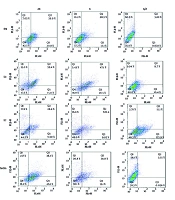
Hosseini M, Kobarfard F, Amidi S, Mokhtari S, Sedaghat A, et al. Design, Synthesis, and Evaluation of Cytotoxic Effects of Functional Fatty Acid Derivatives as Potential Antineoplastic Agents for Breast Cancer. Iran J Pharm Res. 2025;24(1):e159523. doi: https://doi.org/10.5812/ijpr-159523
Khatib H, Rezaei‐Tavirani M, Heidari Keshel S, Zamanian Azodi M, Omidi R, et al. Flow Cytometry Analysis of Rosa Damascena Effects on Gastric Cancer Cell Line (MKN45). Int J Cancer Manag. 2013;6(Supplement):e80457. doi:
Last Update: 3 weeks ago
Last Update: 3 weeks ago
Last Update: 3 weeks ago
Last Update: 9 hours ago
Last Update: 1 day ago
Last Update: 4 days ago