Fulltext
The Full text is available in PDF.
International Journal of Cancer Management
The Official Journal of Cancer Research Center (CRC), Shahid Beheshti University of Medical Sciences
Authors
Background: Determining the optimal and effective scheme for administrating the chemotherapy agents in breast cancer is the main goal of this scientific research. The most important issue here is the amount of drug or radiation administrated in chemotherapy and radiotherapy for increasing patient's survival. This is because in these cases, the therapy not only kills the tumor cells, but also kills some of the healthy tissues and causes serious damages. In this paper we investigate optimal drug scheduling effect for breast cancer model which consist of nonlinear ordinary differential time-delay equations.
Methods: In this paper, a mathematical model of breast cancer tumors is discussed and then optimal control theory is applied to find out the optimal drug adjustment as an input control of system. Finally we use Sensitivity Approach (SA) to solve the optimal control problem.
Results: The goal of this paper is to determine optimal and effective scheme for administering the chemotherapy agent, so that the tumor is eradicated, while the immune systems remains above a suitable level. Simulation results confirm the effectiveness of our proposed procedure.
Conclusion: In this paper a new scheme is proposed to design a therapy protocol for chemotherapy in Breast Cancer. In contrast to traditional pulse drug delivery, a continuous process is offered and optimized, according to the optimal control theory for time-delay systems.
© 2011, Author(s). This open-access article is available under the Creative Commons Attribution 4.0 (CC BY 4.0) International License (https://creativecommons.org/licenses/by/4.0/), which allows for unrestricted use, distribution, and reproduction in any medium, provided that the original work is properly cited.
Yousefi Kashi AS, Montazeri R, Rakhsha A. Clinical Outcome and Prognostic Factors in Iranian Breast Cancer Patients After Neoadjuvant Chemotherapy: A Comparative Matched Study. Int J Cancer Manag. 2018;11(5):e67739. doi: https://doi.org/10.5812/ijcm.67739

Bayat M, Hatami H, Akbari ME. Breast Tumor Response & Axillary Clearance After Neoadjuvant Chemotherapy. Int J Cancer Manag. 2026;19(1):e170019. doi: https://doi.org/10.5812/ijcm-170019
Olfatbakhsh A, Tafazzoli-Harandi H, Najafi S, Hashemi EAS, Sari F, et al. Factors Impacting Pathologic Complete Response after Neoadjuvant Chemotherapy in Breast Cancer: A Single-Center Study. Int J Cancer Manag. 2018;11(5):e60098. doi: https://doi.org/10.5812/ijcm.60098
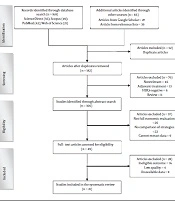
Akbari M, Seyednezhad M, Heidari S, Moradi-joo M. Economic Evaluation of Neoadjuvant Treatment Strategies for HER2 Positive Breast Cancer: A Systematic Review. Int J Cancer Manag. 2023;16(1):e142814. doi: https://doi.org/10.5812/ijcm-142814
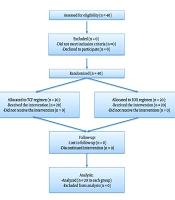
Cheraghi M, Bahadoran E, Masoomi M, Mohammadi N. Pilot Study Comparing Epirubicin, Oxaliplatin, Capecitabine (EOX) and Docetaxel, Cisplatin, and 5-Fluorouracil (TCF) Regimens in Neoadjuvant Chemotherapy for Gastric Cancer Patients. J Inflamm Dis. 2024;28(4):e154396. doi: https://doi.org/10.69107/jid-154396
More by these authors
Last Update: 2 weeks ago
Last Update: 2 weeks ago
Last Update: 2 weeks ago
Last Update: 6 hours ago
Last Update: 9 hours ago
Last Update: 5 days ago