Fulltext
Full text is available in PDF.
International Journal of Cancer Management
The Official Journal of Cancer Research Center (CRC), Shahid Beheshti University of Medical Sciences
Authors
Background: Accurate Diagnosis of Breast Cancer is of prime importance. Fine Needle Aspiration test or "FNA”, which has been used for several years in Europe, is a simple, inexpensive, noninvasive and accurate technique for detecting breast cancer. Expending the suitable features of the Fine Needle Aspiration results is the most important diagnostic problem in early stages of breast cancer. In this study, we introduced a new algorithm that can detect breast cancer based on combining artificial intelligent system and Fine Needle Aspiration (FNA).
Methods: We studied the Features of Wisconsin Data Base Cancer which contained about 569 FNA test samples (212 patient samples (malignant) and 357 healthy samples (benign)). In this research, we combined Artificial Intelligence Approaches, such as Evolutionary Algorithm (EA) with Genetic Algorithm (GA), and also used Exact Classifier Systems (here by Fuzzy C-Means (FCM)) to separate malignant from benign samples. Furthermore, we examined artificial Neural Networks (NN) to identify the model and structure. This research proposed a new algorithm for an accurate diagnosis of breast cancer.
Results: According to Wisconsin Data Base Cancer (WDBC) data base, 62.75% of samples were benign, and 37.25% were malignant. After applying the proposed algorithm, we achieved high detection accuracy of about "96.579%” on 205 patients who were diagnosed as having breast cancer. It was found that the method had 93% sensitivity, 73% specialty, 65% positive predictive value, and 95% negative predictive value, respectively. If done by experts, Fine Needle Aspiration (FNA) can be a reliable replacement for open biopsy in palpable breast masses. Evaluation of FNA samples during aspiration can decrease insufficient samples. FNA can be the first line of diagnosis in women with breast masses, at least in deprived regions, and may increase health standards and clinical supervision of patients.
Conclusion: Such a smart, economical, non-invasive, rapid and accurate system can be introduced as a useful diagnostic system for comprehensive treatment of breast cancer. Another advantage of this method is the possibility of diagnosing breast abnormalities. If done by experts, FNA can be a reliable replacement for open biopsy in palpable breast masses. Evaluation of FNA samples during aspiration can decrease insufficient samples.
© 2012, Author(s). This open-access article is available under the Creative Commons Attribution 4.0 (CC BY 4.0) International License (https://creativecommons.org/licenses/by/4.0/), which allows for unrestricted use, distribution, and reproduction in any medium, provided that the original work is properly cited.
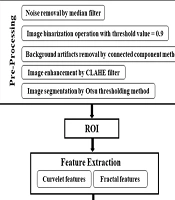
Torabi Jafroudi F, Kiani-Sarkaleh A, Nirouei M. Automatic Classification of Cancerous Masses in Digital Mammograms Using Curvelet Analysis and Hybrid Genetic Algorithm-Artificial Neural Network Model. I J Radiol. 2024;21(2):e146102. doi: https://doi.org/10.5812/iranjradiol-146102
Yazdanpanahi P, Atighi F, Keshtkar A, Hamidi R, Rezaeimanesh M, et al. The Current Progress of Artificial Intelligence in Approach to Thyroid Nodules: A Narrative Review. Shiraz E-Med J. 2024;25(11):e148493. doi: https://doi.org/10.5812/semj-148493
Dehghan MJ, Azizi A. A Hybrid Intelligent Approach to Breast Cancer Diagnosis and Treatment Using Grey Wolf Optimization Algorithm. Jundishapur J Nat Pharm Prod. 2023;18(4):e142058. doi: https://doi.org/10.5812/jjnpp-142058
Gharib MH, Afghani R, Rajaei S, Roshandel G, Alijani A, et al. Clinical Implication of the New AI-TIRADS Classification of Thyroid Nodules; Our Real Clinical Experience. Shiraz E-Med J. 2024;25(11):e147642. doi: https://doi.org/10.5812/semj-147642
Ardakani AA, Gharbali A, Mohammadi A. Application of Texture Analysis Method for Classification of Benign and Malignant Thyroid Nodules in Ultrasound Images. Int J Cancer Manag. 2015;8(2):e80600. doi:
Last Update: 1 week ago
Last Update: 1 week ago
Last Update: 1 week ago
Last Update: 4 hours ago
Last Update: 8 hours ago
Last Update: 5 days ago