
Full Text
Full text is available in PDF
International Journal of Endocrinology and Metabolism
Research Institute for Endocrine Sciences
Authors
Risk indices have been developed to identify postmenopausal women at risk of low bone mineral density who need to undergo BMD test-ing. The aim of study was to compare perform-ance of three decision rules for identifying women with primary osteoporosis in an Iranian post-menopausal population. Materials and Methods: Three osteoporosis risk indices- the osteoporosis self assessment tool (OST), the osteoporosis risk assessment instru-ment (ORAI), and body weight criterion were calculated for 5573 out patients without risk fac-tors for secondary osteoporosis or receiving ac-tive bone medication. BMD at spine and femoral neck were measured via dual x-ray absorpti-omety. The sensitivity, specificity, positive pre-dictive value, negative predicative value and area under receiver operating characteristic curve to identify those with osteoporosis were deter-mined for each decision rule; these were then compared. Results: The sensitivity of these risk indices ranged from 70% to 84/1% and specificity from 44.6 to 65.6%. The area under curve (ROC) in identifying patients with osteoporosis were sig-nificantly better for OST (0.75) and ORAI (0.74) compared with the body weight criteria (0.66). The negative predicative values ranged from 80 to 93%, while positive predication values ranged from 33 to 45%. Conclusion: Our data provide evidence for the application of OST, ORAI as useful clinical tools in making decision about which women need to be referred for BMD testing; more evidence however is needed to confirm validity of the body weight criterion. Of the three tools evalu-ated, the OST is the simplest and has the best potential for use in clinical practice.
© 2007, Author(s). This open-access article is available under the Creative Commons Attribution 4.0 (CC BY 4.0) International License (https://creativecommons.org/licenses/by/4.0/), which allows for unrestricted use, distribution, and reproduction in any medium, provided that the original work is properly cited.
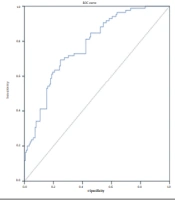
Fazli G, Arab M, Saraeian S, Ghavami B, Nouri B, et al. Diagnostic Value of Clinical Parameters for the Prediction of Osteoporosis in Menopause Iranian Women. Jundishapur J Chronic Dis Care. 2023;12(2):e112758. doi: https://doi.org/10.5812/jjcdc-112758
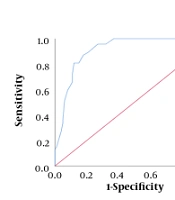
Rajaei A, Mohammadi K, Oroei M, Farsad F. Diagnostic Value of Trabecular Bone Score in Osteoporosis. I J Radiol. 2023;20(2):e131845. doi: https://doi.org/10.5812/iranjradiol-131845
Keshtkar A, Karimi A, Atighi F, Yazdanpanahi P, Naseri A, et al. Artificial Intelligence Applications in Osteoporosis: A Comprehensive Review of Screening, Diagnosis, and Risk Prediction. Shiraz E-Med J. 2025;26(12):e162399. doi: https://doi.org/10.5812/semj-162399
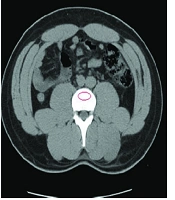
Ganji Jameshouran MA, Abedi AR, Montazeri S, Tasharrofi MA, Mansouri Tehrani MM. CT-Scan as an Opportunistic Osteoporosis Screening Tool in High-Risk Populations; A Diagnostic Study Conducted on a Sample of Urinary Stone Patients. I J Radiol. 2020;17(4):e102177. doi: https://doi.org/10.5812/iranjradiol.102177
Fallahi A, Valiee S, Chan SW. Needs of Women with Osteoporosis in Disease Self-Management: A Qualitative Study. Health Scope. 2019;8(2):e57234. doi: https://doi.org/10.5812/jhealthscope.57234
Last Update: 3 weeks ago
Last Update: 3 weeks ago
Last Update: 3 weeks ago
Last Update: 7 hours ago
Last Update: 10 hours ago
Last Update: 4 days ago
