
1. Background
COVID-19, caused by the novel coronavirus SARS-CoV-2, has posed one of the most severe global public health crises in recent decades (1). Although its classification as a pandemic is well established, its long-term consequences continue to challenge health systems, particularly for individuals who experienced severe illness and hospitalization (2, 3).
Long COVID, a term referring to symptoms that persist beyond the acute phase of infection, affects an estimated 10% to 35% of individuals infected with SARS-CoV-2, with symptoms lasting for months or even years after infection (4, 5). In hospitalized patients, long COVID is often associated with multiorgan damage, including cardiovascular, pulmonary, renal, hepatic, and neurological impairments (6, 7). Cognitive deficits, such as memory loss and brain fog, as well as fatigue, are commonly reported and can substantially reduce functional independence and quality of life (6, 8).
Although long COVID is an important area of investigation, the present study focuses on the long-term spiritual experiences of individuals who survived COVID-19 and required hospitalization, rather than on persistent physical symptoms. Therefore, participants were selected based on recovery from the acute phase of the disease, rather than on the presence of ongoing long COVID symptoms.
Beyond its physical and cognitive effects, COVID-19 has profound psychological consequences (7, 9). Studies have documented increased rates of anxiety, depression, posttraumatic stress disorder, and sleep disturbances, especially among individuals who experienced hospitalization or intensive care (9, 10). These effects often persist long after discharge and contribute to broader challenges, such as disability, unemployment, and reduced social participation (6, 11).
One area that has received growing, but still limited, attention is the spiritual dimension of health (12). Spiritual health is broadly defined as a sense of meaning, purpose, inner peace, and connectedness to oneself, others, nature, or a higher power (13). It is increasingly recognized as a key component of overall well-being, particularly during health crises (14).
Emerging research suggests that COVID-19-related hospitalization can severely disrupt spiritual health, leading to existential distress, feelings of abandonment, and spiritual suffering (15, 16). For instance, patients with post-COVID complications have been found to score significantly lower on standardized measures of spiritual well-being than those with fewer complications (15). Conversely, higher spiritual health has been linked to better coping, resilience, and quality of life among COVID-19 survivors (15, 17). In some populations, spiritual well-being has also been shown to buffer the effects of anxiety and emotional exhaustion during the pandemic (18, 19).
Despite the growing literature on spirituality and COVID-19, important gaps remain. Most studies have used quantitative or cross-sectional designs and have focused primarily on spiritual well-being during acute illness or shortly after recovery. Consequently, little is known about how spiritual experiences evolve over time following hospitalization, how individuals reconstruct meaning after surviving a life-threatening illness, and whether initial spiritual challenges persist, diminish, or become opportunities for personal growth and spiritual development.
Longitudinal qualitative research is particularly well suited to addressing these questions because it enables in-depth exploration of changes, continuities, and transformations in individuals’ lived experiences over time. Furthermore, spiritual health is a complex, multidimensional, and deeply personal phenomenon that cannot be fully understood through quantitative indicators alone. Qualitative inquiry provides a unique opportunity to explore how individuals interpret illness, suffering, recovery, and spirituality within their specific social, cultural, and religious contexts.
In cultural settings where spirituality and religion are deeply intertwined with everyday life, such as Iran, understanding the long-term spiritual consequences of COVID-19 is especially important. Spiritual beliefs frequently influence how individuals interpret illness, cope with adversity, reconstruct meaning, and navigate recovery following traumatic health experiences.
2. Objectives
This longitudinal qualitative study aimed to explore how spiritual health evolves over time among individuals with a history of hospitalization due to COVID-19. Specifically, it sought to understand how survivors interpreted, reconstructed, and transformed their spiritual beliefs, practices, relationships, and sense of meaning during the four years after hospitalization. By examining continuity and change in spiritual experiences over time, the study aimed to deepen understanding of spirituality as a component of long-term recovery and to inform holistic post-COVID care models that address spiritual, psychological, and social well-being alongside physical health.
3. Methods
3.1. Study Design
This study used a longitudinal qualitative design to explore changes in spiritual health experiences over time (20, 21). Data were analyzed using conventional qualitative content analysis, following the approach described by Hsieh and Shannon (22) and informed by the procedures outlined by Graneheim and Lundman (23). A longitudinal qualitative approach was selected because it allows exploration of continuity, change, and transformation in participants’ spiritual experiences over time, which cannot be adequately captured by cross-sectional designs (20, 21).
3.2. Participants and Sampling
The study population consisted of individuals who had been hospitalized because of COVID-19 at three hospitals affiliated with Iran University of Medical Sciences: Firoozgar Hospital, Rasoul Akram Hospital, and Shahid Hasheminejad Hospital, during the pandemic period that began in 2021.
Purposive maximum-variation sampling was used to recruit participants who could provide rich and diverse perspectives on the spiritual consequences of COVID-19 hospitalization. Participants were selected to ensure variation in age, gender, educational level, marital status, occupation, illness severity, and hospitalization experiences. Participants were recruited using hospital records obtained in collaboration with the university research unit. Potential participants were contacted by telephone, informed about the study objectives, and invited to participate if they met the inclusion criteria.
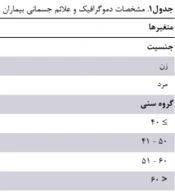
Initially, 120 participants were recruited and interviewed during the first year of the study. Follow-up interviews were subsequently conducted annually, with 105 individuals participating in Year 2, 94 in Year 3, and 86 in Year 4. Attrition occurred due to withdrawal of consent, relocation, health-related limitations, or loss of contact. Detailed demographic characteristics and participant retention across interview waves are presented in Table 1.
Table 1.
Demographic Characteristics of Participants a
| Demographic Variable | Year 1 (n = 120) | Year 2 (n = 105) | Year 3 (n = 94) | Year 4 (n = 86) |
|---|---|---|---|---|
| Gender | ||||
| Male | 68 (56.7) | 60 (57.1) | 53 (56.4) | 49 (57.0) |
| Female | 52 (43.3) | 45 (42.9) | 41 (43.6) | 37 (43.0) |
| Age Group | ||||
| 18 - 30 | 22 (18.3) | 20 (19.0) | 18 (19.1) | 16 (18.6) |
| 31 - 40 | 32 (26.7) | 27 (25.7) | 24 (25.5) | 22 (25.6) |
| 41 - 50 | 38 (31.7) | 34 (32.4) | 30 (31.9) | 28 (32.6) |
| ≥ 51 | 28 (23.3) | 24 (22.9) | 22 (23.4) | 20 (23.3) |
| Educational Level | ||||
| Less than High School | 22 (18.3) | 20 (19.0) | 18 (19.1) | 16 (18.6) |
| High School Graduate | 18 (15.0) | 16 (15.2) | 14 (14.9) | 13 (15.1) |
| Associate Degree | 12 (10.0) | 10 (9.5) | 9 (9.6) | 8 (9.3) |
| Bachelor’s Degree | 35 (29.2) | 30 (28.6) | 27 (28.7) | 24 (27.9) |
| Master’s Degree or Higher | 33 (27.5) | 29 (27.6) | 26 (27.7) | 25 (29.1) |
| Occupation | ||||
| Employed-Office Worker | 50 (41.7) | 44 (41.9) | 39 (41.5) | 35 (40.7) |
| Self-employed/Business | 18 (15.0) | 16 (15.2) | 15 (16.0) | 14 (16.3) |
| Housewife | 20 (16.7) | 18 (17.1) | 16 (17.0) | 15 (17.4) |
| Retired | 12 (10.0) | 10 (9.5) | 9 (9.6) | 8 (9.3) |
| Student | 10 (8.3) | 8 (7.6) | 7 (7.4) | 6 (7.0) |
| Unemployed | 10 (8.3) | 9 (8.6) | 8 (8.5) | 8 (9.3) |
| Place of Residence | ||||
| Urban | 102 (85.0) | 89 (84.8) | 80 (85.1) | 73 (84.9) |
| Rural | 18 (15.0) | 16 (15.2) | 14 (14.9) | 13 (15.1) |
| COVID-19 Severity | ||||
| Mild | 30 (25.0) | 26 (24.8) | 23 (24.5) | 21 (24.4) |
| Moderate | 65 (54.2) | 57 (54.3) | 51 (54.3) | 46 (53.5) |
| Severe | 25 (20.8) | 22 (21.0) | 20 (21.3) | 19 (22.1) |
| Religious Affiliation | ||||
| Shia Muslim | 78 (65.0) | 68 (64.8) | 62 (66.0) | 56 (65.1) |
| Sunni Muslim | 26 (21.7) | 23 (21.9) | 19 (20.2) | 18 (20.9) |
| Other/Non-religious/Unknown | 16 (13.3) | 14 (13.3) | 13 (13.8) | 12 (14.0) |
a Values are expressed as No. (%).
The inclusion criteria were: a) a history of hospitalization due to COVID-19; b) confirmed recovery from the acute phase of the disease; c) age ≥ 18 years; d) the ability to communicate verbally; and e) willingness to participate in repeated interviews over the study period.
Although long COVID is an important clinical condition, individuals with persistent symptoms severe enough to interfere with communication or participation in interviews were not included in the study.
Exclusion criteria included withdrawal of consent, inability to continue participation due to physical or psychological conditions, death during the follow-up period, and inability to communicate effectively.
3.3. Data Collection
Data were collected through semistructured, in-depth interviews conducted between March 2021 and March 2025. Interviews were conducted either face-to-face in private rooms within the participating hospitals or, when necessary, via secure video conferencing platforms.
Before each interview, participants received detailed information about the study objectives, procedures, risks, benefits, confidentiality measures, and their right to withdraw at any time without consequences. Time was allocated to establish rapport and trust so participants would feel comfortable discussing personal and spiritual experiences. Informed consent was documented using standardized written forms or recorded verbally when written consent was not feasible, in accordance with ethics committee-approved procedures.
Each interview lasted approximately 45 - 60 minutes and was audio-recorded with participants’ permission. Field notes were also taken to document contextual observations and nonverbal cues.
The interview guide was developed through a review of the literature on spirituality, health, COVID-19 recovery, and qualitative studies of spiritual experiences. Qualitative research experts and health professionals subsequently reviewed the guide to ensure its relevance and clarity. Open-ended questions encouraged participants to reflect on changes in their beliefs, spiritual practices, relationships, and sense of meaning over time. A sample of the principal interview questions is presented below.
The main interview questions were:
How did your experience of COVID-19 hospitalization affect your spiritual beliefs and practices?
How has your relationship with God changed since your hospitalization?
How has your understanding of the meaning and purpose of life evolved after recovering from COVID-19?
What spiritual challenges did you experience during and after hospitalization?
How have these experiences changed over the years following your recovery?
What role has spirituality played in coping with the consequences of COVID-19?
How do you currently view your spiritual health compared with the period before hospitalization?
Data collection continued until information power and longitudinal saturation were achieved; that is, until no substantially new concepts or patterns emerged across subsequent interviews and interview waves, as described by Malterud et al. (24).
3.4. Data Analysis
Data analysis was conducted concurrently with data collection using conventional qualitative content analysis, as described by Hsieh and Shannon (22). All interviews were audio-recorded, transcribed verbatim immediately after each session, and reviewed repeatedly to achieve immersion in the data and a comprehensive understanding of participants’ experiences. The analytical process was guided by the approach proposed by Graneheim and Lundman (23).
Analysis followed an iterative, inductive process. First, each transcript was read several times to obtain an overall understanding of its content. Meaning units related to participants’ spiritual health experiences following COVID-19 hospitalization were then identified, condensed while preserving their core meanings, and assigned initial codes. Similar codes were compared and grouped into subcategories based on conceptual similarities and differences. These subcategories were abstracted into broader categories, from which overarching themes were developed to capture the latent content and underlying meanings of participants’ narratives.
Given the longitudinal nature of the study, data were analyzed both within and across interview waves. Participants’ narratives from successive annual interviews were compared to identify patterns of continuity, change, adaptation, and transformation in spiritual health over time. This longitudinal analytical approach enabled the researchers to explore how spiritual beliefs, practices, and perceptions evolved throughout the four-year follow-up period.
After each wave of interviews had been analyzed, longitudinal matrices were developed for each participant. Narratives from the four annual interviews were compared to identify continuity, change, emergence, stabilization, or decline in spiritual experiences over time.
To enhance analytical rigor, at least two research team members independently reviewed the transcripts, coding structure, categories, and themes. Differences in interpretation were discussed and resolved by consensus to ensure that the findings accurately reflected participants’ experiences.
3.5. Trustworthiness
The trustworthiness of the study was established according to Lincoln and Guba’s criteria (23).
Credibility was enhanced through prolonged engagement with participants over four years, member checking, and regular discussions among the research team.
Transferability was strengthened through detailed descriptions of the participants, study context, and research procedures.
Dependability was ensured by maintaining a comprehensive audit trail documenting methodological decisions, coding procedures, and analytical developments throughout the study.
Confirmability was supported through peer debriefing, independent coding by multiple researchers, and reflexive memo writing to minimize the influence of researchers’ assumptions on data interpretation.
3.6. Researcher Reflexivity
The interviews were conducted by researchers with prior training and experience in qualitative interviewing. Reflexive notes were maintained throughout the study to document assumptions, methodological decisions, and potential sources of bias. Regular research team meetings enabled critical reflection on interpretations and helped ensure that the findings remained grounded in participants’ narratives.
3.7. Ethical Considerations
Ethical approval was obtained from the Ethics Committee of Iran University of Medical Sciences (approval No. IR.IUMS.REC.1403.1131).
Participants were assured that participation was voluntary and that they could withdraw from the study at any stage without consequences. To protect privacy and confidentiality, all identifying information was removed from transcripts, unique codes were assigned to participants, and electronic files were stored on password-protected devices accessible only to the research team.
4. Results
4.1. Participant Characteristics
This longitudinal qualitative study followed individuals with a history of hospitalization due to COVID-19 over four consecutive years, from Year 1 (n = 120) to Year 4 (n = 86). Among the 120 participants included at baseline, retention decreased over the four-year follow-up period, with 86 participants completing the final interview. Attrition occurred because of loss of contact, withdrawal from participation, or inability to continue follow-up. Comparison of available baseline characteristics suggested no major differences between participants who completed follow-up and those who discontinued participation.
The gender distribution remained relatively stable across all years, with approximately 57% male and 43% female participants. Participants aged 31 to 50 years represented more than half of the sample.
Educational attainment varied slightly over the years, with approximately 27% to 29% of participants holding a master’s degree or higher and 18% to 19% having less than a high school diploma. Office workers constituted the largest occupational group, at approximately 40%, followed by self-employed individuals or business owners, homemakers, retirees, students, and unemployed individuals.
Most participants lived in urban areas, consistently accounting for approximately 85% of the sample throughout the study. COVID-19 severity was predominantly moderate, at approximately 54%, while mild and severe cases accounted for roughly 25% and 20%, respectively.
Participants had diverse religious affiliations. Most were Shia Muslims, at approximately 65%, while others were Sunni Muslims, belonged to other religions, were nonreligious, or had unspecified religious affiliations. This religious diversity was considered in the analysis of their spiritual experiences.
Following recovery, all participants took part in in-depth interviews. The findings revealed profound and lasting effects of COVID-19 hospitalization on participants’ spiritual health, including changes in their relationship with God, a reevaluation of personal values, and a renewed search for meaning in life. Table 1 presents participants’ demographic characteristics across the four years, including gender, age, education, occupation, residence, and illness severity, providing context for interpreting the findings.
4.2. Longitudinal Patterns of Spiritual Experiences
Longitudinal analysis of repeated interviews demonstrated that participants’ spiritual experiences were not static but evolved over time. The narratives indicated a dynamic process that began with spiritual disruption and uncertainty during and shortly after hospitalization, followed by reflection, adaptation, reconstruction of meaning, and, in some cases, perceived spiritual growth. The identified themes represented interconnected trajectories rather than a fixed sequential process, as participants experienced these changes differently according to their personal, social, and spiritual contexts.
To further illustrate the evolution of participants’ spiritual experiences, narratives were compared across the four annual follow-up interviews. This temporal comparison identified dominant patterns in spiritual trajectories and highlighted how uncertainty, meaning reconstruction, coping, and integration emerged and changed over time. Table 2 summarizes the dominant longitudinal patterns observed during each follow-up year. These patterns represent the most prominent tendencies in participants’ narratives and should not be interpreted as a fixed developmental sequence because individual experiences varied according to personal beliefs, social context, illness experiences, and recovery processes.
Table 2.
Longitudinal Trajectory of Dominant Spiritual Experiences Across Four Years After COVID-19 Hospitalization a
| Follow-up Period | Dominant Longitudinal Pattern | Description of Participants’ Experiences |
|---|---|---|
| Year 1 (initial follow-up after hospitalization) | Spiritual disruption, uncertainty, and existential questioning | Participants commonly described fear, vulnerability, spiritual struggles, questioning of previous beliefs, and attempts to understand the meaning of their illness experience. |
| Year 2 | Meaning reconstruction and reflection | Narratives increasingly focused on reevaluating life priorities, reflecting on mortality, and searching for new meanings after surviving a serious illness. |
| Year 3 | Spiritual coping, adaptation, and relational reconnection | Participants described the development of coping strategies through spiritual practices, strengthened relationships, and renewed connections with family, community, and personal beliefs. |
| Year 4 | Spiritual integration and perceived transformation | Some participants described integrating the illness experience into their life narratives, with increased appreciation of life, renewed values, and perceived spiritual growth. |
a These patterns represent dominant trajectories identified across longitudinal interviews; individual participants experienced variations and did not necessarily follow an identical sequence of change.
4.3. Themes and Subconcepts
Five overarching themes were identified through longitudinal analysis: 1) spiritual disruption and questioning after hospitalization; 2) reconstruction of meaning and existential reflection; 3) spiritual coping and adaptation during recovery; 4) transformation of spiritual relationships and connectedness; and 5) long-term spiritual integration and perceived growth.
4.3.1. Spiritual Disruption and Questioning After Hospitalization
During the first interview wave following hospitalization, many participants described experiences of uncertainty, fear, vulnerability, and spiritual questioning. Illness severity, isolation during hospitalization, and confrontation with mortality contributed to changes in participants’ perceptions of faith and spirituality.
Several participants described a period of spiritual struggle during which they reconsidered previously held beliefs:
"In the ICU, I felt abandoned by God. I asked myself why I was experiencing this suffering, and I questioned everything I believed before."
(Male, 60 years, hospitalized for 15 days)
Others described this period as a disruption of previous spiritual assumptions rather than a complete loss of faith:
"COVID made me question many things, but it also made me look at my beliefs differently and search for deeper meaning."
(Male, 52 years, hospitalized for 14 days)
Across subsequent interviews, some participants reported that these early struggles became a starting point for reflection and reevaluation rather than persisting as spiritual distress.
4.3.2. Reconstruction of Meaning and Existential Reflection
Throughout the four-year follow-up period, participants frequently described the illness experience as an opportunity to reconsider personal values, priorities, and life purpose. They reported increased awareness of mortality and deeper reflection on the meaning of life after surviving a serious illness.
One participant explained:
"After surviving COVID, I realized that life is fragile. I started asking myself what is truly important and how I want to spend my remaining years."
(Female, 54 years, hospitalized for 13 days)
Over time, the narratives shifted from focusing primarily on suffering and uncertainty toward meaning reconstruction, acceptance, and reevaluation of personal goals.
4.3.3. Spiritual Coping and Adaptation During Recovery
Participants described spirituality as one of several resources used to cope with emotional challenges during recovery. Prayer, religious practices, meditation, reflection, and engagement with spiritual beliefs were commonly described as sources of comfort and emotional support.
A participant stated:
"Prayer became something that helped me continue when my body was weak. It gave me a sense of strength and hope during recovery."
(Female, 33 years, hospitalized for 7 days)
Another participant explained:
"Meditation helped me calm my thoughts. It allowed me to feel more balanced after the fear and uncertainty of the illness."
(Male, 47 years, hospitalized for 11 days)
Participants generally described these practices as personally meaningful coping strategies rather than as direct solutions to psychological difficulties.
4.3.4. Transformation of Spiritual Relationships and Connectedness
The experience of hospitalization influenced participants’ relationships with themselves, others, and their spiritual communities. Although isolation during illness was associated with loneliness, many participants described a renewed appreciation for family support, social connections, and spiritual belonging.
One participant reported:
"During isolation, I felt very alone, but knowing that my family and others were praying for me made me feel connected."
(Female, 50 years, hospitalized for 20 days)
During later follow-up interviews, some participants described stronger feelings of compassion, connection, and responsibility toward others:
"My experience changed the way I see other people’s suffering. I became more sensitive to those who are going through difficult situations."
(Male, 56 years, hospitalized for 10 days)
4.3.5. Long-Term Spiritual Integration and Perceived Growth
By the later follow-up interviews, some participants described a process of integrating the illness experience into their broader life narratives. These accounts included renewed spiritual values, increased appreciation of life, and perceived personal development.
A participant reflected:
"This experience changed my perspective. I feel that I have become more aware of what matters and more connected to my spiritual values."
(Female, 41 years, hospitalized for 9 days)
However, participants’ experiences varied, and not all individuals described positive transformation. For some, spiritual questioning and uncertainty remained part of their long-term adjustment process.
Table 3 presents the themes and subconcepts related to spiritual health derived from interviews with individuals with a history of hospitalization due to COVID-19.
Table 3.
Longitudinal Themes and Subconcepts Related to Spiritual Experiences After COVID-19 Hospitalization
| Main themes | Subconcepts |
|---|---|
| Spiritual disruption and questioning | Crisis of faith; Spiritual struggle; Spiritual uncertainty; Spiritual disillusionment; Survivor’s guilt; Moral injury |
| Reconstruction of meaning and existential reflection | Search for meaning; Reevaluation of life purpose; Mortality awareness; Existential reflection |
| Spiritual coping and adaptation | Prayer and spiritual practices; Spiritual resilience; Emotional comfort; Spiritual reflection during recovery |
| Transformation of relationships and connectedness | Family and community connection; Spiritual belonging; Compassion; Support networks; Transpersonal connection |
| Long-term spiritual integration and perceived growth | Spiritual awakening; Renewed values; Personal transformation; Perceived spiritual growth |
Across the four-year follow-up, participants’ narratives showed shifts in emphasis rather than a complete replacement of experiences. Early interviews more frequently reflected uncertainty, fear, and spiritual questioning, whereas later interviews increasingly reflected meaning reconstruction, adaptation, and integration of the illness experience. However, spiritual struggle persisted for some participants throughout follow-up.
Although many participants described adaptation and perceived growth, others reported persistent uncertainty, unresolved spiritual questions, or limited changes in their spiritual perspectives throughout follow-up. Overall, participants’ narratives reflected diverse and evolving spiritual responses following COVID-19 hospitalization, ranging from struggle and uncertainty to adaptation and perceived transformation.
4.4. Conceptual Map: Longitudinal Trajectory of Spiritual Experiences Following COVID-19 Hospitalization
The conceptual map illustrates the longitudinal trajectory of spiritual experiences described by participants following hospitalization due to COVID-19. The findings suggest that spiritual experiences were not linear or universal; rather, they represented an evolving and individualized process influenced by personal beliefs, social relationships, illness severity, and recovery experiences.
The process commonly began with spiritual disruption and uncertainty during and shortly after hospitalization. Confrontation with severe illness, isolation, and awareness of mortality prompted many participants to question previous beliefs, experience spiritual struggles, and reconsider their understanding of suffering and vulnerability.
Over time, participants described a process of meaning reconstruction and existential reflection. This involved reevaluating life priorities, reflecting on mortality, and searching for new interpretations of the illness experience. For some individuals, this reflection represented an important shift in how they viewed themselves, their relationships, and their purpose in life.
Alongside these reflections, participants reported developing spiritual coping and adaptation strategies. Practices such as prayer, meditation, spiritual reflection, and engagement with religious beliefs were described as personally meaningful resources that supported emotional adjustment and provided comfort during recovery.
The illness experience also influenced spiritual relationships and connectedness. Participants described changes in their connections with family, communities, and spiritual networks. Although hospitalization and isolation were associated with loneliness, social and spiritual support were perceived as important sources of connection and belonging.
Across the four-year follow-up period, some participants described long-term spiritual integration and perceived growth. These narratives included renewed appreciation of life, strengthened personal values, increased compassion, and a deeper sense of meaning. However, this pattern was not experienced by all participants, and some continued to report uncertainty or unresolved spiritual questions.
Overall, the conceptual model represents a dynamic and nonlinear process of spiritual adaptation following a major health crisis. The arrows between concepts indicate interaction and movement among themes rather than a fixed sequence of stages. The model highlights how hospitalization due to COVID-19 was experienced as a significant life event associated with changes in spiritual beliefs, meaning-making processes, coping approaches, relationships, and personal interpretations of recovery.
Figure 1 illustrates the conceptual model of spiritual experiences, in which hospitalization serves as an initial shock that triggers a cycle of spiritual challenges and reconstruction. The bidirectional arrows represent the iterative and nonlinear movement between crisis, meaning-making, and adaptation over time.
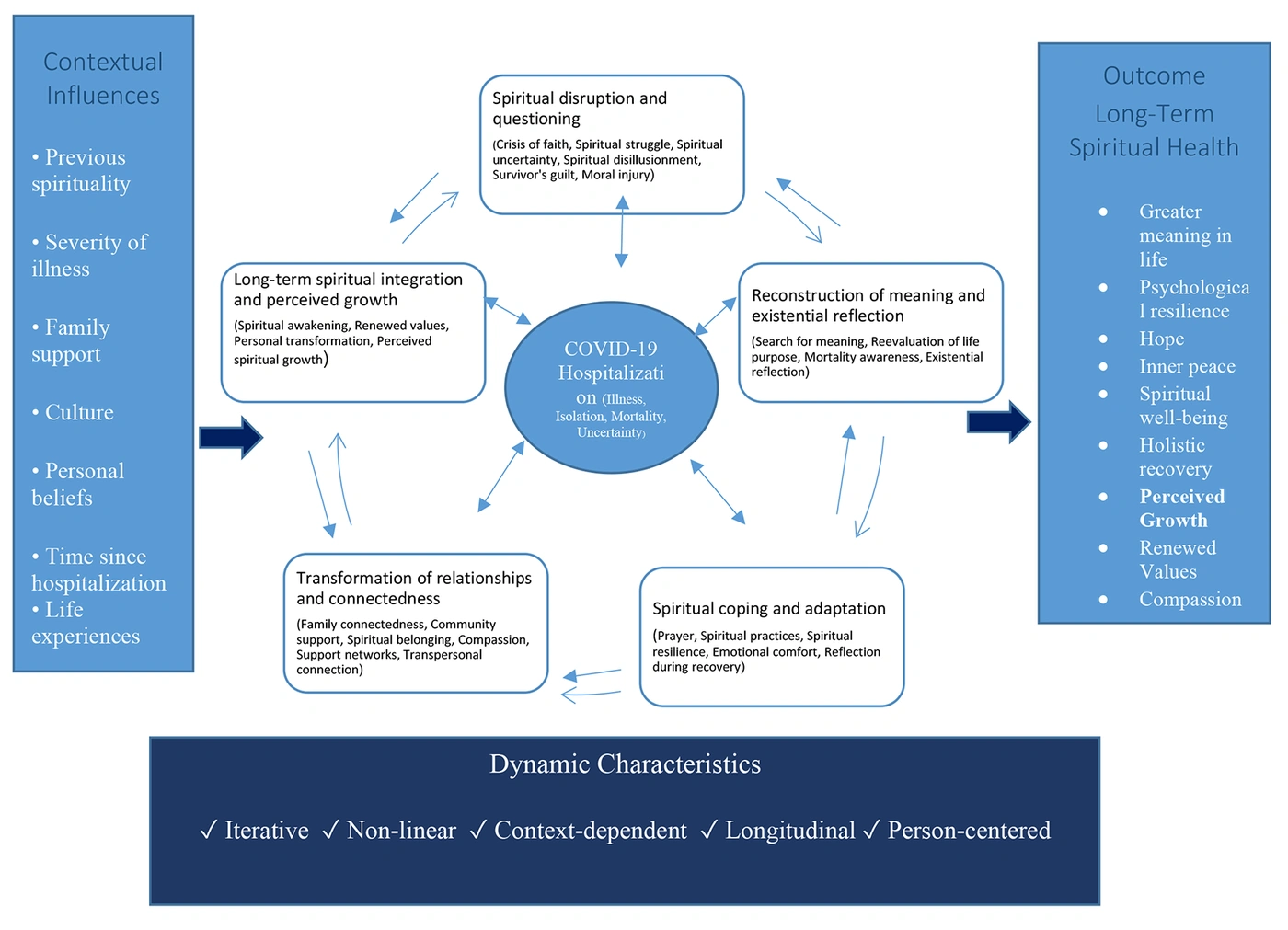
Figure 1.
A Longitudinal Conceptual Model of Spiritual Transformation Following COVID-19 Hospitalization
5. Discussion
This longitudinal qualitative study, conducted through in-depth interviews over four consecutive years, provides a detailed understanding of how individuals with a history of hospitalization due to COVID-19 described changes in spiritual health over time. Extended follow-up allowed us to explore the dynamic, fluid, and individualized nature of spiritual experiences during recovery, including changes in beliefs, coping strategies, meaning-making processes, and interpersonal connections.
Participants described hospitalization due to COVID-19 as a major life event associated with profound reflection and changes in spiritual perspectives. Many reported shifts in their faith and spiritual beliefs, including deeper engagement with spiritual practices, renewed attention to religious beliefs, or reconsideration of previously held worldviews. However, these experiences did not represent a universal or linear pathway; rather, participants described diverse spiritual trajectories shaped by personal, social, and contextual factors.
Over time, some participants described spiritual uncertainty, questioning, and inner struggle related to suffering, mortality, and the meaning of illness. These experiences may be understood as processes of spiritual reflection and meaning reconstruction rather than necessarily as a required stage of spiritual growth (25). These findings are consistent with previous qualitative research indicating that serious illness may challenge individuals’ assumptions about life, identity, and spirituality (26-28).
The findings can be interpreted in relation to the concept of posttraumatic growth, which refers to perceived positive psychological changes following highly challenging experiences. In this study, some participants described experiences consistent with perceived spiritual growth, including renewed purpose, strengthened values, and greater appreciation of life. Nevertheless, given the qualitative design, these findings should be interpreted as participants’ subjective experiences and cannot establish that COVID-19 hospitalization directly caused spiritual transformation.
The longitudinal approach demonstrated that participants’ spiritual experiences evolved over time. Early narratives were frequently characterized by uncertainty, fear, and spiritual questioning, whereas later interviews often reflected adaptation, meaning reconstruction, and integration of the illness experience. At the same time, these patterns varied between individuals, and some participants continued to report unresolved spiritual concerns during follow-up.
Participants described prayer, meditation, spiritual reflection, and religious practices as meaningful resources during recovery. Previous studies have similarly highlighted the role of spirituality in coping with COVID-19-related challenges and psychological distress (27, 29). Our findings extend this literature by showing that spiritual coping was described as an evolving process throughout long-term recovery, rather than solely as an immediate response during hospitalization.
Across the four years of follow-up, participants frequently reflected on life purpose, personal priorities, and relationships. This finding is consistent with previous studies emphasizing the role of meaning-making in adaptation to severe illness and health crises (15, 16, 30). The present study adds a longitudinal perspective by illustrating how these reflections continued to develop after the acute phase of illness.
The importance of community and spiritual relationships was also evident in participants’ narratives. Previous research has identified isolation, loneliness, and disrupted social connections as important challenges during the COVID-19 experience (15, 31). Our findings suggest that participants perceived family support, spiritual communities, and interpersonal relationships as important sources of connection, belonging, and emotional support (15, 32).
The interaction between psychological and spiritual experiences was another important finding. Previous studies have reported associations between spiritual well-being and psychological outcomes, including anxiety, depression, and stress, among individuals affected by COVID-19 (18, 33). Consistent with these findings, participants in our study described spirituality as intertwined with emotional adjustment, grief processing, hope, and inner peace. However, these narratives should not be interpreted as evidence of a direct protective or therapeutic effect of spirituality.
5.1. Changes in Faith and Spiritual Beliefs
Although previous studies have recognized the broad spiritual consequences of COVID-19, longitudinal exploration of sustained changes in faith and spiritual beliefs among hospitalized survivors remains limited. Existing evidence suggests that individuals may experience changes in spiritual frameworks, including renewed religious engagement or reconsideration of beliefs as coping responses (25). Such changes have also been associated with psychological outcomes among patients and healthcare workers (18). However, previous literature has often examined spirituality as a global construct rather than exploring specific transformations in belief systems (27, 28). Our findings describe how faith-related experiences may evolve over an extended recovery period.
5.2. Spiritual Crisis and Inner Reflection
Consistent with previous phenomenological studies (26, 27), participants described spiritual struggles involving uncertainty, existential questioning, and reflection on suffering. Previous research has reported that individuals recovering from severe illness may experience changes in their understanding of mortality, purpose, and personal values (34, 35). In our study, spiritual crises were not uniformly experienced as negative outcomes; for some participants, they provided opportunities for reflection and reinterpretation of life experiences. Previous studies have also highlighted the relationship between spiritual well-being and coping during serious illness (36, 37).
5.3. Spiritual Coping and Adaptation
Our findings align with qualitative evidence demonstrating that spirituality may function as a meaningful coping resource after COVID-19 (27, 29). Participants described spiritual practices as sources of comfort, hope, and emotional support (26, 38). Previous studies have similarly reported relationships between spiritual well-being, coping, and quality of life among individuals affected by COVID-19-related complications (15, 39, 40). However, these findings represent perceived experiences rather than evidence of intervention effectiveness.
5.4. Search for Meaning and Purpose
The search for meaning and purpose emerged as a central aspect of participants’ long-term narratives. This finding is consistent with previous research indicating that meaning-based coping may support adaptation during health crises (15, 16, 30). Studies have suggested that existential reflection may help individuals reinterpret suffering and reconsider their life priorities (41, 42). The present study highlights this process as an important longitudinal dimension of spiritual adjustment after hospitalization.
5.5. Community and Spiritual Relationships
Although previous studies have reported spiritual distress associated with isolation during COVID-19 (15, 31), fewer have examined community and spiritual relationships as a distinct dimension of long-term recovery. Our findings indicate that social and spiritual connections were described as important elements of participants’ recovery experiences (15, 32). Further research is needed to explore how relational and communal factors influence spiritual trajectories after major illness (43, 44).
5.6. Psychological-Spiritual Interaction
Previous literature has consistently demonstrated associations between spiritual health and psychological outcomes among individuals affected by COVID-19 (15, 45, 46). Spirituality has been linked to meaning-making, coping, and adaptation during periods of uncertainty and grief (27, 47). Our findings support a complex interaction between psychological and spiritual experiences while emphasizing that participants’ interpretations varied considerably.
5.7. Long-Term Spiritual Integration and Perceived Growth
Previous research has predominantly focused on spiritual distress and decline among individuals experiencing COVID-19 complications (15, 16, 30). However, our findings suggest that some participants described a process of long-term spiritual integration characterized by renewed meaning, compassion, gratitude, and strengthened personal values. Similar observations have been reported in previous studies examining positive psychological and spiritual responses following major health challenges (15, 48, 49). This theme should be considered one possible trajectory rather than an expected outcome for all survivors.
5.8. Implications and Future Research
In summary, this study describes a multidimensional and nonlinear process of spiritual experience following COVID-19 hospitalization, including changes in beliefs, spiritual uncertainty, meaning reconstruction, coping, relational connectedness, and perceived growth. These findings expand on previous literature by illustrating how spiritual experiences may develop longitudinally rather than remain limited to the acute phase of illness.
The findings suggest that spiritual health is an important aspect of holistic recovery. Healthcare professionals may consider spiritual needs as part of comprehensive supportive care; however, approaches should remain individualized and culturally sensitive rather than assume similar spiritual responses among all patients.
Future research should further investigate spiritual trajectories across diverse cultural settings, levels of illness severity, and populations with varying degrees of spiritual engagement. Comparative longitudinal studies and evaluations of supportive interventions may help clarify how spiritual care can best complement psychological and physical recovery after major health crises.
5.9. Limitations of the Study and Mitigation Strategies
Although this longitudinal qualitative study provides in-depth insights into changes in spiritual health among individuals hospitalized with COVID-19, several limitations should be acknowledged.
First, the study was conducted within the specific cultural and religious context of the Iranian population, limiting the generalizability of the findings to broader, more diverse populations. Spiritual beliefs and practices are strongly influenced by cultural and religious backgrounds; therefore, these experiences may not fully represent those of patients from other cultures or faith traditions. Although we sought to include participants from varied religious and sociodemographic backgrounds within Iran to capture a range of spiritual experiences, cross-cultural generalizability remains limited.
Second, the use of targeted purposive sampling that focused only on hospitalized COVID-19 patients who were highly motivated to discuss religion restricts the applicability of the findings to individuals with milder cases of COVID-19, those who were not hospitalized, or those less motivated to discuss spirituality. This sample selection inherently limits the breadth of experiences and may bias the results toward a cohort of patients with more severe illness and specific spiritual engagement.
Third, although the study followed participants over four years, spiritual effects beyond this period remain unexplored. Spiritual transformation is an ongoing process, and further follow-up could provide additional insights into sustained or emerging changes after recovery.
Fourth, reliance on self-reported narratives introduces potential biases related to recall, social desirability, and personal interpretation. To mitigate these biases, multiple interview rounds and open-ended questions were used to encourage authentic, reflective responses and enhance trustworthiness.
Lastly, the absence of a nonhospitalized control group limits the ability to attribute spiritual changes specifically to hospitalization rather than to the broader societal effects of the pandemic. Comparative analyses with individuals who experienced less severe illness could enrich future research.
Although these limitations warrant cautious interpretation and restraint in generalizing the findings, the concept of posttraumatic psychological growth may partly explain the spiritual transformations observed in this highly motivated cohort. The methodological rigor and longitudinal approach strengthen the credibility and depth of the findings. Future research should expand cross-cultural perspectives, incorporate control groups, and extend longitudinal follow-up to further clarify the complex interplay between illness and spirituality.
5.10. Conclusions
The findings of this longitudinal qualitative study demonstrate that individuals who experienced hospitalization due to COVID-19 described diverse and evolving changes in their spiritual health over a four-year period. Participants’ narratives reflected a complex range of experiences, including changes in spiritual beliefs, periods of uncertainty and spiritual struggle, meaning reconstruction, coping processes, and evolving relationships with themselves, others, and spiritual communities. Rather than representing a fixed sequence of transformation, these experiences reflected individualized and nonlinear trajectories shaped by personal, social, and contextual factors.
The study highlights the close relationship between spiritual and psychological experiences during recovery. Participants described spiritual practices, such as prayer, meditation, and reflection, as meaningful sources of comfort, support, and adaptation during recovery. These findings are consistent with previous research emphasizing the relevance of spirituality in coping with major health challenges; however, the qualitative nature of this study does not allow conclusions about the causal effects of spirituality on psychological outcomes.
The longitudinal design provided insight into how spiritual experiences may continue to evolve beyond the acute phase of illness. Some participants described processes of spiritual integration and perceived growth, including renewed meaning, strengthened values, and greater appreciation of life, whereas others continued to experience uncertainty or unresolved spiritual concerns. This diversity emphasizes the importance of recognizing spirituality as a dynamic and personally interpreted dimension of recovery.
In conclusion, this study contributes to understanding the long-term spiritual experiences of individuals following COVID-19 hospitalization by illustrating spirituality as a multidimensional and evolving aspect of recovery. The findings suggest that attention to spiritual needs, when appropriate and culturally sensitive, may represent an important component of holistic supportive care. Future longitudinal research should further examine spiritual trajectories across diverse populations, cultural contexts, and illness severities and explore approaches for integrating spiritual support alongside psychological and physical recovery.