Full Text
Full text is available in PDF
An Innovative Journal in the Field of Radiology
Authors
Background: For determining the cervical column curvature, the curve fitting method is the most precise method, but using this method in clinic seems to be difficult if not possible. In this study, we used a modification of cervical column inclination angle that has been already mentioned
Objectives: The aim of this study was to evaluate the posture and curvature of the cervical column introducing a modified constructed angle in order to evaluate the cervical column curvature in a relax position in relation to the jaws sagittal position.
Patients and Methods: The lateral cephalometries of patients with no anomaly were taken in the natural head position. The mean age of the patients was 13.49 years including 56 female and 44 male. Steiner and Wits analysis was used to evaluate the sagittal position of the jaws. Modified constructed CVT/HOR and OPT/HOR angles were used to evaluate the cervical column posture and curvature. Patients were classified into three groups according to the angle’s classification.
Results: The results showed a significant positive correlation between modified constructed angles and sagittal jaw relationships (P < 0.05). Besides, in class II patients, there was a significant correlation between OPT/HOR and parameters ANB and Wits (P < 0.05 and P < 0.01, respectively). Age could not affect the curvature and posture of the cervical column.
Conclusions: According to the result of this study using modified constructed angles may be a simple method for evaluation of the relation between cervical column curvature and sagittal position of the jaws. There is significant correlation between cervical column posture angles and parameters ANB and Wits in Cl. II patients.
Copyyright © 2011, Tehran University of Medical Sciences and Iranian
Society of Radiology. Published by Kowsar M.P.Co. All rights reserved.
© 2011, Author(s). This open-access article is available under the Creative Commons Attribution 4.0 (CC BY 4.0) International License (https://creativecommons.org/licenses/by/4.0/), which allows for unrestricted use, distribution, and reproduction in any medium, provided that the original work is properly cited.
Tofangchiha M, Bardal R, Hosseini M, Najafi K. Effect of mandibular plane changes on angular measurements in Cone Beam Computed Tomography. J Inflamm Dis. 2024;19(6):e155942. doi:
Toode Zaeim M, Yassaei S, Aghili H, Tefakh S. Comparison of some cephalometric indices in skeletal class III with skeletal class I patients. J Inflamm Dis. 2024;15(3):e155623. doi:
Bokaee F, Ghasemi E, Etemadi F, Naimi SS. Correlation Between Craniovertebral Angle and Thickness of Longus Colli in Women with and Without Forward Head Posture. Middle East J Rehabil Health Stud. 2021;8(3):e112112. doi: https://doi.org/10.5812/mejrh.112112
Ghafari Nejad F, Taghizadeh S. The effect of B.M.I on lumbar lordosis in 9 to 12 year old school- girls of Shiraz. J Inflamm Dis. 2024;4(2):e154706. doi:
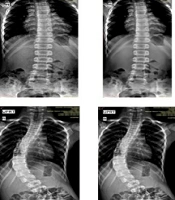
Moftian N, Samad Soltani T, Salahzadeh Z, Hossein Pourfeizi H, Gheibi Y, et al. Computer-aided Measurement System Using Image Processing for Measuring Cobb Angle in Scoliosis. Middle East J Rehabil Health Stud. 2022;9(1):e111360. doi: https://doi.org/10.5812/mejrh.111360
Last Update: 2 weeks ago
Last Update: 2 weeks ago
Last Update: 2 weeks ago
Last Update: 10 hours ago
Last Update: 10 hours ago
Last Update: 4 days ago