Full Text
Full text is available in PDF
An Innovative Journal in the Field of Radiology
Authors
Interventional treatment of ruptured intracranial aneurysms in patients with subarachnoid hemorrhage is a standard therapy based on evidence from randomized trials. Simple coiling is still used for most of the cases. Modern coil technology provides a wide variety of complex shaped coils for faster procedures and reliable dense packing. The assistance of stents and balloons widens the indication towards wide-neck-aneurysms. A major drawback of coiling and reason for recent debates about clipping vs. coiling is the lack of long term stability due to recanalization. Especially size above 10 mm and aneurysm location with direct inflow-jet at a bifurcation may favour reperfusion and the necessity for repeated controls for a long time. However, most of the adequately coiled aneurysms remain stable and rebleeding is confined to very few single cases. Flow-divertes placed in the parent vessel across the aneurysms neck or as nitinol basket within the aneurysm sac provide new treatment options for large, wide neck and fusiform aneurysms. Successful treatment demands careful patient selection and adequate sizing of the devices to induce reliable thrombosis within the aneurysms and healing of the vessel wall defect by coverage of the neck by endothelium and connective tissue. Prophylactic treatment of unruptured aneurysms should be associated with low complication rates, good angiographic results and long term stability. Interdisciplinary decision making and counseling, treatment and follow-up of patients in a neurovascular center are new challenges for interventional neuroradiologists.
© 2017, Author(s). This open-access article is available under the Creative Commons Attribution 4.0 (CC BY 4.0) International License (https://creativecommons.org/licenses/by/4.0/), which allows for unrestricted use, distribution, and reproduction in any medium, provided that the original work is properly cited.
Ghanaati H, Firouznia K, Salamati P, Ebrahimi Nik H, Miri M. Coil Embolization of Intracranial Aneurysms. I J Radiol. 2014;11(30th Iranian Congress of Radiology):e21429. doi: https://doi.org/10.5812/iranjradiol.21429
Miri M, Ghanaati H, Salamati P, Ebrahimi Nik H, Jalali AH, et al. Coil Embolization of Intracranial Aneurysms: A Six-Month Follow-Up Study. I J Radiol. 2015;12(3):e10986. doi: https://doi.org/10.5812/iranjradiol.10986v2
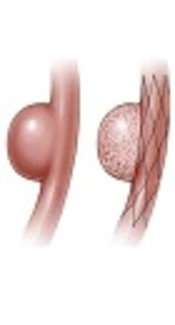
Firouznia K, Hosseiny M, Kooraki S, Samani A, Soltani M, et al. Mid-Term Outcome Following Pipeline Embolization of Unruptured Intracranial Aneurysms. I J Radiol. 2018;15(1):e59703. doi: https://doi.org/10.5812/iranjradiol.59703
Panigrahi MK, Mani MK. An Institutional Experience with Microsurgical Clipping of 170 Consecutive Cases of Intracranial Aneurysms: A Retrospective Data Analysis of Personal Cases. Arch Neurosci. 2016;3(3):e33248. doi: https://doi.org/10.5812/archneurosci.33248
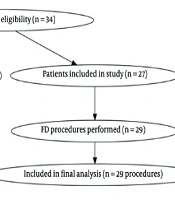
Ghanaati H, Rouzbahani M, Mohaghegh P, Soltani S, Shakiba M, et al. Complications of Flow Diverter Treatment for Intracranial Aneurysms: A Retrospective Single-Center Descriptive Study. I J Radiol. 2025;22(2):e162004. doi: https://doi.org/10.5812/iranjradiol-162004
Last Update: 1 week ago
Last Update: 1 week ago
Last Update: 1 week ago
Last Update: 6 days ago
Last Update: 2 days ago
Last Update: 3 days ago