Full Text
Full text is available in PDF
An Innovative Journal in the Field of Radiology
Authors
Low dose radiation will induce adaptation and following exposure to an adaptive dose, the cells are more resistance to following challenging doses. This phenomenon is known as radio-adaptive response. The aim of this study was to investigate the percentage of apoptotic cells in the peripheral blood samples of the patients which undergo myocardial perfusion imaging with Tc-99m prior to thallium scan to assess the induction of radio-adaptive response.
97 samples from 74 patients, referred to nuclear medicine center of Mazandaran heart hospital for myocardial perfusion imaging which had no history of diagnostic, therapeutic, occupational and radioactive exposures during past two years, were provided. The participants were classified into four groups including control, technetium, thallium and the last group were the patients that examined by technetium followed by thallium. Then 2 mL Peripheral blood samples were obtained, the samples were studied by neutral comet assay with one-way ANOVA.
The mean percent of apoptotic cells in the groups 2, 3, 4 were more than the controls and the mean percent of apoptotic cells in the patients who examined with 201Tl were more than other groups but the mean percent of apoptotic cells in the group 4 (99mTc before 201Tl) was less than that group 3(just examinated by 201Tl) and this difference was significant statistically.
These findings suggest that exposure to Tc-99m could induce a radio-adaptive response against the exposure of Tl-201.
© 2017, Author(s). This open-access article is available under the Creative Commons Attribution 4.0 (CC BY 4.0) International License (https://creativecommons.org/licenses/by/4.0/), which allows for unrestricted use, distribution, and reproduction in any medium, provided that the original work is properly cited.
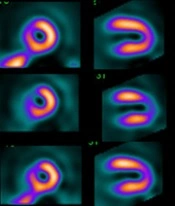
Ota M, Hyodo F, Matsuo S, Kato T, Kawai N, et al. Investigation of the Clinical Efficacy of 99mTc-Sestamibi Washout in Patients with Acute Myocardial Infarction and Comparison with Stress Myocardial Imaging with 99mTc-Sestamibi Using a Two-Day Protocol. I J Radiol. 2022;19(2):e122423. doi: https://doi.org/10.5812/iranjradiol-122423
Hooman A, Mogharrabi M, Solooki M, Mosaffa N, Tabeie F, et al. Radioiodine Therapy Induced Cytotoxicity in Patients with Differentiated Thyroid Carcinoma. Int J Endocrinol Metab. 2008;6(3):. doi:
Keihanian S, Ghaffari F, Fotokian Z, Asri S, THedayati M, et al. The efficacy of biomarkers indexes in comparison with Echocardiography in assessment of antracycline induced cardiotoxicity in cancer patients. J Inflamm Dis. 2024;13(4):e155497. doi:
Mirzaee F, Attar A, Mohammadianpanah M, Abtahi F, Amirmoezi F, et al. Speckle Tracking Echocardiography for Detection of Early Myocardial Changes in Patients Treated with Anthracyclines. Int Cardiovasc Res J. 2017;11(2):e10514. doi:
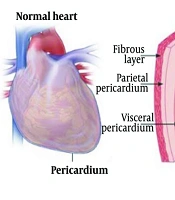
Sattarzadeh Khameneh E, Kakaei S, Noshadi Y, Alirezapour B, Johari Daha F. Recent Progress in PET and SPECT Myocardial Perfusion Imaging: From Radiopharmaceuticals to Imaging Innovations. Iran J Pharm Res. 2026;25(1):e171684. doi: https://doi.org/10.5812/ijpr-171684
Last Update: 1 week ago
Last Update: 1 week ago
Last Update: 1 week ago
Last Update: 6 days ago
Last Update: 2 days ago
Last Update: 3 days ago