Fulltext
The full text is available in PDF.
International Cardiovascular Research Journal
An annual journal in scientific affiliation with the Cardiovascular Research Center, Shiraz University of Medical Sciences
Image Credit:Int Cardiovasc Res J
Authors
Background: To date, not sufficient information is available regarding the effect of High Intensity Interval Training (HIIT) on diabetes-induced myocardial dysfunctions.
Objectives: The present study aimed to evaluate the effect of 4-week HIIT on change in expression levels of ryanodine receptor calcium channel (RyR2) and ATPase calcium pump (SERCA2a) in diabetic rats.
Materials and Methods: This study was conducted on 24 Wistar rats with average weight of 245 ± 10 g. The rats were randomly divided into a sedentary diabetic group and a trained diabetic group. Training was started two weeks after diabetes induction by Streptozotocin (STZ) injection. The training program consisted of 4 weeks running on a treadmill and was considered to be intense for the two groups’ diabetic rats. After all, the animals’ characteristics and myocardial gene expression were compared using independent t-test.
Results: Measurement of gene expression by Real Time-PCR revealed that cardiac mRNA expression of RyR2 was enhanced in the HIIT group. The results also revealed a significant (P = 0.03) difference between the hearts of the sedentary controls and the trained group regarding RyR2 levels. However, no significant difference was observed between the two groups with respect to SERCA2a levels (P = 0.14).
Conclusions: The study results showed that treatment with HIIT could prevent and/or minimize the loss in expression of RyR2 and SERCA2a.
© 2016, Author(s). This open-access article is available under the Creative Commons Attribution 4.0 (CC BY 4.0) International License (https://creativecommons.org/licenses/by/4.0/), which allows for unrestricted use, distribution, and reproduction in any medium, provided that the original work is properly cited.
Janbozorgy M, Shabani M, Darvakh H. High-Intensity Interval Training Attenuates Cardiac P53–p21 Stress Signaling in a Mouse Model of Type 2 Diabetes. Jentashapir J Cell Mol Biol. 2026;17(1):e170292. doi: https://doi.org/10.5812/jjcmb-170292
Miraghaee N, Sadeghi A, Mohammadi N. Effect of an Eight-week High-intensity Interval Training Program on Serum Cardiac Troponin I Level of Streptozotocin-induced Diabetic Rats. J Inflamm Dis. 2024;24(5):e156239. doi:
Pourrazi H, Asgharpour-Arshad M, Gholami F, Abbasi S. Effect of High-Intensity Interval Training on Apoptotic Gene Expression in Rat Myocardial Tissue. Gene Cell Tissue. 2020;7(2):e101963. doi: https://doi.org/10.5812/gct.101963
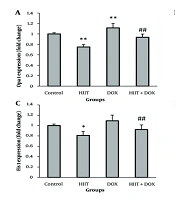
Ebrahimi K, Soori R, Badalzadeh R, Baghaiee B, Hemayattalab A. High-intensity Interval Training Protectively Modulates Doxorubicin-Induced Changes in Cardiac Mitochondrial Dynamics and Autophagy Process. J Clin Res Paramed Sci. 2025;14(1):e159586. doi: https://doi.org/10.5812/jcrps-159586
Jokar M, Sherafati Moghadam M, daryanoosh F. The Effect of an 8-Week Endurance Training Program on the Content of FOXO3a and Beclin-1 Proteins in Heart Muscle of Rats With Type 2 Diabetes. J Inflamm Dis. 2024;23(6):e156188. doi:
Last Update: 6 days ago
Last Update: 6 days ago
Last Update: 6 days ago
Last Update: 5 hours ago
Last Update: 9 hours ago
Last Update: 4 days ago
