Fulltext
The full text is available in PDF.
International Cardiovascular Research Journal
An annual journal in scientific affiliation with the Cardiovascular Research Center, Shiraz University of Medical Sciences
Image Credit:Int Cardiovasc Res J
Authors
Background: Atrial Fibrillation (AF) is a common complication after open heart surgery and is frequently associated with increased hospital stay, complications, and mortality rates. The effect of β-blockers on prevention of supraventricular arrhythmias has been confirmed in several prospective randomized studies.
Objectives: This clinical trial aimed to compare the preventive effects of carvedilol and metoprolol on occurrence of AF after CABG surgery.
Patients and Methods: This prospective, double-blind, randomized clinical trial was conducted on 150 patients (55 females, 95 males; mean age: 59 ± 10 years) who underwent CABG surgery. The patients with no contraindication for β-blocker use were randomly divided into two groups of carvedilol and metoprolol Tartarate (n = 75). Treatment with β-blocker was started on the first postoperative day (metoprolol, 25 mg BD; carvedilol, 6.25 mg, BD) and the dosage was regulated according to the patients’ hemodynamic response. All the patients were monitored 5 days after the surgery and incidence of AF and other complications was recorded in both groups.
Results: AF was detected in 18 patients in the carvedilol group and 21 patients in the metoprolol group (P = 0.577). The results of Fisher Exact test showed no significant relationship between the type of the drug and the occurrence of AF (P < 0.05). Nevertheless, the prevalence of AF was higher in the renal failure group. AF was mostly recorded on the second and third days after the surgery. The results showed an association between old age and higher occurrence of AF. AF was recorded in 11 patients (14%) in the metoprolol group and 9 ones (12%) in the carvedilol group, with Left Ventricle Ejection Fraction (LVEF) being between 35% and 45% (P = 0.587). However, no significant difference was found between the two groups in this regard.
Conclusions: In the patients with sufficient ejection fraction, no difference was observed in using carvedilol or metoprolol in prevention of post-CABG AF. Yet, given the anti-oxidant and anti- inflammatory effects of carvedilol, it might be more beneficial in comparison to metoprolol, particularly in the patients with lower ejection fractions or heart failure.
© 2017, Author(s). This open-access article is available under the Creative Commons Attribution 4.0 (CC BY 4.0) International License (https://creativecommons.org/licenses/by/4.0/), which allows for unrestricted use, distribution, and reproduction in any medium, provided that the original work is properly cited.
ul‑hassan N, Majeed Dar A, Wani ML, Rather HA, Ganie FA. A Comparative Study on the Effect of Amiodarone and Metaprolol for Prevention of Arrythmias after Open Heart Surgery. Int Cardiovasc Res J. 2017;7(1):e12711. doi:
Rostambeigi S, Mohammadi Z, Asadipoor E, Naderi N, Javadi H, et al. The Correlation between the Severity of Coronary Artery Disease and Coronary Collateral Circulation and Atrial Fibrillation after Coronary Artery Bypass Surgery: A Cross-Sectional Study. Int Cardiovasc Res J. 2021;15(4):e117063. doi:
Golmohammadi M, Esmaeeli Javid G, Farajzadeh H. Incidence and Risk Factors for Atrial Fibrillation after First Coronary Artery Bypass Grafting in Urumiyeh Imam Khomeini Hospital from 2006 to 2008. Int Cardiovasc Res J. 2010;4(2):e65017. doi:
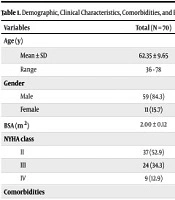
Saad AM, Messeha MM, Abdelmageed NA, Farid AM. The Value of Intraoperative Transesophageal Echocardiography in Predicting the Incidence of Atrial Fibrillation After Coronary Artery Bypass Grafting: A Prospective Cohort Study. J Cell Mol Anesth. 2025;10(4):e167020. doi: https://doi.org/10.5812/jcma-167020
Moloudi A, Sabzi F, Rashidi S. Suppression of Myocardial Injury Markers following Percutaneous Coronary Interventions by Pre-treatment with Carvedilol. Int Cardiovasc Res J. 2017;6(3):e12805. doi:
More by these authors
Last Update: 1 week ago
Last Update: 1 week ago
Last Update: 1 week ago
Last Update: 2 hours ago
Last Update: 6 hours ago
Last Update: 5 days ago
