Fulltext
The full text is available in the PDF.
International Cardiovascular Research Journal
An annual journal in scientific affiliation with the Cardiovascular Research Center, Shiraz University of Medical Sciences
Image Credit:Int Cardiovasc Res J
Authors
Background: Endothelial-derived apoptotic microparticles (EMPs) play a pivotal role in endothelial dysfunction in hronic Heart Failure (CHF).
Objectives: The present study aimed to evaluate the association between EMPs and pro-inflammatory biomarkers, clinical status, and outcomes in the patients with ischemic CHF.
Patients and Methods: This study was conducted on 154 patients with ischemic symptomatic moderate-to-severe CHF on discharge from hospital. The observation period was up to 3 years. Circulating NT-pro-BNP, TNF-alpha, sFas, and sFas ligand were determined at baseline. Flow cytometry analysis was used for quantifying the number of EMPs. All-cause mortality, CHF-related death, and CHD-re-hospitalization rate were examined. The data were analyzed using descriptive statistics, Receive Operation Characteristic Curve (ROC), and logistic regression analysis. Besides, P < 0.05 was considered as statistically significant.
Results: During a median follow-up of 2.18 years, 21 participants died and 106 subjects were hospitalized repetitively. The results showed a significant difference between the patients with a large number of EMPs (> 0.514 n/mL) and those with a low level of the biomarker (< 0.514 n/mL) regarding their survival. The number of circulating EPMs independently predicted all-cause mortality (OR = 1.58; 95% CI = 1.20 – 1.88; P = 0.001), CHF-related death (OR = 1.22; 95% CI: 1.12 – 1.36; P < 0.001), and CHF-related re-hospitalization (OR = 1.20; 95% CI: 1.11 – 1.32; P < 0.001).
Conclusions: Among the patients with symptoms of CHF, increased number of circulating EMPs was associated with increased 3-year CHF-related death, all-cause mortality, and risk of recurrent hospitalization due to CHF.
© 2017, Author(s). This open-access article is available under the Creative Commons Attribution 4.0 (CC BY 4.0) International License (https://creativecommons.org/licenses/by/4.0/), which allows for unrestricted use, distribution, and reproduction in any medium, provided that the original work is properly cited.
Berezin A, Kremzer AA. Circulating Osteonectin as a Predictive Biomarker in Patients with Ischemic Symptomatic Chronic Heart Failure. Int Cardiovasc Res J. 2017;9(4):e10873. doi: https://doi.org/10.17795/icrj-9(4)203
Najafipour R, Pavelovna O. Association between the level of soluble markers of Fas/FasL apoptosis system and heart failure. J Inflamm Dis. 2024;12(1):e155378. doi:

Nabati M, Bakhshinasab S, Farsavian AA, Rasolpor F, Yazdani- Charati J. Atrial Fibrillation as a Risk Marker in Patients with Decompensated Heart Failure. Int Cardiovasc Res J. 2020;14(2):e103597. doi:
Fontes-Oliveira M, Martins F, Gomes L, Trepa M, Baggen-Santos R, et al. Correlates and Prognostic Value of NT-proBNP in Post-Acute Coronary Syndrome Patients with Preserved Left Ventricular Ejection Fraction. Int Cardiovasc Res J. 2019;13(4):e96017. doi:
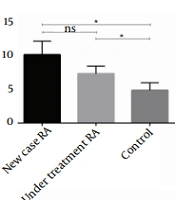
Hassan NH, Shamsi A, Soufivand P, Bahremand F, Taghaddosi M, et al. The Relationship of Inflammatory Chemokine, CXCL12, with NT-proBNP: A Marker of Congestive Heart Failure in Rheumatoid Arthritis Patients. J Kermanshah Univ Med Sci. 2023;27(4):e141254. doi: https://doi.org/10.5812/jkums-141254
Last Update: 1 week ago
Last Update: 1 week ago
Last Update: 1 week ago
Last Update: 3 hours ago
Last Update: 7 hours ago
Last Update: 5 days ago
