Fulltext
The full text is available in PDF.
International Cardiovascular Research Journal
An annual journal in scientific affiliation with the Cardiovascular Research Center, Shiraz University of Medical Sciences
Image Credit:Int Cardiovasc Res J
Authors
Background: Metabolic Syndrome (MetS) is prevalent in Asian countries, but there is limited information about its distribution in rural communities.
Objectives: This study aimed to determine the prevalence of MetS and its components in a rural population in southern Iran.
Patients and Methods: This cross-sectional study was conducted on 13304 adults living in Kavar, southern Iran. The participants aged ≥ 20 years (67.4% female and 32.6% male) and were selected from a larger survey including 20000 subjects. MetS was diagnosed by the National Cholesterol Education program-Adult Treatment Panel III (ATP III) and its prevalence was compared to the rates estimated by modified ATPIII and International Diabetes Federation (IDF) definitions. The data were collected through a structured questionnaire. Anthropometric, clinical, and biochemical parameters including blood pressure, Body Mass Index (BMI), waist circumference, Fasting Plasma Glucose (FPG), and lipid profile were recorded. Then, the data were entered into the SPSS statistical software (v. 15) and analyzed using student’s t-test, Chi-square test, and logistic regression analysis. P < 0.05 was considered as statistically significant.
Results: The prevalence of ATP III-defined-MetS was 25.1% compared to 27.7% and 28.3% using the modified ATP III and IDF definitions, respectively. Yet, the prevalence rate was higher among the females compared to the males by all the definitions (e.g. 28.4% in females and 18.9% in males by ATP III criteria, P < 0.001). Also, the prevalence of Mets increased with age (P < 0.001). The most and least common components were low serum High Density Lipoprotein Cholesterol (HDL-C) and impaired FPG, respectively.
Conclusions: MetS was prevalent in this rural area and dyslipidemia was its major component. These findings make it critical to plan further healthcare interventions in order to prevent the adverse consequences of the disease.
© 2017, Author(s). This open-access article is available under the Creative Commons Attribution 4.0 (CC BY 4.0) International License (https://creativecommons.org/licenses/by/4.0/), which allows for unrestricted use, distribution, and reproduction in any medium, provided that the original work is properly cited.
AbtaeiNaeini B, Skandarian R, Rashidi A, Khamse ME, Malek M, et al. Prevalence of metabolic syndrome according to ATPIII and IDF criteria in the Iranian population. koomesh. 2012;14(1):e152550. doi:
Zoghi G, Nejatizadeh A, Shahmoradi M, Ghaemmaghami Z, Kheirandish M. Prevalence of Metabolic Syndrome and Its Determinants in the Middle-aged and Elderly Population in A Southern Coastal Region, Iran (the PERSIAN Cohort Study): A Cross-sectional Study. Shiraz E-Med J. 2022;23(3):e116838. doi: https://doi.org/10.5812/semj.116838
Javadi HR, Hashemipour S, Abbasi M, Javadi A. Prevalence of metabolic syndrome and its components in over 24 years old population of Qazvin (2012). J Inflamm Dis. 2024;18(3):e155836. doi:
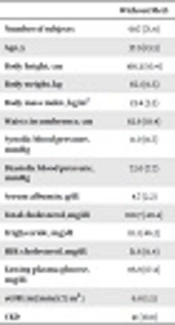
Bakhshayeshkaram M, Roozbeh J, Heidari ST, Honarvar B, Dabbaghmanesh MH, et al. Relationships Between Various Components of Metabolic Syndrome and Chronic Kidney Disease in Shiraz, Iran. Int J Endocrinol Metab. 2019;17(2):e81822. doi: https://doi.org/10.5812/ijem.81822
Maleki F, Sayehmiri F, Kiani F, sayehmiri K, Nasiri S. Metabolic syndrome prevalence in Iran: a systematic review and meta-analysis. J Kermanshah Univ Med Sci. 2014;18(4):e74115. doi: https://doi.org/10.22110/jkums.v18i4.1514
Last Update: 1 week ago
Last Update: 1 week ago
Last Update: 1 week ago
Last Update: 8 hours ago
Last Update: 11 hours ago
Last Update: 5 days ago
