Fulltext
The full-text is available in pdf.
International Cardiovascular Research Journal
An annual journal in scientific affiliation with the Cardiovascular Research Center, Shiraz University of Medical Sciences

Image Credit:Int Cardiovasc Res J
Authors
 1, Sara Barzegar1,*, Raheleh Kaviani1, Amir Askarinejad2, Hamed Bazrafshan Drissi3, Mohamad Ali Ghaznavi1
Background: Hypertension is a major risk factor for cardiovascular diseases and is associated with increased all-cause and cardiovascular mortality. Cardiac changes such as impaired left ventricular (LV) function, left ventricular hypertrophy (LVH), and heart failure are consequences of chronic exposure to elevated blood pressure. Speckle tracking echocardiography (STE) is a sensitive method for detecting early regional and global myocardial dysfunction missed in asymptomatic patients with cardiovascular disease by conventional modalities.
Objectives: This study aimed to assess the ability of 2D-STE in assessing regional and global LV strain to diagnose subclinical LV dysfunction in patients with systemic hypertension and preserved ejection fraction.
Methods: This prospective observational study included 80 hypertensive patients and 30 healthy controls. In the hypertensive group, at least six months had passed from diagnosis of hypertension according to AHA guidelines. 2D echocardiographic LV images were acquired in apical 4, 2, and 3-chamber and parasternal short axis views. Left ventricular global longitudinal strain (LVGLS) and circumferential strain (LVGCS) were quantified in all segments using a Philips Affiniti 70 device. Differences between hypertensive patients and controls were analyzed using the independent t-test. A P-value less than 0.05 was considered statistically significant.
Results: In comparison, LVGLS and LVGCS were significantly (P < 0.001) lower among the hypertensive group (GLS: -17.43 ± 1.71, GCS: -23.76 ± 3.35) than the control group (GLS: -20.18 ± 1.11, GCS: -27.46 ± 4.33). LVGLS was significantly (P < 0.001) lower in uncontrolled hypertension (-16.91 ± 1.70) vs. controlled hypertension (-17.96 ± 1.57). Similarly, LVGLS was significantly (P < 0.001) lower among the cases with LVH on 2D echocardiography (16.23 ± 1.69) compared to those without LVH (17.96 ± 1.6). In the hypertensive group, LVGLS was significantly lower in males (-16.84 ± 1.42) than in females (-18.02 ± 1.78; P < 0.05).
Conclusion: This study demonstrates the potential benefits of using STE as a non-invasive imaging technique in assessing cardiac remodeling and providing a further risk assessment of hypertensive patients.
© 2022, Author(s). This open-access article is available under the Creative Commons Attribution 4.0 (CC BY 4.0) International License (https://creativecommons.org/licenses/by/4.0/), which allows for unrestricted use, distribution, and reproduction in any medium, provided that the original work is properly cited.

Pishgahi M, Bayat F, Bozorgmehr R, Ghane Fard S, Rafiei Sadr H, et al. Investigation of the Possible Risk Factors Associated with Subclinical Left Ventricular Dysfunction Assessed by 2D Speckle Tracking Echocardiography in Patients with Type 2 Diabetes Mellitus and Normal Ejection Fraction. Int Cardiovasc Res J. 2023;17(2):e138792. doi:
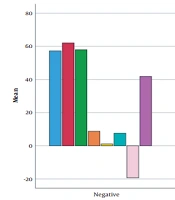
Pazoki M, Kianmehr N, Hajahmadi M, Joghataie P, Amirinasab Sarabi N. Early Detection of Subclinical Left Ventricular Dysfunction in Patients with Systemic Lupus Erythematosus: A Case-Control Study. Jundishapur J Chronic Dis Care. 2022;11(2):e121401. doi: https://doi.org/10.5812/jjcdc.121401

Rajaei E, Pournaghshband Isfahani N, Akiash N, Mohammadi M, Mowla K. Evaluation of the Left Ventricular Function in Patients with Scleroderma with Normal Pulmonary Artery Pressure Using Myocardial Strain Analysis: A Cross-Sectional Study. Int Cardiovasc Res J. 2022;16(4):e130889. doi:
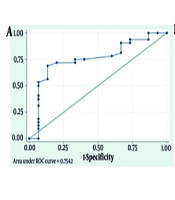
Jalalian R, Bagheri B, Alipour A, Sinaeii M, Mohammadi M, et al. The Rule of Speckle Tracking Echocardiography Indicators, Including Post Systolic Shortening Index, in Predicting Left Ventricular Ejection Fraction Improvement and Detection of Viable Myocardium in Patients With ST-segment Elevation Myocardial Infarction who Undergo Late Percutaneous Coronary Intervention. Int J Cardiovasc Pract. 2025;10(1):e160173. doi: https://doi.org/10.5812/intjcardiovascpract-160173
Peivandi L, Dabbagh Kakhki VR. Assessment of Correlation of Left Ventricular Diastolic Functional Indices Between Gated Myocardial Perfusion SPECT and Echocardiography. I J Radiol. 2017;14(Special Issue):e48002. doi: https://doi.org/10.5812/iranjradiol.48002
Last Update: 3 weeks ago
Last Update: 3 weeks ago
Last Update: 3 weeks ago
Last Update: 5 hours ago
Last Update: 8 hours ago
Last Update: 4 days ago

