Fulltext
The full text is available in PDF.
International Cardiovascular Research Journal
An annual journal in scientific affiliation with the Cardiovascular Research Center, Shiraz University of Medical Sciences
Image Credit:Int Cardiovasc Res J
Authors
Background: The alpha chemokine, stromal-derived factor (SDF)-1 is produced by bone marrow stromal cells
and other cells, especially damaged tissues. SDF-1 receptor, a chemokine receptor 4 (CXCR4), is expressed
on inflammatory cells and that SDF-1/CXCR4 axis plays a critical role in migration of inflammatory cells. In
cardiovascular diseases, SDF-1 is produced by endothelial cells and plaques and that SDF-1 chemoattracts
monocytes to the endothelial cells resulting in a local inflammation. Simvastatin, a cholesterol-lowering agent,
is a general drug for treatment of cardiovascular diseases. However, its molecular mechanism has not yet been
completely elucidated.
Method: Herein, we investigated the role of simvastatin on the SDF- 1/CXCR4 axis by employing flow cytometry,
RT-PCR, chemotaxis and adhesion assays.
Results: Simvastatin (i) downregulates CXCR4 expression on monocytic cell line (THP-1) and primary monocyte
in a dose-dependent manner, (ii) inhibits adhesion of monocytes to endothelial cells and (iii) decreases
SDF-1 production by endothelial cells. Moreover, preincubation with simvastatin significantly decreased the
migration of THP-1 towards the SDF-1 gradient.
Conclusion: All together our data indicate that simvastatin inhibits the binding of monocytes to endothelial cells
through disrupting of the SDF-1/CXCR4 axis.
© 2010, Author(s). This open-access article is available under the Creative Commons Attribution 4.0 (CC BY 4.0) International License (https://creativecommons.org/licenses/by/4.0/), which allows for unrestricted use, distribution, and reproduction in any medium, provided that the original work is properly cited.
Ahmadiankia N. Analysis of epithelial mesenchymal transition markers in breast cancer cells in response to stromal cell-derived factor 1. koomesh. 2019;21(2):e153072. doi:
Golipoor Z, Soleimani Asl S, Mehraein F, Alizadeh A, Asadi E, et al. Spinal Cord Injury Repair by Intrathecal Infusion of Stromal Cell-Derived Factor-1/CXC Chemokine Receptor 4 in a Rat Model. Gene Cell Tissue. 2016;3(2):e36386. doi: https://doi.org/10.17795/gct-36386
Khawer A, Roome T, Zaman U, Aslam S, Imran ul Haq HS, et al. Simvastatin Nano-formulation Exhibited Protective Effect in Cellular Model of Atherosclerosis via Inhibition of Osteopontin Expression. Int Cardiovasc Res J. 2025;19(1):e160072. doi: https://doi.org/10.5812/icrj-160072
Bahrami G, Hosseinzadeh L, Azadi Z, Mohammadi B, Mahdiyan Z, et al. The Anti-Atherosclerotic Effect of Prosopis Farcta is Associated with the Inhibition of VCAM-1 and ICAM-1. J Rep Pharm Sci. 2018;7(3):e147504. doi:
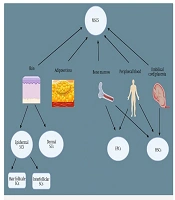
Parkhideh S, Vahdat Lasemi M, Mehravar M, Asadi M, Majidi M, et al. Mechanism of Wound Healing by Hematopoietic Stem Cells. J Skin Stem Cell. 2025;12(2):e162196. doi: https://doi.org/10.5812/jssc-162196
Last Update: 3 weeks ago
Last Update: 3 weeks ago
Last Update: 3 weeks ago
Last Update: 9 hours ago
Last Update: 1 day ago
Last Update: 4 days ago