Fulltext
The full-text is available in PDF.
International Cardiovascular Research Journal
An annual journal in scientific affiliation with the Cardiovascular Research Center, Shiraz University of Medical Sciences
Image Credit:Int Cardiovasc Res J
Authors
 1,*, Filipe Martins2, Luis Gomes2, Maria Trepa1, Raquel Baggen-Santos1, Ricardo Costa1, Patricia Rodrigues1, Andre Luz1, Sofia Cabral1, Mario Santos1, 3, 4, Severo Torres1
Background:
Patients with Acute Coronary Syndrome (ACS) with preserved Left Ventricular Ejection Fraction (LVEF) have an incidence of adverse outcomes despite the previously presumed benign prognosis.
Objective:
We hypothesized that NT-pro-BNP could help refine the risk stratification of these patients.
Methods:
In this observational retrospective study, laboratory and clinical data were collected from 232 consecutive patients with ACS and preserved LVEF (> 50%) and no previous history of Heart Failure (HF) at hospital discharge. Associations between NT-proBNP and the composite outcome of HF hospitalization, HF diagnosis de novo, and all-cause mortality were assessed by univariate and multivariable Cox models. Statistical analyses were performed using Stata software, version 12.1 and a two-sided P-value < 0.05 was considered to be statistically significant.
Results:
The NT-proBNP median was 408 [IQR 177-853] pg/mL. Patients with increased NT-proBNP were older and were more likely to be female (P = 0.013), be non-smoker (P = 0.039), have worse renal function (P < 0.001), and have lower hemoglobin concentration (P < 0.001). They had more ST-Elevation Myocardial Infarction (STEMI) and evolved with higher Killip classes (P < 0.001). Increased NT-proBNP levels were also associated with higher peak values of Creatinine Kinase (CK) and troponin (r = 0.36, P < 0.001 and r = 0.37, P < 0.001), higher left ventricular mass (P = 0.021), larger left atria (P = 0.013), and higher prevalence of regional LV hypocontractility (P = 0.012 to P = 0.090). During the 4.2 [2.1-5.4] years of follow-up, the composite outcome occurred in 19 patients. After adjusting for age, sex, and Killip class, NT-proBNP was not associated with the composite outcome (HR = 1.18; 95% CI: 0.78 - 1.78).
Conclusion:
Post-ACS patients with preserved LVEF and increased levels of NT-proBNP were older, had more comorbidities, and presented with a more severe myocardial infarction. However, NT-proBNP levels measured during ACS hospitalization did not predict the clinical adverse outcomes.
© 2019, Author(s). This open-access article is available under the Creative Commons Attribution 4.0 (CC BY 4.0) International License (https://creativecommons.org/licenses/by/4.0/), which allows for unrestricted use, distribution, and reproduction in any medium, provided that the original work is properly cited.

Namazi MH, Vakili H, Charkhkar M, Gachkar L, Khaheshi I. The Correlation between Serum Level of N-Terminal Pro-B-type Natriuretic Peptide and Gensini Score in Patients with Acute Coronary Syndrome. Int J Cardiovasc Pract. 2016;1(2):e130039. doi: https://doi.org/10.20286/ijcp-010205
Vakili H, Sadeghi R, Toofaninejad N, Akbari T, Kachoueian N. One- and Six-month Outcomes of Patients with Non-ST Elevation Myocardial Infarction. Int J Cardiovasc Pract. 2016;1(3):e130050. doi: https://doi.org/10.21859/ijcp-010303
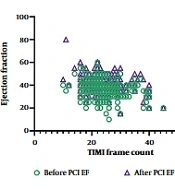
Safi M, Heidarpour Kiaee F, Khani M, Deravi N, Banihashemian SZ, et al. Association of Ejection Fraction with Reperfusion Parameters Before and After Primary Percutaneous Coronary Intervention. Int J Cardiovasc Pract. 2023;8(2):e142571. doi: https://doi.org/10.5812/intjcardiovascpract-142571
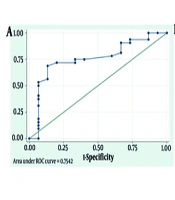
Jalalian R, Bagheri B, Alipour A, Sinaeii M, Mohammadi M, et al. The Rule of Speckle Tracking Echocardiography Indicators, Including Post Systolic Shortening Index, in Predicting Left Ventricular Ejection Fraction Improvement and Detection of Viable Myocardium in Patients With ST-segment Elevation Myocardial Infarction who Undergo Late Percutaneous Coronary Intervention. Int J Cardiovasc Pract. 2025;10(1):e160173. doi: https://doi.org/10.5812/intjcardiovascpract-160173
Karvandi M, Sheidary A, Hajizadeh Ahrami K. The Outcome of Left Ventricular Thrombosis in Patients with Coronavirus Disease 2019 Infection. Int J Cardiovasc Pract. 2024;9(1):e147986. doi: https://doi.org/10.5812/intjcardiovascpract-147986
More by these authors
Last Update: 1 month ago
Last Update: 1 month ago
Last Update: 1 month ago
Last Update: 6 hours ago
Last Update: 10 hours ago
Last Update: 4 days ago

