Cover image of the article: Policy Brief Based on Published Clinical Evidence: Melatonin Supplementation in Metabolic Syndrome: A Policy Brief Based on Evidence from a Randomized Clinical Trial

Image Credit:J Adv Immunopharmacol

Policy Brief Based on Published Clinical Evidence: Melatonin Supplementation in Metabolic Syndrome: A Policy Brief Based on Evidence from a Randomized Clinical Trial

Authors

Negar DinarvandNegar Dinarvand ORCID1, Hossein Babaahmadi‐Rezaei1,*
1Hyperlipidemia Research Center, Ahvaz Jundishapur University of Medical Sciences, Ahvaz, Iran
*Corresponding Author: Hyperlipidemia Research Center, Ahvaz Jundishapur University of Medical Sciences, Ahvaz, Iran. Email: hbr.biomed@gmail.com

Journal of Advanced Immunopharmacology:Vol. 6, issue 2; e170126
Published online:Jun 30, 2026
Article type:Brief Report
Received:Feb 04, 2026
Accepted:Jun 20, 2026
How to Cite:Dinarvand N, Babaahmadi‐Rezaei H. Policy Brief Based on Published Clinical Evidence: Melatonin Supplementation in Metabolic Syndrome: A Policy Brief Based on Evidence from a Randomized Clinical Trial. J Adv Immunopharmacol. 2026;6(2):e170126. doi: https://doi.org/10.69107/jai-170126

Abstract

Context:

Metabolic syndrome (MetS) is associated with oxidative stress, endothelial dysfunction, and increased cardiometabolic risk. Melatonin has antioxidant and anti-inflammatory properties and may be relevant to the metabolic and inflammatory pathways involved in MetS.

Objectives:

This policy brief summarizes and translates findings from a previously published randomized, double-blind, placebo-controlled clinical trial evaluating the effects of melatonin supplementation on biomarkers of oxidative stress and endothelial function in adults with MetS.

Evidence Acquisition:

The underlying trial included adults with MetS who received melatonin (6 mg/day) or a visually similar placebo for 12 weeks. This policy brief summarizes the reported effects on serum endothelin-1 (ET-1), malondialdehyde (MDA), and superoxide dismutase (SOD) activity and considers their potential policy and research implications.

Results:

Among the analyzed participants, 31 received melatonin and 32 received placebo. After 12 weeks, ET-1 decreased from 1.55 ± 0.25 to 0.81 ± 0.18 pg/mL and MDA decreased from 1.33 ± 0.06 to 1.13 ± 0.05 μM in the melatonin group, whereas SOD activity increased from 23.64 ± 2.78 to 41.35 ± 1.22 U/mL. The corresponding within-group changes were not statistically significant in the placebo group. In baseline-adjusted between-group analyses, the intervention was associated with significant differences between groups in SOD activity (P = 0.001) and MDA (P = 0.022), whereas the between-group difference in ET-1 was not statistically significant (P = 0.682).

Conclusions:

The findings summarized in this policy brief suggest that melatonin supplementation may improve selected biomarkers of oxidative stress in adults with MetS. However, the evidence is based on a single, relatively small clinical trial with surrogate biomarker outcomes. Further multicenter studies with longer follow-up and assessment of clinical outcomes, safety, tolerability, and adherence are needed before routine clinical or policy implementation can be considered.

1. Background

Metabolic syndrome (MetS) is a major global public health issue (1), and its steadily increasing prevalence constitutes a significant risk factor for type 2 diabetes (T2D), cardiovascular diseases (CVD), and premature mortality (2). MetS is characterized by a cluster of interrelated metabolic abnormalities occurring within the same individual, including obesity, commonly assessed by waist circumference and body mass index (BMI), as well as dyslipidemia, elevated blood pressure, hyperglycemia, and insulin resistance (3).
Accumulating evidence indicates that MetS is also associated with oxidative stress (OxS), defined as an imbalance between pro-oxidant and antioxidant systems, as well as chronic low-grade inflammation (4). In this context, increased circulating levels of endothelin-1 (ET-1) have been reported in patients with MetS. ET-1 is a potent endogenous vasoconstrictor peptide that plays a key role in vascular dysfunction and inflammation (5).
Given the well-documented antioxidant and anti-inflammatory properties of melatonin, evaluating its potential as a safe, low-cost adjunctive therapeutic strategy for MetS management is highly relevant to health policy formulation and clinical practice.

1.1. Policy Rationale and Added Value

The underlying randomized clinical trial provides evidence on the effects of melatonin supplementation on selected biomarkers of oxidative stress and endothelial function in adults with metabolic syndrome. While the original publication primarily reports the clinical and biological findings of the intervention, this policy brief situates these findings within a broader policy and healthcare context. It synthesizes the available evidence, considers its potential relevance to the prevention and management of metabolic syndrome, identifies limitations and key evidence gaps, and highlights priorities for future research.
The intended stakeholders include clinicians, researchers, health policy makers, and decision makers involved in the prevention and management of metabolic syndrome. The added value of this policy brief lies not in generating new clinical evidence but in translating findings from the previously published trial into a policy-oriented framework and clarifying what additional evidence is required before clinical or policy recommendations can be considered. Accordingly, this policy brief is not intended to establish a new therapeutic recommendation or replace existing clinical guidelines; rather, it is intended to support evidence-informed discussion and inform future research and policy planning.

2. Objectives

This policy brief aims to summarize and translate the findings of a previously published randomized clinical trial of melatonin supplementation in adults with metabolic syndrome; assess their policy and healthcare relevance; identify limitations and evidence gaps; and highlight priorities for future research before clinical or policy recommendations are considered.

3. Methods

3.1. Evidence Source and Trial Characteristics

This policy brief summarizes findings from a previously published randomized, double-blind, placebo-controlled clinical trial evaluating melatonin supplementation in adults with MetS (5).
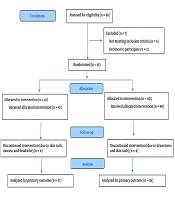
The trial was conducted at Golestan Hospital, affiliated with Ahvaz Jundishapur University of Medical Sciences. Participants were adults diagnosed with MetS according to established criteria. Block randomization was used to allocate participants to the melatonin or placebo groups. A total of 110 individuals were assessed for eligibility; 80 were randomized, and 40 participants were initially allocated to each group. During follow-up, 8 participants in the placebo group and 9 participants in the melatonin group were lost to follow-up, resulting in 32 and 31 participants, respectively, being included in the final analysis.
Participants received melatonin 6 mg/day or a visually similar placebo for 12 weeks. The placebo contained starch, and both interventions were administered before bedtime.
The trial was registered in the Iranian Registry of Clinical Trials (IRCT2016111016123N11), and ethical approval was obtained from Ahvaz Jundishapur University of Medical Sciences (IR.AJUMS.REC.1395.702).
Detailed methodological information about the original trial is available in the primary publication (5).

3.2. Statistical Analysis

In the original trial, statistical analyses were performed using IBM SPSS version 16.0 and GraphPad Prism version 5. Independent-samples t tests were used for between-group comparisons, paired-samples t tests for within-group comparisons, and analysis of covariance (ANCOVA) was used to evaluate intervention effects after adjustment for baseline values.

4. Results

4.1. Key Evidence

This policy brief summarizes the findings and policy implications of a previously published randomized, double-blind, placebo-controlled clinical trial (5).
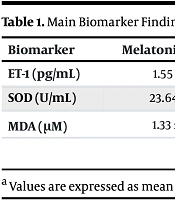
The principal biomarkers assessed were serum ET-1, MDA, and SOD activity. The main quantitative findings are summarized in Table 1.
Table 1.
Main Biomarker Findings from the Underlying Randomized Clinical Trial a
BiomarkerMelatonin BaselineMelatonin After 12 wkPlacebo BaselinePlacebo After 12 wkBaseline-Adjusted Between-Group P
ET-1 (pg/mL)1.55 ± 0.250.81 ± 0.181.16 ± 0.290.93 ± 0.210.682
SOD (U/mL)23.64 ± 2.7841.35 ± 1.2228.85 ± 2.4734.75 ± 1.190.001
MDA (μM)1.33 ± 0.061.13 ± 0.051.28 ± 0.061.31 ± 0.050.022
a Values are expressed as mean ± SEM. Baseline-adjusted between-group comparison using ANCOVA.
The trial reported significant within-group reductions in ET-1 and MDA and an increase in SOD activity following melatonin supplementation. However, the baseline-adjusted between-group differences were statistically significant for SOD and MDA, but not for ET-1. This distinction is important for interpreting the evidence and avoiding overstatement of melatonin’s endothelial effects.

5. Discussion

5.1. Immunopharmacological Rationale

MetS involves not only metabolic abnormalities and oxidative stress but also chronic low-grade inflammation and immunometabolic dysregulation. These processes may interact with endothelial activation and oxidative stress, thereby contributing to cardiometabolic disease.
Melatonin may have immunopharmacological relevance through its reported antioxidant and anti-inflammatory effects and its potential interactions with inflammatory signaling pathways. Such mechanisms may be relevant to the interplay among oxidative stress, endothelial activation, and chronic inflammation in MetS (6-9).
However, the underlying clinical trial did not directly evaluate inflammatory or immune-related pathways. Several potentially relevant biomarkers, including IL-6, TNF-α, glutathione peroxidase, and glutathione reductase, were not assessed. Therefore, the proposed immunopharmacological mechanisms should be considered a rationale for future investigation rather than mechanisms established by the clinical trial.

5.2. Policy Implications

These findings provide a preliminary rationale for further evaluation of melatonin as a potential adjunctive intervention in metabolic syndrome, particularly with respect to oxidative-stress biomarkers.
The relatively low cost and biological plausibility of melatonin support further investigation; however, the available evidence is insufficient to recommend routine clinical or policy implementation.
Future policy considerations should be informed by larger randomized trials that assess clinical outcomes, safety, tolerability, adherence, and longer-term effectiveness.

5.3. Policy and Practice Recommendations

1) Support large, multicenter randomized controlled trials evaluating melatonin supplementation in diverse populations with metabolic syndrome.
2) Prioritize clinically meaningful outcomes, including cardiovascular events and other long-term cardiometabolic outcomes, in addition to surrogate biomarkers.
3) Systematically assess safety, tolerability, adherence, and treatment acceptability in future trials.
4) Evaluate inflammatory and immunometabolic pathways, including relevant cytokines and signaling mechanisms, to clarify the immunopharmacological basis of melatonin's potential effects.
5) Avoid recommendations for routine implementation until the findings are replicated and supported by evidence from larger trials with longer follow-up.

5.4. Study Limitations

The evidence summarized in this policy brief is based on a single randomized clinical trial with a relatively small sample size and a short intervention period. The underlying study evaluated surrogate biomarkers of oxidative stress and endothelial function rather than hard clinical outcomes such as cardiovascular events, hospitalization, or mortality. In addition, serum melatonin concentrations were not measured to objectively assess adherence, and comprehensive data on adverse events, tolerability, and long-term safety were not reported. The trial also did not assess several potentially relevant inflammatory and oxidative-stress biomarkers, including IL-6, TNF-α, glutathione peroxidase, and glutathione reductase. Furthermore, the findings were derived from a specific study population and may therefore have limited generalizability to other populations and healthcare settings. Consequently, larger multicenter studies with longer follow-up and systematic assessment of clinical outcomes, safety, tolerability, adherence, and inflammatory and immunometabolic biomarkers are needed before routine clinical or policy implementation can be considered.

5.5. Conclusions

The evidence summarized in this policy brief suggests that 12 weeks of melatonin supplementation may improve selected biomarkers of oxidative stress in adults with metabolic syndrome. These findings provide a rationale for further investigation of melatonin as a potential adjunctive strategy, but they do not establish a clinical cardiovascular benefit or support routine therapeutic implementation.
Larger multicenter trials with longer follow-up and systematic assessment of clinical outcomes, safety, tolerability, adherence, and inflammatory and immunometabolic biomarkers are needed before policy or clinical recommendations can be considered.
Footnotes

  • AI Use Disclosure:ChatGPT was used for text editing at a minor level.

  • Authors' Contribution:H. B.-R. conceived and designed the study and interpreted the data; H. B.-R. and N. D. drafted the policy brief and approved the final version of the manuscript.

  • Clinical Trial Registration Code:Iranian Registry of Clinical Trials (IRCT2016111016123N11)

  • Conflict of Interests Statement:The authors declare that they have no conflict of interest.

  • Data Availability:The data underlying the original clinical trial are not publicly available. Anonymized data may be available from the corresponding author upon reasonable request, subject to applicable ethical, privacy, and institutional requirements.

  • Ethical Approval:The Ethics Committee of Ahvaz Jundishapur University of Medical Sciences (IR.AJUMS.REC.1395.702)

  • Funding/Support:This study was financially supported by a research grant (No: HLRC- 9612) from Ahvaz Jundishapur University of Medical Sciences.

  • Informed Consent:Informed written consent was obtained from all study subjects.

References

  • 1.
    Martemucci G, Fracchiolla G, Muraglia M, Tardugno R, Dibenedetto RS, D'Alessandro AG. Metabolic syndrome: a narrative review from the oxidative stress to the management of related diseases. Antioxidants. 2023;12(12):2091. [PubMed ID: 38136211]. [PubMed Central ID: PMC10740837]. https://doi.org/10.3390/antiox12122091.
  • 2.
    Masenga SK, Kabwe LS, Chakulya M, Kirabo A. Mechanisms of oxidative stress in metabolic syndrome. International journal of molecular sciences. 2023;24(9):7898. [PubMed ID: 37175603]. [PubMed Central ID: PMC10178199]. https://doi.org/10.3390/ijms24097898.
  • 3.
    Rocha NG, Templeton DL, Greiner JJ, Stauffer BL, DeSouza CA. Metabolic syndrome and endothelin-1 mediated vasoconstrictor tone in overweight/obese adults. Metabolism. 2014;63(7):951-6. [PubMed ID: 24856242]. [PubMed Central ID: PMC4074589]. https://doi.org/10.1016/j.metabol.2014.04.007.
  • 4.
    Monserrat-Mesquida M, Quetglas-Llabrés M, Capó X, Bouzas C, Mateos D, Pons A, et al. Metabolic syndrome is associated with oxidative stress and proinflammatory state. Antioxidants. 2020;9(3):236. [PubMed ID: 32178436]. [PubMed Central ID: PMC7139344]. https://doi.org/10.3390/antiox9030236.
  • 5.
    Ghaderi-Zefrehi H, Seif F, Niayesh‐Mehr R, Ayashi S, Jafarirad S, Niknam Z, et al. Impact of the supplementation of melatonin on oxidative stress marker and serum endothelin-1 in patients with metabolic syndrome. International Journal of Diabetes in Developing Countries. 2024;44(3):619-25. https://doi.org/10.1007/s13410-023-01266-5.
  • 6.
    Reiter RJ, Calvo JR, Karbownik M, Qi W, Tan DX. Melatonin and its relation to the immune system and inflammation. Annals of the New York Academy of Sciences. 2000;917(1):376-86. [PubMed ID: 11268363]. https://doi.org/10.1111/j.1749-6632.2000.tb05402.x.
  • 7.
    Favero G, Franceschetti L, Bonomini F, Rodella LF, Rezzani R. Melatonin as an anti‐inflammatory agent modulating inflammasome activation. International journal of endocrinology. 2017;2017(1):1835195. [PubMed ID: 29104591]. [PubMed Central ID: PMC5643098]. https://doi.org/10.1155/2017/1835195.
  • 8.
    Cho JH, Bhutani S, Kim CH, Irwin MR. Anti-inflammatory effects of melatonin: A systematic review and meta-analysis of clinical trials. Brain, behavior, and immunity. 2021;93:245-53. [PubMed ID: 33581247]. [PubMed Central ID: PMC7979486]. https://doi.org/10.1016/j.bbi.2021.01.034.
  • 9.
    Isaac IGM, do Prado Servian C, de Oliveira Feitosa de Castro F, de Azevedo J, Preto RM, Dorta ML, et al. Immune Consequences of Metabolic Syndrome and Its Treatment: A Cytokine Perspective. Immunology. 2026. [PubMed ID: 42503015]. https://doi.org/10.1111/imm.70166.

Copyright

Copyright © 2026, Journal of Advanced Immunopharmacology. This open-access article is available under the Creative Commons Attribution-NonCommercial 4.0 (CC BY-NC 4.0) International License (https://creativecommons.org/licenses/by-nc/4.0/), which allows for the copying and redistribution of the material only for noncommercial purposes, provided that the original work is properly cited.

Similar Articles

3
May
2026
Effects of Oral Melatonin Supplementation on Inflammatory and Oxidative Stress Markers, Metabolic Parameters, Blood Pressure, and Sleep Quality in Patients With Stage 3 - 4 Chronic Kidney Disease: A Randomized, Double-Blind, Placebo-Controlled Trial

Effects of Oral Melatonin Supplementation on Inflammatory and Oxidative Stress Markers, Metabolic Parameters, Blood Pressure, and Sleep Quality in Patients With Stage 3 - 4 Chronic Kidney Disease: A Randomized, Double-Blind, Placebo-Controlled Trial

Shadi Ziaie,
Fatemeh Pourrezagholie,
Aylar Nadiri Niri,
Behnam Mahdavi,
Mohammad Abbasinazari,
Roja Asadpour

Ziaie S, Pourrezagholie F, Nadiri Niri A, Mahdavi B, Abbasinazari M, et al. Effects of Oral Melatonin Supplementation on Inflammatory and Oxidative Stress Markers, Metabolic Parameters, Blood Pressure, and Sleep Quality in Patients With Stage 3 - 4 Chronic Kidney Disease: A Randomized, Double-Blind, Placebo-Controlled Trial. Jundishapur J Nat Pharm Prod. 2026;21(1):e170199. doi: https://doi.org/10.5812/jjnpp-170199

31
Dec
2019
Effect of Bedtime Melatonin Administration in Patients with Type 2 Diabetes: A Triple-Blind, Placebo-Controlled, Randomized Trial

Effect of Bedtime Melatonin Administration in Patients with Type 2 Diabetes: A Triple-Blind, Placebo-Controlled, Randomized Trial

Amir Farrokhian,
Maryam Tohidi,
Noushin Sadat Ahanchi,
Davood Khalili,
Mahtab Niroomand,
Arash Mahboubi
,et al.

Farrokhian A, Tohidi M, Ahanchi NS, Khalili D, Niroomand M, et al. Effect of Bedtime Melatonin Administration in Patients with Type 2 Diabetes: A Triple-Blind, Placebo-Controlled, Randomized Trial. Iran J Pharm Res. 2019;18(Suppl1):e124689. doi: https://doi.org/10.22037/ijpr.2019.112011.13485

6
May
2017
The effect of progressive resistance training with melatonin supplementation on total antioxidant capacity and lipid peroxidation in overweight men, randomized clinical trial

The effect of progressive resistance training with melatonin supplementation on total antioxidant capacity and lipid peroxidation in overweight men, randomized clinical trial

Mohammad Ghaderi,
Hossein Abed Natanzi,
Farshad Ghazalian,
Hojatollah Nikbakht

Ghaderi M, Abed Natanzi H, Ghazalian F, Nikbakht H. The effect of progressive resistance training with melatonin supplementation on total antioxidant capacity and lipid peroxidation in overweight men, randomized clinical trial. J Clin Res Paramed Sci. 2017;6(2):e81354. doi:

30
Apr
2010
Effect of garlic on serum adiponectin and interleukin levels in women with metabolic syndrome

Effect of garlic on serum adiponectin and interleukin levels in women with metabolic syndrome

Faranak Sharifi,
Abdolkarim Sheikhi,
Mahnaz Behdad,
Nouraddin Mousavinasab

Sharifi F, Sheikhi A, Behdad M, Mousavinasab N. Effect of garlic on serum adiponectin and interleukin levels in women with metabolic syndrome. Int J Endocrinol Metab. 2010;8(2):. doi:

31
Dec
2019
Determining Cardiometabolic and Antioxidant Effects of Olive Leaf Extract in Patients with Essential Hypertension

Determining Cardiometabolic and Antioxidant Effects of Olive Leaf Extract in Patients with Essential Hypertension

Seyyed Mehdi Mirhashemi

Mirhashemi SM. Determining Cardiometabolic and Antioxidant Effects of Olive Leaf Extract in Patients with Essential Hypertension. J Inflamm Dis. 2024;23(5):e156177. doi:

More by these authors

Negar DinarvandPubMedScholar
Hossein Babaahmadi‐RezaeiPubMedScholar
Share
Cited by
Metrics