
1. Background
Psychiatric service dogs are trained to assist with a range of tasks, including support for mental health conditions such as post-traumatic stress disorder (PTSD). Estimates suggest that PTSD affects about 11 - 20% of veterans of the Iraq and Afghanistan wars, about 12% of Gulf War veterans, and approximately 15% of Vietnam veterans (1, 2). The lifetime prevalence of PTSD among U.S. veterans is around 7% (3-5). The Americans with disabilities act (ADA) defines service dogs as "any dog trained to do work or perform tasks for the benefit of an individual with a disability, including physical, sensory, psychiatric, intellectual, or other mental disabilities" (6).
Hamama et al. demonstrated the positive impact of group interventions combined with basic canine training on traumatized teenagers, providing an early foundation for the therapeutic use of canines in trauma care (7). However, another study included a randomized controlled trial comparing service dogs with emotional support dogs among veterans, showing inconclusive results regarding their effectiveness (8). Extensive reviews and meta-analyses have emphasized both the therapeutic potential and the limitations of animal-assisted interventions, further underscoring the need for robust empirical research to inform policies and practices (9).
2. Objectives
Empirical research on the impact of psychiatric service dogs on health outcomes for veterans with PTSD has grown over the past decade, but remains sparse. This gap impedes healthcare providers and policymakers from making informed decisions about incorporating service dogs into PTSD treatment protocols. Therefore, the primary aim of this study is to assess health outcomes in veterans receiving psychiatric service dog assistance, evaluating the relationship between this assistance and changes in health outcomes to determine its utility as an adjunct to standard PTSD care.
3. Methods
In this study, we employed a nonrandomized controlled trial design and used the STROBE cohort reporting guidelines (10).
3.1. Subjects
Participants were recruited through the Association of Service Dog Providers (11). Invitations were sent to all 14 members, and nine agreed to participate, which included: Dog Tag Buddies (Billings, MT), Got Your Six Support Dogs (Collinsville, IL), K9 Caring Angels (Manassas, VA), Labs for Liberty (Morgan, UT), Northwest Battle Buddies (Battle Ground, WA), Operation Freedom Paws (San Martin, CA), Patriotic Service Dog Foundation (Murrieta, CA), Semper K9 Assistance Dogs (Woodbridge, VA), and This Able Veteran (Carbondale, IL). To ensure methodological consistency, the service dog training organizations adhered to standardized protocols set forth by the Association of Service Dog Providers. Power analysis, targeting a 95% confidence level and 80% power, determined a sample size of 190 participants.
This study followed guidelines from the Johns Hopkins Bloomberg School of Public Health’s IRB. Participants were offered a 30$ Amazon gift card for each survey completed. Inclusion criteria for the study were a PTSD diagnosis and a history of military service. Exclusion criteria included receiving prior service dog assistance.
3.2. Instrumentation
Appropriate instrumentation was selected to measure the primary outcome of PTSD symptomatology and secondary outcomes, including: Depression severity, health-related quality of life (HRQoL), and social functioning.
3.3. Usual Care Assessment
To assess the standard care participants were receiving for PTSD, we developed a questionnaire that inquired about the frequency, type, and perceived efficacy of various treatments that participants reported having ever sought for.
3.4. Post-traumatic Stress Disorder Symptomatology Measure
Post-traumatic stress disorder diagnosis was confirmed using the PTSD checklist for DSM-5 (PCL-5) (12). The PCL-5, a self-report measure with a scoring range of 0 - 80, quantifies PTSD severity, with lower scores indicating less severe symptoms. Results are analyzed longitudinally, expressed as mean scores. The reliability and validity of PCL-5 are well-established (13). The Cronbach’s alpha for the PCL-5 in this study at baseline was 0.95.
3.5. Depression Severity Measure
Depression was assessed using the Patient Health Questionnaire-9 (PHQ-9). The diagnostic accuracy of PHQ-9 is well-documented, serving as our tool for self-assessment of depression severity, which correlates with the DSM-5 criteria (14). The Cronbach’s alpha for the PHQ-9 in this study was 0.88.
3.6. Health Related Quality of Life Measures
Health Related Quality of Life Measurement assesses the broad impact of health on overall life satisfaction and functioning. The Satisfaction with Life Scale (SWLS) measures life satisfaction (15) and had a Cronbach’s alpha of 0.87 in this study. The Bradburn Scale of Psychological Wellbeing (BSPW) measures emotional wellbeing with positive and negative affects (16) and had a Cronbach’s alpha of 0.47. The Connor Davidson Resilience Scale (CDRS) evaluates resilience in coping with stress (17), and had a Cronbach’s alpha of 0.94. Together, these measures provide an assessment of HRQoL, encompassing the multidimensional aspects of overall quality of life.
3.7. Social Functioning Measures
Social functioning was assessed using the patient-reported outcomes measurement information system (PROMIS). This allowed for the examination of social participation, isolation, and companionship, integral aspects of veterans’ reintegration and adaptation post-service. The PROMIS t-scores include established population means and standard deviations, enabling standardized assessments of social functioning (18). The Cronbach’s alpha for the PROMIS in this study was 0.68.
3.8. Procedures
Participants were emailed with an online link, directing them to the survey hosted on the REDCap platform. Data collection commenced in March 2020 and continued until July 2022. A control group was simultaneously established, using a concurrent waitlist design. Loss to follow-up was addressed through difference-in-differences (DiD) as a sensitivity analysis.
We conducted longitudinal assessments at three stages: At baseline and two subsequent follow-up periods. Data collection was conducted in parallel for both the intervention and control groups, ensuring comparable assessment points for each group. For the control group, which did not receive service dog assistance during the study, surveys were conducted at baseline, one-month post-baseline, and three-month post-baseline. For the intervention group, surveys were conducted at baseline, then one-month and three-months after beginning disability task training with their service dogs. This distinction is key as it highlights that the improvements observed in the intervention group occurred post-initiation of specific service dog training, contrasting with the control group that did not receive such an intervention during the study period.
Data analysis was performed using STATA 15, which facilitated the construction of DiD multi-level linear regression models. We employed these models to assess health outcomes variations, taking into account the nested structure of our data. In our multi-level models, organization-level random effects were included to account for inter-organization variability, while individual-level fixed effects were used to control for participant-specific characteristics. In addition, we controlled for potential confounding factors in our analysis, which included demographic variables and baseline health status. By incorporating these controls, we aimed to mitigate the impact of external factors that could influence the observed outcomes, providing a more accurate assessment of the effect of service dog assistance.
To account for natural progression over time, we observed the mean changes within the waitlist control group, while the intervention group’s changes encapsulate both the maturation and the treatment effects. The 'difference-in-differences' estimate is obtained by deducting the time-related change in the control group from the change in the intervention group. This method yields an estimate of the exclusive effect of the treatment. This approach ensures a robust analysis, controlling for potential confounding temporal trends and providing a clearer insight into the specific impact of service dog assistance on veteran health outcomes. This DiD approach provides a more nuanced understanding of the treatment effects, reducing the likelihood that observed benefits are solely due to placebo or confounding factors.
The use of chi-square tests for categorical data and paired sample t-tests for continuous variables allowed for rigorous comparison between groups, with a statistical significance threshold set at P < 0.05. Fisher’s exact test was employed for gender-based comparisons due to the limited representation of non-binary participants. In our analysis, we used weighted proportions to adjust for any potential sampling bias. This statistical technique allows us to account for the disproportionate representation of certain subgroups within our sample, thus providing a more accurate reflection of the veteran community. It is important to note that our study did not encounter any missing survey data. Therefore, the use of weighted proportions is not a means to address missing items, but rather a methodological choice to enhance the validity of our results.
4. Results
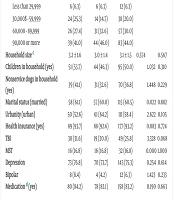
A total of 238 individuals were assessed for eligibility, with 220 meeting the criteria and enrolling in the study. Thirty participants were lost to follow-up and excluded from the final analysis. Table 1 provides a demographic and clinical comparison between veterans in our study receiving service dog assistance and those in the waitlist control group. While our respondent pool was not derived from a probability sample, it provided valuable insights into the population of veterans engaging in service dog programs. We acknowledge, however, that our sample may not fully represent the broader US veteran population. Veterans in our study were proactive in seeking service dog assistance for PTSD, which may differ from the general veteran population, particularly those who may not be in such a state of mental readiness to acknowledge one’s condition and seek out such mental health resources. Although our sample had a lower average age and a higher proportion of female veterans compared to national veteran demographics (19), the baseline characteristics between our study groups showed no significant discrepancies, indicating comparability for the purpose of this study. Nevertheless, these differences underscore the importance of exercising caution when generalizing these results to all veterans with PTSD.
Table 1.
Characteristics of Participants a
| Characteristics | Group | Group Difference | ||||
|---|---|---|---|---|---|---|
| Waitlist (n = 95) | Service Dog (n = 95) | Total (n = 190) | t | χ2 | P | |
| Age (y) | 42.8 ± 10.3 | 44.6 ± 11.1 | 43.7 ± 10.7 | -1.157 | 0.249 | |
| Gender | 1.020 | 0.600 | ||||
| Female | 24 (25.3) | 25 (26.3) | 49 (25.8) | |||
| Male | 70 (73.7) | 70 (73.7) | 140 (73.7) | |||
| Non-binary b | 1 (1.1) | 0 (0.0) | 1 (0.5) | |||
| Race/ethnicity | 9.406 | 0.152 | ||||
| Asian | 1 (1.1) | 6 (6.3) | 7 (3.7) | |||
| American Indian or Alaskan native | 3 (3.2) | 2 (2.1) | 5 (2.6) | |||
| Black or African American | 9 (9.5) | 4 (4.2) | 13 (6.8) | |||
| Mexican or Latino | 10 (10.5) | 7 (7.4) | 17 (8.9) | |||
| Native Hawaiian or Pacific Islander | 0 (0.0) | 2 (2.1) | 2 (1.1) | |||
| White or European American | 66 (69.5) | 71 (74.7) | 137 (72.1) | |||
| Others | 6 (6.3) | 3 (3.2) | 9 (4.7) | |||
| Education | 4.972 | 0.174 | ||||
| High school or GED | 6 (6.3) | 6 (6.3) | 12 (6.3) | |||
| Some college | 40 (42.1) | 27 (28.4) | 67 (35.3) | |||
| Bachelor degree | 28 (29.5) | 41 (43.2) | 69 (36.3) | |||
| Graduate degree | 21 (22.1) | 21 (22.1) | 42 (22.1) | |||
| Religion | 2.033 | 0.730 | ||||
| Buddhist | 2 (2.1) | 3 (3.2) | 5 (2.6) | |||
| Christian | 55 (57.9) | 54 (56.8) | 109 (57.4) | |||
| Jewish | 2 (2.1) | 3 (3.2) | 5 (2.6) | |||
| Others | 12 (12.6) | 7 (7.4) | 19 (10.0) | |||
| None | 24 (25.3) | 28 (29.5) | 52 (27.4) | |||
| Employment status | 4.392 | 0.624 | ||||
| Employed, full-time | 41 (43.2) | 49 (51.6) | 90 (47.4) | |||
| Employed, part-time | 7 (7.4) | 7 (7.4) | 14 (7.4) | |||
| Not employed, looking for work | 4 (4.2) | 2 (2.1) | 6 (3.2) | |||
| Not employed, not looking for work | 1 (1.1) | 3 (3.2) | 4 (2.1) | |||
| Retired | 14 (14.7) | 9 (9.5) | 23 (12.1) | |||
| Disabled, not able to work | 22 (23.2) | 17 (17.9) | 39 (20.5) | |||
| Others | 6 (6.3) | 8 (8.4) | 14 (7.4) | |||
| Household income ($) | 3.371 | 0.338 | ||||
| Less than 29,999 | 6 (6.3) | 6 (6.3) | 12 (6.3) | |||
| 30,000 - 59,999 | 24 (25.3) | 14 (14.7) | 38 (20.0) | |||
| 60,000 - 89,999 | 26 (27.4) | 31 (32.6) | 57 (30.0) | |||
| 90,000 or more | 39 (41.0) | 44 (46.0) | 83 (44.0) | |||
| Household size c | 3.2 ± 1.6 | 3.0 ± 1.4 | 3.1 ± 1.5 | 0.574 | 0.567 | |
| Children in household (yes) | 51 (53.7) | 44 (46.3) | 95 (50.0) | 1.032 | 0.310 | |
| Nonservice dogs in household (yes) | 39 (41.1) | 31 (32.6) | 70 (36.8) | 1.448 | 0.229 | |
| Marital status (married) | 58 (61.1) | 57 (60.0) | 115 (60.5) | 0.022 | 0.882 | |
| Urbanity (urban) | 50 (52.6) | 61 (64.2) | 111 (58.4) | 2.622 | 0.105 | |
| Health insurance (yes) | 89 (93.7) | 88 (92.6) | 177 (93.2) | 0.083 | 0.774 | |
| TBI | 30 (31.6) | 19 (20.0) | 49 (25.8) | 3.328 | 0.068 | |
| MST | 16 (16.8) | 16 (16.8) | 32 (16.8) | 0.000 | 1.000 | |
| Depression | 73 (76.8) | 70 (73.7) | 143 (75.3) | 0.254 | 0.614 | |
| Bipolar | 8 (8.4) | 4 (4.2) | 12 (6.3) | 1.423 | 0.233 | |
| Medication d (yes) | 80 (84.2) | 78 (82.1) | 158 (83.2) | 0.190 | 0.663 | |
Abbreviations: TBI, traumatic brain injury; MST, military sexual trauma.
a Values are expressed as No. (%) or mean ± SD.
b Fisher's exact test.
c Including the veteran.
d Medication ever prescribed for mental health condition.
The impact of service dog assistance was assessed on utilization of usual care. Baseline comparisons of usual care PTSD treatment participation between the waitlist and service dog groups showed that the average number of treatment sessions attended by veterans was similar, with means of 2.96 (SD = 0.87) for the waitlist group and 2.89 (SD = 0.82) for the service dog group, indicating no significant difference (t = -0.547, P = 0.585). However, the perceived level of improvement since receiving care reported by veterans was significantly higher in the service dog group with a mean of 9.72 (SD = 23.32), compared to the waitlist group, which had a mean of 3.56 (SD = 0.73) (t = -2.570, P = 0.011). This suggests that service dogs may enhance perceived treatment effectiveness among veterans with PTSD.
Table 2 presents a longitudinal comparison of outcome scores. Our findings reveal that veterans receiving service dog assistance demonstrated significant and clinically meaningful reductions in PTSD symptomatology when compared to the waitlist control group, with a decrease of 10.7 points at the 1-month follow-up and 14.1 points at the 3-month follow-up in total PTSD scores on the PCL-5. Depression scores also decrease over time in both groups, with the service dog group showing greater improvement. Quality of life, measured by the SWLS and CDRS, improved slightly or remained stable, and the BSPW showed minimal changes. Social functioning, assessed through participation in social activities and feelings of social isolation, showed slight improvements or remained stable, but the sense of companionship notably increased over time in the service dog group.
Table 2.
Longitudinal Comparison of Survey Outcome Scores a
| Measures | Waitlist (n = 95) | Waitlist (n = 95) | ||||
|---|---|---|---|---|---|---|
| Baseline | 1-Month | 3-Months | Baseline | 1-Month | 3-Months | |
| PTSD | ||||||
| Overall PTSD | 50.5 ± 15.5 | 46.5 ± 16.4 | 46.3 ± 16.5 | 49.1 ± 15.7 | 38.4 ± 17.1 | 34.9 ± 17.7 |
| Intrusion | 11.9 ± 4.4 | 11.2 ± 4.5 | 11.0 ± 4.6 | 11.5 ± 4.4 | 9.3 ± 4.6 | 8.4 ± 4.7 |
| Avoidance | 5.5 ± 1.9 | 4.8 ± 1.9 | 5.0 ± 2.0 | 5.4 ± 2.2 | 4.3 ± 2.1 | 3.7 ± 2.1 |
| Alterations in cognition and mood | 17.1 ± 6.4 | 16.0 ± 6.7 | 15.7 ± 6.7 | 17.1 ± 6.3 | 13.2 ± 6.8 | 12.1 ± 6.7 |
| Hyper-vigilance | 15.8 ± 4.6 | 14.3 ± 5.1 | 14.4 ± 4.8 | 14.9 ± 4.7 | 11.3 ± 5.1 | 10.5 ± 5.4 |
| Depression | 14.8 ± 5.8 | 13.9 ± 5.8 | 14.2 ± 5.8 | 14.3 ± 6.0 | 11.1 ± 6.0 | 10.6 ± 6.6 |
| HRQoL | ||||||
| SWLS | 16.0 ± 6.9 | 16.9 ± 7.4 | 17.3 ± 7.1 | 15.8 ± 7.3 | 18.9 ± 7.1 | 18.8 ± 7.3 |
| CDRS | 55.9 ± 16.5 | 55.7 ± 17.1 | 55.9 ± 16.7 | 56.8 ± 18.2 | 58.2 ± 15.8 | 60.0 ± 17.2 |
| BSPW | -1.8 ± 2.2 | -1.9 ± 2.2 | -1.8 ± 2.3 | -1.9 ± 2.0 | -0.5 ± 2.5 | -0.5 ± 2.7 |
| PROMIS social functioning | ||||||
| Participate in social activities (SF-8a) b | 39.2 ± 5.7 | 39.9 ± 6.0 | 40.1 ± 5.8 | 40.4 ± 6.7 | 41.0 ± 6.3 | 43.0 ± 5.8 |
| Social isolation (SF-8a) b | 61.8 ± 8.4 | 62.0 ± 7.6 | 61.3 ± 8.7 | 62.2 ± 7.1 | 61.1 ± 7.8 | 59.6 ± 7.4 |
| Companionship (SF-6a) b | 45.7 ± 9.2 | 46.0 ± 9.3 | 45.7 ± 8.7 | 45.8 ± 9.4 | 47.1 ± 10.2 | 47.6 ± 10.0 |
Abbreviations: BSPW, Bradburn Scale of Psychological Well-Being; CDRS, Connor-Davidson Resilience Scale; PHQ-9, Patient Health Questionnaire-9; PTSD, post-traumatic stress disorder; SF, short form; n, sample size.
a Values are expressed as mean ± SD.
b Raw scores converted and presented as t-scores (M = 50, SD = 10).
Table 3 delineates the outcomes from the DiD multi-level linear regression analysis assessing the impact of service dog assistance on PTSD symptoms. The DiD approach is essential as it accounts for pre-existing trends by using the waitlist control group as a benchmark. Significant reductions in total PTSD symptoms are observed in the service dog group. The interactions between having a service dog and time (at 1-month and 3-months) suggest an increasing beneficial effect. This is indicated by statistically significant negative coefficients for the service dog group over time.
Table 3.
Difference in Differences Regression Analysis of Service Dog Assistance on Total Post-Traumatic Stress Disorder and Related Symptom Clusters (n = 190 Veterans)
| Measures | Total PTSD | Intrusion | Avoidance | Alterations in Cognition and Mood | Hypervigilance | ||||||||||
|---|---|---|---|---|---|---|---|---|---|---|---|---|---|---|---|
| Coef. | SE | P | Coef. | SE | P | Coef. | SE | P | Coef. | SE | P | Coef. | SE | P | |
| PTSD | |||||||||||||||
| Service Dog compared to waitlist | -1.45 | 2.38 | 0.543 | -0.32 | 0.66 | 0.622 | -0.12 | 0.30 | 0.674 | -0.05 | 0.96 | 0.956 | -0.94 | 0.72 | 0.190 |
| 1-month after baseline assessment | -4.07 | 1.29 | 0.002 | -0.71 | 0.36 | 0.050 | -0.70 | 0.20 | 0.001 | -1.07 | 0.54 | 0.050 | -1.57 | 0.44 | 0.000 |
| 3-months after baseline assessment | -4.07 | 1.29 | 0.001 | -0.83 | 0.36 | 0.023 | -0.54 | 0.20 | 0.008 | -1.43 | 0.54 | 0.009 | -1.41 | 0.44 | 0.002 |
| Service Dog x 1-month | -6.63 | 1.83 | 0.000 | -1.49 | 0.51 | 0.004 | -0.42 | 0.29 | 0.147 | -2.73 | 0.77 | 0.000 | -1.97 | 0.62 | 0.002 |
| Service Dog x 3-months | -9.92 | 1.83 | 0.000 | -2.27 | 0.51 | 0.000 | -1.10 | 0.29 | 0.000 | -3.54 | 0.77 | 0.000 | -3.00 | 0.62 | 0.000 |
Abbreviations: PTSD, post-traumatic stress disorder; Coef., coefficient; SE, standard error.
The impact of service dog assistance on veterans’ depression scores was analyzed over time using DiD regression. Initial comparisons showed no significant differences in depression scores between the service dog and waitlist control groups immediately after the baseline assessment (P > 0.05). However, significant improvements were observed in the service dog group at 1-month (Coef. = -2.30, P = 0.001) and 3-months (Coef. = -3.07, P < 0.001) follow-ups. These results indicate that the beneficial effects of service dog assistance on reducing depression among veterans become increasingly pronounced over time.
Table 4 examines the effect of service dog assistance on HRQoL scores. Significant improvements were found in the SWLS and BSPW scores. Specifically, the interaction of having a service dog and time showed a significant positive effect on SWLS scores at both 1-month (P = 0.004) and 3-months (P = 0.032) and on BSPW scores (P < 0.001 at both time points). The CDRS showed a significant increase only in the interaction at 3-months (P = 0.049).
Table 4.
Difference in Differences Regression Analysis of Service Dog Assistance on Health-Related Quality of Life Scores over Time (n = 190 Veterans)
| Measures | SWLS | CDRS | BSPW | ||||||
|---|---|---|---|---|---|---|---|---|---|
| Coef. | SE | P | Coef. | SE | P | Coef. | SE | P | |
| Service Dog compared to waitlist | -0.25 | 1.04 | 0.809 | 0.87 | 2.45 | 0.722 | -0.04 | 0.34 | 0.902 |
| 1-month after baseline assessment | 0.84 | 0.56 | 0.135 | -0.15 | 1.16 | 0.892 | -0.08 | 0.22 | 0.710 |
| 3-months after baseline assessment | 1.25 | 0.56 | 0.026 | -0.02 | 1.16 | 0.986 | 0.08 | 0.22 | 0.710 |
| Service Dog x 1-month | 2.29 | 0.79 | 0.004 | 1.55 | 1.64 | 0.345 | 1.47 | 0.32 | 0.000 |
| Service Dog x 3-months | 1.17 | 0.79 | 0.032 | 3.25 | 1.64 | 0.049 | 1.29 | 0.32 | 0.000 |
Abbreviations: SWLS, Satisfaction with Life Scale; CDRS, Connor-Davidson Resilience Scale; BSPW, Bradburn Scale of Psychological Well-Being; Coef., coefficient; SE, standard error.
Table 5 presents a regression analysis of how service dog assistance affects social functioning over time. At 3 months, veterans with service dogs show a significant improvement in their ability to participate in social activities (P = 0.033). Interestingly, the interaction effect of service dog assistance on social isolation is significant at 3 months (P = 0.011), indicating a reduction in feelings of isolation over time for those with service dogs.
Table 5.
Difference in Differences Regression Analysis of Service Dog Assistance on Patient-Reported Outcomes Measurement Information System Social Functioning Scores over Time (n = 190 Veterans)
| Measures | Ability to Participate in Social Activities (SF-8a) | Social Isolation (SF-8a) | Companionship (SF-8a) | ||||||
|---|---|---|---|---|---|---|---|---|---|
| Coef. | SE | P | Coef. | SE | P | Coef. | SE | P | |
| Service Dog compared to waitlist | 1.18 | 0.88 | 0.180 | 0.37 | 1.13 | 0.744 | 0.15 | 1.37 | 0.912 |
| 1-month after baseline assessment | 0.76 | 0.54 | 0.158 | 0.21 | 0.59 | 0.718 | 0.31 | 0.69 | 0.651 |
| 3-months after baseline assessment | 0.99 | 0.54 | 0.070 | -0.48 | 0.59 | 0.411 | -0.00 | 0.69 | 0.999 |
| Service Dog x 1-month | -0.13 | 0.76 | 0.859 | -1.27 | 0.83 | 0.129 | 0.96 | 0.98 | 0.329 |
| Service Dog x 3-months | 1.64 | 0.77 | 0.033 | -2.11 | 0.83 | 0.011 | 1.73 | 0.98 | 0.079 |
Abbreviations: SF, short form; Coef., coefficient; SE, standard error.
5. Discussion
Our investigation into the effectiveness of psychiatric service dog assistance for military veterans diagnosed with PTSD included nine training organizations located across the US, which represents the most extensive nationally representative study in this domain thus far. We utilized the DiD approach to provide a robust regression analysis that controls for potential confounding temporal trends. This approach allowed us to isolate the specific impact of service dog assistance from general supportive effects or changes due to the passage of time. Aligning with our initial hypotheses, the findings revealed that veterans paired with service dogs exhibited significant reductions in PTSD symptoms over a 3-month period, as compared to those receiving standard care (P < 0.001 at both follow-up points). These outcomes not only support the growing body of research evidence supporting the therapeutic benefits of service dogs, but also extend the current understanding of their role in PTSD management.
The consistency of these findings with prior research (20-24) underscores a pattern of positive impacts across various populations. This convergence suggests that service dogs may serve as a viable adjunct to conventional PTSD treatments, offering a non-pharmacologic option that could be tailored to individual needs. These results contribute to an important discourse on the potential for service dogs to be integrated into comprehensive care strategies for veterans with PTSD, advocating for a holistic approach to treatment that encompasses both traditional therapies and innovative, person-centered interventions.
While the overall reduction in PTSD scores did not fall below the PCL-5 diagnostic threshold, the intervention group exhibited a clinically meaningful reduction, with an average decrease of 14.2 points. This significant shift, exceeding the 10-point change benchmark necessary for clinical relevance, underscores the therapeutic potential of service dog assistance in mitigating PTSD symptoms. In addition, notable improvements were recorded across all four PTSD symptom clusters, suggesting that the benefits of service dog assistance encompass the full spectrum of PTSD symptomatology. These findings support the hypothesis that extended periods of service dog assistance may yield continued PTSD symptom improvement, echoing the trajectory of long-term amelioration reported by Kloep et al. (25), who documented a 20-point improvement at a 6-month follow-up.
Our study’s findings provide evidence that service dogs may play a significant role in alleviating depressive symptoms in veterans with PTSD. While our study did not reveal a clinically meaningful change according to the PHQ-9, the observed mean decrease from the high "moderate" to the low "moderate" range on the PHQ-9 indicates a downward shift in depressive symptoms. The longitudinal analysis at the 3-month mark uncovered a substantial decrease in depression as time progressed. Specifically, the interaction terms at 1-month and 3-months were both statistically significant, indicating that the benefits of having a service dog become more pronounced over time, aligning with findings by O’Haire and Rodriguez (20). This suggests that the support provided by a service dog may contribute to a veteran’s psychological adjustment and emotional well-being, which in turn may lead to a reduction in depressive symptoms.
The analysis of HRQoL outcomes in our study indicates that service dogs may have a nuanced impact on the lives of veterans with PTSD. While there were no significant immediate differences in HRQoL measures when comparing veterans with and without service dogs, the longitudinal effects, particularly at the three-month mark, suggest a positive trend. Veterans paired with service dogs reported a modest yet statistically significant improvement in their overall quality of life, as reflected in enhanced scores in both the SWLS and the BSPW. These improvements underscore the potential role of service dogs in contributing to a sense of well-being and life satisfaction over time. Notably, the CDRS showed significant improvement only in the interaction at 3-months, pointing towards a delayed yet valuable impact of service dogs on resilience. These findings align with the concept that the companionship of a service dog can augment traditional treatments for PTSD, potentially leading to gradual and sustained enhancements in quality of life and resilience.
Our findings reveal that service dogs may have a beneficial effect on the social functioning of veterans with PTSD. The data showed no immediate significant changes in social engagement or perceived companionship after receiving a service dog. However, over the course of 3-months, veterans with service dogs reported a significant increase in their ability to participate in social activities and a notable decrease in feelings of social isolation. These results suggest that service dogs could provide veterans with the means to overcome social barriers, potentially facilitating a more active and engaged lifestyle. The trend towards increased companionship, although not statistically significant, points to an important role of service dogs in providing consistent social support, which may contribute to the observed improvements in social activity and isolation. Moreover, the natural increase in social interactions experienced by veterans during service dog training sessions within program cohorts could offer additional opportunities for building closeness, thus enhancing aspects of companionship over time.
An important dimension that emerged from our sample characteristics was health equity. With a substantial proportion of participants holding a bachelor’s degree or higher and reporting household incomes exceeding 90,000$, there appears to be a disparity in access to service dog assistance. This raises concerns about the equitable distribution of such therapeutic resources, especially considering the scarcity of professionally trained service dogs.
While our study demonstrates clinical and statistically significant improvement in PTSD symptoms among veterans paired with service dogs, it is necessary to consider these findings in the context of existing research. One separate study includes a randomized controlled trial comparing service dogs with emotional support dogs, concluding no significant differences between these groups for primary outcomes, suggesting that some benefits observed may be attributable to placebo effects (8). Our study’s methodology, particularly the use of a waitlist control group and the assessment of usual care, was instrumental in mitigating potential placebo effects. By carefully analyzing the changes over time in both groups, we sought to distinguish the specific effects of service dog assistance. This approach strengthens our findings, suggesting that the improvements observed in the intervention group are not merely a result of general supportive care or placebo, but likely attributable to the unique benefits of service dog assistance.
5.1. Conclusions
This study adds preliminary evidence on the potential benefits of psychiatric service dogs as adjunctive support for military veterans with a diagnosis of PTSD. The synthesis of our research indicates that the integration of service dogs could extend to a broader spectrum of HRQoL improvements for veterans beyond the mental health scope. These improvements may encompass improvement in areas of substance use and interpersonal relationships, warranting additional investigative efforts. Future studies should aim to evaluate the holistic impact of service dogs on veterans’ well-being, providing a deeper understanding of their capacity to enhance various aspects of veterans’ lives.
The implications of this research for clinical practice and policy development are promising. Thus, it is recommended that clinicians and policymakers consider service dog assistance as one of the many tools available for supporting veterans with PTSD. The VA clinicians are uniquely positioned to provide guidance on the potential value in receiving service dog assistance, beginning with an assessment of patient suitability and need. Clinicians may utilize service dog training organizations who are equipped to offer assistance in navigating the application process for obtaining a service dog.
Building on the evidence supporting the mental health benefits of service dog partnerships, this study highlights the potential value of incorporating service dog assistance into comprehensive care plans for military veterans, with the aim of improving their overall well-being.
5.2. Limitations
While the use of a waitlist control group allowed for a realistic comparative analysis, it does not fully address potential placebo effects. In addition, the self-report nature of the measures used to assess PTSD symptoms and other outcomes may be subject to social desirability bias. Participants’ awareness of the study’s focus on service dogs might have influenced their responses, potentially affecting the reliability of these self-reported measures. While the sample size was sufficient to achieve statistical significance and is representative of the veteran population engaging in service dog programs, it was relatively small, which may introduce a higher level of statistical error. This factor necessitates caution when generalizing these results to the broader veteran population.