
1. Background
According to the Americans with Disabilities Act (ADA), service animals are defined as “dogs that are individually trained to do work or perform tasks for people with disabilities” (1). In recent years, the integration of service dogs into the therapeutic landscape for military veterans with post-traumatic stress disorder (PTSD) has drawn increasing attention. While conventional PTSD treatments such as psychotherapy and pharmacotherapy show varying effectiveness, psychiatric service dogs have emerged as promising complementary interventions for improving mental health outcomes. Evidence suggests service dogs can help alleviate PTSD symptoms, reduce depression, enhance social functioning, and improve health-related quality of life (HRQoL) (2-4). Nonetheless, a more nuanced understanding of the service dog-veteran partnership is needed to align expectations, optimize training practices, and maximize the therapeutic potential of these partnerships.
2. Objectives
This paper examines key dimensions of the service dog-veteran partnership, including the specific tasks performed by service dogs, breed characteristics, aspects of care, and veterans’ expectations, as well as how these expectations align with the realities of service dog assistance. In addition, we explored the bond between service dogs and veterans, with attention to its role in supporting mental health and social integration. A deeper understanding of these dynamics is essential for informing training practices, enhancing veteran outcomes, and guiding policy related to service dog programs. By presenting a holistic perspective on the service dog-veteran relationship, this study seeks to generate evidence that will refine training and utilization guidelines, ultimately ensuring veterans receive the most appropriate and effective support.
3. Methods
This qualitative study was conducted as part of a larger mixed-methods investigation examining the impact of psychiatric service dogs on veterans PTSD (5). To better understand the dynamics of the service dog-veteran partnership, we employed a systematic approach to capture multiple dimensions of the relationship. The design was structured to generate a comprehensive understanding of how service dogs contribute to the mental health and social well-being of veterans.
3.1. Subjects
Participants were recruited through service dog training organizations affiliated with the Association of Service Dog Providers. Eligibility criteria included: (1) A clinical diagnosis of PTSD, (2) having partnered with a psychiatric service dog for at least three months, and (3) prior service as a U.S. military veteran. Exclusion criteria were: (1) Absence of a PTSD diagnosis or (2) current placement on a waitlist to receive a service dog.
3.2. Procedures
To examine veterans’ experiences with psychiatric service dogs, we developed a semi-structured survey containing open-ended questions. The instrument was created in consultation with experienced service dog trainers to ensure relevance and comprehensiveness. Data were collected between June 2021 and July 2022. Verbal consent was obtained from all participants, and the study received ethical approval from the Johns Hopkins Bloomberg School of Public Health Institutional Review Board (IRB). In total, 42 veterans completed the survey, generating approximately 810 pages of qualitative responses. All submissions were transcribed in full and de-identified prior to analysis.
3.3. Analysis
Quantitative data were summarized using descriptive statistics to characterize participant demographics. Qualitative data were analyzed using an iterative thematic coding approach to identify recurring themes related to veterans’ goals, expectations, and the perceived impact of their service dogs on mental health and social functioning. Transcripts were independently reviewed by trained qualitative analysts using Atlas.ti software. Coding was conducted deductively, informed by prior literature (e.g., medication use, sleep disturbances, trauma-related symptoms), and inductively, based on emergent themes. Inter-coder agreement was assessed using Cohen’s Kappa (k = 0.78), with discrepancies resolved through team discussion until consensus was reached. The analytic process followed established qualitative standards, incorporating reflexivity, triangulation, and rigor throughout (6).
4. Results
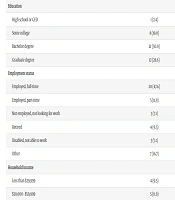
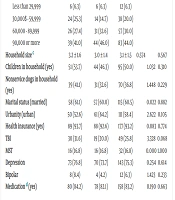
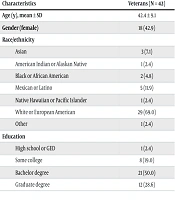
Table 1 presents a demographic breakdown of the veteran interviewees. Many veterans reported co-occurring mental health conditions as well as experiences with traumatic brain injury (TBI) or military sexual trauma (MST). These overlapping complexities underscore the wide range of challenges that service dogs are trained to address.
Table 1.
Characteristics of Participants a
| Characteristics | Veterans (N = 42) |
|---|---|
| Age (y), mean ± SD | 42.4 ± 9.1 |
| Gender (female) | 18 (42.9) |
| Race/ethnicity | |
| Asian | 3 (7.1) |
| American Indian or Alaskan Native | 1 (2.4) |
| Black or African American | 2 (4.8) |
| Mexican or Latino | 5 (11.9) |
| Native Hawaiian or Pacific Islander | 1 (2.4) |
| White or European American | 29 (69.0) |
| Other | 1 (2.4) |
| Education | |
| High school or GED | 1 (2.4) |
| Some college | 8 (19.0) |
| Bachelor degree | 21 (50.0) |
| Graduate degree | 12 (28.6) |
| Employment status | |
| Employed | |
| Full-time | 20 (47.6) |
| Part-time | 5 (11.9) |
| Not employed or not looking for work | 3 (7.1) |
| Retired | 4 (9.5) |
| Disabled or not able to work | 3 (7.1) |
| Other | 7 (16.7) |
| Household income ($) | |
| Less than 29,999 | 4 (9.5) |
| 30,000 - 59,999 | 5 (11.9) |
| 60,000 - 89,999 | 15 (35.7) |
| 90,000 or more | 18 (43.0) |
| Marital status (married) | 24 (57.1) |
| Children in household | 32 (76.2) |
| Urbanicity (urban) | 26 (61.9) |
| Health insurance | 38 (90.5) |
| Mental health conditions | |
| TBI | 9 (21.4) |
| MST | 9 (21.4) |
| Depression | 32 (76.2) |
| Anxiety | 36 (85.7) |
| Bipolar | 2 (4.8) |
Abbreviations: TBI, traumatic brain injury; MST, military sexual trauma.
a Values are expressed as No. (%) unless indicated.
4.1. Thematic Categories and Key Insights
4.1.1. Practical Expectations of Service Dog Assistance (Services and Tasks)
Organizational leaders noted that many veterans approach the application process with vague or unrealistic expectations. As one leader explained: I think sometimes they know that they want the dog because they have been exposed to a dog or a friend had a dog or something, but I don't think they understand exactly what the role of the service dog is, and then sometimes of course I get people who come to me and they want the dog to do 25 different things. A true service dog-, especially a psychiatric service dog, is required to recognize and alert when a person is in trouble, when to ground them. When they understand that, I think they begin to understand how much a dog can bring to the program.
Veterans echoed this uncertainty in describing their initial experiences entering a program. One veteran reflected: Going into getting the service dog, I really didn't know what to expect. I didn't have any expectations. The only thing I kind of knew, just from word-of-mouth, or seeing other people with service dogs, is just that, you know, they are a constant companion there for you.
Recovery goals were often a central consideration. Many participants described conducting research, talking with peers, or observing other service dog teams to shape their expectations. Veterans reported relying on these shared experiences as an important step in preparing for service dog partnership. As one veteran shared, “The number one thing I saw when I was doing research and talking to other veterans at the VA was the nightmare interruption.” Conversely, some veterans needed to address misaligned or impractical expectations before receiving a service animal. One organizational leader highlighted this point, emphasizing the importance of education: I think it comes across more as, "I am looking for a dog because I need to feel safe" or "I am looking for a dog who can clear a room" or do things that are not typical of what we would look for in a service dog. So, they are thinking about their own needs and they are thinking about how that is going to solve that piece of the feeling.
4.1.1.1. Alerting
Eighty-eight percent of veterans reported that alerting behaviors by their service dogs helped them regain control during emotionally intense situations. This task often involved the dog recognizing subtle behavioral or physiological changes before the veteran became consciously aware of their emotional state. As one veteran emphasized, the proactive response of their dog enabled them to redirect focus and apply coping strategies more effectively: A lot of it is alerting, like she just puts a paw on me, a paw on my foot, a paw on my leg, a paw on my hand, you know… Oftentimes you are not aware of your person and space, or in your mind-, what's happening in your mind or your subconscious. That's really driving all of your physical interactions, or what you say or what you do for your emotions, you are not aware of your emotions, and so when, at the beginning, I wasn't really aware of anything. And so, my service dog helps me become aware of what's happening. So, when she alerts me, I just do a full body scan and kind of, okay, and then I make better decisions quicker to be able to minimize the negative reaction of having PTSD.
4.1.1.2. Nightmare Interruption
Seventy-one percent of veterans identified nightmare interruption as the second most commonly requested task. This intervention involves the service dog recognizing and responding to physical cues such as tossing, yelling, thrashing, or other manifestations of distress during sleep. By disrupting these episodes, the service dog helps veterans transition to a calmer, more relaxed state and reduces anxiety associated with sleep disturbances. One veteran described: I have night terrors where I will actually scream out or yell, kick, run in my sleep, punch, flail – if she sees me do any of that, she usually jumps up, puts her paws on my chest or next to my chest, starts licking my face to wake me up, and then once I am awake, she keeps licking me, tail wagging, until I sit up and start petting her, then we both just sit there and calm down, and then I will lay down and go back to sleep and she will go back to sleep.
4.1.1.3. Blocking
Thirty-three percent of veterans described experiences with blocking, a task in which the service dog physically positions itself between the veteran and others to provide a controlled space. This behavior reduces anxiety in crowded or public environments and allows veterans to engage more comfortably. As one participant shared: It's also liberating to know that I am not alone. I am not alone in that-, when I'm standing in a crowd and about to have a meltdown, I am not alone, she's here with me, making space around me, blocking me, having my back so I don't have to watch 360, you know she's got that, I can trust her. I am never alone.
4.1.1.4. Physical Assistance
Nineteen percent of veterans reported that their service dogs also supported them with progressive physical impairments. Organizational leaders explained that service dogs were trained to assist with mobility-related tasks that enhanced veterans’ independence. This included retrieval, opening and closing doors, and turning on lights. As one leader described: Most of our veterans also have physical impediments. So, even though they might be mobile, teaching a dog how to pick things up for them. So, let's say you are walking and you drop your keys. It might be a challenge for you to bend over to pick up those keys. We can teach the dogs how to do that. We can teach retrieval, picking things up. We can teach them how to open and close doors. We can teach them how to turn on lights.
4.1.2. Expectations of Veteran-Service Dog Compatibility (Breeds, Characteristics, and Strength of Bond)
4.1.2.1. Matching and Bonding
Matching is not an instantaneous event. Extensive data collection occurs during the application process and early training sessions, considering factors such as PTSD symptoms, recovery goals, lifestyle, and preferred breed characteristics. As one organizational leader explained, while the initial match is important, achieving long-term success ultimately depends on the ongoing development of the partnership: We do not hand them a certified dog, we hand them a dog with the understanding that you are going to work together, do the training together, do the certifications together, so that they have more of a bond.
Despite careful matching, challenges were reported. Thirty-eight percent of veterans described difficulties with initial compatibility, noting that adjustment often required additional training and support. One veteran reflected on the process of transitioning from their first to second dog: Well, my first dog was a German shepherd and while he did his job and he did it very, very well, he just had more energy and drive than I could provide him. I worked in an office environment, so him to lay down for 6 to 8 hours a day and just hang out in an office, just wasn't his thing, and the staff here picked up on that, and we got it fixed. My new dog and I are clicking along… I will say that they asked me to come to a class on weekends, like an agility class, which I was more than willing to do that. So, I tried to bond with my dog better, as a whole, but once they could see it, they never doubted me at all, but they also wanted to see if they could help me with the dog before they washed the dog out. Once the director of the organization was able to see it, she was on board, so we made that transition.
4.1.2.2. Breeds and Characteristics
When entering the program, veterans were typically informed that the service dog they would receive would be the “best fit” for their lifestyle and specific needs. However, some veterans expressed preferences for particular breeds, citing familiarity from previous ownership, perceived suitability for performing specific tasks, or the association of certain traits (e.g., energetic, mellow, intelligent) with their ideal companion.
For some veterans, breed preferences were rooted in the belief that certain breeds possessed traits better suited to address their PTSD symptoms. One veteran described how similarity in temperament and drive facilitated bonding: I would say it depends on the veteran, their disabilities, and the type of dog that they were teamed up with. For me personally, my dog is a German shepherd and Belgian Malinois, and they are notorious for being very intelligent, very fast learners, and I think that because of his personality, basically complementing my personality because I'm an overachiever, the two of us were able to develop quicker than most service dog teams.
4.1.3. Expectations of Handler Responsibilities (Care and Safety of the Service Dog)
4.1.3.1. Safety Measures and Emergency Preparedness
Reflecting on their experiences post-graduation, seventy-six percent of veterans emphasized concerns about long-term responsibility for their service dog, particularly regarding medical emergencies and insurance coverage. Veterans described the importance of clear communication with training organizations about who assumes responsibility in these situations. One veteran explained: If she were to experience a medical emergency, so I would consult with my training organization first, and they would tell me ER or a doctor's visit, because I do check her body a lot, and I used to text the organizational leader about it, and she did have to go to the ER once, but the organization would take care of the bill. I do know that when I graduate, I would be in charge of her healthcare. I am going to go through USAA because they have pet insurance.
4.1.3.2. Diet
Maintaining appropriate nutrition was another prominent responsibility, with forty-three percent of veterans reporting that training organizations provided detailed guidance on managing diet. Adherence to these guidelines was viewed as key to ensuring the dog remained healthy and fit for service. One veteran recalled: Food, they give you a list and they say, "This is what we recommend you get," because of the nutrition content. There are no artificial fillers or anything that is poison or whatever. Again, they do a good job of educating you on diet. That way, there is no guesswork. As far as the treats go. They can have treats, but if you give them too many-, there is a weight standard that they have to meet. So, every year we go back and recertify and we have to-, they have to meet a weight standard. If they are too fat, then they put you on the fat dog program. You have got to keep their weight to a certain-, they have to be within five pounds of weight from when you got them.
4.1.3.3. Separation
Nineteen percent of veterans expressed anxiety over being separated from their dogs, underscoring the emotional dependence that develops within these partnerships. Training organizations often provided strategies to manage such separations, ensuring that dogs remained secure and veterans were reassured. As one trainer noted: Usually, the dogs are on some type of camera where you can pull them up on the phone and check in on them. Most of the time, the dogs are supposed to be with them anyway, but all dogs are kennel trained- … You want your dog to be comfortable in a kennel, so that you don't create anxiety, but you also don't want a dog to be so freaked out that they are tearing at the door because you are not in the room. So, part of that is training. You have got to have a dog who doesn't have separation anxiety, which is pretty common with service dogs because they are with you all of the time, but they have to understand that when they are not with you, it is not the end of the world. If they had that separation anxiety, then yes, you should probably put them in a crate
4.1.3.4. Ownership
Questions about long-term ownership and responsibility frequently arose, especially around graduation. Veterans described uncertainty and confusion over whether the organization or the veteran retained ultimate ownership. One veteran shared, “My confusion is on who owns the dog? I feel comfortable owning the dog, rather than renting the dog.” Others emphasized that transparent communication between organizations and veterans was essential to reducing uncertainty. Another veteran described the transition this way: The dog becomes more of the handler's pet whenever they choose to retire, but for the first several years, the organization maintains ownership, especially if your dog was to ever run away because they have the option as an organization to find you unfit as a handler and remove the dog for the dog's safety.
5. Discussion
Consistent with prior research, tasks such as alerting, nightmare interruption, and blocking emerged as the most valued forms of assistance provided by service dogs (6-8). At the same time, some veterans entered the program with unrealistic expectations of what service dogs could provide. This underscores the importance of training organizations offering clear guidance early in the application process to manage expectations and reduce misconceptions, ultimately supporting more successful matches.
When evaluating service dog candidates, training organizations often favor golden retrievers, labradors, and German shepherds for their temperament, intelligence, and trainability. These breeds typically succeed in Canine Good Citizen and Public Access assessments, common prerequisites for placement (9, 10). While some veterans prefer specific breeds, organizations emphasize identifying the 'best fit' based on lifestyle, therapeutic goals, and compatibility. Key factors influencing compatibility include canine energy, disposition, environment, support systems, and recovery objectives. Managing veterans’ expectations should focus on the dog’s ability to meet needs and the strength of the bond developed through training.
This study identified few unsuccessful matches. When challenges arose, such as personality mismatches or unmet expectations, training organizations arranged alternative service dogs to ensure veterans still received support. Unless extenuating circumstances existed, like inadequate preparation or unrealistic expectations, an unsuccessful match did not preclude access to canine support. Nonetheless, knowledge gaps highlight the need for further research to improve standardization and best practices in matching (9).
Our findings emphasize that graduation does not mark the endpoint of training, but rather a transition to sustained partnership. Service dogs must continue practicing essential skills, and veterans are expected to engage in regular recertification and ongoing training to maintain proficiency. This continuous process helps preserve the dog’s effectiveness and strengthens the bond between veteran and dog. Supporting compatibility and ongoing relationship development ensures partnerships remain effective over time.
In line with previous studies, this research highlights that training organizations conduct structured evaluations to confirm veterans can meet financial, physical, and emotional demands of service dog ownership (11, 12). Nonetheless, post-graduation challenges frequently surfaced, particularly around emergency preparedness, medical care, diet, separation, and ownership. Many organizations offered resources to ease this transition, but veterans often described uncertainty as responsibilities shifted from organizational oversight to personal accountability.
Dietary management was consistently emphasized, with organizations recommending feeding dogs high-quality, nutritionally balanced food to support health and working capacity. Adherence to these guidelines allowed veterans to make informed decisions and reduce the risk of complications, aligning with prior research on the importance of diet and exercise in maintaining service dog effectiveness (13).
Ownership after graduation emerged as a significant concern among veterans. Limited literature exists on the impact of ownership policies, but this study found varying policies between training organizations contribute to veterans’ uncertainty and anxiety regarding long-term rights and responsibilities. Many organizations retain ownership of the service dog as a safeguard to protect the animal’s welfare, allowing intervention if necessary. While Whitworth and Stewart suggest that current legal frameworks do not directly affect the bond between the handler and service dog, clearer communication about ownership policies may help alleviate veterans’ apprehension and improve their overall sense of security (9).
5.1. Conclusions
This study emphasizes the importance of aligning veterans’ expectations with the practical realities of psychiatric service dog partnerships. Successful outcomes are shaped by compatibility, sustained training, and the development of a strong veteran-dog bond. Clear communication from training organizations, particularly regarding: Ownership, care responsibilities, and program standards can further strengthen veterans’ confidence and long-term satisfaction.
These findings add to the growing evidence supporting the therapeutic benefits of service dogs for veterans with PTSD, while also underscoring the need for more consistent program practices. Future research should employ longitudinal and comparative designs to examine long-term outcomes and inform the standardization of training protocols. Advancing this evidence base will be essential to refining best practices and ensuring that both veterans and their service dogs experience the greatest possible benefit.
5.2. Limitations
This study has several limitations. The cross-sectional design limits causal inference and prevents assessment of changes over time. Self-reported data may be subject to recall and social desirability bias, and the sample may not reflect veterans who do not pursue service dog partnerships. Variability in training models and organizational policies also limits generalizability. Future research should use longitudinal designs and examine program differences to strengthen the evidence base for service dog interventions.