
1. Background
Posttraumatic stress disorder (PTSD) affects an estimated 11% to 20% of military veterans and is associated with chronic psychological distress, functional impairment, social isolation, substance use, and elevated suicide risk. Although evidence-based psychotherapies and pharmacologic treatments have demonstrated efficacy (1, 2), many veterans do not experience sustained benefit and often discontinue treatment because of stigma, perceived ineffectiveness, or side effects (3, 4). These limitations have increased interest in complementary approaches to PTSD care. Throughout this article, we use “psychiatric service dog handler training” as an umbrella term for the structured process by which a veteran is matched with and trained to work alongside a psychiatric service dog; narrower terms such as “post-placement support” and “handler-dog partnership” are used only when they denote distinct components of this process.
Psychiatric service dogs have emerged as a complementary intervention and receive specialized training to perform task-based interventions that mitigate trauma-related symptoms and support daily functioning, including grounding, nightmare interruption, and anxiety alerting. Prior studies have associated service dog partnerships with reduced PTSD symptoms, depression, anxiety, suicidal ideation, and sleep disturbance, as well as improved emotional regulation, engagement in meaningful activities, and community reintegration (5-8). The effectiveness of these partnerships is shaped by training quality, veteran-dog matching, trauma-informed program delivery, and post-placement support (9). Facilitators include skilled staff, clear communication, and ongoing follow-up services (7), whereas barriers such as limited access, financial burden, and inconsistent health care documentation persist (8, 10). Despite growing interest, research remains constrained by small samples, single-site designs, and limited examination of structural and process-level factors.
2. Objectives
This study addresses these gaps by identifying barriers and facilitators that influence psychiatric service dog partnerships among veterans with PTSD, thereby informing training practices, access, and policy development.
3. Methods
3.1. Study Design and Framework
This qualitative study represents a secondary, focused analysis conducted within a larger mixed-methods research program examining psychiatric service dog partnerships among veterans with PTSD (6). Whereas prior analyses from this project examined veteran-reported mental health and quality-of-life outcomes, the present study was designed to investigate training-related barriers and facilitators influencing veterans’ participation in psychiatric service dog handler programs. Guided by Donabedian’s structure, process, and outcome framework for health care quality (11), this analysis specifically examined organizational characteristics (structure), training access and delivery practices (process), and veterans’ perceived engagement and sustainability during handler training (outcome). The framework was applied deductively to seed coding and again during interpretation; Table S1 in the Supplementary File maps each theme to its domain.
3.2. Participants and Sampling
Participants were recruited from nine service dog training organizations. Eligible veterans completed all preliminary surveys and reported elevated emotional distress based on baseline PCL-5 and PHQ-9 scores. Thematic saturation was achieved after 42 interviews, and participants received a $50 Amazon gift card. Interviews were also conducted with 10 executive-level leaders. Eligibility criteria included a clinical PTSD diagnosis, age 18 years or older, and active participation in a service dog program. Veterans with prior service dog certification or a history of animal-related offenses were excluded. Organizations were identified through the broader mixed-methods program and selected using purposive maximum-variation sampling to ensure variation by region, size, and training model. Eligible veterans and executive leaders were invited directly; all who met criteria agreed to participate, so no decline or nonresponse count applies. Saturation was confirmed during coding, with no new themes identified in the final interviews.
3.3. Data Collection and Analysis
A semi-structured interview guide was developed with expert input to assess perceived barriers and facilitators to psychiatric service dog training. Interviews were conducted between June 2021 and July 2022 following Institutional Review Board approval from the Johns Hopkins Bloomberg School of Public Health. Interviews were audio recorded, transcribed, and anonymized. Inter-coder reliability was assessed using Cohen’s Kappa (0.74), and discrepancies were resolved by consensus. Data were analyzed using iterative thematic coding in Atlas.ti following established qualitative guidelines (12). Veterans were interviewed by telephone, and leaders were interviewed using a mix of in-person and telephone formats, in each participant’s preferred setting, by a single male DrPH candidate trained in qualitative methods; this work was part of supervised dissertation research, and the interviewer had no clinical or prior relationship with participants. The guide was piloted with non-study volunteers and is available on request; field notes were maintained. Interviews averaged 79 minutes (range: 53 - 171), and transcripts were not returned to participants. Analysis used a hybrid inductive-deductive approach, with an initial codebook seeded from Donabedian’s framework and three coders (public health, psychology, and qualitative methods) reconciling codes by consensus into the final four barriers and four facilitators. A full COREQ checklist is provided as Supplementary File 1.
4. Results
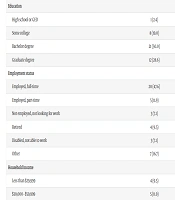
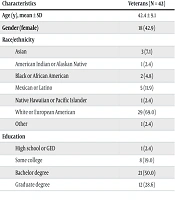
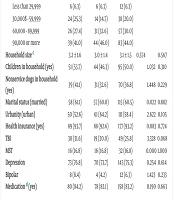
The demographic and clinical characteristics of the veteran cohort have been reported previously (8). Briefly, veterans had a mean age of 42.4 years (SD 9.1), 42.9% were female, and most identified as White or European American (69.0%). A majority held a bachelor’s degree or higher (78.6%), were married (57.1%), and lived in urban areas (61.9%). Clinically, the cohort reported high rates of anxiety (85.7%) and depression (76.2%), with 21.4% reporting military sexual trauma and 21.4% reporting traumatic brain injury. Interviews averaged 79 minutes, and veterans had been partnered with their service dogs for a mean of 10 months (range: 3 - 22 months), allowing examination of both early and established partnerships.
All theme frequencies and percentages reported below were calculated from the 42 veteran participants. Quotations from the 10 executive-level organizational leaders are presented as contextual and corroborating evidence and are labeled accordingly; they were not included in the veteran-based frequency counts.
4.1. Thematic Categories and Key Insights
4.1.1. Barriers
Four primary barriers to psychiatric service dog handler training were identified: (1) access, (2) emotions, feelings, and behaviors, (3) communication, and (4) health care providers and systems. Ranked by frequency, these themes reflect intersecting individual- and system-level challenges that limited veterans’ ability to fully engage in training programs.
4.1.1.1. Access
Limited access was identified as a primary barrier by 14 interviewees (33%). Veterans described highly competitive application processes driven by large applicant pools and dog-matching constraints. One veteran explained, “There are a significantly high number of applicants… you are competing with a lot of other veterans who have disability needs.”
After acceptance, veterans described lengthy and inconsistent waits—often applying to multiple organizations and waiting months to more than a year for placement. Geographic distance compounded these challenges, particularly for out-of-state veterans with limited in-person support. One participant explained:
I think that for the service dog teams that are in the local area, it would be a lot easier, but if there's someone like me who lives 3 hours away, I think it's been a little bit difficult for me to move forward with my training. [Veteran]
4.1.1.2. Emotions, Feelings, and Behaviors
Thirteen of the 42 interviewees (31%) identified emotions, feelings, and behaviors as significant barriers to progressing through service dog handler training. Veterans described how depression, anxiety, and trauma-related distress interfered with completing applications and sustaining engagement in training activities. One veteran explained how mental illness limited their ability to navigate the demands of the process, stating, “If you're super depressed, then you are not going to be able to climb out of the hole to do all the things that you need to do.” Others noted that revisiting traumatic experiences, particularly military sexual trauma, triggered distress that discouraged veterans from applying for or continuing in training programs.
Men and women are afraid to come out and tell their story related to military sexual trauma. And so, having just underlying issues of anxiety and depression stemming from that is probably a big one that has shied veterans away from applying for a service dog. [Veteran]
One participant recounted a peer who struggled to overcome negative emotions during training, which affected their progress:
He was in it for a week, did okay, but on one Saturday he locked himself in his room and he didn't come out for days. He could not handle being in public for more than two or three hours a day… We had great conversations, and I said I will do anything for you except support you not going to class, but he didn't make it. So, he lost a dog. [Veteran]
One program leader described encouraging veterans to persevere through negative emotions during training:
When they come in, they do not want to take a dog from another veteran, because they do not feel that they deserve it. They have unbelievable survivor's guilt… They sit here saying, "I don't deserve this. Somebody else deserves it more." I tell them, "That somebody else is not in front of me, but you are, and this is your time.” [Program leader]
4.1.1.3. Communication
Twelve of the 42 interviewees (29%) identified communication as a barrier, reporting difficulty reaching organizations during urgent situations, which created distress and uncertainty at critical moments.
It took them a week to get back to me… At that point, I had already taken the dog to the vet and spent $500… I am a first-time dog owner and I am asking you for help, and you are getting back to me 3 days later. What if something happens to the dog within those 3 days? It feels like I am not a priority. [Veteran]
Participants also described limited post-graduation communication and expressed disappointment with infrequent follow-up and few opportunities to discuss post-placement experiences.
I was disappointed in the fact of not really having much communication or support so quickly after getting the dog. It was sort of like, "You graduated, and we will see you after one month, virtually." Every time we have met since, we have not been able to share or talk about our experiences… that has been very disappointing. [Veteran]
Some veterans also reported that an overly intense or unwelcoming communication style compounded emotional strain during training.
I think the staff are rough… I would not call them welcoming. The master trainer, maybe, and the class instructor, but the actual staff who are running around all the time, they have a tendency to be rough… the general consensus is that it is just too much, too rough, in your face, intense. [Veteran]
4.1.1.4. Health Care Providers and Systems
Six of the 42 interviewees (14%) identified health care providers and systems as substantial barriers, describing difficulty obtaining letters of recommendation from Veterans Affairs (VA) providers perceived as unsupportive or unfamiliar with service dog programs. One veteran stated, “The doctor at the VA did not seem interested… Getting him to participate and write the letter was grueling, and I almost gave up.”
Several described inconsistent VA guidance that required extensive self-advocacy to secure documentation.
My psychiatrist told me that the VA will not do recommendations for service dogs… So, I went to the patient advocate who had my PCP do it. It is really annoying when the VA will not follow its own rules… ultimately, if it is something you want, you have got to self-advocate for it, but it is really frustrating and difficult to navigate. [Veteran]
Program leaders echoed these concerns, urging better coordination between training organizations and health care systems and broader recognition of service dogs in training.
Allow service dogs in training instead of just certified. Quite often, they [veteran handlers] have the dog for a decent period of time, before they do get certified… several states allow service dogs in training the same rights as a certified service dog. So, I think that would help. [Program leader]
4.1.2. Facilitators
Four primary facilitators of psychiatric service dog handler training were identified: (1) training staff, (2) Veteran Peer Support, (3) post-graduation support, and (4) family inclusion.
4.1.2.1. Training Staff
Eighteen of the 42 interviewees (43%) identified training staff as the most frequently cited facilitator, emphasizing the value of skilled health professionals embedded within programs. One participant noted, “They have a behavioral health specialist and a social worker there on site that can help you process through some of the things… that will come out.”
When I started with the service dog and training, and it was a combination of the service dog and the counselors that they have there — when you don't have someone to talk to, it just builds up in you… having someone to talk to there makes a big difference. [Veteran]
Staff responsiveness during distress also supported continued engagement.
When I am having difficulty in classes, the trainers are very good to step aside and talk to me, and they will guide me to show me ways that work better. They are also very good at saying, "I think you need to have a break.” [Veteran]
Some veterans reported that staff assistance extended beyond formal training.
I was there in a hotel that I could afford, of course, was drug-infested, and it was triggering as heck for me and my dog, and I told [training staff] I could not live there anymore… they had a tiny house on the facility that they let me move into… their openness and courage to take a chance on me has allowed me to grow. [Veteran]
4.1.2.2. Veteran Peer Support
Fifteen of the 42 interviewees (36%) identified Veteran Peer Support as a significant facilitator. Veterans described how training alongside peers with shared experiences reduced feelings of isolation and helped mitigate avoidant behaviors.
It's very helpful to hear that other people have experienced the same things I have, because I have avoided group sessions in the past. It just makes me feel like I am less alone. [Veteran]
Peer support was also described as instrumental in maintaining accountability: “During the pre-work, we formed battle buddies or accountability buddies… someone that you can check in with.”
Beyond formal training periods, participants described ongoing peer networks that provided practical and emotional support.
We have a Facebook page that we all talk on… and if there is a veteran that is close to you, you can get together with them, or you can help them out. So, everybody is a support network—they can stop whatever they're doing and come over and help you. [Veteran]
4.1.2.3. Post-Graduation Support
Fourteen of the 42 interviewees (33%) identified post-graduation support as a facilitator, valuing continued access to trainers for skill reinforcement and problem solving after placement.
If I have a problem, they will schedule immediately, like I had an issue with my service dog being too much of a dog when he was out of his vest. They spoke to me on the phone for about 30 minutes and by the next day I had him basically listening to me again. [Veteran]
Another veteran explained, “They made that perfectly clear before they left, ‘You have got our numbers. Call us anytime.’ Yeah, they are very open-door policy.”
Program leaders also adapted post-graduation services to maintain continuity during disruptions such as the COVID-19 pandemic.
Our men and women were really struggling because they could not come here. That really contributed to them having more problems. And so, we started Zoom calls and we did our own little thing on Facebook - a community page… We would share videos of dog training and ask everybody to take a video of themselves with their dog. So, it kept them connected again, and they loved it. [Program leader]
4.1.2.4. Family Inclusion
Four of the 42 interviewees (10%) identified family involvement as a key facilitator, describing how programs intentionally included spouses to improve understanding of PTSD, service dog integration, and household dynamics.
They did a whole day of training. That was in person, where the spouses came in and worked for maybe a day and a half. So, they got to know what was going on and how to incorporate the dog into our life as a family… they got a taste of the trauma resiliency as well as the dog training, and I thought that was pretty valuable. [Veteran]
Participants also noted that involving spouses positively affected relationships and communication.
I told [staff member] that I was going to get divorced, and I had already returned the paperwork and stuff, and she said, "Bring your wife with you." … That was a huge thing, that finally someone let my wife in on what was going on with me… my training organization helped bridge that. [Veteran, quoting staff]
Program leaders reinforced family participation, noting that allowing spouses to observe and ask questions supported handler progression and skill reinforcement at home.
We have a space set up so that they can actually come and be a part of it. They can see what is going on and they can ask questions. They can interact. For some of our veterans, that is very helpful. For example, one veteran has such a traumatic brain injury that his spouse is able to remind him of the training and help him stay on track. [Program leader]
5. Discussion
This study provides a national qualitative assessment of barriers and facilitators influencing participation in psychiatric service dog training programs. Using Donabedian’s seminal structure, process, and outcome framework (11), the findings demonstrate that the effectiveness of psychiatric service dog programs is shaped by individual veteran–dog matching, as well as organizational capacity, service delivery practices, and continuity of support. Together, these system-level factors influence veteran engagement, satisfaction with care, and the sustainability of therapeutic benefits.
5.1. System-Level Barriers to Service Dog Training (Structure and Process)
Barriers identified in this study reflect intersecting structural, procedural, and clinical constraints that limit veterans’ ability to engage fully in service dog training. Access challenges—limited program availability, competitive admission, and geographic distance—were most frequently cited, consistent with prior findings that service dog organizations often operate with limited staffing and resources, restricting scalability and prolonging wait times (13).
Psychological distress further compounded access barriers, as veterans described how depression, anxiety, and trauma-related symptoms interfered with completing applications and sustaining participation. Communication breakdowns and inconsistent post-acceptance support further undermined trust. Barriers within health care systems were also notable: despite VHA Directive 1134 (3), which requires VA providers to assist with essential medical documentation, veterans frequently encountered resistance or inconsistent implementation, revealing a persistent gap between policy and practice.
5.2. Program-Level Facilitators and Conditions for Success (Process and Outcome)
Facilitators identified across programs consistently reflected relational and organizational strengths. Training staff—especially embedded behavioral health specialists—supported emotional regulation and skill acquisition, and veteran peer support reduced isolation and reinforced accountability, consistent with prior research on peer-based support in PTSD recovery (14). Post-graduation support and family inclusion further sustained skill retention and household understanding over time.
5.3. Implications for Practice and Policy
Optimizing these programs requires investment in system-level capacity rather than individual resilience alone, including sustainable funding, standardized communication protocols, and stronger integration with health care systems. Programs that embed trauma-informed staff, foster peer networks, provide post-graduation support, and include families may deliver more consistent and durable benefits. Aligning provider education with existing VA policy may further reduce access barriers.
5.4. Limitations
This study relies on self-reported data and is subject to recall and social desirability bias. The sample—veterans engaged with nine programs—may not represent veterans with PTSD who lack access to or do not pursue training. Qualitative interpretation is inherently subjective, despite iterative coding and consensus review among multiple coders. Future mixed-methods or longitudinal studies may enhance generalizability.
5.5. Conclusions
This national qualitative study identified structural- and process-level barriers to psychiatric service dog training, including limited access, communication challenges, and provider documentation requirements. Facilitators such as engaged training staff, peer support, post-graduation services, and family inclusion supported more sustainable training experiences. The findings underscore the importance of organizational capacity and continuity of support and point to the need for future multisite mixed-methods research to inform evidence-based standards and improve equitable access for veterans with PTSD.