
1. Background
Total Quality Management (TQM) is widely used in industrial sectors, particularly in the pharmaceutical and food industries, to improve production control. However, its application in healthcare is less widespread, possibly due to misconceptions about its nature. TQM aims to satisfy customers and ensure appropriate medical care (1).
TQM principles have been applied in nursing care management and adopted by healthcare institutions (2). TQM comprises 3 key elements: a commitment to customer-focused quality improvement, inclusive teamwork, and continuous improvement through systematic error identification and resolution (3, 4). Dilber et al. defined TQM as a process and business model that aligns goods or services with customer needs through efficient, cost-effective, timely, and safe processes involving all employees (5).
Protecting citizens requires strategies to address potential hazards. The coronavirus disease 2019 (COVID-19) pandemic highlighted the need for emergency plans. Effective preparation involves risk assessment, expert consultation, and analysis of hypothetical scenarios. Identifying risks enables the implementation of appropriate measures, such as physical distancing, mask use, testing, and assistance for affected individuals (6). Preparation for potential hazards is an ongoing process; as new threats emerge, contingency plans must be updated and adapted. Proactive preparedness can better protect individuals and communities from harm.
Hospitals in the northern and eastern Gaza Strip are close to conflict zones and face numerous hazards, including bombing (7). The healthcare system in Gaza has experienced severe strain during recurrent conflicts, particularly during the war that began in October 2023. Before the escalation, the Gaza Strip's healthcare infrastructure was already fragile, with only 35 fully operational hospitals and 3,412 beds serving more than 2 million people. The war exacerbated these vulnerabilities, causing widespread hospital closures, shortages of medical supplies, and infrastructure damage. Hospitals in northern and eastern Gaza, including the Indonesian Hospital in the north and Al-Jazzar Hospital in Khan Younis, were severely affected. These facilities faced limited resources, damaged utilities, and increased numbers of patients injured in the conflict (8).
The Indonesian Hospital in northern Gaza faced unique challenges during the conflict, as documented by Musalam et al. (9). Staff were under immense pressure to maintain healthcare delivery despite ongoing attacks. Infrastructure destruction, compounded by the blockade, reduced access to medical supplies and threatened healthcare workers' safety, substantially limiting the hospital's capacity to provide care. This case illustrates the broader implications for healthcare facilities during wartime, particularly when they also confront challenges such as the COVID-19 pandemic.
As the conflict escalated, healthcare facilities became increasingly overwhelmed, and prioritizing war injuries over chronic health conditions placed additional strain on the system. Rapid depletion of medical resources contributed to preventable deaths and a growing health crisis (8). Antimicrobial resistance, already an increasing concern, was exacerbated by hospital overcrowding and medication mismanagement, as highlighted by Moussally et al. (10). These factors demonstrate the less visible, long-term effects of war on disease control and treatment.
Healthcare systems in the region also struggled to accommodate the increasing number of casualties. Studies of Israeli hospitals closest to Gaza showed that their capacity was similarly tested, emphasizing the importance of planning and cross-border coordination during regional crises (11). These experiences provide lessons for future health-crisis management and underscore the need for a coordinated response during conflict.
Attacks on healthcare facilities in Gaza also raise major ethical and legal concerns. Healthcare services are protected under international law during armed conflict. Gostin and Goodwin (12) emphasized that protecting healthcare facilities and workers is essential from both humanitarian and health-system resilience perspectives. Their work highlights the importance of safeguarding healthcare infrastructure in conflict zones.
Collectively, these studies illustrate the multifaceted challenges faced by Gaza's healthcare system during the 2023 war. The destruction of healthcare infrastructure and persistent public health threats underscore the urgent need for international support and comprehensive strategies to protect health services during conflict.
1.1. Previous Studies
Alshourah (13) evaluated TQM implementation and its association with quality performance in accredited private hospitals in Jordan. Data were collected from 330 participants in 5 hospitals, with a response rate of 42.4%. The findings indicated a high level of TQM implementation.
Al-Shdaifat (14) investigated TQM implementation in hospitals and its relationship with demographic characteristics. Questionnaire data were collected from 332 nurses in public, armed forces, and academic hospitals. The findings indicated 70% success in TQM implementation, with variation in the application of its guiding principles.
Faloudah et al. (15) proposed a healthcare quality-management framework based on 5 measures. The framework was intended to improve professional and service performance and increase confidence among patients and staff. The study emphasized continuous improvement and alignment with patient needs.
Mosadeghrad (16) identified essential TQM elements, including education, leadership, customer focus, employee engagement, process management, and improvement. The study aimed to facilitate TQM implementation and improve organizational strategy.
Alolayyan et al. (17) examined the effects of operational flexibility and TQM on hospital performance. Based on a sample of 231 medical executives, the study identified an association among operational flexibility, TQM, and hospital performance.
Carman et al. (18) examined TQM and continuous quality improvement in 10 hospitals to identify factors associated with successful program implementation. Their 2-year study focused on critical care in the United States and sought to improve standards and effectiveness through organized processes and institution-wide participation.
Patel (19) highlighted the following approaches to healthcare improvement:
1) Providing high-quality care at a fair cost and in a timely manner.
2) Implementing a zero-error policy and preventing medical errors.
3) Educating healthcare professionals to prevent errors, reduce delays, and meet patient needs.
4) Prioritizing patient-centered healthcare.
Algerian Hospital, located near the eastern border of Khan Younis, provides essential medical and emergency services to approximately 70,000 residents. Kamal Adwan Hospital in northern Gaza serves approximately 300,000 people in Beit Hanoun and Beit Lahiya and employs 334 staff members across its surgical, internal medicine, and emergency departments. Figure 1 illustrates the strategic distribution of these military hospitals in the Gaza Strip, with Algerian Hospital in the south and Kamal Adwan Hospital in the north, both near conflict zones and serving border communities.
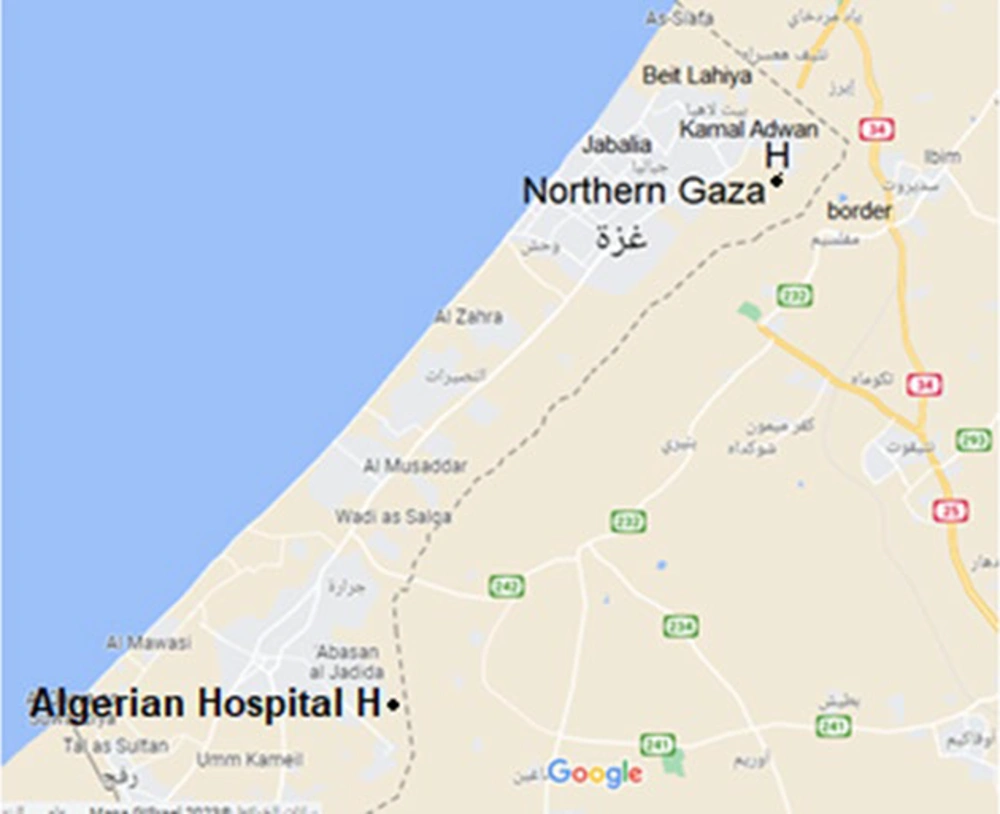
Figure 1.
Locations of military hospitals in the Gaza Strip
2. Objectives
This study aimed to assess administrators’ perceptions of TQM across hospital departments, focusing on Algerian Hospital in the east and Kamal Adwan Hospital in the north, both affiliated with Military Medical Services. The specific objectives were as follows:
1) Determine the challenges encountered in implementing a comprehensive quality-management system in military hospitals in the Gaza Strip.
2) Identify the challenges associated with implementing crisis-response plans in military hospitals in the Gaza Strip.
3) Determine the relationship between crisis preparedness and response plans and the implementation of a comprehensive quality-management system in military hospitals in the Gaza Strip.
4) Identify the available administrative and medical personnel, as well as the capabilities, required to implement comprehensive quality-management systems and response plans.
5) Develop a comprehensive quality-management model for military hospitals in the Gaza Strip that incorporates crisis-response protocols.
The main research question was: What is the relationship between TQM systems and crisis-response plans in Military Medical Services hospitals?
The following subquestions were examined:
1) To what extent is senior management in military hospitals aware of TQM systems?
2) What obstacles and challenges affect TQM implementation in military hospitals in the Gaza Strip?
3) What obstacles and challenges affect the implementation of crisis-response plans in military hospitals in the Gaza Strip?
4) What is the relationship between TQM implementation and crisis preparedness and response plans in Military Medical Services hospitals?
5) What engineering and technical requirements must hospitals meet to respond to emergencies?
3. Methods
3.1. Study Design and Setting
A descriptive qualitative approach was used to describe and analyze TQM implementation in military hospitals and to assess their capacity for crisis and risk preparedness and response. The study focused on the Algerian Hospital and Kamal Adwan Hospital in the Gaza Strip.
3.2. Study Population and Sample
The study population and sample comprised all hospital directors and administrative directors at the participating military medical services hospitals, as shown in Table 1.
Table 1.
Study Population and Sample Distribution
| Name | Position | Workplace |
|---|---|---|
| Ehab Siam | Administrative director | Kamal Adwan Medical Complex |
| Ahmed Al-Kahlout | Director | Kamal Adwan Medical Complex |
| Bilal Sahmoud | Administrative director | Algerian Hospital |
| Wael Shaqfa | Director | Algerian Hospital |
3.3. Data Collection and Framework Development
Personal interviews were conducted with senior managers at the participating military medical services hospitals. The interviews were conducted before the outbreak of the October 2023 war. A comprehensive quality-management model incorporating response procedures was developed by analyzing the interview findings and reviewing relevant references.
4. Results
4.1. Awareness of the Total Quality Management System
The first research question examined senior managers’ awareness of TQM. Interviews were conducted with the director and administrative director of Kamal Adwan Hospital and the director and administrative director of Algerian Hospital. The findings are presented in Table 2.
Table 2.
Senior Managers' Understanding and Application of Quality-Management Systems
| Question Topic; Summary of Interview Results | Detailed Responses | Respondent |
|---|---|---|
| Understanding of the TQM system; Agreement on quality care and patient satisfaction; ongoing administrative, medical, and technical improvement; comprehensive quality planning for all departments; implementation based on available resources, particularly medical and technical logistics | Prior knowledge involves completing tasks correctly from the outset. It includes planning, time management, service quality, patient satisfaction, and safety protocols. | Kamal Adwan Hospital (hospital director) |
| We strive for patient safety and satisfaction by applying our knowledge. We also improve technical, mechanical, medical, and nursing performance through protocol implementation. | Kamal Adwan Hospital (administrative director) | |
| By developing a strategic plan, we establish goals and secure equipment, medications, consumables, and supplies. Staff education and development are key components. | Algerian Hospital (hospital director) | |
| TQM can be achieved through continuous service improvement aligned with general quality standards across all hospital areas and through active employee participation and cooperation. | Algerian Hospital (administrative director) | |
| Application of the TQM system; The Ministry of Interior's strategic plan should include comprehensive quality management; implementation should proceed gradually according to available capabilities; trained medical, administrative, and technical personnel are essential; quality-system implementation and development should be continuous | Plans developed by the Medical Services Department cover hospital operations, while the Ministry of Interior has a detailed strategic plan. These plans integrate quality-management concepts into administrative, medical, and technical functions according to recognized procedures. | Kamal Adwan Hospital (hospital director) |
| Strategic and operational planning before implementation involves all personnel, prioritizes patient safety, and prevents complications through continuous improvement in administrative processes, prevention, and departmental monitoring. | Kamal Adwan Hospital (administrative director) | |
| The system can be implemented gradually according to established capabilities and priorities while ensuring the minimum requirements for patient and staff safety. | Algerian Hospital (hospital director) | |
| Quality-system implementation depends on administrative and financial resources, qualified staff, and system availability. | Algerian Hospital (administrative director) |
Patient satisfaction reflects patients’ experiences with medical care, including communication, access to information, waiting times, and facility quality (20). It is an important indicator of healthcare quality and the extent to which providers meet patient needs. High-quality care and patient satisfaction require teamwork among healthcare professionals to deliver coordinated and comprehensive care (20).
The findings showed that senior managers at military hospitals understood the concepts of comprehensive quality management and considered its application essential for improving medical services and patient satisfaction through the involvement of patients, management, and leadership (21).
4.2. Obstacles to Total Quality Management Implementation and Crisis Response
Senior managers from both hospitals described the obstacles and challenges affecting TQM implementation and crisis-response planning, as shown in Table 3.
Table 3.
Obstacles to Implementing Quality-Management and Crisis-Response Systems
| Aspect; Summary of Interview Results | Detailed Responses | Respondent |
|---|---|---|
| TQM implementation obstacles; Insufficient administrative and medical staff; budget constraints affecting computers and medical equipment; lack of integrated maintenance systems for emergency vehicles and equipment; shortage of technical and mechanical resources | There are insufficient administrative and medical personnel for essential tasks and shortages of technical and mechanical resources. Implementation requires financial allocations, medical equipment, technical support, and maintenance. | Kamal Adwan Hospital (hospital director) |
| Equipment, medications, medical supplies, ambulances, and technical maintenance logistics are required. | Kamal Adwan Hospital (administrative director) | |
| There are shortages of skilled medical and technical staff for equipment, vehicle, and air-conditioning maintenance, as well as shortages of supplies, medications, equipment, and financial resources. | Algerian Hospital (hospital director) | |
| Shortages of maintenance engineers, medical and administrative staff, and computers affect quality-system implementation, along with limited financial and material resources. | Algerian Hospital (administrative director) | |
| Crisis-response plans; Crisis-response plans should be based on anticipated scenarios; emergency response should be incorporated into quality systems; the Ministry of Health, health committees, and the United Nations Relief and Works Agency for Palestine Refugees in the Near East should participate in implementation | We have a crisis-response plan for anticipated scenarios, particularly during wars. Hospitals affiliated with the Ministry of Health, the Union of Health Work Committees, and the United Nations Relief and Works Agency for Palestine Refugees in the Near East coordinate their activities. | Kamal Adwan Hospital (hospital director) |
| We have established crisis plans and collaborate with the United Nations Relief and Works Agency for Palestine Refugees in the Near East and the Ministry of Health to respond to shortages of fuel, medical equipment, and medicines. | Kamal Adwan Hospital (administrative director) | |
| Crisis management relies on prioritization within a realistic preparedness plan. | Algerian Hospital (hospital director) | |
| Quality-system implementation should include emergency-response scenarios to ensure patient and staff safety. | Algerian Hospital (administrative director) | |
| Challenges in implementing crisis plans; Coordination and communication challenges among medical institutions; shortage of personnel required for operations and maintenance; absence of strategic emergency reserves | Medical institutions in Gaza experience cooperation and communication difficulties because some employees live outside the North Governorate. Staff availability is challenging, and emergency response is affected by insufficient strategic reserves, including fuel. | Kamal Adwan Hospital (hospital director) |
| During emergencies such as war or bombing, there are no strategic reserves of medical supplies, medications, equipment spare parts, or ambulances. | Kamal Adwan Hospital (administrative director) | |
| Shortages of medical and administrative staff, limited financial resources, and inadequate supplies adversely affect residents' health. | Algerian Hospital (hospital director) | |
| The blockade of Gaza causes shortages of medical, engineering, and technical staff and equipment. | Algerian Hospital (administrative director) |
The blockade of the Gaza Strip, in place since 2008, poses substantial barriers to TQM implementation in military hospitals (22). Challenges include shortages of staff, supplies, budgets, and maintenance systems. Human resource, strategic, and structural constraints hinder comprehensive quality management (22).
The blockade also limits access to resources required for strategic planning and prevents hospitals from aligning operations with organizational goals. Structural constraints impede the acquisition of supplies and equipment needed to maintain hospital infrastructure (23), including basic medical supplies, imaging equipment, and surgical instruments.
Hospital quality-management systems should incorporate emergency-response plans to protect patients and staff. Because emergencies are unpredictable, hospitals require timely and efficient response plans. Regular drills and simulations can integrate emergency scenarios into quality management, identify weaknesses, and support revisions before actual emergencies occur.
Effective emergency response also depends on communication with external agencies (24). Protocols for patient and staff safety, including securing hospital premises and providing personal protective equipment, are essential. Drills, communication systems, and safety protocols can improve emergency preparedness and the quality of patient care (24).
4.3. Relationship Between Total Quality Management and Crisis Preparedness
The fourth research question examined the relationship between TQM implementation and crisis preparedness and response plans in medical services. Interviews with senior hospital managers yielded the findings presented in Table 4.
Table 4.
Relationship Between TQM Implementation and Crisis Preparedness
| Aspect; Summary of Interview Results | Detailed Responses | Respondent |
|---|---|---|
| TQM improves crisis response; TQM improves crisis-response coordination; identifies weaknesses and supports strategy development; establishes communication channels and emergency protocols; facilitates involvement of external agencies | TQM improves coordination and integration among medical institutions. For example, Kamal Adwan Hospital specializes in women's health and surgery, while the Indonesian Hospital focuses on accidents and internal medicine, creating complementary capabilities. | Kamal Adwan Hospital (hospital director) |
| The effect is achieved through accurate protocols and effective planning that prioritize patient safety and prevent complications through systematic approaches. | Kamal Adwan Hospital (administrative director) | |
| Improvement is feasible but constrained and gradual because resource limitations and external challenges affect the pace of implementation. | Algerian Hospital (hospital director) | |
| Improvement is partially and gradually achievable because of the complex variables and constraints in the operational environment. | Algerian Hospital (administrative director) | |
| TQM enhances crisis preparedness; TQM is directly linked to crisis preparedness; enables continuous improvement and staff engagement; supports systematic problem measurement; promotes quality improvement through structured changes identification and performance | Emergency plans complement preparedness in military hospitals, while comprehensive quality management improves staff allocation, data collection, administrative forms, and identification of strategic reserves for crises. | Kamal Adwan Hospital (hospital director) |
| Emergency preparedness can be improved through optimized work systems. This requires training medical, administrative, and engineering staff and ensuring the availability of equipment, vehicles, and fuel for professional emergency response. | Kamal Adwan Hospital (administrative director) | |
| TQM improves staffing and medical and engineering resources, thereby strengthening preparedness and response protocols for effective crisis management. | Algerian Hospital (hospital director) | |
| Quality-system implementation requires staff coordination and engineering support for maintenance, supplies, and medicines, thereby improving crisis preparedness. | Algerian Hospital (administrative director) |
The findings indicate that TQM systems improve the coordination of medical services among relevant institutions (25). This improvement is achieved by establishing protocols, controlling operations, and integrating emergency scenarios. These measures help hospitals systematically identify risks, ensure resource availability, and develop effective emergency plans.
Emergency-response and preparedness plans in border hospitals are complementary. A comprehensive quality-management system can improve procedures and planning, including strategic stock management and staff allocation during emergencies (26). Hospital managers require appropriate policies, programs, training, and support to implement risk-management measures effectively (26).
Although improving TQM in Gaza’s military hospitals is feasible, progress is constrained by multiple factors. The ongoing blockade substantially impedes the establishment and maintenance of high standards of patient care. These constraints affect the pace and completeness of implementation, although incremental improvements remain possible through adaptive strategies and resource optimization.
4.4. Engineering and Technical Requirements for Emergency Response
The fifth research question addressed the engineering and technical requirements that hospitals must meet to respond effectively to emergencies. Hospital emergency response requires coordinated efforts across multiple departments, supported by robust infrastructure and reliable technical systems.
As shown in Table 5, essential engineering and technical requirements support effective emergency response. These requirements include communication systems, backup power, medical equipment, emergency infrastructure, fire-safety systems, security systems, vehicle maintenance, and emergency protocols. The availability and functionality of these components are essential for maintaining operational readiness during crises, particularly in conflict-affected regions such as the Gaza Strip.
Table 5.
Essential Engineering and Technical Requirements for Hospital Emergency Response
| Requirement Category | Specific Components | Critical Functions |
|---|---|---|
| Communication systems | Intercoms, pagers, mobile phones, radio systems | Rapid staff alerts, coordination among departments, and external communication |
| Backup power systems | Generators, uninterruptible power supplies, alternative power sources | Continued operation of critical equipment, including ventilators, monitors, and life-support systems, during power outages |
| Medical equipment | Defibrillators, oxygen tanks, crash carts, emergency kits | Immediate lifesaving interventions and patient stabilization |
| Emergency infrastructure | Clearly marked exits, evacuation routes, assembly points | Safe and efficient evacuation of patients and staff during crises |
| Fire-safety systems | Smoke detectors, fire alarms, sprinklers, extinguishers | Fire prevention, early detection, and containment |
| Security systems | Surveillance cameras, access control, perimeter security | Protection of patients, staff, and facilities during emergencies |
| Vehicle maintenance | Ambulance fleet, maintenance workshops, spare parts | Reliable patient transportation and emergency mobility |
| Emergency protocols | Response plans, staff roles, coordination procedures | Organized and efficient emergency management |
Ambulances are particularly important during hospital emergencies and require continuous maintenance to remain operational. Engineering workshops are needed to maintain ambulances and other emergency vehicles, perform routine maintenance such as oil changes, tire rotations, and brake inspections, and conduct major repairs such as engine overhauls and equipment upgrades. These measures support uninterrupted patient transportation and effective emergency response.
4.5. Proposed Total Quality Management Framework for Emergency Response
TQM is closely associated with crisis readiness in medical services. As a management philosophy, it prioritizes continuous improvement, customer satisfaction, and employee engagement through systematic problem identification, performance measurement, and the implementation of change (27).
4.5.1. Total Quality Management-Enhanced Crisis Preparedness
TQM can improve hospital preparedness for crises through the following mechanisms:
1) Risk identification: TQM supports anticipation of problems and hazards, including pandemics, natural disasters, wars, and other emergencies that may affect medical services (28).
2) Contingency planning: TQM supports the development of comprehensive contingency plans for identified risks, including emergency-response strategies, stockpiling of essential supplies, and staff training in crisis-management protocols.
3) Performance measurement: TQM enables assessment against established benchmarks, including crisis-readiness indicators such as response times, patient outcomes, and the effectiveness of staff training.
4) Continuous improvement: TQM emphasizes ongoing assessment and improvement, enabling hospitals to identify weaknesses in crisis-preparedness plans and systematically implement necessary changes.
5) Administrative support: TQM includes the development of administrative forms for maintenance requirements and support for essential logistics and supply chains.
4.5.2. Proposed Total Quality Management Model
The study proposes a comprehensive TQM model for military hospitals that integrates crisis-response procedures, as illustrated in Figure 2.
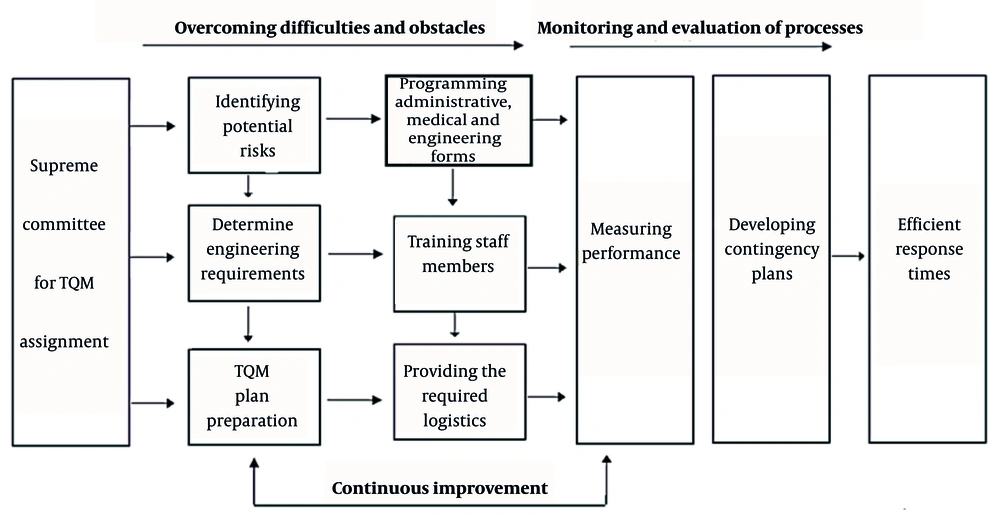
Figure 2.
Proposed Total Quality Management model for improved emergency response
Timely response is critical in medical emergencies because intervention time can determine patient survival. Factors affecting response times include geographic location, traffic conditions, the availability of emergency responders, and the effectiveness of communication systems (29).
The proposed TQM framework incorporates global best practices while adapting them to the constraints faced by military hospitals in conflict zones. By emphasizing patient-centered care, process improvement, interdepartmental collaboration, data-driven decision-making, continuous training, and leadership commitment, hospitals can use TQM principles to improve emergency-response capabilities and overall quality of care (30).
5. Discussion
The study findings indicate that senior managers recognize the relevance of TQM to patient satisfaction, hospital operations, emergency preparedness, and crisis response. TQM can strengthen coordination, establish protocols, identify operational weaknesses, support strategic resource planning, and promote continuous improvement. However, implementation in Gaza's military hospitals is constrained by shortages of personnel, equipment, medicines, maintenance capacity, funding, strategic reserves, and reliable infrastructure.
The findings also show that crisis preparedness cannot be separated from quality management. Effective implementation requires leadership commitment; trained medical, administrative, and engineering personnel; reliable communication and power systems; well-maintained ambulances and equipment; scenario-based planning; regular drills; and coordination with external institutions. Under conditions of blockade and recurrent conflict, implementation may need to proceed incrementally according to available resources and priorities.
5.1. Recommendations
Based on the findings, the following recommendations are proposed:
1) Continuous learning systems: Implement ongoing training and adaptation programs for emergency-response teams to improve medical service quality and crisis-management capabilities.
2) Engineering infrastructure: Establish on-site engineering workshops to maintain critical hospital equipment and emergency vehicles, reduce downtime, and ensure operational readiness during crises.
3) Regular plan evaluation: Periodically review emergency-response plans using simulation exercises and lessons from actual emergencies to identify areas for improvement.
4) Comprehensive needs assessment: Conduct systematic assessments to develop tailored emergency-response plans that address specific operational requirements and resource constraints.
5) TQM model implementation: Adopt the proposed TQM framework to strengthen disaster-response capabilities through systematic quality-improvement processes, particularly in military healthcare facilities.
6) Crisis-management enhancement: Strengthen crisis-response mechanisms through improved risk identification, communication channels, and emergency planning based on TQM principles.
7) Resource optimization: Prioritize resource allocation to maintain and improve patient-care standards in conflict-affected regions despite severe constraints.
5.2. Conclusions
Despite substantial structural, strategic, and human resource constraints, TQM offers a systematic approach to strengthening healthcare resilience in Gaza. The proposed framework links quality management with crisis preparedness, technical readiness, staff coordination, and continuous improvement. Gradual implementation may help military hospitals improve service quality, protect patients and staff, and respond more effectively to chronic and acute crises.