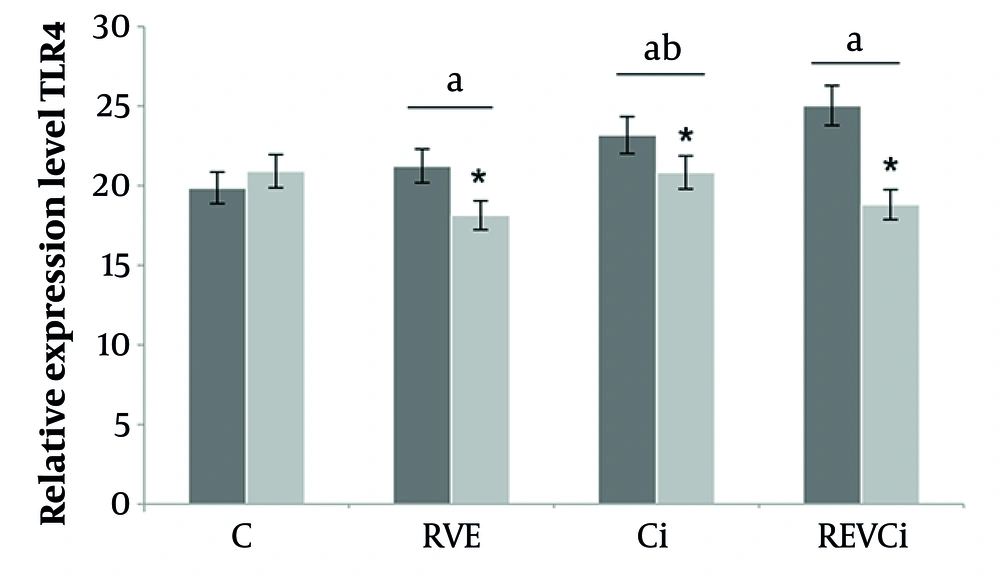
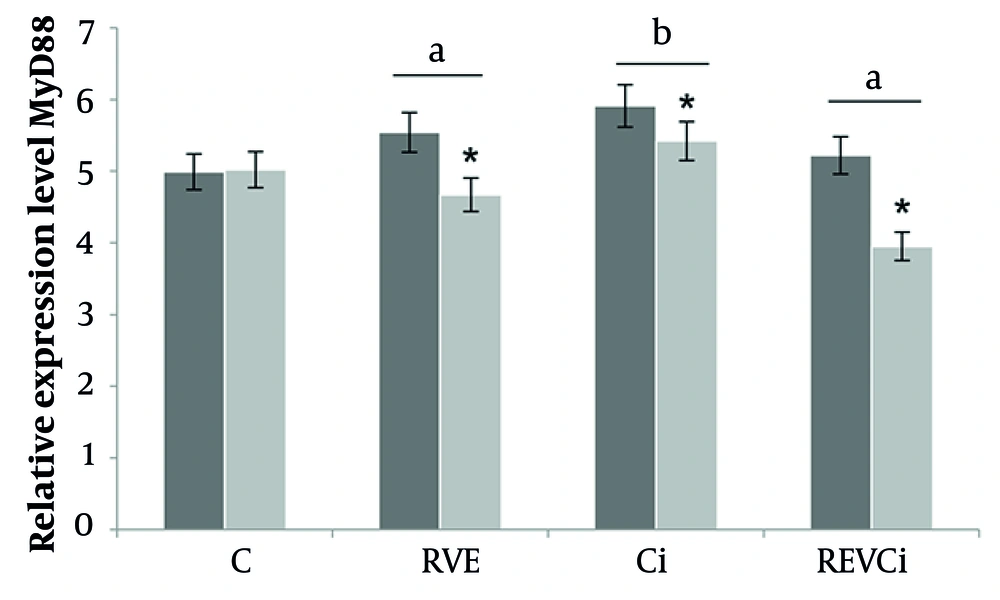
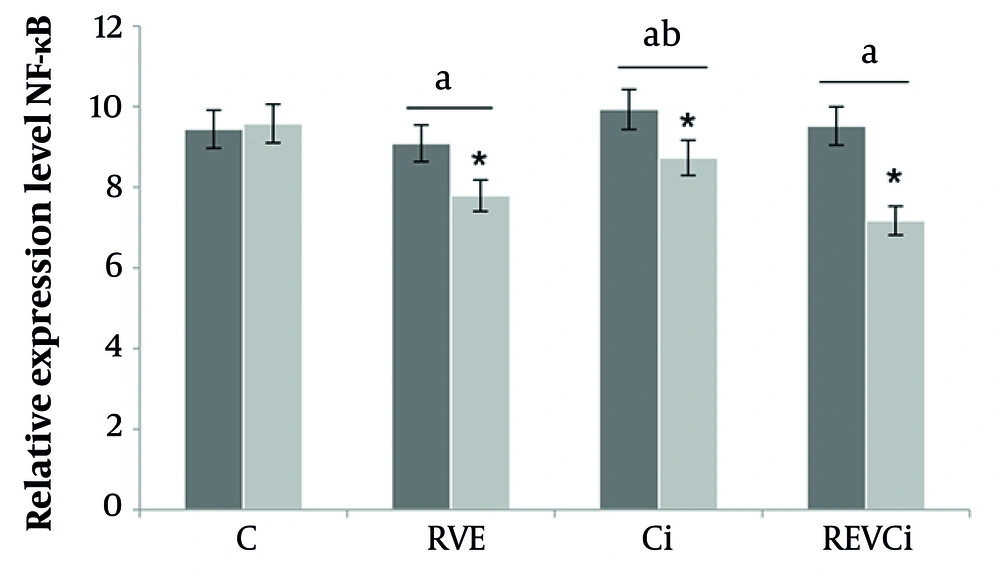
The present study demonstrated that high-intensity aerobic exercise combined with resistance training significantly attenuates the activity of the TLR4/MyD88/NF-κB inflammatory signaling pathway in women with T2DM. These findings are consistent with emerging evidence regarding the molecular mechanisms through which exercise modulates inflammation and glucose metabolism in patients with diabetes.
The TLR4/MyD88/NF-κB pathway plays a central role in mediating chronic low-grade inflammation and insulin resistance in T2DM. Activation of TLR4 by inflammatory stimuli, such as LPS and free fatty acids, initiates MyD88 recruitment, which subsequently activates NF-κB, a transcription factor that upregulates pro-inflammatory gene expression. This cascade contributes to systemic inflammation, β-cell dysfunction, and impaired insulin signaling (
22,
23).
Recent studies have consistently shown that combined aerobic and resistance exercise suppresses this pathway. Su et al. (
22) reported significant reductions in IL-6, TNF-α, and CRP after such training in women with T2DM, alongside improvements in autonomic cardiac function. Another study demonstrated that combined training reduced both mRNA and protein expression of TLR4 and NF-κB p65 in skeletal muscle, correlating with improved insulin sensitivity and glycemic control (
24). More recent research further supports these outcomes: Ma et al. (
25) observed that 12 weeks of combined training significantly decreased TLR4 and NF-κB expression in the skeletal muscle of patients with T2DM, with concurrent increases in IL-10 and reductions in HOMA-IR.
Mechanistically, exercise exerts anti-inflammatory effects through multiple pathways. It increases the secretion of cytokines such as IL-10 and adiponectin, which inhibit NF-κB signaling, and enhances GLUT4 translocation to the muscle membrane, facilitating insulin-independent glucose uptake (
26). Importantly, Li et al. (
27) showed that combined exercise also lowers circulating endotoxin levels, thereby reducing TLR4 activation at its upstream trigger point. Additionally, Lin et al. (
28) reported that structured exercise downregulates MyD88-dependent signaling while promoting AMPK activation, further supporting the multifaceted anti-inflammatory potential of exercise.
Systematic reviews and meta-analyses reinforce these findings, showing that long-term combined aerobic-resistance training significantly reduces inflammatory biomarkers and improves metabolic parameters in T2DM (
29). Animal studies provide additional support, demonstrating exercise-induced downregulation of TLR4 and NF-κB activity in multiple tissues, resulting in enhanced insulin responsiveness (
26).
The current study also found that cinnamon supplementation significantly reduced TLR4 and NF-κB expression, while having no significant effect on MyD88 expression. These results are consistent with evidence that cinnamon and its bioactive polyphenolic compounds can downregulate TLR4 expression and inhibit NF-κB activation by preventing IκBα phosphorylation and degradation, thereby blocking NF-κB nuclear translocation (
15,
30). Cinnamon also reduces oxidative stress and free fatty acid-induced TLR4 activation (
31,
32). Pang et al. (
33) further showed that polyphenol-rich diets, including cinnamon, can synergistically reduce NF-κB activation when combined with resistance training, suggesting potential interaction effects between diet and exercise.
The lack of a significant change in MyD88 expression with cinnamon supplementation may indicate that cinnamon primarily targets downstream elements of the pathway or engages MyD88-independent signaling. The complexity of TLR4 signaling, including MyD88-independent activation routes, warrants further mechanistic studies.
When exercise and cinnamon were combined, the reduction in TLR4/MyD88/NF-κB activity was greater than that observed with cinnamon alone, suggesting that cinnamon may potentiate the anti-inflammatory effects of exercise. However, this combination did not significantly outperform exercise alone, possibly due to overlapping mechanisms, a ceiling effect of the anti-inflammatory action of exercise, or study limitations such as sample size and intervention duration. Similar findings were reported by Gomarasca et al. (
34), who found that high-intensity training alone robustly reduced inflammation, leaving limited scope for additive effects from dietary supplementation.
From a clinical perspective, these findings support the integration of structured exercise programs and evidence-based nutritional strategies as complementary interventions for managing chronic inflammation in T2DM. Such approaches may help prevent complications, improve metabolic control, and reduce the need for pharmacological interventions.
Limitations of this study include the relatively small sample size, short intervention duration, participant attrition, and lack of blinding for exercise protocols. Additionally, dietary intake outside supplementation was not strictly controlled, which may have influenced inflammatory outcomes. Other limitations include the absence of long-term follow-up to assess the sustainability of the effects, potential variability in exercise adherence and intensity, and the lack of assessment of other relevant inflammatory pathways, such as MAPK or JNK signaling.
Future research should explore longer interventions with larger and more diverse populations, incorporate rigorous dietary monitoring, and investigate combined lifestyle strategies in real-world community settings. Molecular studies should assess broader inflammatory and metabolic signaling networks to better understand synergistic or additive effects between exercise and bioactive dietary compounds such as cinnamon.
This study demonstrated that high-intensity aerobic-resistance training, either alone or in combination with cinnamon supplementation, significantly reduces the activity of the TLR4/MyD88/NF-κB inflammatory pathway in women with T2DM. Cinnamon supplementation enhanced some anti-inflammatory outcomes, although the combined intervention did not significantly surpass the effects of exercise alone.
These findings suggest that structured exercise remains a cornerstone of inflammation management in T2DM, while cinnamon may serve as a safe and potentially synergistic adjunct. The study contributes to the growing evidence base supporting integrated, non-pharmacological strategies for improving metabolic health and reducing inflammation in chronic disease.
Further large-scale, long-term studies are needed to confirm these findings, explore optimal dosing and timing of cinnamon supplementation, and evaluate their combined impact on broader cardiometabolic outcomes. By clarifying these mechanisms, future research could refine personalized lifestyle prescriptions for patients with T2DM, ultimately advancing the translation of molecular insights into practical, clinically effective interventions.