Image Credit:J Cell Mol Anesth
Outline
Regulatory Effects of Thymoquinone on Dopamine Level in Neuronal Cells Exposed to Amphetamine: An In Vitro Study
Authors
Abstract
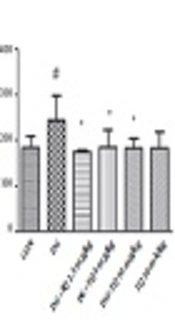
Introduction: Amphetamine (AT) is used to treat some medical conditions and also known to be abused recreationally. It is a potent central nervous system stimulant that is capable of producing damaging effects to the central dopaminergic pathway. Most of AT users are treated clinically for symptomatic treatment which is associated with neurological side effects. To date, there is growing interest in naturally occurring compounds which have lesser side effects to treat health problems. One of the potential compounds is thymoquinone (TQ), an active compound of Nigella sativa which is known for its cellular protective effects. Objective: The objectives of this study were to determine the IC50 values of AT and TQ on differentiated SH-SY5Y neuronal cells and to evaluate the changes of dopamine (DA) level in the cells exposed to AT after co-administering with TQ. Methodology: Differentiated SH-SY5Y cells were grown in cell culture flask containing DMEM/F12 medium supplemented with 10% (v/v) fetal bovine serum and 1% (v/v) penicillin/streptomycin. The IC50 value of TQ and AT in differentiated SH-SY5Y cells was determined by using 3-(4,5-dimethylthiazol-2-yl)-2,5-diphenyl tetrazolium bromide (MTT) assay. The DA level was determined by using the Enzyme-Linked Immunosorbent Assay (ELISA) kit. Result and Discussion: The IC50 values of AT and TQ were 1596 ?M and 926 ?M respectively. Co-administration of 40 ?M of AT and 30 ?M of TQ demonstrated a significant increase in DA level at 48 hours of exposure when compared to the administration of AT group (P?0.05). Conclusion: These findings suggested that TQ has a role in maintaining the DA activity after a long-term AT exposure.
Highlights
References
- 1.References are in the PDF file of the article.
Copyright
© 2020, Author(s). This open-access article is available under the Creative Commons Attribution 4.0 (CC BY 4.0) International License (https://creativecommons.org/licenses/by/4.0/), which allows for unrestricted use, distribution, and reproduction in any medium, provided that the original work is properly cited.
Similar Articles
Neuroprotective Effect of Thymoquinone, the Nigella Sativa Bioactive Compound, in 6-Hydroxydopamine-Induced Hemi-Parkinsonian Rat Model
Sedaghat R, Roghani M, Khalili M. Neuroprotective Effect of Thymoquinone, the Nigella Sativa Bioactive Compound, in 6-Hydroxydopamine-Induced Hemi-Parkinsonian Rat Model. Iran J Pharm Res. 2014;13(1):e125415. doi: https://doi.org/10.22037/ijpr.2014.1385
The Comparison of Anticancer Activity of Thymoquinone and Nanothymoquinone on Human Breast Adenocarcinoma
Dehghani H, Hashemi M, Entezari M, Mohsenifar A. The Comparison of Anticancer Activity of Thymoquinone and Nanothymoquinone on Human Breast Adenocarcinoma. Iran J Pharm Res. 2015;14(2):e125355. doi: https://doi.org/10.22037/ijpr.2015.1648

Synergistic and Defensive Properties of Emblica officinalis, Terminalia chebula, and Terminalia bellerica Extracts Against Serum/Glucose Deprivation-Induced PC12 Cells Death
Saeedi Rezvani M, Bakhtiari E, Tayarani-Najaran Z, Mousavi SH. Synergistic and Defensive Properties of Emblica officinalis, Terminalia chebula, and Terminalia bellerica Extracts Against Serum/Glucose Deprivation-Induced PC12 Cells Death. Jundishapur J Nat Pharm Prod. 2018;13(1):e65032. doi: https://doi.org/10.5812/jjnpp.65032
In Vitro Challenge using Thymoquinone on Hepatocellular Carcinoma (HepG2) Cell Line
Hassan SA, Ahmed WA, Galeb FM, El-Taweel MA, Abu-Bedair FA. In Vitro Challenge using Thymoquinone on Hepatocellular Carcinoma (HepG2) Cell Line. Iran J Pharm Res. 2022;7(4):e128603. doi: https://doi.org/10.22037/ijpr.2010.777
Protective Effect of Thymoquinone on D-Galactose-Induced Aging in Mice
Badibostan H, Mehri S, Mohammadi E, Hosseinzadeh H. Protective Effect of Thymoquinone on D-Galactose-Induced Aging in Mice. Jundishapur J Nat Pharm Prod. 2019;14(1):e13911. doi: https://doi.org/10.5812/jjnpp.13911
- Scopus by DOI: 3
Last Update: 1 month ago
- Scopus by Title: 3
Last Update: 1 month ago
- Scopus by Title (Ref): 3
Last Update: 1 month ago
- CrossRef: 0
Last Update: 6 days ago
- OpenAlex: 1
Last Update: 8 hours ago
- OpenCitations: 0
Last Update: 4 days ago
