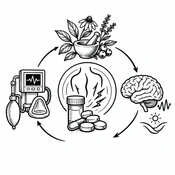
Cover image of the article: Natural Products in Opioid-Related Pain and Neurobehavioral Outcomes: Translational Perspectives for Anesthesiology and Perioperative Medicine (AI-generated illustration)

Image Credit:AI-generated illustration

Natural Products in Opioid-Related Pain and Neurobehavioral Outcomes: Translational Perspectives for Anesthesiology and Perioperative Medicine

Authors

Eskandar MoghimipourEskandar Moghimipour ORCID1, Masood FereidoonnezhadMasood Fereidoonnezhad ORCID2, 3,*
1Nanotechnology Research Center, Medical Basic Sciences Research Institute, Ahvaz Jundishapur University of Medical Sciences, Ahvaz, Iran
2Toxicology Research Center, Medical Basic Sciences Research Institute, Ahvaz Jundishapur University of Medical Sciences, Ahvaz, Iran
3Department of Medicinal Chemistry, Faculty of Pharmacy, Ahvaz Jundishapur University of Medical Sciences, Ahvaz, Iran, Ahvaz, Iran
*Corresponding Author: Toxicology Research Center, Medical Basic Sciences Research Institute, Ahvaz Jundishapur University of Medical Sciences, Ahvaz, Iran. Email: masood6289@gmail.com

Journal of Cellular & Molecular Anesthesia:Vol. 11, issue 3; e175859
Published online:Oct 18, 2026
Article type:Letter
Received:Oct 11, 2026
Accepted:Oct 14, 2026
How to Cite:Moghimipour E, Fereidoonnezhad M. Natural Products in Opioid-Related Pain and Neurobehavioral Outcomes: Translational Perspectives for Anesthesiology and Perioperative Medicine. J Cell Mol Anesth. 2026;11(3):e175859. doi: https://doi.org/10.5812/jcma-175859

Dear Editor,
Managing perioperative pain remains a central challenge in anesthesiology, particularly when adequate analgesia must be balanced against opioid-related adverse effects and the risk of persistent opioid use. Although opioids remain valuable analgesics, their use may be complicated by respiratory depression, sedation, tolerance, dependence, and opioid-induced hyperalgesia (OIH). Contemporary perioperative recommendations therefore emphasize individualized multimodal analgesia, appropriate opioid prescribing, and the assessment of functional recovery rather than pain intensity alone (1-3). In this context, natural products may offer a promising source of candidate compounds for investigating nociceptive mechanisms and opioid-associated neurobehavioral effects. However, their potential therapeutic value must be distinguished from clinical benefits demonstrated through rigorous investigation.
Evidence from experimental pain research suggests that natural compounds may influence pathways involved in nociception. For example, formononetin has been investigated for its analgesic effects and the possible involvement of hypothalamic corticotrophin-releasing hormone, orexin, and melanin-concentrating hormone signaling in a rat pain model (4). A review of phytochemicals and plant-derived natural products has also described potential analgesic mechanisms involving inflammatory signaling, neuronal excitability, and ion channels associated with nociceptive transmission (5). These findings support further investigation of molecular and neuroendocrine pathways as potential targets for analgesic development. Nevertheless, experimental analgesic activity does not establish efficacy in postoperative pain. The clinical relevance of these findings depends on reproducibility, pharmacokinetic characterization, dose optimization, and safety evaluation. Studies should also determine whether candidate compounds interact with opioids or commonly used anesthetic agents in ways that alter analgesia, sedation, or respiratory function.
Another relevant area is opioid dependence and withdrawal. Research on Ganoderma lucidum extract in mice has explored its effects on morphine dependence (6), while a systematic review of randomized clinical trials has examined herbal therapies for opioid withdrawal syndrome (7). Together, these studies illustrate the potential of natural-product research to identify compounds that influence opioid-associated behavioral and physiological responses. However, dependence, withdrawal, tolerance, OIH, and persistent postoperative opioid use are distinct phenomena. Evidence of an effect on withdrawal-related behavior cannot, by itself, demonstrate that a compound reduces postoperative opioid consumption or prevents OIH. Future investigations should define these outcomes separately and establish whether any observed benefits persist without compromising analgesia or introducing additional adverse effects.
Research on natural-product-based adjuncts in local anesthesia provides an additional clinically relevant perspective. A randomized clinical trial comparing lidocaine alone with lidocaine combined with clove oil for episiotomy-site anesthesia illustrates the evaluation of a natural product in conjunction with a conventional local anesthetic (8). Such studies are valuable because they assess an intervention in a clinical setting. Nevertheless, findings from episiotomy-site anesthesia cannot automatically be generalized to peripheral nerve blocks, neuraxial anesthesia, or general anesthesia. Before broader clinical adoption, potential adjuncts require evaluation of their formulation, local tolerability, systemic exposure, and interactions with the primary anesthetic. Adequate assessment of adverse events is particularly important when a natural product is combined with an established drug.
The potential effects of natural products on the central nervous system also warrant careful consideration. Experimental work has examined the protective effects of Echium amoenum seed oil against pentylenetetrazole-induced seizures (9). Similarly, research on Phoenix dactylifera L. pollen and fluvoxamine in PC12 cells exposed to hydrogen peroxide has explored oxidative stress and the expression of Nrf2 and SIGMAR1 (10). Although these studies may inform hypotheses regarding neurological effects, neuronal protection, and cellular defense mechanisms, they do not establish protection against anesthesia-related neurological complications or improved postoperative cognitive outcomes. Candidate compounds therefore require targeted neurological and toxicological evaluation before potential perioperative applications can be established.
These findings have practical implications for translational research. First, the chemical composition of botanical extracts and the identities and concentrations of their active constituents should be characterized to support quality control, batch consistency, and reproducibility. Second, pharmacokinetic, toxicological, and drug-interaction assessments should inform clinical development, particularly when candidate compounds may affect central nervous system function or interact with perioperative medications. Third, preclinical models should incorporate behavioral outcomes relevant to the intended clinical application to improve the translational value of analgesic research (11). For perioperative analgesic candidates, clinical evaluation should include relevant outcomes such as postoperative pain intensity, physical function, and treatment-related adverse events (12). Rescue analgesic requirements and opioid consumption should also be measured directly when an opioid-sparing effect is hypothesized, rather than inferred from biochemical markers or experimental pain responses (1, 2, 12).
Clinical development should be guided by established principles of perioperative pain management. Multimodal analgesia and individualized opioid prescribing remain central to minimizing opioid-related harm (1, 2). The addition of a natural product should therefore be evaluated against appropriate standard-of-care comparators and should not replace established analgesics without adequate evidence. Early-phase studies should prioritize safety, tolerability, pharmacokinetics, and potential interactions; subsequent controlled trials should assess clinically meaningful benefits and harms. Longer follow-up may also be needed when investigators claim that an intervention reduces persistent postoperative opioid use or improves longer-term recovery.
In conclusion, natural products offer promising opportunities for identifying pharmacological leads relevant to pain processing and opioid-associated neurobehavioral outcomes. However, the available evidence from experimental pain models, dependence and withdrawal studies, neurological investigations, and cell-based experiments supports further investigation rather than routine clinical use. A translational framework combining chemical standardization, mechanistic validation, interaction studies, and appropriately designed clinical trials could help identify candidates with genuine value for anesthesiology and perioperative medicine. Maintaining a clear distinction between biological plausibility and demonstrated clinical efficacy will be essential to realizing this potential safely.
Footnotes

  • Artificial Intelligence Use Disclosure:ChatGPT (GPT-6, OpenAI) was used to assist with paraphrasing and language refinement of the manuscript text. The authors reviewed and edited all AI-assisted content and take full responsibility for the accuracy, originality, and integrity of the final manuscript.

  • Authors' Contribution:Both authors had similar and equivalent contributions.

  • Conflict of Interests Statement:The authors declared no conflicts of interest.

  • Funding/Support:This letter received no specific funding from any public, commercial, or not-for-profit funding agency.

References

  • 1.
    El‐Boghdadly K, Levy NA, Fawcett WJ, Knaggs RD, Laycock H, Baird E, et al. Peri‐operative pain management in adults: a multidisciplinary consensus statement from the Association of Anaesthetists and the British Pain Society. Anaesthesia. 2024;79(11):1220-36. [PubMed ID: 39319373]. https://doi.org/10.1111/anae.16391.
  • 2.
    Levy N, Quinlan J, El‐Boghdadly K, Fawcett WJ, Agarwal V, Bastable RB, et al. An international multidisciplinary consensus statement on the prevention of opioid‐related harm in adult surgical patients. Anaesthesia. 2021;76(4):520-36. [PubMed ID: 33027841]. https://doi.org/10.1111/anae.15262.
  • 3.
    Wilson SH, Hellman KM, James D, Adler AC, Chandrakantan A. Mechanisms, diagnosis, prevention and management of perioperative opioid-induced hyperalgesia. Pain management. 2021;11(4):405-17. [PubMed ID: 33779215]. [PubMed Central ID: PMC8023328]. https://doi.org/10.2217/pmt-2020-0105.
  • 4.
    Basirat E, Mahmoudi F, Khazali H. Analgesic Effects of Formononetin: An Investigation of the Role of Hypothalamic Corticotrophin Releasing Hormone, Orexin, and Melanin Concentrating Hormone Signaling Pathways in a Pain Model of Rats. Jundishapur Journal of Natural Pharmaceutical Products. 2025;20(1). e153233. https://doi.org/10.5812/jjnpp-153233.
  • 5.
    Patel M, Wahezi S, Mavrocordatos P, Abd-Elsayed A. The Effects and Mechanisms of Phytochemicals on Pain Management and Analgesic. Nutrients. 2025;17(4):633. [PubMed ID: 40004962]. [PubMed Central ID: PMC11858770]. https://doi.org/10.3390/nu17040633.
  • 6.
    Rezaei K, Sheikholeslami MA, Salimi-Sabour E, Lotfali E, Parvardeh S. Attenuation of Morphine Dependence by Ganoderma lucidum Extract in Mice. Jundishapur Journal of Natural Pharmaceutical Products. 2022;17(4). e123164. https://doi.org/10.5812/jjnpp-123164.
  • 7.
    Nematollahi MH, Ahmadianmoghadam MA, Mehrabani M, Moghadari M, Ghorani-Azam A, Mehrbani M. Herbal therapy in opioid withdrawal syndrome: a systematic review of randomized clinical trials. Addict Health. 2022;14(2):152-63. [PubMed ID: 36544511]. [PubMed Central ID: PMC9743811]. https://doi.org/10.22122/AHJ.2022.195961.1247.
  • 8.
    Eidi Shirinbolagh Z, Partash N, Khayattimotlagh Bonab S, Ebrahimi E. What is the Effect of Lidocaine Compared to Lidocaine and Clove Oil on Episiotomy Site Anesthesia: Results from a Randomized Clinical Trial. Jundishapur Journal of Natural Pharmaceutical Products. 2024;19(3). e140313. https://doi.org/10.5812/jjnpp-140313.
  • 9.
    Gavzan H, Araghi A, Behzadi R. The Protective Effects of the Echium amoenum Seed Oil Against Seizures Induced by Pentylenetetrazole. Jundishapur Journal of Natural Pharmaceutical Products. 2023;18(3). e138748. https://doi.org/10.5812/jjnpp-138748.
  • 10.
    Lak Mazaheri E, Niknejad A, Amini E, Nabiuni M. Phoenix dactylifera L. Pollen and Fluvoxamine Maleate Protect PC12 Cells Against H2O2-Induced Oxidative Stress by Involvement of Nrf2 and SIGMAR1 Gene Expression. Jundishapur Journal of Natural Pharmaceutical Products. 2024;19(1). e141738. https://doi.org/10.5812/jjnpp-141738.
  • 11.
    Negus SS. Core Outcome Measures in Preclinical Assessment of Candidate Analgesics. Pharmacol Rev. 2019;71(2):225-66. [PubMed ID: 30898855]. [PubMed Central ID: PMC6448246]. https://doi.org/10.1124/pr.118.017210.
  • 12.
    Pogatzki-Zahn EM, Liedgens H, Hummelshoj L, Meissner W, Weinmann C, Treede RD, et al. Developing consensus on core outcome domains for assessing effectiveness in perioperative pain management: results of the PROMPT/IMI-PainCare Delphi Meeting. Pain. 2021;162(11):2717-36. [PubMed ID: 34181367]. https://doi.org/10.1097/j.pain.0000000000002254.

Copyright

Copyright © 2026, Moghimipour and Fereidoonnezhad. This open-access article is available under the Creative Commons Attribution 4.0 (CC BY 4.0) International License (https://creativecommons.org/licenses/by/4.0/), which allows for unrestricted use, distribution, and reproduction in any medium, provided that the original work is properly cited.

Similar Articles

1
Jul
2011
Postoperative pain management

Postoperative pain management

Farnad Imani

Imani F. Postoperative pain management. Anesth Pain Med. 2011;1(1):6-7. doi: https://doi.org/10.5812/kowsar.22287523.1810

30
Sep
2017
Perioperative Pain: Molecular Mechanisms and Future Perspectives

Perioperative Pain: Molecular Mechanisms and Future Perspectives

Zahra Talebi,
Ali Dabbagh

Talebi Z, Dabbagh A. Perioperative Pain: Molecular Mechanisms and Future Perspectives. J Cell Mol Anesth. 2017;2(3):e149534. doi: https://doi.org/10.22037/jcma.v2i3.15119

31
Jan
2018
The miracle of Lidocaine: Second Look with Cellular and Molecular Perspectives

The miracle of Lidocaine: Second Look with Cellular and Molecular Perspectives

Mahnoosh Foroughi

Foroughi M. The miracle of Lidocaine: Second Look with Cellular and Molecular Perspectives. J Cell Mol Anesth. 2018;3(1):e150276. doi: https://doi.org/10.22037/jcma.v3i1.19895

19
Feb
2020
Risk of Opioid Use Disorder from Exposure to Opioids in the Perioperative Period: A Systematic Review

Risk of Opioid Use Disorder from Exposure to Opioids in the Perioperative Period: A Systematic Review

Khalid M Malik,
Farnad Imani,
Rena Beckerly,
Rani Chovatiya

Malik KM, Imani F, Beckerly R, Chovatiya R. Risk of Opioid Use Disorder from Exposure to Opioids in the Perioperative Period: A Systematic Review. Anesth Pain Med. 2020;10(1):e101339. doi: https://doi.org/10.5812/aapm.101339

18
Sep
2021
Pain and Neuromodulation

Pain and Neuromodulation

Seyed Mansoor Rayegani

Rayegani SM. Pain and Neuromodulation. Interv Pain Med Neuromod. 2021;1(1):e118842. doi: https://doi.org/10.5812/ipmn.118842

More by these authors

Eskandar MoghimipourPubMedScholar
Masood FereidoonnezhadPubMedScholar
Share
Cited by
Metrics