
1. Background
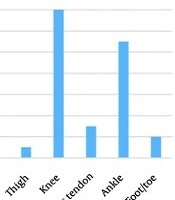
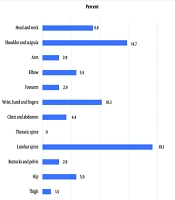
Swimming is a globally practiced sport that involves high-intensity training, often conducted five to seven days per week. Among the various swimming techniques, freestyle is most commonly emphasized in elite training programs (1). While swimming is frequently perceived as a low-impact sport, the repetitive movements inherent in training place athletes at significant risk for musculoskeletal injuries, particularly due to overuse. The shoulder is the most frequently injured area, followed by the knee, spine, and hip/groin (2).
Epidemiological data indicate that elite male and female swimmers experience injury rates of 4 and 3.78 per 1,000 training hours, respectively (3). Notably, 68.1% of these injuries are attributed to overuse, with the shoulder accounting for 26.3%, the knee for 10.1%, the lower back for 9.8%, and the groin for 9.6% of cases (2). These findings underscore the need for targeted preventive strategies, especially given that over 69% of injured swimmers modify their training intensity, volume, or technique. Alarmingly, approximately one-third continue training despite pain, viewing it as a routine aspect of elite performance (4, 5). Such attitudes may contribute to chronic pain, impaired performance, and premature withdrawal from professional sport (6).
To address the issue of sports injuries, several prevention models have been proposed, with the Van Mechelen model being among the most widely implemented. This model consists of four key steps: (1) identifying the extent of the injury problem, (2) understanding its causes, (3) implementing preventive interventions, and (4) evaluating their effectiveness (7, 8). The initial steps — defining injury prevalence and identifying risk factors — are especially critical in shaping effective prevention strategies.
Swimming relies heavily on repetitive upper limb movements and demands optimal shoulder function, scapular control, core stability, and neuromuscular coordination (9, 10). Factors such as muscle imbalances, biomechanical inefficiencies, poor motor control, excessive training loads, faulty stroke technique, and joint instability are recognized contributors to injury risk (5). However, despite the established prevalence of overuse injuries, the specific risk factors contributing to injury development in swimmers remain inadequately defined in the current literature.
2. Objectives
The present study aims to investigate the prevalence of sports injuries in swimmers and identify risk factors associated with these injuries. It will incorporate demographic characteristics and swimmers’ training profiles as predictive variables.
3. Methods
This applied research was conducted as a field study using a retrospective approach to examine the prevalence of sports injuries and associated risk factors among swimmers. The study population consisted of male and female swimmers aged 15 to 60 years who had at least one year of regular swimming training. Among the participants, 102 were male (60%) and 68 were female (40%).
To determine the sample size, considering an 80% statistical power, a 0.05 alpha error level, and an estimated injury prevalence of 30% among swimmers, with an additional 10% sample attrition rate, a total of 170 swimmers were selected through convenience sampling.
A) Inclusion criteria: Participants were required to be 15 - 60 years old, have at least one year of swimming experience, and train regularly (minimum three sessions or 180 minutes per week). They had to be in good health (based on PAR-Q), provide informed consent, and be willing to participate.
B) Exclusion criteria: Individuals with clinical conditions affecting performance (e.g., cardiovascular, respiratory, or neurological disorders), a history of joint replacement or reconstructive surgery, participation in conflicting research, non-compliance with study protocols, or unwillingness to share injury-related information were excluded.
3.1. Research Procedure
Data were collected using a researcher-designed questionnaire to document swimmers’ demographic and training profiles, along with a Sports Injury History Questionnaire. Statistical analyses were then conducted to examine the relationship between sports injuries and associated risk factors.
3.2. Instruments
3.2.1. Researcher-Designed Questionnaire for Demographic and Training Profiles
This questionnaire gathered data on demographics and training profiles through 14 questions. The first section recorded age, gender, weight, height, and BMI to analyze general characteristics and their potential impact on injury risk. The face and content validity of the questionnaires were reviewed by a panel of experts, and the test-retest reliability was confirmed in a pilot study (ICC = 0.84). The second section focused on training history, including years of experience, weekly training frequency, session duration, intensity, types of exercises, and warm-up/cool-down routines.
3.2.2. Sports Injury History Questionnaire
This section included specific questions about past injuries and affected areas. A body map showing anterior and posterior views of the human body was used to facilitate accurate injury reporting. The map highlighted different body regions, including the head and neck, thoracic and abdominal areas, upper and lower spine, scapula and shoulders, arms, elbows, forearms, wrists, hands, fingers, hips, thighs, knees, lower legs, ankles, and toes. Participants either shaded the injured area on the map or specified the affected region.
4. Results
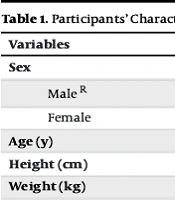
A logistic regression analysis was conducted to identify factors associated with injury status (injured vs. uninjured) among 170 participants. The results indicated that age was the only significant predictor, with each additional year of age increasing the odds of injury by 2.5% [OR = 1.025, 95% CI (1.00, 1.04), P = 0.027]. None of the other variables — sex, height, weight, BMI, training experience, training frequency, session duration, weekly training duration, participation in other sports, warm-up habits, or swimming style — were significant predictors of injury status. Specifically, sex (OR = 1.218, P = 0.573), height (OR = 1.018, P = 0.222), weight (OR = 1.010, P = 0.315), BMI (OR = 1.032, P = 0.481), training experience (OR = 1.031, P = 0.203), training frequency (OR = 1.237, P = 0.305), session duration (OR = 0.999, P = 0.931), weekly training duration (OR = 1.030, P = 0.659), participation in other sports (OR = 0.714, P = 0.384), warm-up habits (OR = 0.642, P = 0.450), and swimming style (OR values ranging from 1.172 to 0.999, P-values between 0.448 and 0.931) did not show significant associations with injury status. These findings suggest that age is a key factor in predicting injury risk, while other factors related to demographics, training habits, and swimming style did not contribute significantly to injury likelihood in this sample (Table 1).
Table 1.
Participants’ Characteristics and Training Profiles, Coaching Status by Injury Status a
| Variables | Total (N = 170) | Uninjured (N = 124) | Injured (N = 46) | B | SE | Wald | OR (95% CI) | P-Value |
|---|---|---|---|---|---|---|---|---|
| Sex | 0.197 | 0.350 | 0.563 | 1.218 (0.61 - 2.41) | 0.573 | |||
| Male (reference) | 102 (60) | 76 (74.5) | 26 (25.5) | |||||
| Female | 68 (40) | 48 (70.6) | 20 (29.4) | |||||
| Age (y) | 28.47 ± 14.97 | 26.91 ± 14.56 | 32.67 ± 15.43 | 0.025 | 0.011 | 2.21 | 1.025 (1.00 - 1.04) | 0.027 |
| Height (cm) | 170.3 ± 11.92 | 168.70 ± 12.18 | 171.21 ± 11.12 | 0.018 | 0.014 | 1.22 | 1.018 (0.98 - 1.05) | 0.222 |
| Weight (kg) | 70 ± 16.88 | 69.22 ± 17.72 | 72.15 ± 14.35 | 0.010 | 0.010 | 1.00 | 1.010 (0.99 - 1.03) | 0.315 |
| BMI (kg/m2) | 24.12 ± 3.94 | 23.99 ± 4.12 | 24.47 ± 3.43 | 0.031 | 0.044 | 0.70 | 1.032 (0.94 - 1.12) | 0.481 |
| Training experience (y) | 6.03 ± 6.62 | 5.63 ± 6.39 | 7.10 ± 7.17 | 0.031 | 0.024 | 1.27 | 1.031 (0.98 - 1.08) | 0.203 |
| Training frequency (sessions/wk), median ± IQR | 3 ± 0 | 3 ± 0 | 3 ± 0 | 0.213 | 0.208 | 1.03 | 1.237 (0.82 - 1.85) | 0.305 |
| Session duration (min/session), median ± IQR | 90 ± 22.50 | 90 ± 22.50 | 90 ± 37.50 | -0.001 | 0.007 | -0.087 | 0.999 (0.98 - 1.01) | 0.931 |
| Weekly duration (h/wk), median ± IQR | 4.5 ± 1 | 4.5 ± 2.63 | 4.5 ± 2.63 | 0.029 | 0.067 | 0.44 | 1.030 (0.90 - 1.17) | 0.659 |
| Participation in other sports | -0.336 | 0.386 | -0.87 | 0.714 (0.33 - 1.52) | 0.384 | |||
| No (reference) | 117 (68.8) | 83 (70.9) | 34 (29.1) | |||||
| Yes | 53 (31.2) | 41 (77.4) | 12 (22.6) | |||||
| Warm-up | -0.444 | 0.587 | -0.756 | 0.642 (0.20 - 2.03) | 0.450 | |||
| Never (reference) | 14 (8.2) | 9 (64.3) | 5 (35.7) | |||||
| Always | 156 (91.8) | 115 (73.7) | 41 (26.3) | |||||
| Swimming style | 0.159 | 0.209 | 0.758 | 1.172 (0.77 - 1.76) | 0.448 | |||
| Freestyle | 111 (65.3) | 76 (68.5) | 35 (31.5) | |||||
| Butterfly | 32 (18.8) | 25 (78.1) | 7 (21.9) | |||||
| Breaststroke | 18 (10.6) | 15 (83.3) | 3 (16.7) | |||||
| Backstroke | 9 (5.3) | 8 (88.9) | 1 (11.1) |
a Values are expressed as No. (%) or mean ± SD, unless indicated.
A logistic regression analysis was conducted to determine whether Y-Balance Test (YBT) scores for the Upper Quarter (YBT-UQ) and Lower Quarter (YBT-LQ) could predict injury status. Results showed that none of the reach distances in the YBT-UQ (right and left hand in superolateral, medial, and inferolateral directions) significantly predicted injury status (all P > 0.05). The YBT-LQ results indicate that only the posteromedial reach distance of the left leg showed a weak predictive value for injury status (P = 0.012), while all other reach distances were not significant predictors (P > 0.05) (Table 2).
Table 2.
Logistic Regression Analysis of Y-Balance Test Scores for Predicting Injury Status in Swimmers a
| Variables | Total (N = 170) | Uninjured (N = 124) | Injured (N = 46) | B | SE | Wald | OR (95% CI) | P-Value |
|---|---|---|---|---|---|---|---|---|
| YBT-UQ | ||||||||
| Superolateral direction right hand reach distance (cm) | 64.66 ± 8.06 | 64.95 ± 7.44 | 63.86 ± 9.57 | -0.016 | 0.021 | -0.783 | 0.983 (0.94 - 1.03) | 0.433 |
| Medial direction right hand reach distance (cm) | 85.50 ± 10.98 | 84.82 ± 10.23 | 87.34 ± 12.72 | 0.020 | 0.015 | 1.32 | 0.102 (0.99 - 1.05) | 0.185 |
| Inferolateral direction right hand reach distance (cm) | 79.10 ± 11.03 | 78.85± 11.06 | 79.76 ± 11.05 | 0.007 | 0.015 | 0.477 | 1.008 (0.97 - 1.04) | 0.634 |
| Superolateral direction left hand reach distance (cm) | 60.10 ± 9.90 | 60.13 ± 9.17 | 60.00 ± 11.76 | -0.001 | 0.017 | -0.080 | 0.999 (0.96 - 1.03) | 0.936 |
| Medial direction left Hand reach distance (cm) | 84.71 ± 9.06 | 84.53 ± 8.82 | 85.21 ± 9.76 | 0.008 | 0.019 | 0.439 | 1.008 (0.97 - 1.05) | 0.661 |
| Inferolateral direction left hand reach distance (cm) | 77.68 ± 13.46 | 77.51 ± 12.04 | 78.15 ± 16.84 | 0.003 | 0.012 | 0.274 | 1.004 (0.97 - 1.03) | 0.784 |
| YBT-LQ | ||||||||
| Anterior direction right leg reach distance (cm) | 79.72 ± 10.96 | 79.77 ± 10.93 | 79.58 ± 11.16 | -0.001 | 0.015 | -0.099 | 0.998 (0.96 - 1.03) | 0.921 |
| Posteromedial direction right leg reach distance (cm) | 91.91 ± 10.48 | 91.37 ± 10.06 | 93.39 ± 11.50 | 0.018 | 0.016 | 1.12 | 1.018 (0.98 - 1.05) | 0.265 |
| Posterolateral direction right leg (cm) | 84.38 ± 11.38 | 83.66 ± 10.92 | 86.30 ± 12.45 | 0.021 | 0.016 | 1.34 | 1.022 (0.98 - 1.05) | 0.182 |
| Anterior direction left leg reach distance (cm) | 78.87 ± 10.97 | 78.51 ± 10.44 | 79.82 ± 12.35 | 0.010 | 0.015 | 0.692 | 1.011 (0.98 - 1.04) | 0.489 |
| Posteromedial direction left leg reach distance (cm) | 87.23 ± 10.87 | 85.93 ± 10.43 | 90.73 ± 11.34 | 0.043 | 0.017 | 2.51 | 1.044 (1.01 - 1.080) | 0.012 |
| Posterolateral direction left leg reach distance (cm) | 79.21 ± 12.27 | 78.60 ± 12.47 | 80.84 ± 11.71 | 0.0149 | 0.0141 | 1.06 | 1.015 (0.98 - 1.04) | 0.291 |
Abbreviations: YBT-UQ, Y-Balance Test Upper Quarter; YBT-LQ, Y-Balance Test Lower Quarter.
a Values are expressed as mean ± SD.
None of the normalized limb length measurements significantly predicted injury status (P > 0.05), with ORs close to 1, indicating minimal impact on injury likelihood. For the right and left hands, all reach directions showed no significant associations (P = 0.120 - 0.827). Similarly, for the lower limbs, anterior, posteromedial, and posterolateral reach distances were non-significant (P = 0.450 - 0.985), except for the posteromedial left leg, which approached significance (OR = 1.025, P = 0.075), suggesting a weak predictive value. These findings align with logistic regression results, where age was the only significant predictor of injury risk in swimmers (Table 3).
Table 3.
Normalized by Limb Length a
| Variables | Total (N = 170) | Uninjured (N = 124) | Injured (N = 46) | B | SE | Wald | OR (95% CI) | P-Value |
|---|---|---|---|---|---|---|---|---|
| Supero lateral right hand (%) | 75.18 ± 11.48 | 76.02 ± 11.04 | 72.92 ± 12.44 | -0.024 | 0.015 | -1.554 | 0.976 (0.94 - 1.01) | 0.120 |
| Medial right hand (%) | 98.93 ± 11.92 | 98.81 ± 11.63 | 99.26 ± 12.80 | 0.003 | 0.014 | 0.219 | 1.003 (0.97 - 1.03) | 0.827 |
| Infero lateral right hand (%) | 91.50 ± 12.18 | 91.78 ± 12.21 | 90.74 ± 12.19 | -0.007 | 0.014 | -0.494 | 0.993 (0.96 - 1.02) | 0.621 |
| Supero lateral left hand (%) | 69.92 ± 12.63 | 70.42 ± 12.00 | 68.56 ± 14.25 | -0.011 | 0.013 | -0.855 | 0.988 (0.96 - 1.02) | 0.393 |
| Medial left hand (%) | 98.23 ± 10.00 | 98.66 ± 9.77 | 97.08 ± 10.62 | -0.016 | 0.017 | -0.914 | 0.984 (0.95 - 1.02) | 0.361 |
| Infero lareral left hand (%) | 90.14 ± 15.27 | 90.58 ± 14.27 | 88.95 ± 17.81 | -0.007 | 0.011 | -0.621 | 0.993 (0.97 - 1.02) | 0.535 |
| Anterior right leg (%) | 89.75 ± 12.54 | 90.19 ± 12.69 | 88.55 ± 12.19 | -0.010 | 0.014 | -0.756 | 0.989 (0.96 - 1.02) | 0.450 |
| Postero medial right leg (%) | 103.68 ± 13.76 | 103.48 ± 13.17 | 104.23 ± 15.38 | 0.003 | 0.012 | 0.317 | 1.004 (0.97 - 1.03) | 0.751 |
| Postero latral right leg (%) | 95.00 ± 13.27 | 94.61 ± 12.88 | 96.05 ± 14.34 | 0.008 | 0.013 | 0.631 | 1.008 (0.98 - 1.03) | 0.528 |
| Anterior left leg (%) | 89.14 ± 12.40 | 89.13 ± 12.01 | 89.16 ± 13.52 | -0.001 | 0.014 | 0.018 | 1.00 (0.97 - 1.03) | 0.985 |
| Postero medial left leg (%) | 98.61 ± 12.79 | 97.54 ± 12.24 | 101.50 ± 13.88 | 0.024 | 0.014 | 1.78 | 1.025 (0.99 - 1.05) | 0.075 |
| Postero latral left leg (%) | 89.47 ± 13.76 | 89.15 ± 13.89 | 90.34 ± 13.49 | 0.006 | 0.012 | 0.502 | 1.006 (0.98 - 1.03) | 0.616 |
a Values are expressed as mean ± SD.
5. Discussion
The present study aimed to examine the prevalence of sports injuries among swimmers and assess the predictive capacity of the YBT-UQ and YBT-LQ. The findings indicated that age was the only significant predictor of injury risk (OR = 1.025, P = 0.027), with each additional year increasing the likelihood of injury by 2.5%. In contrast, demographic variables, training-related factors, normalized limb length, and all YBT-UQ measures showed no significant association with injury status. Among YBT-LQ components, only the posteromedial reach distance of the left leg approached statistical significance (P = 0.012), suggesting a weak predictive value.
The results of this study are partially consistent with previous research findings. Specifically, studies by Gorman et al. (11) and Bauer et al. (12) also demonstrated that the YBT-UQ is a reliable tool for assessing upper limb function but has limited applicability in predicting injuries. This consistency suggests that the YBT-UQ may be more suitable for evaluating neuromuscular control and overall functional performance rather than predicting sports injuries. However, our findings contradict those of Butler et al. (13) and Cosio-Lima et al. (14), who confirmed an association between YBT-UQ performance and injury risk. This discrepancy could be due to differences in the study population (swimmers versus athletes from other sports), assessment conditions, or controlled variables.
Additionally, Wright et al. (15) and Lai et al. (16) reported that the YBT-LQ alone is not a valid predictor of lower extremity injuries, particularly in collegiate athletes from various sports. Our findings support this conclusion, indicating that the YBT-LQ may have similar limitations for swimmers.
One possible explanation for these discrepancies is the difference in skill levels and movement patterns required in swimming compared to other sports. Swimming involves unique movement patterns and does not require significant weight-bearing on the lower limbs, whereas the YBT-LQ is primarily designed for land-based sports that demand stability and motor control in the lower extremities. This factor may explain why only one YBT-LQ variable (posteromedial reach distance of the left leg) approached statistical significance.
The identification of age as the only significant predictor of injury could be attributed to increased training load and biomechanical changes associated with aging in swimmers. Aging may lead to decreased flexibility, reduced muscular endurance, and slower recovery after injuries, all of which can elevate injury risk. This finding aligns with the results of Lisman et al. (17), who demonstrated that age is a key factor in increasing injury risk among high school athletes. This limitation is due to the accessibility of the target swimmer population.
Furthermore, the lack of a significant association between training variables (number of training sessions, session duration, and weekly training volume) and injuries suggests that training intensity alone is not the primary determinant of injury risk in swimmers. This implies that other factors, such as swimming technique, adequate rest, and recovery strategies, may play a crucial role in injury occurrence — factors that were not examined in this study.
This study has several limitations that should be considered when interpreting the findings. First, it was conducted on a specific population of swimmers aged 15 to 60 years, and the results may not be generalizable to other age groups or sports disciplines. Second, variables such as flexibility, muscular endurance, and swimming technique, which may influence injury occurrence, were not examined. Third, the use of cross-sectional data limits the ability to establish causal relationships, highlighting the need for longitudinal studies to investigate this issue more thoroughly.
5.1. Conclusions
The findings of this study indicate that the Y-Balance Tests have limitations as screening tools for injury risk in swimmers, with age emerging as the only significant predictor. Therefore, using these tests alone for injury risk assessment in swimmers is not recommended. Instead, they are best applied in combination with other functional assessments and biomechanical or performance-related factors. To enhance prediction accuracy, it is suggested to integrate the Y-Balance Tests with additional evaluations, such as motion analysis, muscle strength testing, and swimming technique assessment.