
1. Context
Antisense therapies have revolutionized the treatment of neurodegenerative diseases by enabling targeted modulation of gene expression. These therapies use antisense oligonucleotides (ASOs), which are short nucleotide strands designed to bind specific RNA sequences, thereby regulating pathogenic proteins or correcting genetic mutations associated with neurodegeneration. Unlike traditional treatments that primarily manage symptoms, antisense therapies aim to intervene at the molecular root of disease, offering the potential for disease modification or slowed progression (1, 2).
Neurodegenerative diseases, such as Alzheimer’s disease, Parkinson’s disease, amyotrophic lateral sclerosis (ALS), and Huntington’s disease, involve progressive neuronal loss, leading to debilitating motor, cognitive, and sensory impairments. Despite extensive research, effective curative treatments remain elusive, and current therapies provide only symptomatic relief. The emergence of ASOs has raised hope by enabling precision therapies that target RNA transcripts, thereby directly affecting the molecular pathways underlying these disorders (2, 3).
Recent research has demonstrated the clinical efficacy of antisense treatments, as evidenced by the US Food and Drug Administration (FDA) approval of ASOs for spinal muscular atrophy (SMA), which has shown substantial clinical advantages in increasing motor function and patient survival, particularly when ASOs are administered early in the clinical course. Ongoing clinical evaluation of ASO treatment for ALS and other neurodegenerative disorders has also yielded encouraging findings, including reductions in biomarkers indicative of neurodegeneration with certain ASOs, as well as evidence of beneficial clinical effects in treated patients. However, challenges to the progress of ASO therapies remain, including the development of technologies that enable efficient delivery across the blood–brain barrier, identification of appropriate target cell populations, and minimization of off-target effects and long-term toxicities associated with ASOs (3).
Advances in the nucleotides that constitute ASOs, delivery technologies, and improved animal models for ASO-based therapy development are accelerating progress in the field. In addition, patient-derived cerebral organoids and induced pluripotent stem cells provide new platforms to better understand disease pathophysiology and develop more personalized antisense treatment approaches. Collectively, these advances in ASO technology are addressing several current barriers to ASO therapy development, such as inefficient ASO delivery and interpatient variability in ASO response, thereby supporting the translation of ASO therapeutics into meaningful clinical options for a broad range of neurodegenerative diseases (4).
Despite growing interest in ASO therapeutics, the literature on neurodegenerative diseases remains fragmented across disease-specific targets, delivery technologies, and clinical trial updates. Existing reviews often emphasize either general ASO biology or a single disorder, whereas the rapid pace of new approvals, biomarker findings, and delivery innovations has created a need for an updated narrative synthesis focused specifically on neurodegenerative diseases. Accordingly, this review consolidates recent advances in ASO mechanisms, target selection, delivery systems, clinical outcomes, and safety challenges to provide an integrated overview for readers working at the interface of translational neuroscience and RNA therapeutics (1). Literature relevant to antisense oligonucleotides and neurodegenerative disease was identified from major peer-reviewed publications, clinical trial reports, and regulatory documents to support a narrative synthesis of current developments and challenges.
2. Evidence Acquisition
This narrative review was developed through targeted literature searches in PubMed/MEDLINE, Scopus, Web of Science, and ClinicalTrials.gov, covering publications and records from January 2010 through December 2025. Search terms combined concepts related to antisense oligonucleotides and neurodegeneration, including “antisense oligonucleotide,” “neurodegeneration,” “Alzheimer,” “Parkinson,” “ALS,” “Huntington,” “spinal muscular atrophy,” “ASO therapy,” “intrathecal delivery,” and “nanocarrier.” The search was limited to English-language sources and included peer-reviewed articles, clinical trials, and regulatory documents.
Eligible records were screened for relevance to antisense oligonucleotide biology, therapeutic development, delivery strategies, clinical evidence, safety, and translational issues in neurodegenerative disease. Conference abstracts without full text, non-English sources without translation, and studies focused on non-ASO therapeutic modalities were excluded. Reference lists of key reviews and primary studies were also examined to identify additional relevant sources.
Because this was a narrative review, study selection was not based on a formal systematic review protocol or a quantitative meta-analysis. Instead, the authors selected references based on relevance, recency, and scientific quality, with an emphasis on influential studies, emerging clinical data, and regulatory guidance.
3. Results
3.1. Molecular Mechanisms of Antisense Therapies
Three classes of small RNA therapeutics with strong potential as viable alternatives to traditional small-molecule drugs include small interfering RNAs, microRNAs (miRNAs), and ASOs belonging to the RNA subclass. Unlike small-molecule drugs, small RNA therapeutics can selectively bind and modulate the activity of any desired target gene product, creating an opportunity to develop new treatment strategies that are both more therapeutically effective and broadly applicable than conventional approaches (5). Synthetic ASO therapies use Cloned Antisense Oligonucleotides to target specific RNA sequences by base pairing with the corresponding RNA strand. The two strands bind together, initiating a series of reactions that alter gene expression at the RNA level, enabling targeted treatment of diseases related to the abnormal production or processing of a specific gene product. ASOs may initiate changes in gene expression through various mechanisms, such as degradation of the target mRNA through RNase H activity, a protein present in cells that recognizes RNA and reduces the amount of toxic mRNA produced. ASOs may inhibit protein expression, restore expression of beneficial isoforms, or modulate alternative splicing of mRNA through translation inhibition. The use of ASOs allows the precise reduction of harmful proteins or enhancement of beneficial proteins (6).
The primary molecular mechanism utilized in ASO therapies is the ability to recruit and activate RNase H. RNase H is a naturally occurring protein that recognizes RNA-related DNA molecules complementary to a specific ASO and cleaves the RNA portion of the RNA:DNA hybrid molecule. The use of ASOs that recruit RNase H is particularly useful in diseases characterized by a toxic gain-of-function protein due to mutations or changes in a specific gene. Examples include mutant huntingtin in patients with Huntington's disease and the SOD1 mutation in certain patients with ALS (7, 8).
ASOs also function by modulating RNA splicing. They can bind to regulatory elements and modulate mRNA splicing by promoting exon inclusion in, or exon exclusion from, the spliced mRNA. This splicing modulation can be used to develop therapies for conditions in which an improper splicing event leads to a faulty protein, such as SMA, where ASOs can promote splicing of the SMN2 gene to include exon 7, enabling further production of functional SMN protein and restoring proper SMN protein function in affected tissue. Therefore, fine-tuning alternative splicing has expanded the potential therapeutic options for ASOs beyond a gene knockdown approach (9, 10) (Figure 1).
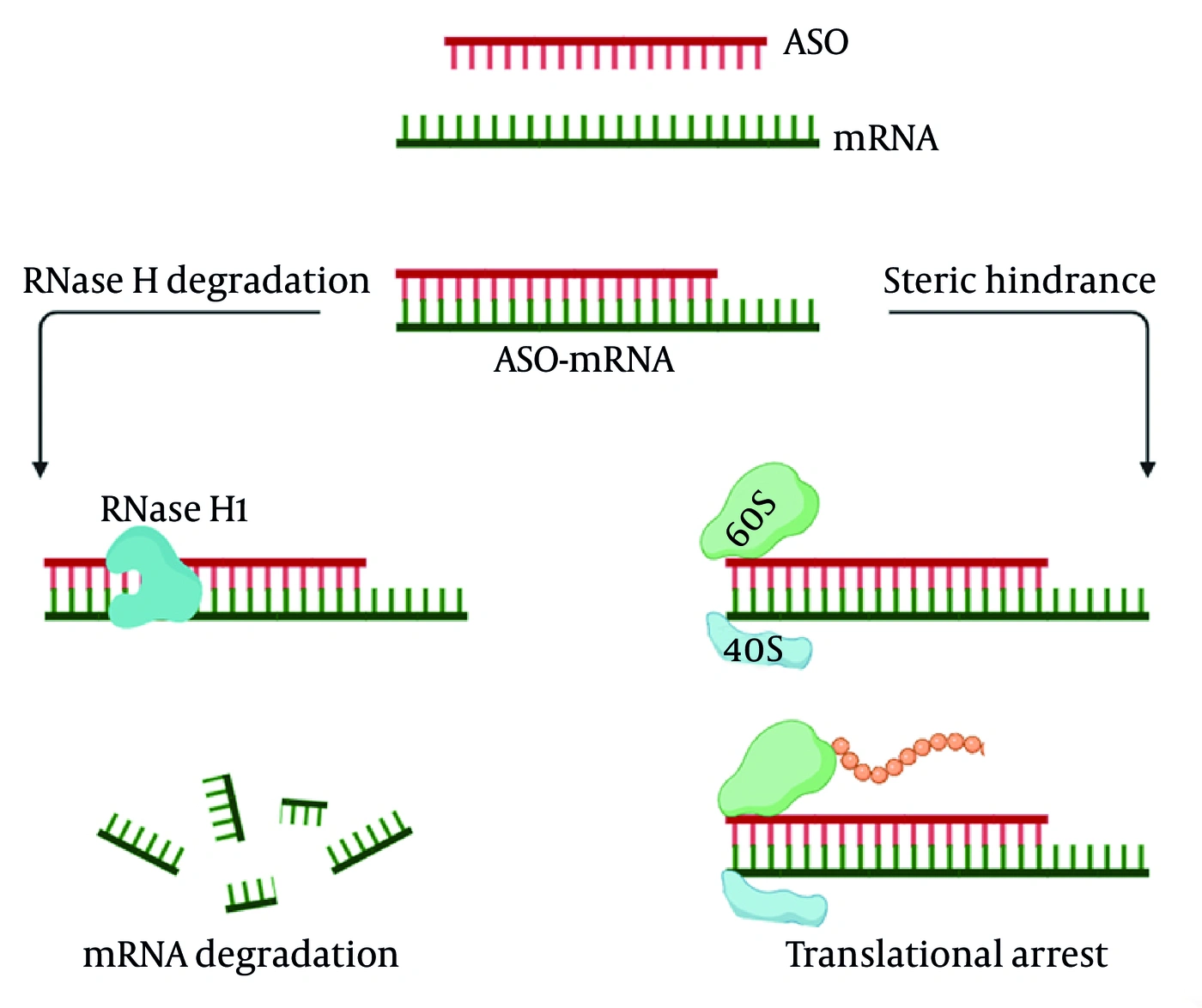
Figure 1.
Schematic representation of antisense oligonucleotide mechanisms of action, including RNase H-mediated degradation and steric blockade.
ASOs can also sterically block and prevent the binding of translation initiation factors or ribosomes, thereby preventing protein synthesis without degrading RNA. This provides another therapeutic option for situations in which a temporary or partial decrease in the production of a particular protein is required. In addition, ASOs can be used to affect the activity level of microRNAs, thereby influencing post-transcriptional gene regulation. Collectively, these effects support the application of antisense therapies across a broad range of neurodegenerative diseases with high specificity and precision, facilitating the development of new disease-modifying therapies (2, 11, 12).
These mechanistic differences should be interpreted alongside delivery feasibility, because the optimal route depends on whether the therapeutic goal is transcript knockdown or splice correction (1, 8-10, 13, 14). RNase H-mediated ASOs are particularly relevant for toxic gain-of-function disorders, whereas splice-modulating ASOs are better suited to diseases in which restoration of a functional transcript is the key objective (7, 10). In both cases, therapeutic success depends on whether sufficient drug reaches the appropriate central nervous system (CNS) compartment while limiting off-target exposure and procedural burden.
3.2. Disease Targets in Neurodegeneration
Identifying specific molecular targets responsible for neurodegenerative diseases is essential for the successful application of ASOs. These molecular targets are generally genetic mutations, abnormal RNA transcripts, or pathogenic proteins that cause the disease (15). Using genomic and transcriptomic technologies, researchers have identified many compelling molecular targets that ASOs can use to modify disease trajectories or alleviate symptoms (14).
One major molecular target for ASOs in Alzheimer’s disease (AD) is the amyloid precursor protein (APP) and its protein product, amyloid-beta (Aβ), which forms plaques associated with the disease. ASOs designed to decrease APP production or alter APP splicing to reduce Aβ production have been evaluated. The goal of these efforts is to reduce amyloid burden in patients with AD to prevent or hinder neuronal damage, thereby potentially modifying the disease course in patients with AD (16).
Alpha-synuclein accumulates in the brains of individuals with Parkinson’s disease and forms toxic aggregates. Targeting the SNCA gene responsible for producing alpha-synuclein using ASOs provides a method to decrease alpha-synuclein production and reduce the associated neurotoxic effects. Studies in early preclinical models suggest a significant reduction in alpha-synuclein aggregation and improved cellular health when alpha-synuclein is suppressed with ASOs (17).
ALS is caused by variations in several genes, including mutations in two key genes, SOD1 and HTT. Clinical trials are ongoing using ASO treatments to reverse the toxic properties of mutated SOD1 protein. Preliminary findings indicate that using these ASO treatments to block expression of mutated SOD1 may reduce exposure to a toxic protein that causes ALS and slow disease progression. It has been hypothesized that targeting the repeat sections (hexanucleotide repeats) of the C9orf72 gene through antisense strategies will decrease the amount of aberrantly expressed RNA and dipeptide repeat proteins expressed by C9orf72. Accumulation of either of these two types of proteins is a direct cause of neurodegeneration in familial forms of ALS and frontotemporal dementias (18).
Huntington's disease, another neurodegenerative disease, is caused by an increase in CAG repeats in the HTT gene. When antisense therapies are used to inhibit the mRNA carrying these CAG repeats, ASO treatments have been shown, in preclinical studies, to be effective and safe and to decrease production of mutant HTT and the associated neurotoxic effects (19).
Research into ASO therapy development has progressed substantially with the identification and validation of specific targets across neurodegenerative diseases. Furthermore, ongoing efforts to identify additional targets will support the development of ASO therapies with higher specificity for pathways associated with specific diseases. Ultimately, this study will provide a basis for developing therapies that modify disease characteristics associated with the molecular pathology of a particular genetic mutation (20).
The translational maturity of ASO strategies differs substantially across neurodegenerative diseases. To avoid conflating exploratory concepts with clinically established therapies, the evidence is summarized below according to development stage, with approved therapies, active clinical candidates, and preclinical delivery approaches separated explicitly (Table 1).
Table 1.
Comparative Overview of Antisense Oligonucleotide Strategies Across Major Neurodegenerative Diseases
| Disease Areas | Molecular Target(s) | ASO Name/Candidate | Mechanism of Action | Development Stage | Key Clinical/Biomarker Findings | Major Limitations |
|---|---|---|---|---|---|---|
| Spinal muscular atrophy | SMN2 | Nusinersen | Splice modulation to increase full-length SMN protein | Approved therapy | Nusinersen established proof of clinical ASO efficacy and remains the clearest example of disease-modifying benefit in neuromuscular disease (21-23). | Repeated intrathecal administration, access burden, and long-term treatment logistics (13, 21-24). |
| Amyotrophic lateral sclerosis (SOD1-ALS) | SOD1 | Tofersen | RNase H-mediated knockdown of mutant SOD1 transcript | Approved therapy | Tofersen lowered neurofilament biomarkers and showed signals of clinical stabilization in SOD1 ALS. | Heterogeneous genetics, incomplete clinical response, and uncertainty about long-term durability (25-27). |
| Alzheimer’s disease | MAPT / tau | BIIB080 | Tau mRNA suppression to reduce tau protein production | Active clinical candidate | Phase 1b data showed reductions in CSF tau biomarkers, and Phase 2 CELIA is ongoing in early AD (28, 29). | Clinical efficacy remains unproven; optimal dosing, long-term benefit, and broader clinical impact are still under study (28, 29). |
| ALS (FUS-ALS) | FUS | ION363 | Transcript silencing of mutant FUS | Active clinical candidate | Clinical development is underway in the FUSION study evaluating efficacy, safety, pharmacokinetics, and pharmacodynamics in FUS-ALS (28). | Human efficacy data remain limited, and durability of benefit has not yet been established (28, 30). |
| ALS / FTD | C9orf72 | Investigational ASO programs | Transcript silencing / repeat-targeting approaches | Early-stage / preclinical | Early clinical programs have been explored, but results have been mixed and some studies were stopped for lack of benefit. | No validated durable efficacy; translational uncertainty remains high (30). |
| Huntington’s disease | HTT | Investigational HTT-lowering ASOs | RNase H-mediated knockdown | Early-stage / preclinical | Preclinical studies support mutant HTT lowering and target engagement. | No broadly validated clinical efficacy yet, and durable benefit remains unproven (31). |
| Parkinson’s disease | SNCA | Investigational SNCA-lowering ASOs | Knockdown of alpha-synuclein | Early-stage / preclinical | Early work suggests that lowering alpha-synuclein may reduce aggregation and improve cellular stress phenotypes (32, 33). | No clinical validation, uncertain target optimality, and translational uncertainty (33). |
| Delivery platforms | BBB-penetrating peptides, LNPs, polymeric nanoparticles, dendrimers, intranasal routes | Delivery-enabling platforms | Improve CNS delivery rather than directly modifying disease biology | Preclinical/exploratory | These approaches may improve stability, uptake, and CNS distribution of ASOs (13, 34-39). | They are not established therapies and still require reproducible manufacturing, safety, and regulatory validation (39-43). |
Abbreviations: AD, Alzheimer’s disease; ALS, amyotrophic lateral sclerosis; ASO, antisense oligonucleotides; CNS, central nervous system; CSF, cerebrospinal fluid; LNPs, lipid nanoparticles.
To facilitate comparison across disease areas, the evidence is best interpreted by development stage rather than by therapeutic promise alone. Nusinersen and tofersen represent clinically validated ASO therapies, whereas most other disease-specific approaches remain in preclinical or early clinical development. Delivery technologies such as nanoparticle systems, peptide conjugates, and intranasal approaches should therefore be presented as enabling platforms under investigation rather than established clinical strategies.
3.3. Central Nervous System Delivery Strategies
One of the most significant barriers to developing therapies for neurodegenerative diseases is the efficient delivery of ASOs into the central nervous system. The blood-brain barrier (BBB), which is highly selective in allowing molecules to cross from the blood into the central nervous system, limits access of nearly all ASOs to the brain. Therefore, there is a strong need for delivery systems that can be matched to disease anatomy and target location, particularly those that allow direct injection into the cerebrospinal fluid using intrathecal (IT) or intracerebroventricular (ICV) routes. These methods allow ASOs to reach therapeutically effective concentrations in patients with neurodegenerative diseases by bypassing the BBB; thus, ASOs enter deeper layers of both the brain and spinal cord at a higher rate than ASOs introduced by systemic administration (Figure 2) (13).
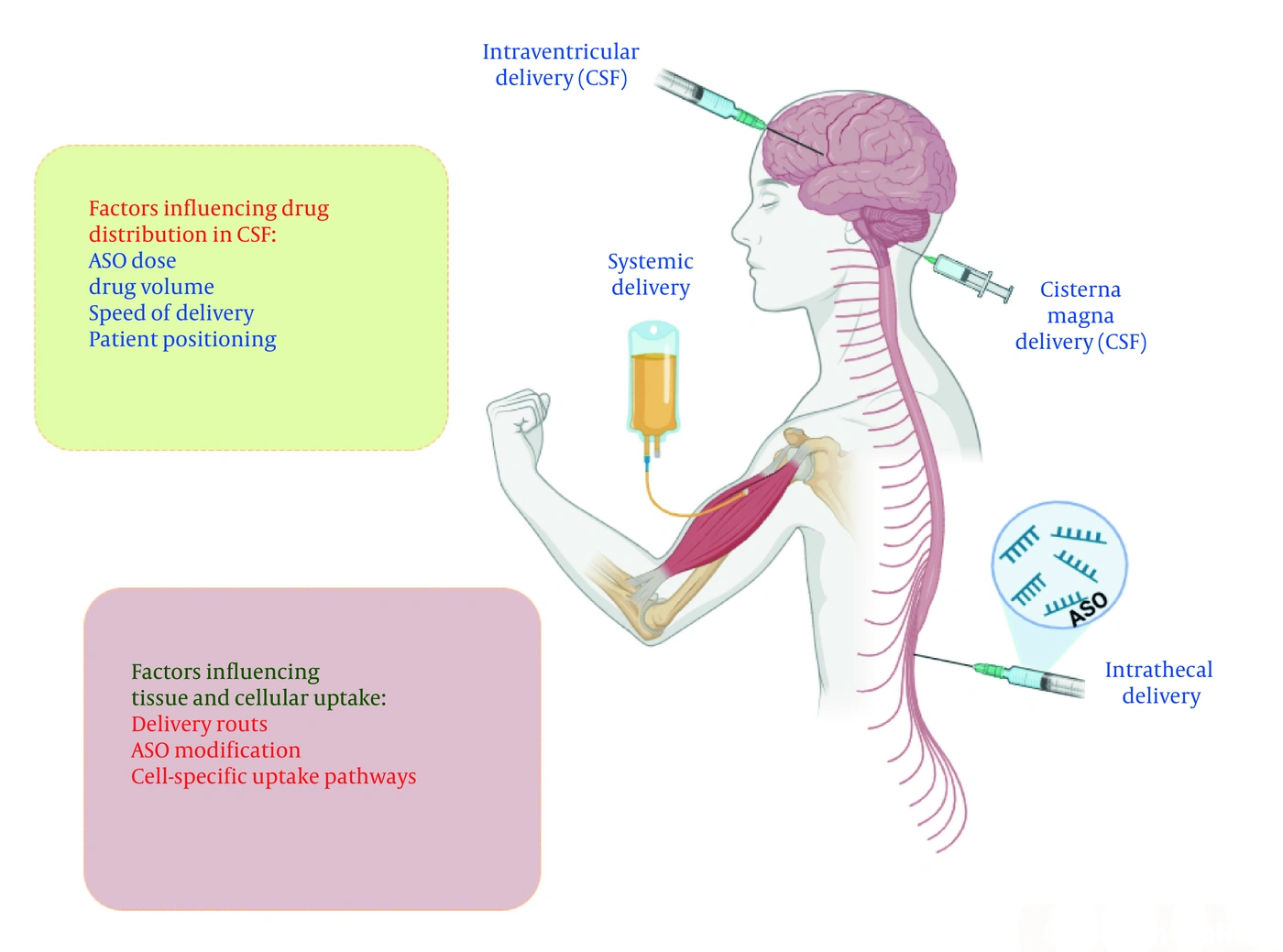
Figure 2.
Overview of antisense oligonucleotide delivery routes to the central nervous system and factors influencing biodistribution and uptake.
Owing to the relative ease and success of IT delivery, IT has become the preferred method of clinical delivery for ASOs in neurodegenerative disease clinical trials. ASOs delivered IT diffuse throughout the CSF and ultimately penetrate brain and spinal cord tissues to interact directly with target cells. The IT route has additional advantages, including the requirement for lower doses than systemic administration, thereby decreasing the potential for systemic exposure and off-target effects associated with ASOs. Nonetheless, challenges associated with IT delivery remain, including limited distribution to deeper brain regions and the invasiveness associated with repeated lumbar punctures (24).
The choice between IT and ICV delivery should be guided by disease anatomy and the primary clinical barrier to access (13, 24, 34, 35, 44). In spinal-predominant diseases such as SMA, IT delivery is especially appropriate because the therapeutic target is closely linked to CSF-accessible spinal motor neurons, and this route has already been validated clinically by nusinersen (21-23). In contrast, disorders with broader cortical or hippocampal involvement, such as AD, may require strategies that improve distribution beyond the spinal compartment, including ICV delivery or BBB-targeted carrier systems (13, 16, 34-36, 44, 45). This anatomical matching is essential because an otherwise effective ASO can still fail clinically if it does not reach the relevant neuronal population in sufficient amounts.
Advancements in delivery technology have prompted the exploration of approaches to overcome many of these barriers. New types of Phosphorothioate Backbones and 2′-O-Methoxyethyl Groups developed through Chemical Modifications to ASOs offer improved Stability, increased cellular uptake, and enhanced distribution in the CNS. Other methods for improving delivery and target specificity involve combining peptides/nanoparticles with ASOs to assist delivery across the BBB. Attachment of blood-brain barrier-penetrating peptides (BPPs) to ASOs enables CNS delivery following systemic intravenous injection. This represents significant progress toward less invasive and more patient-friendly therapies (36, 45).
Among the potential delivery methods currently under study for ASO therapeutics is the intranasal pathway. With this approach, ASOs can be delivered intranasally and bypass the BBB via the olfactory and trigeminal nerve pathways to access the brain. Laboratory studies indicate that ASOs administered using this method can exhibit therapeutic activity and favorable brain distribution, representing an attractive alternative to invasive methods such as spinal injection. Currently, only a limited number of clinical trials have been conducted using intranasal ASO delivery; however, several positive findings have emerged from research on intranasal ASOs for treating neurodegenerative diseases (37).
Overall, advances in ASO delivery to the CNS reflect collaborative efforts to develop both invasive and innovative noninvasive methods that maximize CNS delivery while minimizing the risk of treatment-associated adverse events (46). Continued development of ASO delivery strategies will be critical for facilitating the clinical use of antisense therapies in neurodegenerative diseases by providing opportunities for improved efficacy, adherence, and safety in a rapidly evolving therapeutic area (47).
3.3.1. Nanoplatforms and Carrier Systems
Nanoplatforms are emerging as advanced delivery platforms to address many issues associated with ASO therapy for neurodegenerative diseases (Figure 3) (38). The use of nanocarriers to extend ASO stability in the body (biological barriers), increase cellular uptake, and facilitate delivery through biological barriers (eg, blood-brain barrier) is one way nanotechnology can improve the efficacy and safety of ASO therapeutics compared with more traditional methods, such as intrathecal injections (13, 40), and research in this area has been an emerging trend for many years. Lipid nanoparticles (LNPs) are among the leading technologies used for ASO delivery. LNPs consist of biodegradable lipids and are used to encapsulate ASO molecules. Lipid nanoparticles protect ASOs from enzymatic degradation and allow efficient endosomal escape after cellular uptake. Research has shown that LNPs exhibit high transfection efficiency in neuronal cells and can be modified with targeting ligands or surface coatings to facilitate delivery through the BBB. The rapid success of lipid nanoparticles for delivering mRNA-based vaccines has further propelled their development for delivering ASOs to treat neurodegenerative diseases (48, 49).
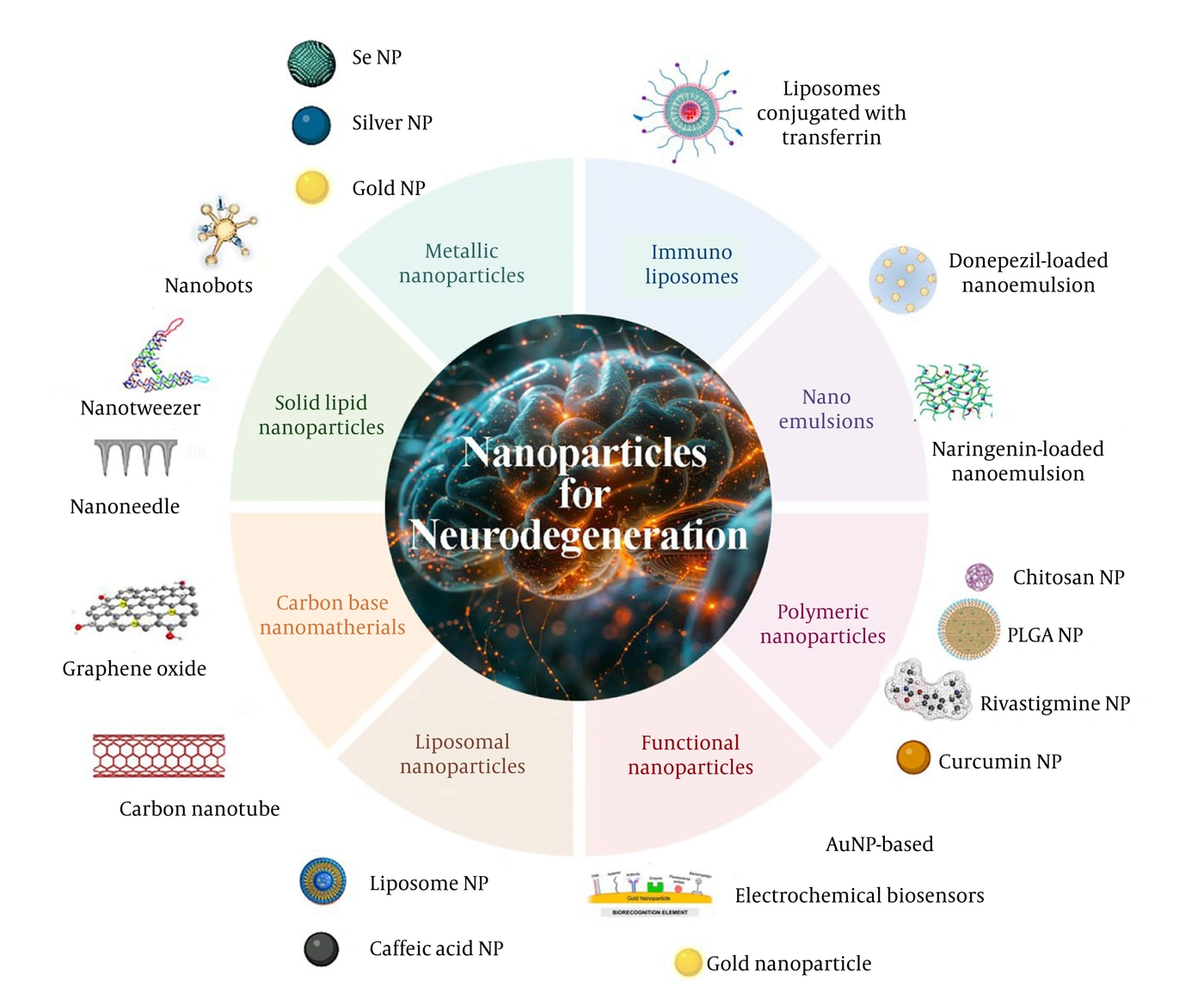
Polymeric nanoparticles also offer unique advantages for ASO delivery. Polymeric nanoparticles composed of biodegradable and biocompatible polymers, such as poly (lactic-co-glycolic acid), allow controlled and sustained release of ASOs to target tissues and can be functionalized with peptides or antibodies to provide cell-type specificity. Polymeric nanoparticles have been effective for delivering ASOs to the CNS in preclinical models of neurodegenerative diseases, improving therapeutic outcomes and decreasing toxicity (53, 54).
Dendrimers are highly branched macromolecules composed of repeating units at different degrees of polymerization. Because of the large number of polymerization units in each dendrimer molecule, they can be used to deliver multiple ASOs or other drugs. The use of dendrimers can increase the stability and specificity of delivered drugs. Dendrimers are small enough to cross the BBB, and their surfaces can be modified to enhance delivery into brain cells and tissues. Studies have shown that dendrimers used as carriers for ASOs can reduce the amount of pathogenic RNA transcripts in preclinical animal models of ALD and HLD. Therefore, dendrimers may be valuable for providing personalized treatments for patients with these disorders (55, 56).
Nanoparticles made from inorganic materials, such as silica and gold, have become valuable tools for delivering ASOs. These nanoparticles have properties that allow decision-makers to visualize and control ASO delivery in living organisms, serving both as a means of administering a therapeutic drug and monitoring whether it is being delivered. One major concern with nanoparticles is ensuring that biocompatibility and clearance characteristics are sufficiently optimized to prevent chronic toxicity, particularly in the treatment of chronic neurodegenerative diseases (57).
Although substantial advances have been made in developing nanocarriers for ASO delivery, significant challenges remain in large-scale manufacturing, ensuring reproducibility, and obtaining regulatory approval. Moreover, further research is needed to understand immune responses to nanoparticles, accumulation at sites of action, and off-target biodistribution. Continued progress in nanotechnology will enable improved nanocarrier design, ultimately contributing to safer and more effective treatments targeting neurodegenerative diseases (39, 42).
These platforms should therefore be viewed as delivery-enabling technologies rather than clinically validated therapeutic strategies. Their main value lies in improving stability, CNS penetration, cellular uptake, and tissue selectivity, especially when conventional IT delivery is unlikely to provide adequate exposure to deeper or more diffuse disease-relevant regions (34, 35, 38-40, 42, 47-50, 52-57). However, their translational use will depend on whether they can demonstrate reproducible manufacturing, acceptable safety, and clear superiority over established routes in long-term neurodegenerative disease settings (39, 41-43, 57).
3.4. Clinical Evidence Across Disease Areas
Recent clinical trials involving ASOs have achieved important milestones in the treatment of neurodegenerative diseases (Figure 4), resulting in the first disease-modifying treatments for several previously unmanageable disorders (58). The most prominent example is nusinersen, an ASO that targets the survival motor neuron 2 (SMN2) gene and was approved by the FDA for the treatment of SMA. Nusinersen has improved motor function and survival in infants with symptom onset or no symptoms at the time of administration (21, 22). The FDA’s approval was based on evidence from phase III studies showing increased achievement of motor milestones and reduced levels of neurodegenerative biomarkers (22, 23).
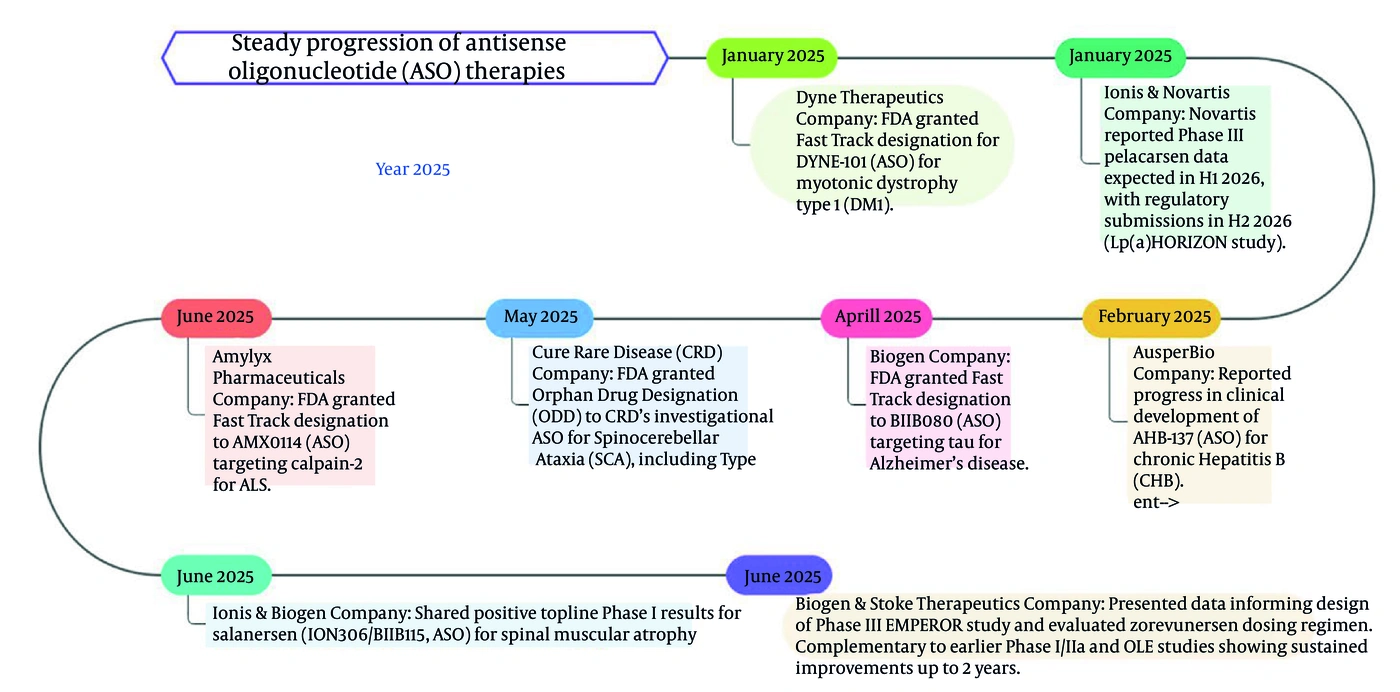
Figure 4.
Timeline of key antisense oligonucleotide development milestones and clinical progress in neurodegenerative disease.
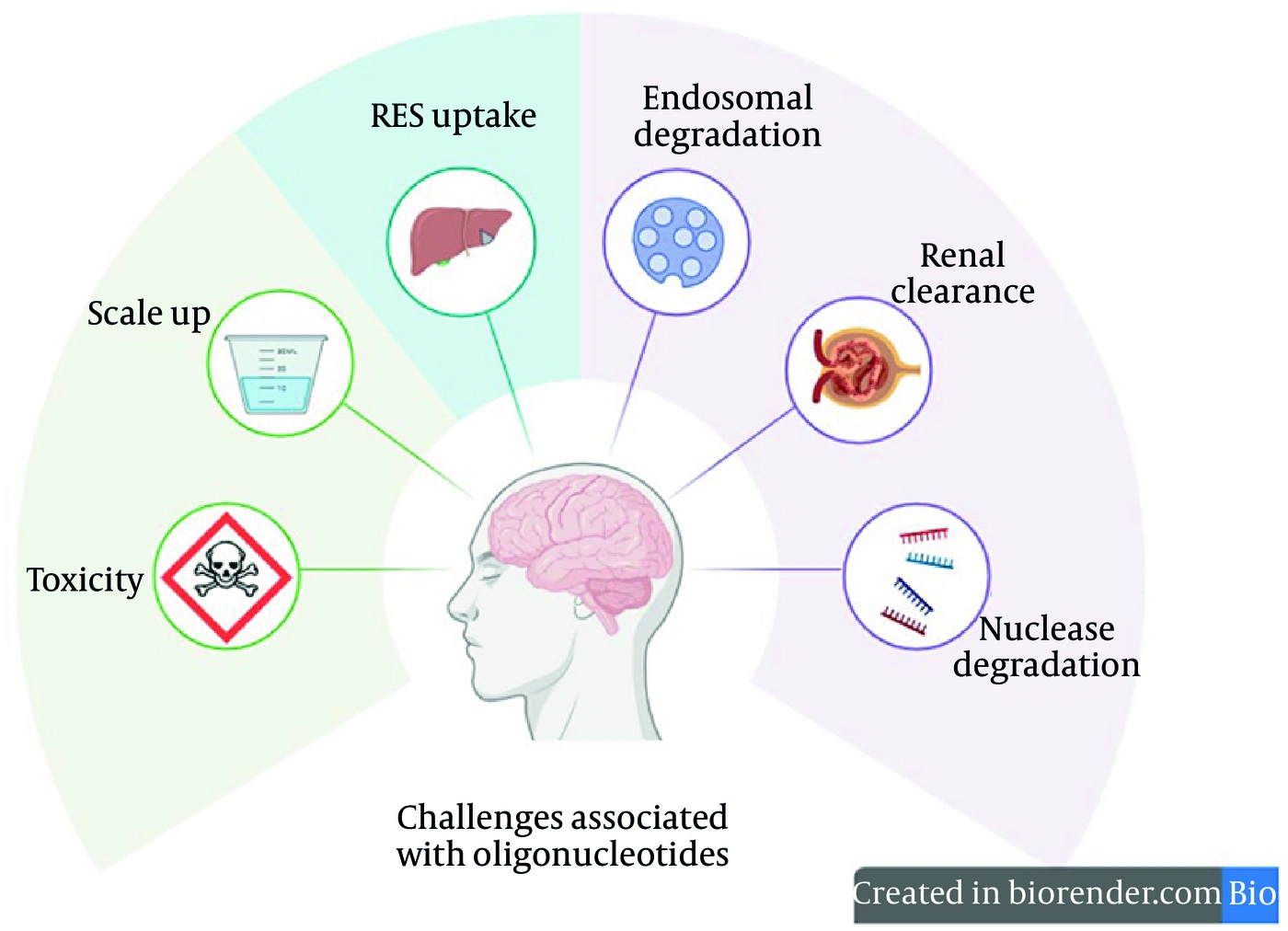
Figure 5.
Major safety and translational challenges associated with antisense oligonucleotide therapy.
In ALS, ASOs are now in advanced development, including tofersen, which targets the superoxide dismutase 1 (SOD1) transcript and has received accelerated FDA approval. Although the initial phase III study (6 months) did not achieve its primary endpoint (improvement in the functional rating scale), extended treatment demonstrated stabilization of disease progression and improved respiratory and muscular strength in many patients. Importantly, the study provided evidence that treated patients also experienced decreases in biomarkers, specifically neurofilament proteins, which correlated with clinical improvement, supporting the potential of ASOs to slow ALS progression (26, 59).
At present, several ASOs are in early clinical evaluation targeting other genetic pathways that contribute to neurodegenerative diseases (eg, C9orf72 expansions in familial ALS and frontotemporal dementia) (14). Initial trial results, however, have been mixed, with some studies failing to meet prespecified efficacy endpoints or being terminated because of a lack of observable clinical benefit. In addition, this growing body of data continues to yield valuable information regarding the mechanism(s) of action of ASOs, optimization of ASO delivery for maximum effectiveness, and the critical issue of stratifying patients based on predicted chances of success with ASO treatment (27).
Studies of HD have similarly benefited from the conclusive demonstration that ASOs can target and modify disease-causing proteins/pathways associated with neurodegeneration with an identifiable genetic source. As in ALS, the developing body of clinical data on ASOs for Huntington's disease continues to demonstrate the potential for both direct therapeutic benefit and meaningful safety improvements. Future clinical research and development in other neurodegenerative diseases using ASOs will build on information gained through evaluation of Huntington's disease studies (31, 60).
Overall, the continued evolution of ASO clinical trials in neurodegenerative diseases reflects substantial therapeutic progress while underscoring the practical constraints that still limit broader implementation. Regulatory approval of ASOs marks a major advance in the therapeutic landscape, but the clinical value of these agents remains strongly dependent on delivery route, tissue access, and disease stage (20, 21, 23, 26, 27, 39, 43, 45, 59, 61). As patient selection, early-response prediction, and route-specific optimization continue to improve, ASO therapies may become increasingly tailored to specific neurodegenerative conditions; however, real-world utility will still be shaped by BBB penetration, dosing frequency, and long-term tolerability.
3.5. Safety and Limitations
ASO therapy has strong therapeutic promise, but safety remains a major barrier to broader clinical translation in neurodegenerative disease. Toxicity may arise from non-target effects, immune activation, and accumulation in off-target tissues, particularly when chemical modifications are introduced to improve stability and cellular uptake (3, 40, 62). These risks are especially important in chronic CNS disorders, where treatment may continue for years and cumulative exposure can affect tolerability and long-term benefit (63, 64).
Preclinical safety evaluation should therefore include careful assessment of biodistribution, organ-specific toxicity, and exposure-response relationships. This is essential because the therapeutic window may narrow as dose and treatment duration increase, particularly for therapies intended for prolonged use (65). In neurodegenerative indications, route selection, repeat dosing, and long-term monitoring should be considered together rather than in isolation (1, 58).
CNS delivery introduces additional safety concerns because ASOs can concentrate in the brain and spinal cord after intrathecal or intracerebroventricular administration (13). Although these routes improve target access, they may also increase the risk of local inflammation, neuronal injury, and off-target RNA modulation if exposure is excessive or poorly controlled. Animal studies have reported acute neurotoxic effects, including localized inflammation and vacuolation, reinforcing the need for dose optimization and neurological surveillance (13).
These concerns are compounded by the need for repeated CNS dosing in many chronic neurodegenerative settings. Repeated exposure may increase the likelihood of cumulative toxicity over time, even when individual doses appear acceptable. As a result, ASO development must balance durable target engagement against the risk of chronic adverse effects and procedure-related burden (13, 24, 66).
Immunogenicity is another major limitation of ASO therapy. Unmethylated CpG motifs and certain backbone chemistries can activate Toll-like receptors and induce cytokine release, systemic inflammation, hypersensitivity, or anti-ASO antibody formation. These responses may reduce tolerability and compromise therapeutic efficacy (8, 43, 67).
Chemical modification can reduce immunogenicity, but it may also introduce other safety concerns. Design features that improve stability and cellular uptake may increase the risk of pro-inflammatory or cytotoxic effects under some conditions. Accordingly, sequence design and backbone chemistry should be optimized together to preserve efficacy while minimizing toxicity (36, 45, 68, 69).
Long-term toxicology remains uncertain, particularly with respect to genotoxicity and carcinogenicity. Although ASOs are generally considered less risky than many small molecules, prolonged exposure could still theoretically contribute to DNA damage or mutagenic effects (41). Therefore, carcinogenicity and genotoxicity testing should be completed before human use, especially for therapies intended for continuous administration in chronic disease (40, 70).
Defining the NOAEL and MTD is essential for establishing an appropriate therapeutic window. These parameters help identify a dose and schedule that maximizes benefit while minimizing adverse effects. Because many ASOs have a narrow therapeutic index, individualized dosing and close monitoring are often required during treatment (71-73).
Overall, the main limitations of ASO therapy include off-target hybridization, variable CNS delivery, immune activation, and uncertainty regarding long-term safety and durability of benefit (Figure 5) (74). Advances in chemical design and high-throughput screening have improved specificity and reduced some toxicities, but they have not eliminated these risks entirely. Current FDA and EMA guidance supports a cautious, mechanism-based development pathway that emphasizes immune safety, organ toxicity, and long-term tolerability before broad clinical adoption (62, 75).
3.6. Future Directions and Emerging Technologies in Antisense Therapeutics
Antisense oligonucleotides (ASOs) are being rapidly developed through the integration of new technologies to expand the range of treatable diseases and increase effectiveness. One area of active discovery involves designing ASOs that are delivered to lysosomes for degradation (and thus, via a non-nuclear mechanism) to target mRNA degradation, or via other non-RNase H-mediated methods of mRNA degradation. The use of bifunctional molecules enables direct transport of ASOs to lysosomes, where cytoplasmic mRNA can be degraded more efficiently with the bifunctional molecule than with the original RNase H-based design. This method broadens the range of targetable mRNAs and may improve therapeutic efficacy and stability (73).
Currently, over 70 pharmaceutical companies are working on more than 90 ASO candidates for various diseases (eg, rare genetic diseases, neurological diseases, oncology, and infectious diseases). In addition, ASOs continue to be rapidly developed through collaboration between industries and advances in nucleotide chemistry, delivery platform technologies, and patient stratification techniques. Ultimately, these discoveries have the potential to make ASOs a cornerstone of personalized medicine, enabling precisely targeted therapies based on each patient’s profile (74, 76).
Antisense oligonucleotide (ASO) optimization can benefit from rapid advances in machine learning and high-throughput screening, which can enhance ASO design, predict unintended targets, and improve target affinity and specificity. These approaches can accelerate discovery and shorten ASO development timelines, thereby improving ASO safety. Research in ASO delivery techniques, such as ASO-targeting ligands, nanoparticle systems, and BBB-crossing carriers, is enabling ASOs to target specific cells and tissues more effectively than previous generations of ASOs, including the ability to reach specific tissues in the CNS (77-79).
In addition to the aforementioned advances, emerging regulatory frameworks and expedited approval pathways are contributing to the future of antisense therapeutics. Regulatory bodies are developing new processes in response to the rapid pace of ASO clinical trials, and approval designations such as Fast Track and Orphan Drug are becoming more frequent as ASO trials continue to increase. With the rise of these accelerated pathways, there is increased impetus to develop innovative treatments for rare and ultra-rare diseases via personalized therapeutics based on an individual’s genomic makeup, establishing new paradigms in precision medicine (75, 80).
In addition, ongoing research is focused on improving the safety of ASOs and their accompanying chemical modifications, as well as delivery methods, to ensure minimal side effects while preserving overall efficacy (45). Advances in biomarker and non-invasive technologies for monitoring patient status allow real-time tracking of ASO therapeutic effects and monitoring of dosage adjustments and treatment plans. Collectively, these emerging technologies may expand the therapeutic use of ASOs, including for neurodegenerative diseases (25, 81).
4. Conclusions
ASO therapy has provided strong proof of concept for precision intervention in selected neurodegenerative settings, but translational success remains uneven across diseases and delivery platforms. The therapeutic promise of ASOs is greatest when the molecular mechanism, anatomical target, and delivery route are aligned; however, clinical implementation remains constrained by limited BBB penetration, immunogenicity, local neurotoxicity, and the need for repeated dosing in lifelong disorders. Approved therapies provide the clearest validation of this approach, whereas many other programs remain limited by delivery barriers, short follow-up, biomarker-dominant endpoints, and incomplete clinical confirmation. Future progress will depend not only on improved chemistry and targeting but also on better anatomical matching of delivery routes to disease biology, longer and more rigorous trials, and careful distinction between therapeutic promise and demonstrated clinical utility.