Jentashapir J Cell Mol Biol

Image Credit:Jentashapir J Cell Mol Biol

Dual Molecular Actions of Aspirin on Pancreatic β-Cell Function and Hepatic Glucose Transport in Experimental Diabetes

Author(s):
Mohammad Reza MirzaeiMohammad Reza Mirzaei1, Sajjad SisakhtnezhadSajjad SisakhtnezhadSajjad Sisakhtnezhad ORCID1,*, Mahnaz GhowsiMahnaz Ghowsi1
1Department of Biology, Faculty of Science, Razi University, Kermanshah, Iran

Jentashapir Journal of Cellular and Molecular Biology:Vol. 17, issue 1; e168632
Published online:May 30, 2026
Article type:Research Article
Received:Nov 29, 2025
Accepted:May 18, 2026
How to Cite:Mirzaei MR, Sisakhtnezhad S, Ghowsi M. Dual Molecular Actions of Aspirin on Pancreatic β-Cell Function and Hepatic Glucose Transport in Experimental Diabetes. Jentashapir J Cell Mol Biol. 2026;17(1):e168632. doi: https://doi.org/10.5812/jjcmb-168632

Abstract

Background:

Aspirin (acetylsalicylic acid), a nonsteroidal anti-inflammatory drug, has been shown to modulate inflammatory and metabolic pathways.

Objectives:

This study aimed to investigate the molecular effects of aspirin on pancreatic and hepatic gene expression associated with β-cell function and glucose regulation in alloxan-induced diabetic rats.

Methods:

Twenty-four male Wistar rats were allocated to the control, diabetic, and diabetic-aspirin groups. Rats in the diabetic-aspirin group received aspirin (100 mg/kg/day, intraperitoneally) for 35 days. Fasting blood glucose (FBG), body weight, and the mRNA expression of Pdx1, Ins1/2, Insr, and Tnfα in pancreatic tissue, as well as Glut1, Glut2, Insr, and Tnfα in hepatic tissue, were analyzed using quantitative real-time polymerase chain reaction.

Results:

Diabetes induction significantly increased FBG levels and dysregulated the expression of genes involved in insulin synthesis, glucose transport, and inflammation. Aspirin administration markedly reduced FBG by approximately 30% without affecting body weight, restored pancreatic Pdx1 and Ins1/2 expression, and downregulated Insr and Tnfα, indicating improved β-cell function and reduced local inflammation. In hepatic tissue, aspirin significantly suppressed the overexpression of Glut1, Glut2, Insr, and Tnfα, suggesting improved hepatic glucose handling and attenuated inflammatory signaling. These organ-specific transcriptional effects indicate that aspirin simultaneously supports β-cell regeneration and modulates hepatic glucose transport and inflammatory pathways. Mechanistically, these effects may be mediated through inhibition of the nuclear factor kappa B pathway, activation of AMP-activated protein kinase, and reduction of oxidative stress.

Conclusions:

Collectively, these findings provide molecular evidence that aspirin may exert beneficial antidiabetic and anti-inflammatory effects by restoring pancreatic β-cell gene expression and normalizing hepatic metabolic gene networks, thereby supporting its potential as an accessible adjunct therapy for diabetes management.

1. Background

Diabetes mellitus (DM) is a chronic metabolic disorder characterized by persistent hyperglycemia resulting from impaired insulin secretion, insulin resistance, or both. The global prevalence of DM has increased sharply, making it one of the leading causes of mortality and morbidity worldwide (1). Type 2 diabetes mellitus (T2DM), which accounts for more than 90% of cases, is primarily driven by insulin resistance and progressive β-cell dysfunction (2, 3). Despite advances in pharmacotherapy, long-term glycemic control remains challenging, largely because of ongoing β-cell failure and inflammation-driven metabolic dysregulation.

Pancreatic β cells are central to glucose homeostasis through insulin synthesis and secretion. In diabetes, oxidative stress and chronic inflammation disrupt β-cell function, leading to apoptosis, reduced insulin gene transcription, and β-cell dedifferentiation. Key transcription factors, such as pancreatic and duodenal homeobox 1 (Pdx1), and insulin genes (Ins1 and Ins2) are downregulated, impairing glucose-stimulated insulin secretion (4, 5). Restoring β-cell gene expression is therefore essential to improve endogenous insulin production and glucose regulation.

Inflammation is now recognized as a major contributor to β-cell dysfunction and insulin resistance. Cytokines such as tumor necrosis factor-alpha (TNF-α) and interleukin-1β activate nuclear factor kappa B (NF-κB) and c-Jun N-terminal kinase pathways, thereby suppressing insulin signaling and promoting oxidative stress (6, 7). These pathways also disrupt hepatic glucose metabolism, further aggravating hyperglycemia. Accordingly, modulation of inflammatory pathways is a potential therapeutic strategy to preserve β-cell function and enhance insulin sensitivity.

Aspirin (acetylsalicylic acid), one of the oldest nonsteroidal anti-inflammatory drugs, has recently received renewed attention for its metabolic effects. Beyond inhibiting cyclooxygenase enzymes, aspirin suppresses the IκB kinase β/NF-κB pathway, thereby reducing inflammatory cytokine production and enhancing insulin signaling (8). Aspirin can also activate AMP-activated protein kinase (AMPK), a key regulator of energy metabolism that promotes glucose uptake, inhibits hepatic gluconeogenesis, and improves lipid oxidation (9, 10).

Previous studies have shown that high-dose aspirin improves insulin sensitivity and reduces fasting blood glucose levels in both diabetic patients and animal models (8, 11-13). In addition, aspirin treatment in diabetic rats has been associated with improved glucose tolerance and decreased hepatic inflammation (14). However, these investigations have primarily focused on systemic biochemical outcomes rather than molecular mechanisms. Little is known about aspirin’s direct regulatory effects on β-cell gene expression and its coordinated influence on hepatic metabolic and inflammatory genes. This knowledge gap is important because diabetes involves complex crosstalk between the pancreas and the liver, the 2 key organs regulating glucose homeostasis. The pancreas regulates insulin production, whereas the liver controls glucose metabolism and insulin sensitivity; thus, both organs are essential for maintaining glucose homeostasis. In this context, β-cell-specific genes such as Pdx1 and Ins1/2 govern insulin production, whereas hepatic genes such as Glut1, Glut2, and Tnfα regulate glucose transport and inflammatory responses. Understanding aspirin’s simultaneous impact on these molecular pathways could clarify how it exerts systemic glycemic benefits beyond its anti-inflammatory action.

Alloxan-induced diabetes in rats is a well-established model for studying oxidative β-cell injury and hyperglycemia. Alloxan selectively destroys pancreatic β cells via glucose transporter 2 (GLUT2), thereby mimicking insulin-deficient diabetes. This model enables evaluation of agents that protect β-cells or modulate gene expression involved in glucose regulation. Collectively, in addition to its anti-inflammatory properties, aspirin exerts important metabolic effects relevant to diabetes. By inhibiting the IκB kinase β/NF-κB pathway and activating AMPK, aspirin reduces pro-inflammatory cytokine production, suppresses hepatic gluconeogenesis, and improves glucose metabolism. These combined actions support the use of aspirin as a suitable model compound for investigating the molecular mechanisms underlying β-cell function and hepatic glucose regulation in diabetes.

2. Objectives

The present study aimed to evaluate fasting blood glucose (FBG), body weight, and the molecular mechanisms underlying the antidiabetic and anti-inflammatory effects of aspirin by assessing its effects on pancreatic and hepatic gene expression. Specifically, we examined whether 35-day aspirin treatment could 1) improve glycemic control and body weight, 2) restore the pancreatic expression of Pdx1, Ins1/2, and Insr, and 3) modulate hepatic Glut1, Glut2, and Tnfα expression in alloxan-induced diabetic rats.

3. Methods

3.1. Experimental Design and Ethical Approval

This experimental study evaluated the effects of aspirin on the expression of genes involved in insulin synthesis, glucose transport, and inflammation in alloxan-induced diabetic rats. The protocol was reviewed and approved by the Ethics Committee of Razi University (Ethical Code: IR.RAZI.REC.1399.044) and conformed to the guidelines for the care and use of laboratory animals established by the National Institutes of Health (NIH Publication No. 85-23, revised 2011).

A total of 24 healthy adult male Wistar rats, aged 8 - 10 weeks and weighing 200 - 250 g, were obtained from the Animal House of Kermanshah University of Medical Sciences, Kermanshah, Iran. Male rats were selected to minimize biological variability related to sex hormones and to obtain more consistent metabolic and molecular outcomes. All animals were clinically healthy and acclimatized for 1 week before experimentation. The total study duration, including the treatment phase, was 35 days.

3.2. Animal Housing and Husbandry

Rats were housed in appropriate cages, with 4 animals per cage, under controlled environmental conditions: a temperature of 22 ± 2°C, relative humidity of 55% ± 5%, and a 12-hour light/dark cycle. They were fed standard laboratory chow (Pars Animal Feed, Iran) and provided with tap water ad libitum. Bedding material (wood shavings) was changed twice per week, and cages were cleaned regularly to maintain hygienic conditions. Throughout the experimental period, animals were monitored daily for general health, food intake, and behavior.

3.3. Experimental Groups and Treatments

After acclimatization, rats were randomly assigned to 3 groups (n = 8 per group): the control group received normal saline (1 mL/kg, intraperitoneally) daily for 35 days; the diabetic group received a single intraperitoneal injection of alloxan monohydrate (150 mg/kg) to induce diabetes and was left untreated thereafter; and the diabetic-aspirin group comprised diabetic rats treated with aspirin (acetylsalicylic acid; Sigma-Aldrich, USA) at a dose of 100 mg/kg/day, intraperitoneally, for 35 consecutive days.

Aspirin was freshly dissolved in sterile phosphate-buffered saline (PBS; pH 7.4) each day before injection. The dose was selected based on previous studies demonstrating significant metabolic effects without toxicity in rats (12-14). All treatments were administered at the same time each day to minimize circadian variability.

3.4. Induction of Experimental Diabetes

Diabetes was induced after a 12-hour overnight fast by a single intraperitoneal injection of freshly prepared alloxan monohydrate (150 mg/kg body weight; Sigma-Aldrich, USA) in PBS (pH 7.4). Because alloxan can cause transient hypoglycemia due to sudden insulin release, rats were provided with a 5% glucose solution for 24 hours after injection to prevent hypoglycemic shock. After 72 hours, FBG levels were measured using a glucometer (Accu-Chek, Roche Diagnostics, Germany) in venous blood collected from the orbital sinus at the inner corner of the eye. Rats with FBG ≥ 250 mg/dL were considered diabetic and included in the study. Control rats received an equal volume of PBS only.

3.5. Measurement of Fasting Blood Glucose and Body Weight

Fasting blood glucose and body weight were recorded at baseline and weekly throughout the 35-day experimental period. For FBG measurement, rats were fasted for 12 hours, and blood was collected from the tail vein. Glucose levels were determined using the glucose dehydrogenase-nicotinamide adenine dinucleotide method with a standard glucometer (Accu-Chek, Roche Diagnostics, Germany). Body weight was measured using a digital scale with 0.01-g precision. These parameters were used to assess systemic metabolic alterations and the effects of aspirin on glycemic regulation.

3.6. Sample Collection

At the end of the 35-day treatment period, rats were fasted overnight and anesthetized with a mixture of ketamine (80 mg/kg) and xylazine (10 mg/kg) (Bremer Pharma, Iran) at a ratio of 1:10, administered intraperitoneally. Pancreatic and hepatic tissues were rapidly excised, transferred into cryotubes, immediately snap-frozen in liquid nitrogen, and stored at -80°C for molecular assays.

3.7. Quantitative Real-Time Polymerase Chain Reaction

Total RNA was isolated from approximately 30 mg of frozen pancreatic and hepatic tissue using a column total RNA extraction kit (DenaZist Asia, Iran) according to the manufacturer’s instructions. RNA concentration and purity were assessed spectrophotometrically at 260/280 nm using a NanoDrop 2000 (Thermo Fisher Scientific, USA). Samples with purity ratios between 1.8 and 2.0 were used for downstream applications. RNA integrity was further confirmed by agarose gel electrophoresis. Potential genomic contamination in the RNA samples was eliminated using a DNase I kit (Fermentase, Germany) according to the manufacturer’s instructions, with incubation at 37°C for 30 minutes (15). Following DNase I treatment, the RNA samples were used for complementary DNA (cDNA) synthesis.

Complementary DNA synthesis was performed using an ExcelRT Reverse Transcription Kit (SMOBiO Technology, Taiwan) in a 20-µL reaction mixture containing 1 µg of total RNA and oligo-dT primers. The reaction conditions were as follows: 25°C for 10 minutes, 37°C for 50 minutes, and 85°C for 5 minutes to inactivate reverse transcriptase. The resulting cDNA was stored at -20°C until use for quantitative real-time polymerase chain reaction (qRT-PCR).

Quantitative analysis of target gene expression was performed using SYBR Green-based real-time PCR on a Rotor-Gene thermocycler (Corbett, Australia). Each 10-µL reaction contained 5 µL of 2× SYBR Green PCR Master Mix (BioBasic, Canada), 1 µL of the cDNA template, 0.5 µL of each forward and reverse primer (10 µM), and 3 µL of nuclease-free water. The amplification program consisted of enzyme activation for 2 minutes at 94°C, initial denaturation at 95°C for 10 minutes, followed by 45 cycles of 94°C for 5 seconds, 58°C for 30 seconds, and 72°C for 30 seconds. Melting curve analysis (54 - 95°C) was performed after amplification to verify specificity. Each sample was analyzed in triplicate, and no-template controls were included to rule out contamination.

The target genes analyzed included Ins1, Ins2, Insr, and Pdx1 in pancreatic tissue and Glut1, Glut2, Insr, and Tnfα in hepatic tissue. The glyceraldehyde-3-phosphate dehydrogenase (Gapdh) gene was used as an internal housekeeping control. Primers specific for the target genes were designed using Allele ID (version 6) software and used for qRT-PCR reactions (Table 1). Relative gene expression was calculated using the comparative threshold cycle method, and results were expressed as fold changes relative to the control group (16).

Table 1.Details of Gene-Specific Primers Used for PCR Analysis
Gene and Primer Sequence (5' -> 3')GenBank IDPCR Product Length (bp)
InsrNM_017071.2147
GATGCCACCAATCCTTCCGTTCCC
GCTGTCCTCCGCCTGCCTCTC
Ins1/2NM_019129.3195
CCATCAGCAAGCAGGTCATTGTTC
CGACGGGACTTGGGTGTGTAG
Glut1NM_011400.3190
TGCTGCTCAGTGTCATCTTCATCC
ATCTGCCGACCCTCTTCTTTCATC
Glut2L28126.187
GGATCTGCTGACCTGTGAAAGT
TCCACTACCCTGTACCTGCC
Pdx1NM_022852.3111
GTGCCAGAGTTCAGTGCTAATCC
ACTTCCCTGTTCCAGCGTTCC
TnfαNM_012675180
AGAACTCCAGGCGGTGTC
GAGAAGATGATCTGAGTGTGAGG
GapdhNM_017008110
GCTGGTGCTGAGTATGTCGTGGAG
GCGGAAGGGGCGGAGATGATG

3.8. Statistical Analysis

All quantitative data are presented as the mean ± standard error of the mean (SEM). Statistical analyses were performed using SPSS version 25.0 (IBM Corp., USA) and GraphPad Prism version 9.0 (GraphPad Software, USA). Data normality was assessed using the Shapiro-Wilk test. Differences among groups were analyzed using 1-way analysis of variance, followed by Tukey’s post hoc test for multiple comparisons. A P value < 0.05 was considered statistically significant. In addition, for gene expression analysis, fold-change data were log2-transformed before statistical testing to achieve a normal distribution. Graphical representations were generated using GraphPad Prism to display the mean ± SEM, with statistically significant differences indicated by asterisks (*P < 0.05, **P < 0.01, and ***P < 0.001).

4. Results

4.1. Body Weight Changes

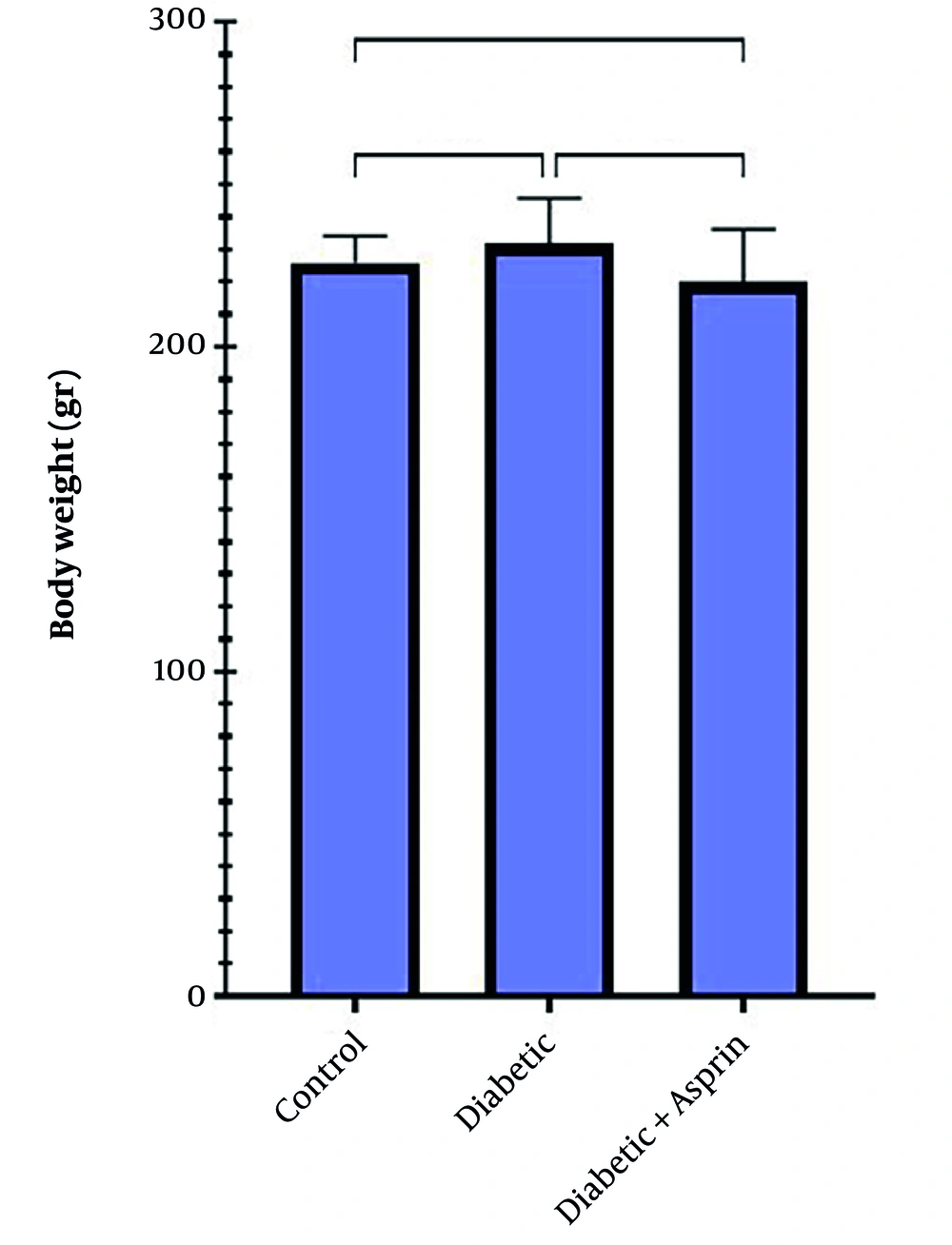
No statistically significant differences in body weight were observed among the 3 groups (P > 0.05) (Figure 1). Both diabetic and aspirin-treated diabetic rats maintained body weights comparable to those of the control animals, indicating that neither diabetes induction with alloxan nor aspirin treatment (100 mg/kg/day for 35 days) significantly affected overall body mass. These findings suggest that, under the experimental conditions used, aspirin did not exert measurable effects on body weight regulation and may have primarily influenced metabolic and molecular parameters rather than gross physiological changes in body weight.

Comparison of body weight (in grams) among the control, diabetic, and diabetic-aspirin groups. No significant difference was observed among groups. Abbreviation: ns, not significant.
Figure 1.

Comparison of body weight (in grams) among the control, diabetic, and diabetic-aspirin groups. No significant difference was observed among groups. Abbreviation: ns, not significant.

4.2. Fasting Blood Glucose Levels

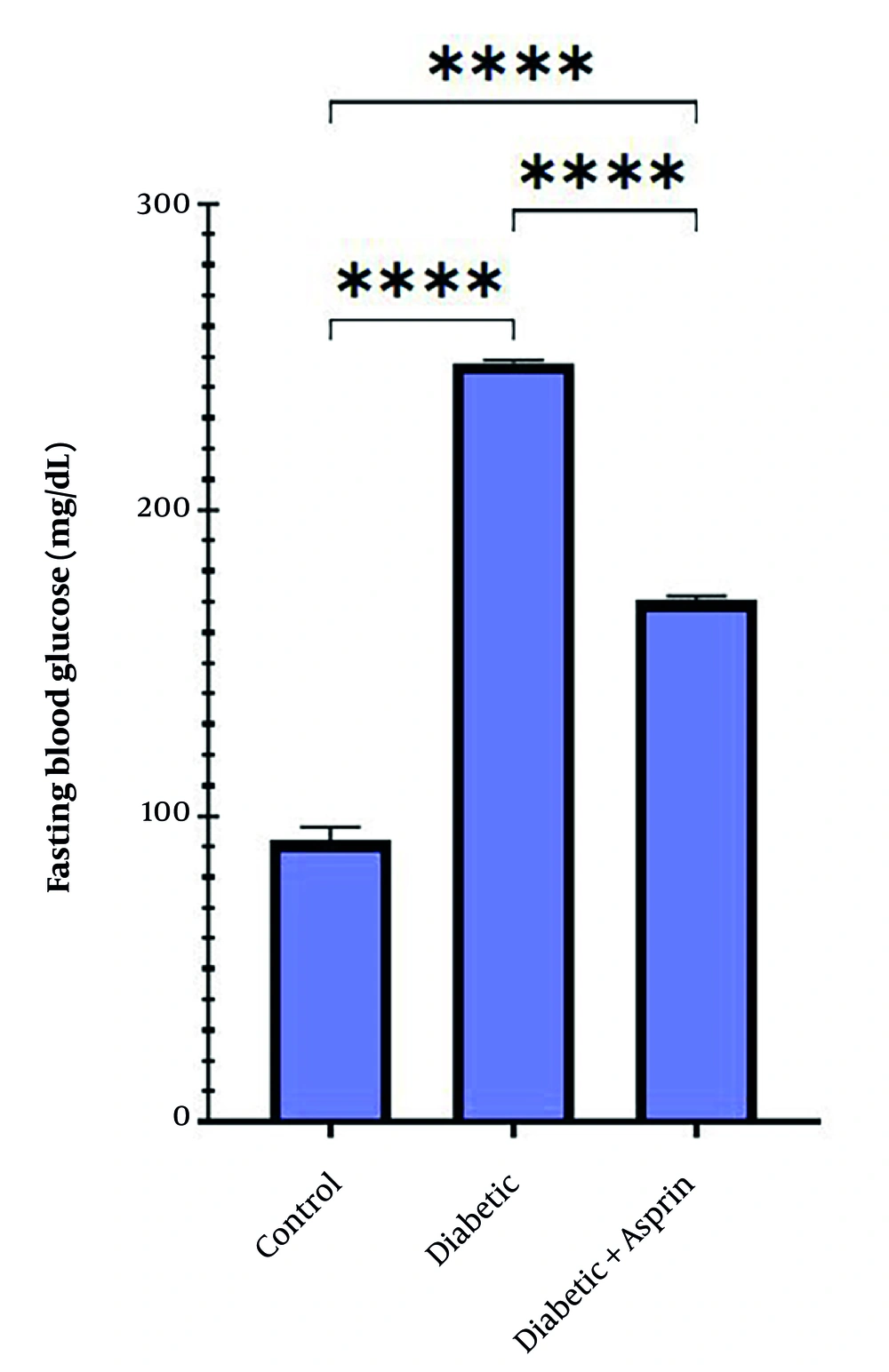
Alloxan injection successfully induced diabetes, as indicated by a significant elevation in FBG compared with that in the control group (P < 0.001). The mean FBG level in diabetic rats was 248.14 ± 3.1 mg/dL, compared with 76.53 ± 3 mg/dL in controls (Figure 2). Aspirin treatment (100 mg/kg/day for 35 days) led to a marked decline in FBG levels (170.33 ± 6.6 mg/dL) compared with those in diabetic rats (P < 0.01), demonstrating a potent antihyperglycemic effect. These findings confirm that aspirin treatment effectively improved glycemic control in alloxan-induced diabetic rats by attenuating hyperglycemia.

Effect of aspirin treatment on fasting blood glucose levels in diabetic rats. The diabetic group showed a significant increase in fasting blood glucose compared with the control group (P &lt; 0.0001). Treatment with aspirin significantly reduced blood glucose levels compared with the untreated diabetic group (P &lt; 0.0001). Data are expressed as mean ± SEM.
Figure 2.

Effect of aspirin treatment on fasting blood glucose levels in diabetic rats. The diabetic group showed a significant increase in fasting blood glucose compared with the control group (P < 0.0001). Treatment with aspirin significantly reduced blood glucose levels compared with the untreated diabetic group (P < 0.0001). Data are expressed as mean ± SEM.

4.3. Hepatic Gene Expression Analysis

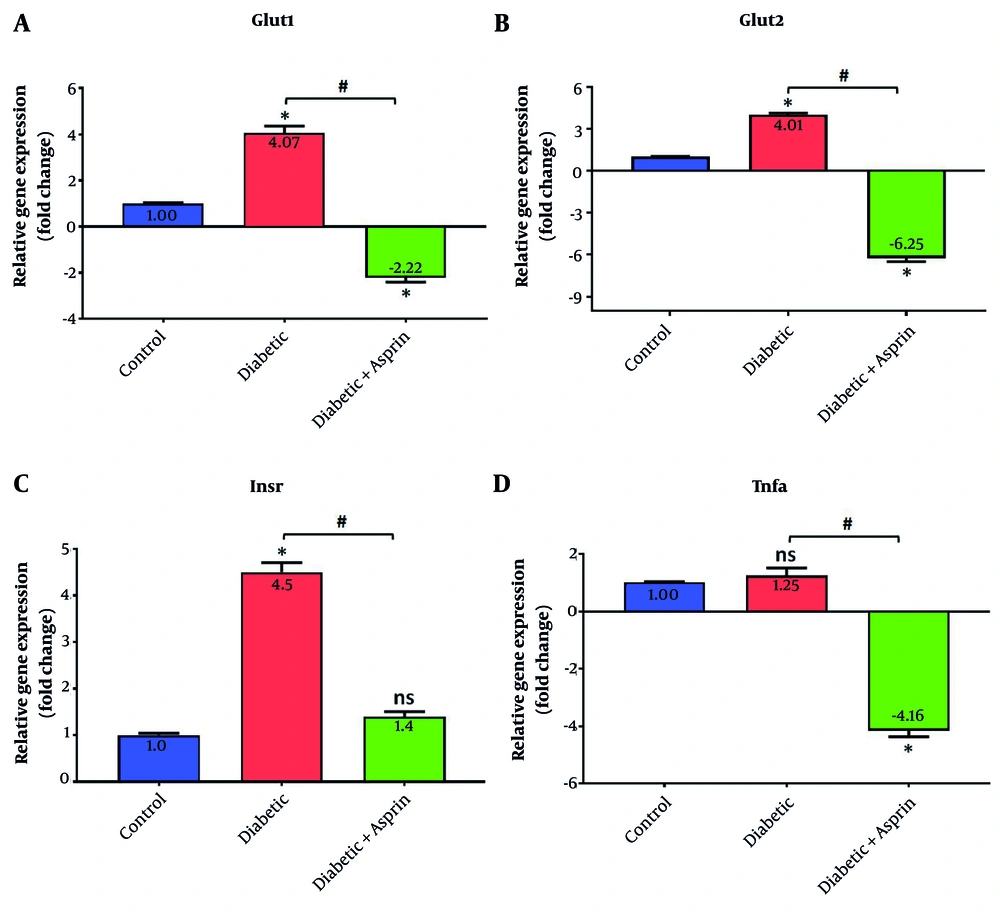
Real-time PCR analysis revealed that diabetes significantly upregulated Insr, Glut1, and Glut2 expression in liver tissue compared with that in controls. Specifically, expression increased approximately 4.5-, 4.07-, and 4.01-fold, respectively (fold change > 2; P < 0.05) (Figure 3). In contrast, Tnfα expression was mildly elevated (1.25-fold), but this difference was not statistically significant.

Effect of aspirin treatment on hepatic gene expression in diabetic rats. Relative mRNA expression levels of (A) Glut1, (B) Glut2, (C) Insr, and (D) Tnfα were analyzed by qRT-PCR. Diabetic rats showed significant alterations in the expression of these genes compared with controls, while aspirin treatment modulated their expression toward normal levels. Data are expressed as fold change (mean ± SEM). *P &lt; 0.05 vs control; #P &lt; 0.05 vs diabetic. Abbreviation: ns, not significant.
Figure 3.

Effect of aspirin treatment on hepatic gene expression in diabetic rats. Relative mRNA expression levels of (A) Glut1, (B) Glut2, (C) Insr, and (D) Tnfα were analyzed by qRT-PCR. Diabetic rats showed significant alterations in the expression of these genes compared with controls, while aspirin treatment modulated their expression toward normal levels. Data are expressed as fold change (mean ± SEM). *P < 0.05 vs control; #P < 0.05 vs diabetic. Abbreviation: ns, not significant.

Following aspirin treatment, the expression of these genes decreased markedly compared with that in diabetic rats: Insr (-1.4-fold), Glut1 (-2.22-fold), Glut2 (-6.25-fold), and Tnfα (-4.16-fold). All downregulations were statistically significant (P < 0.05). These results indicate that aspirin suppressed hepatic glucose transporter and insulin receptor overexpression, suggesting regulatory effects on glucose uptake and inflammatory pathways in the liver.

4.4. Pancreatic Gene Expression Analysis

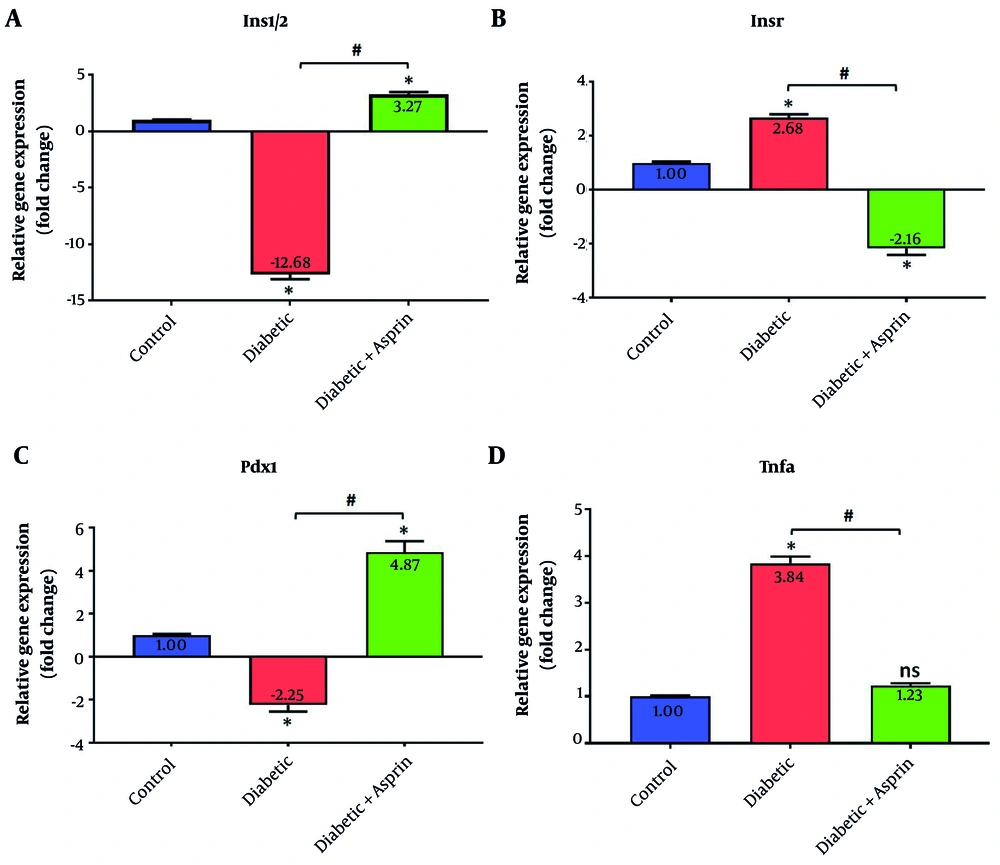
Analysis of pancreatic tissue revealed that, in diabetic rats, Pdx1 and Ins1/2 expression was significantly downregulated, whereas Insr and Tnfα expression was markedly upregulated compared with that in the control group (Figure 4). Quantitatively, Pdx1 and Ins1/2 expression decreased by 2.25 and 12.68-fold, respectively, whereas Insr and Tnfα increased by 2.68 and 3.84-fold, respectively (P < 0.05).

Impact of aspirin administration on pancreatic gene expression in diabetic rats. Quantitative RT-PCR was used to determine the relative mRNA expression of (A) Ins1/2, (B) Insr, (C) Pdx1, and (D) Tnfα. Diabetes induced profound changes in the transcription of insulin-regulatory and inflammatory genes compared with the control group. Administration of aspirin mitigated these effects by enhancing the expression of insulin-related genes and downregulating pro-inflammatory markers. Results are presented as fold change (mean ± SEM). *P &lt; 0.05 vs control; #P &lt; 0.05 vs diabetic. Abbreviation: ns, not significant.
Figure 4.

Impact of aspirin administration on pancreatic gene expression in diabetic rats. Quantitative RT-PCR was used to determine the relative mRNA expression of (A) Ins1/2, (B) Insr, (C) Pdx1, and (D) Tnfα. Diabetes induced profound changes in the transcription of insulin-regulatory and inflammatory genes compared with the control group. Administration of aspirin mitigated these effects by enhancing the expression of insulin-related genes and downregulating pro-inflammatory markers. Results are presented as fold change (mean ± SEM). *P < 0.05 vs control; #P < 0.05 vs diabetic. Abbreviation: ns, not significant.

In the aspirin-treated group, Pdx1 and Ins1/2 expression increased significantly (4.87- and 3.27-fold, respectively) relative to the diabetic group, indicating enhanced β-cell differentiation and insulin synthesis. Conversely, Insr expression showed a significant reduction (-2.16-fold). Moreover, the change in Tnfα expression was not statistically significant (P > 0.05). These data demonstrate that aspirin promotes pancreatic β-cell regeneration and suppresses inflammatory gene expression, thereby enhancing insulin biosynthesis.

5. Discussion

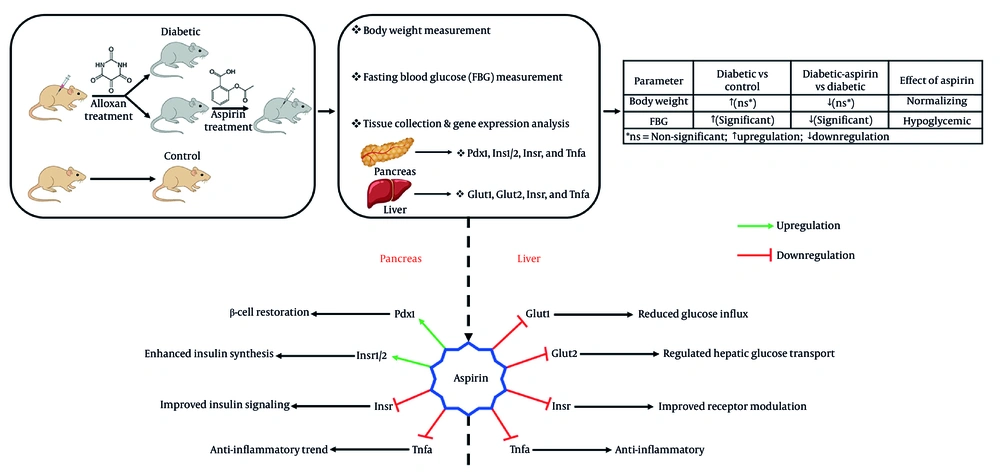
The present study demonstrated that chronic administration of aspirin (100 mg/kg/day, intraperitoneally) for 35 days significantly improved glycemic control and induced marked transcriptional changes in both the pancreas and liver of alloxan-induced diabetic rats. Aspirin lowered FBG from approximately 248 mg/dL in untreated diabetic rats to approximately 170 mg/dL and produced marked changes in gene expression. In pancreatic tissue, Pdx1 and Ins1/2 expression was restored, whereas Insr and Tnfα tended to decline. In hepatic tissue, Glut1, Glut2, Insr, and Tnfα were significantly downregulated (Figure 5). These coordinated molecular effects suggest that aspirin acts on both β-cell transcriptional programs and hepatic glucose-handling pathways, consistent with the anti-inflammatory and metabolic regulatory actions previously attributed to salicylates.

Summary of the effects of aspirin on physiological and molecular parameters in alloxan-induced diabetic rats.
Figure 5.

Summary of the effects of aspirin on physiological and molecular parameters in alloxan-induced diabetic rats.

Induction of diabetes with alloxan caused a marked elevation in FBG levels, confirming the successful establishment of the diabetic model via β-cell destruction and insulin deficiency. Aspirin treatment led to a substantial reduction in FBG, reflecting improved glycemic control. Notably, body weight remained statistically unchanged among groups, suggesting that aspirin’s metabolic benefits occurred primarily at the molecular level rather than through systemic physiological changes. Similar trends have been reported in previous studies, in which aspirin lowered hyperglycemia in diabetic rodents without markedly affecting body weight (8, 11-14). The antihyperglycemic effects observed in the aspirin group align with prior human and animal studies showing that salicylates can lower fasting glucose and improve insulin sensitivity. In this regard, Hundal et al. (8) reported that high-dose salicylate improved glucose metabolism in patients with T2DM via inhibition of IκB kinase β/NF-κB, and multiple rodent studies demonstrated reduced blood glucose and lower inflammatory cytokine levels following aspirin or salsalate treatment (14, 17). Similarly, Chen (18) suggested that salicylate-mediated inhibition of IκB kinase β leads to enhanced insulin signaling in hepatocytes and skeletal muscle. In our study, the approximately 30% reduction in FBG suggests a potent effect that likely arises from a combination of the hepatic and pancreatic mechanisms described below, although the reduction did not fully normalize glycemia.

At the pancreatic level, aspirin restored the expression of Pdx1 and the insulin genes (Ins1/2). Because Pdx1 is a master transcription factor essential for β-cell development, identity, and insulin gene transcription, and because its downregulation is a hallmark of β-cell failure in diabetes (19), its recovery is a central finding. Re-expression of Pdx1 is consistent with improved β-cell transcriptional competence and potential restoration of insulin synthetic capacity (20). The parallel increase in Ins1/2 mRNA corroborates this interpretation and provides a plausible molecular basis for the improvement in blood glucose. The likely mediators of this pancreatic effect are aspirin’s anti-inflammatory and antioxidative actions: inhibition of IκB kinase β/NF-κB signaling reduces the local cytokine burden, notably TNF-α, and reduced oxidative/nitrosative stress relieves repression of β-cell transcriptional programs (8, 21). Indeed, prior studies have shown that salicylates protect islet morphology and preserve insulin content in diabetic rodent models (12, 22).

Concomitant changes in pancreatic Insr and Tnfα were also observed. Insulin receptor transcripts modestly declined, and TNF-α tended to decrease after aspirin treatment. A decrease in Insr mRNA does not necessarily indicate impaired insulin action; instead, it may reflect normalization of compensatory overexpression during hyperglycemia. By reducing inflammatory kinase activation and improving downstream signaling efficiency, aspirin may reduce the transcriptional demand for receptor expression while improving net insulin signal transduction (23). In other words, aspirin may restore receptor homeostasis and enhance post-receptor signaling efficiency by reducing oxidative and inflammatory stress, even with lower receptor transcript levels. Similarly, the moderate decline in Tnfα expression in pancreatic tissue, although not statistically significant, supports aspirin’s anti-inflammatory influence, which may indirectly promote β-cell survival by reducing cytokine-mediated apoptosis (24).

In the liver, aspirin robustly suppressed glucose transporter and inflammatory gene expression. Diabetic animals showed significant upregulation of Glut1, Glut2, and Insr, and aspirin reversed these changes. In this regard, aspirin decreased Glut2 expression most dramatically. Because hepatic GLUT2 mediates bidirectional glucose flux, its downregulation may reduce inappropriate hepatic glucose output and contribute substantially to lower fasting glucose. Conversely, excessive GLUT2 expression can enhance hepatic glucose output and exacerbate hyperglycemia (25, 26). Aspirin’s concurrent reduction of hepatic Tnfα is mechanistically important. Tumor necrosis factor-alpha is a driver of hepatic insulin resistance through activation of the c-Jun N-terminal kinase and NF-κB pathways, which impair insulin receptor substrate function; thus, aspirin’s anti-inflammatory effect plausibly improves hepatic insulin responsiveness and restrains gluconeogenesis (8, 23, 27). Additionally, aspirin-induced activation of AMPK may directly suppress gluconeogenic gene expression and promote energy utilization, reinforcing the observed transcriptional pattern (9, 10).

Taken together, the dual-organ effects observed in this study—namely, restored pancreatic insulin transcriptional machinery and normalized hepatic glucose transport and inflammation—suggest that aspirin may act through convergent mechanisms: 1) blockade of IκB kinase β/NF-κB signaling to reduce cytokine-driven insulin resistance and β-cell stress; 2) activation of AMPK to improve metabolic flux and reduce gluconeogenesis; and 3) reduction of oxidative/nitrosative stress to preserve transcriptional programs such as Pdx1 (19). These mechanisms have been described previously in isolation (8, 9, 21), and our gene-expression data provide an integrated picture across the pancreas and liver that is consistent with these pathways.

In summary, our findings demonstrate that aspirin exerts coordinated and organ-specific molecular effects in alloxan-induced diabetic rats. Aspirin improved glycemic control and simultaneously modulated key transcriptional pathways in both the pancreas and liver. In pancreatic tissue, aspirin restored the expression of Pdx1 and Ins1/2, indicating improved β-cell transcriptional function and insulin biosynthetic capacity. In hepatic tissue, aspirin downregulated Glut1, Glut2, Insr, and Tnfα, suggesting normalization of glucose transport, insulin signaling, and inflammatory responses. Collectively, these effects indicate that aspirin acts through integrated anti-inflammatory and metabolic mechanisms, rather than through a single-target pathway, to improve glucose homeostasis.

Comparison with previous studies indicates overall concordance. Earlier animal and human studies have reported enhanced insulin sensitivity and reduced inflammatory markers following salicylate or aspirin treatment (8, 17, 28). However, some studies did not observe consistent normalization of blood glucose, highlighting variability that depends on the experimental model and dosage (29-32). Our findings refine this understanding by identifying gene-level alterations that likely contribute to the partial restoration of glycemic control. Importantly, aspirin treatment in our study did not produce a significant change in body weight compared with diabetic controls, suggesting that its metabolic benefits occurred largely independent of weight modulation. This observation implies that improvements in glycemic control and inflammatory status may result primarily from molecular and cellular mechanisms rather than systemic alterations in energy balance. Therefore, the causal relationships among appetite regulation, energy expenditure, inflammation reduction, and glucose homeostasis warrant further mechanistic investigation. Despite these findings, this study has limitations that should be considered and addressed in future studies. Future studies should include multiple doses, protein-level validation, functional assays, and female animals to further confirm and extend these findings.

5.1. Conclusions

The present findings indicate that aspirin exerts multifaceted metabolic benefits in diabetic rats by simultaneously modulating gene networks in the pancreas and liver. In the pancreas, aspirin restored the expression of Pdx1 and Ins1/2, key regulators of β-cell differentiation and insulin biosynthesis, while reducing Tnfα, consistent with anti-inflammatory β-cell protection. In the liver, aspirin downregulated Glut1, Glut2, Insr, and Tnfα, indicating normalization of hepatic glucose transport and suppression of inflammatory signaling. These molecular changes correlated with improved glycemic control and maintenance of body weight. Mechanistically, the observed effects can be attributed to aspirin’s inhibition of the NF-κB inflammatory cascade, activation of AMPK, and reduction of oxidative stress. Overall, this study provides molecular evidence supporting aspirin’s potential as an affordable and widely available adjunct therapy for maintaining β-cell integrity, regulating hepatic metabolism, and improving glucose homeostasis in DM. Further preclinical and clinical studies are warranted to confirm these results and delineate the precise signaling pathways underlying the metabolic actions of aspirin.

Footnotes

References

  • 1.
    Pan C, Cao B, Fang H, Liu Y, Zhang S, Luo W, et al. Global burden of diabetes mellitus 1990 - 2021: Epidemiological trends, geospatial disparities, and risk factor dynamics. Front Endocrinol (Lausanne). 2025;16. 1596127. [PubMed ID: 40666058]. [PubMed Central ID: PMC12259457]. https://doi.org/10.3389/fendo.2025.1596127.
  • 2.
    Kaneto H, Kimura T, Shimoda M, Obata A, Sanada J, Fushimi Y, et al. Molecular mechanism of pancreatic β-cell failure in type 2 diabetes mellitus. Biomedicines. 2022;10(4):818. [PubMed ID: 35453568]. [PubMed Central ID: PMC9030375]. https://doi.org/10.3390/biomedicines10040818.
  • 3.
    Dludla PV, Mabhida SE, Ziqubu K, Nkambule BB, Mazibuko-Mbeje SE, Hanser S, et al. Pancreatic β-cell dysfunction in type 2 diabetes: Implications of inflammation and oxidative stress. World J Diabetes. 2023;14(3):130-146. [PubMed ID: 37035220]. [PubMed Central ID: PMC10075035]. https://doi.org/10.4239/wjd.v14.i3.130.
  • 4.
    Ebrahim N, Shakirova K, Dashinimaev E. PDX1 is the cornerstone of pancreatic β-cell functions and identity. Front Mol Biosci. 2022;9. 1091757. [PubMed ID: 36589234]. [PubMed Central ID: PMC9798421]. https://doi.org/10.3389/fmolb.2022.1091757.
  • 5.
    Nasteska D, Fine NHF, Ashford FB, Cuozzo F, Viloria K, Smith G, et al. PDX1(LOW) MAFA(LOW) β-cells contribute to islet function and insulin release. Nat Commun. 2021;12(1). 674. [PubMed ID: 33514698]. [PubMed Central ID: PMC7846747]. https://doi.org/10.1038/s41467-020-20632-z.
  • 6.
    Lee YS, Olefsky J. Chronic tissue inflammation and metabolic disease. Genes Dev. 2021;35(5 - 6):307-328. [PubMed ID: 33649162]. [PubMed Central ID: PMC7919414]. https://doi.org/10.1101/gad.346312.120.
  • 7.
    Chen J, Fei S, Chan LWC, Gan X, Shao B, Jiang H, et al. Inflammatory signaling pathways in pancreatic β-cell: New insights into type 2 diabetes pathogenesis. Pharmacol Res. 2025;216. 107776. [PubMed ID: 40378943]. https://doi.org/10.1016/j.phrs.2025.107776.
  • 8.
    Hundal RS, Petersen KF, Mayerson AB, Randhawa PS, Inzucchi S, Shoelson SE, et al. Mechanism by which high-dose aspirin improves glucose metabolism in type 2 diabetes. J Clin Invest. 2002;109(10):1321-1326. [PubMed ID: 12021247]. [PubMed Central ID: PMC150979]. https://doi.org/10.1172/JCI0214955.
  • 9.
    Hawley SA, Fullerton MD, Ross FA, Schertzer JD, Chevtzoff C, Walker KJ, et al. The ancient drug salicylate directly activates AMP-activated protein kinase. Science. 2012;336(6083):918-922. [PubMed ID: 22517326]. [PubMed Central ID: PMC3399766]. https://doi.org/10.1126/science.1215327.
  • 10.
    Xu Y, Bai L, Yang X, Huang J, Wang J, Wu X, et al. Recent advances in anti-inflammation via AMPK activation. Heliyon. 2024;10(13). e33670. [PubMed ID: 39040381]. [PubMed Central ID: PMC11261115]. https://doi.org/10.1016/j.heliyon.2024.e33670.
  • 11.
    Dervisevik M, Dinevska-Kovkarovska S, Dimitrovska M, Cipanovska N, Miova B. High dose of aspirin moderates diabetes-induced changes of heart glycogen/glucose metabolism in rats. J Physiol Sci. 2014;64(6):411-420. [PubMed ID: 25183483]. [PubMed Central ID: PMC10717915]. https://doi.org/10.1007/s12576-014-0335-6.
  • 12.
    John A, Amiri L, Shafarin J, Howarth FC, Raza H. Effect of aspirin on mitochondrial dysfunction and stress in the pancreas and heart of Goto-Kakizaki diabetic rats. Life (Basel). 2021;11(9):902. [PubMed ID: 34575050]. [PubMed Central ID: PMC8465065]. https://doi.org/10.3390/life11090902.
  • 13.
    John A, Amiri L, Shafarin J, Tariq S, Adeghate E, Howarth FC, et al. Alterations in energy metabolism, mitochondrial function and redox homeostasis in GK diabetic rat tissues treated with aspirin. Life (Basel). 2022;12(1):104. [PubMed ID: 35054496]. [PubMed Central ID: PMC8780217]. https://doi.org/10.3390/life12010104.
  • 14.
    Amiri L, John A, Shafarin J, Adeghate E, Jayaprakash P, Yasin J, et al. Enhanced glucose tolerance and pancreatic beta cell function by low dose aspirin in hyperglycemic insulin-resistant type 2 diabetic Goto-Kakizaki (GK) rats. Cell Physiol Biochem. 2015;36(5):1939-1950. [PubMed ID: 26202354]. https://doi.org/10.1159/000430162.
  • 15.
    Aref M, Sisakhtnezhad S, Fallahi H. Investigating the effect of quercetin in the presence of CoCl_2 as an inducing hypoxia agent on the biological characteristics of human telomerase reverse transcription-immortalized adipose tissue-derived MSCs. Ecotoxicol Environ Saf. 2024;288. 117389. [PubMed ID: 39577050]. https://doi.org/10.1016/j.ecoenv.2024.117389.
  • 16.
    Schmittgen TD, Livak KJ. Analyzing real-time PCR data by the comparative C(T) method. Nat Protoc. 2008;3(6):1101-1108. [PubMed ID: 18546601]. https://doi.org/10.1038/nprot.2008.73.
  • 17.
    Sun X, Han F, Yi J, Han L, Wang B. Effect of aspirin on the expression of hepatocyte NF-κB and serum TNF-α in streptozotocin-induced type 2 diabetic rats. J Korean Med Sci. 2011;26(6):765-770. [PubMed ID: 21655062]. [PubMed Central ID: PMC3102870]. https://doi.org/10.3346/jkms.2011.26.6.765.
  • 18.
    Chen F. Is NF-kappaB a culprit in type 2 diabetes? Biochem Biophys Res Commun. 2005;332(1):1-3. [PubMed ID: 15896290]. https://doi.org/10.1016/j.bbrc.2005.03.075.
  • 19.
    Zhang Y, Fang X, Wei J, Miao R, Wu H, Ma K, et al. PDX-1: A promising therapeutic target to reverse diabetes. Biomolecules. 2022;12(12):1785. [PubMed ID: 36551213]. [PubMed Central ID: PMC9775243]. https://doi.org/10.3390/biom12121785.
  • 20.
    Yamamoto Y, Miyatsuka T, Sasaki S, Miyashita K, Kubo F, Shimo N, et al. Preserving expression of Pdx1 improves β-cell failure in diabetic mice. Biochem Biophys Res Commun. 2017;483(1):418-424. [PubMed ID: 28017717]. https://doi.org/10.1016/j.bbrc.2016.12.128.
  • 21.
    Carvalho-Filho MA, Ropelle ER, Pauli RJ, Cintra DE, Tsukumo DML, Silveira LR, et al. Aspirin attenuates insulin resistance in muscle of diet-induced obese rats by inhibiting inducible nitric oxide synthase production and S-nitrosylation of IRbeta/IRS-1 and Akt. Diabetologia. 2009;52(11):2425-2434. [PubMed ID: 19730809]. [PubMed Central ID: PMC5009800]. https://doi.org/10.1007/s00125-009-1498-1.
  • 22.
    He B, Zhao S, Zhang W, Li Y, Han P. Effect of sodium salicylate on oxidative stress and insulin resistance induced by free fatty acids. Hepatobiliary Pancreat Dis Int. 2010;9(1):49-53. [PubMed ID: 20133229].
  • 23.
    Hotamisligil GS. Inflammation and metabolic disorders. Nature. 2006;444(7121):860-867. [PubMed ID: 17167474]. https://doi.org/10.1038/nature05485.
  • 24.
    Xu XF, Fan JW, Xin JQ, Wu N, Gao H, Duan LF, et al. Aspirin ameliorates pancreatic inflammation and fibrosis by inhibiting COX-2 expression in experimental chronic pancreatitis. J Inflamm Res. 2022;15:4737-4749. [PubMed ID: 36032936]. [PubMed Central ID: PMC9398909]. https://doi.org/10.2147/JIR.S375383.
  • 25.
    Sun B, Chen H, Xue J, Li P, Fu X. The role of GLUT2 in glucose metabolism in multiple organs and tissues. Mol Biol Rep. 2023;50(8):6963-6974. [PubMed ID: 37358764]. [PubMed Central ID: PMC10374759]. https://doi.org/10.1007/s11033-023-08535-w.
  • 26.
    Weinstein SP, O'Boyle E, Fisher M, Haber RS. Regulation of GLUT2 glucose transporter expression in liver by thyroid hormone: Evidence for hormonal regulation of the hepatic glucose transport system. Endocrinology. 1994;135(2):649-654. [PubMed ID: 8033812]. https://doi.org/10.1210/endo.135.2.8033812.
  • 27.
    Niranjan S, Phillips BE, Giannoukakis N. Uncoupling hepatic insulin resistance-hepatic inflammation to improve insulin sensitivity and to prevent impaired metabolism-associated fatty liver disease in type 2 diabetes. Front Endocrinol (Lausanne). 2023;14. 1193373. [PubMed ID: 37396181]. [PubMed Central ID: PMC10313404]. https://doi.org/10.3389/fendo.2023.1193373.
  • 28.
    Shoelson SE, Lee J, Goldfine AB. Inflammation and insulin resistance. J Clin Invest. 2006;116(7):1793-1801. [PubMed ID: 16823477]. [PubMed Central ID: PMC1483173]. https://doi.org/10.1172/JCI29069.
  • 29.
    van der Crabben SN, Allick G, Ackermans MT, Endert E, Romijn JA, Sauerwein HP. Prolonged fasting induces peripheral insulin resistance, which is not ameliorated by high-dose salicylate. J Clin Endocrinol Metab. 2008;93(2):638-641. [PubMed ID: 18056775]. https://doi.org/10.1210/jc.2006-2491.
  • 30.
    Pradhan AD, Cook NR, Manson JE, Ridker PM, Buring JE. A randomized trial of low-dose aspirin in the prevention of clinical type 2 diabetes in women. Diabetes Care. 2009;32(1):3-8. [PubMed ID: 18835953]. [PubMed Central ID: PMC2606821]. https://doi.org/10.2337/dc08-1206.
  • 31.
    Finnegan C, Breathnach FM. The role of aspirin for preeclampsia prevention in women with diabetes. Curr Diab Rep. 2020;20(12). 76. [PubMed ID: 33231765]. https://doi.org/10.1007/s11892-020-01365-1.
  • 32.
    Xiao C, Giacca A, Lewis GF. The effect of high-dose sodium salicylate on chronically elevated plasma nonesterified fatty acid-induced insulin resistance and β-cell dysfunction in overweight and obese nondiabetic men. Am J Physiol Endocrinol Metab. 2009;297(5):E1205-E1211. [PubMed ID: 19755670]. https://doi.org/10.1152/ajpendo.00313.2009.

Crossmark
Crossmark
Checking
Share on
Metrics

Purchasing Reprints

  • Copyright Clearance Center (CCC) handles bulk orders for article reprints for Brieflands. To place an order for reprints, please click here (   https://www.copyright.com/landing/reprintsinquiryform/ ). Clicking this link will bring you to a CCC request form where you can provide the details of your order. Once complete, please click the ‘Submit Request’ button and CCC’s Reprints Services team will generate a quote for your review.
Search Relations

Author(s):

Related Articles