
Fulltext
The fulltext is available in PDF file.
Jentashapir Journal of Cellular and Molecular Biology
 Mohamad Javad Tahmasebi Biragani1, Nahid Chegeni2,*, Mansur Zabihzade3, Shole Arvandi4, Sasan Razmjoo Ghalaee4, Fatemeh Seif2
Background: The dose distribution plays an importance role in the commercial treatment planning algorithm; therefore, a patient-independent model is needed to calculate the modulated profile.
Methods: A general formula has been proposed to calculate the profiles for any field shape in the wedged and non-wedged, blocked and non-blocked fields under symmetry and asymmetry photon beam conditions. Percentage depth doses (PDDs) are measured for a large number of square fields for both energies, and 45º wedge. Accessing the accuracy of the model for profile prediction, several measurements were carried out for some special treatment fields.
Results: Comparison between measurements and calculation showed that using the γ-index in the range of 3% error in the low dose gradient region and a 3mm isodose shift in the penumbra region.
Conclusion: This analytical approach provides a general fast and accurate algorithm to calculate dose distribution for any treatment field in conventional radiotherapy.
© 2013, Jentashapir Journal of Cellular and Molecular Biology. This open-access article is available under the Creative Commons Attribution-NonCommercial 4.0 (CC BY-NC 4.0) International License (https://creativecommons.org/licenses/by-nc/4.0/), which allows for the copying and redistribution of the material only for noncommercial purposes, provided that the original work is properly cited.
Hejai P, Hashemi B, Shahriari M, Eivazi M, KazemNezhad A. Determination of a medical linac wedge factor dependency on the field size, depth and separation using Monte Carlo method to introduce an algorithm for treatment planning. koomesh. 2008;10(1):e152214. doi:
Hejazi P, Hashemi B, Shahriari M, KazemNezhad A. Monte Carlo stimulation of the angular, radial and energy distribution of a medical linear accelerator using MCNP4C code. koomesh. 2007;8(2):e152139. doi:
Mahdavi SR. The Role of CT-Based Radiotherapy Planning on Dosimetric Correction . I J Radiol. 2009;6(1):e78928. doi:
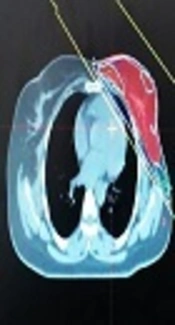
Nokhasteh S, Nazemi H, Hejazi P, Dayyani M. Comparison of Dosimetric Parameters Between Field in Field and Conformal Radiation Therapy Techniques in Early Stage of Left Breast Cancer Patients. Int J Cancer Manag. 2019;12(2):e84123. doi: https://doi.org/10.5812/ijcm.84123
Haghparast A, Hashemi B, Eyvazi MT. An assessment of the factors involved in effective attenuation coefficient of the compensator material for the treatment with 6MV photons using intensity modulated radiation therapy method. koomesh. 2011;12(3):e152458. doi:
Last Update: 1 week ago
Last Update: 1 week ago
Last Update: 1 week ago
Last Update: 16 hours ago
Ordering Reprints
Articles are published under the Creative Commons license stated on each article. No permission or royalty fee is required for uses permitted by that license. CCC handles optional bulk and customized reprint orders. Any quotation covers production and delivery services only, not copyright permission. > Request Reprints from CCC
Author(s):