Fulltext
Antibiotic resistance is an increasing threat to the general wellbeing of patients. In clinics, 190 million measurements of antitoxins are performed every day. Among nonhospitalized patients, more than 133 million courses of anti-infective agents are recommended by specialists every year. It is assessed that 50% of the recent medicines will be ineffective as they are being recommended for colds, hacking coughs, and other viral diseases (1, 2). Staphylococcus aureus is considered to be the principle etiological agent and most prevalent microorganism involved in clinic-acquired infections (3), and about 1% of the S. aureus infections in patients are caused by methicillin-resistant Staphylococcus aureus (MRSA) (4, 5). Methicillin, a form of penicillin, was introduced to counter the increasing problem of penicillin-resistant S. aureus. In general, MRSA is resistant to an entire class of penicillin-like antibiotics called beta-lactams, including penicillin, amoxicillin, oxacillin, and methicillin (6, 7).
Since MRSA infections are a health problem worldwide, it is necessary to develop new antimicrobial compounds. Considering broad-spectrum antimicrobial activity and low probability of drug resistance to peptides, applications these peptides are being studied extensively. These peptides are produced by macrophages and epithelial cells in humans and have antimicrobial, antifungal, antiviral, and antiprotozoal activity and are important components of the body’s natural defense mechanism against pathogens. In recent years, antimicrobial peptides (AMPs), which are considered to be novel antibiotics with strong bactericidal properties, have been used against antibiotic-resistant bacteria, and some of these are being evaluated in clinical trials (8).
Previous studies led to the identification of the CM11 peptide (WKLFKKILKVL-NH2), a short cecropin-melittin hybrid peptide, with effective antibacterial activity against some Gram-negative and Gram-positive pathogenic bacteria such as MRSA (9, 10). Time-dependent release formulations for drug delivery are useful for slowing down or controlling the release of drugs to maintain the drug levels within the therapeutic window and prevent potentially hazardous peaks in drug concentrations. Different strategies are used to develop materials for time-dependent drug delivery; natural hydrogels (11), which are exceptionally hydrated biomaterials, are typically composed of polysaccharides such as alginate, dextran, and chitosan and have numerous advantages over synthetic hydrogels in that they are biocompatible and biodegradable and have bacteriostatic, wound-healing, and mechanical properties similar to those of natural tissues (12). Therefore, hydrogels are widely used and impregnated with various compounds including antimicrobial agents such as AMPs, silver ions, and polycationic polymers, which are released over time and confer antimicrobial properties to the hydrogels (13).
On the basis of data reported by previous studies (9, 10), we evaluated the wound healing effects of an alginate sulfate-based hydrogel impregnated with the CM11 peptide on skin infections caused by MRSA strains in a mouse model.
Staphylococcus aureus and other Staphylococcus are considered to be the most common bacteria causing wound infections. Many minor skin infections (i.e., localized infections) caused by S. aureus can be treated with topical agents such as mupirocin and retapamulin; however, most MRSA strains are resistant to these and other conventional antibiotics. Cationic AMPs and their synthetic derivatives are promising candidates to combat antibiotic resistance (8, 20, 21). We investigated the wound-healing efficacy of CM11, a short hybrid cationic peptide, against S. aureus skin infection. Our previous study showed that this peptide is effective against bacterial infections, but only in the in vivo environment. Therefore, we investigated the in vitro cytotoxic effects of the CM11 peptide on some eukaryotic cells (RAJI, CHO, Hela, SP2/0, and LNCAP) by using the MTT assay (9, 10). At low concentrations, this peptide showed few effects on the cell lines, but increasing the peptide concentration led to an increase in the cytotoxic effects on the eukaryotic cells.
Use of time-dependent release formulations for drug delivery may help prevent potentially hazardous peaks in drug concentrations. Hydrogels are powerful agents that can be formulated in a variety of physical forms with the potential property to control the release of impregnated compounds (22). During the 1970s, the human amniotic membrane was first used as a wound dressing in burn patients, which promoted rapid re-epithelialization and healing of wounds (23). In 1986, Sparkes et al. (24) first described the use of a hydrogel consisting of a blend of gelatin and chitosan, which are biological polymers, for wound healing. Many studies have reported the use of implant coatings or hydrogel dressings for wound and skin lesion healing. Marchesan et al. (25) described a self-assembled antimicrobial hydrogel containing a hydrophobic tripeptide (DLeu-Phe-Phe). The gel showed antibacterial activity against S. aureus, Escherichia coli, and a clinical strain of Klebsiella pneumoniae without significant cytotoxicity against human red blood cells or mouse fibroblast cell cultures. Meng et al. (26) investigated the impact of a gathering toward oneself peptide nanofiber platform (RADA16-I) for the treatment of severely charred skin in rats. They indicated that the use of RADA16-I dressing decreased the level of edema of burn wounds, accelerated the formation and debridement of eschar, and quickened wound constriction.
Sodium alginate and its derivatives are water-soluble anionic polymers that can be used to deliver microspheres, globules, and microcapsules and can be used as dressings to maintain a physiologically moist microenvironment and minimize bacterial infection at wound sites, facilitating wound healing (17, 27). Charge associations between ionic polymers and charged medications improve the quality of the relationships between a gel and a target medication. Therefore, sulfation of alginate can lead to induction of the ionic property of hydrogel and so increase the interaction. Alginate sulfate is structurally similar to heparin and has a high affinity for certain growth factors, leading to the absorption and accumulation of heparin-binding growth factors. Unlike chitosan, alginate is inherently nondegradable in mammals (28). Novel alginate dressings in the dry form absorb wound fluid to re-gel, and the gels can supply water to a dry wound, maintaining a physiologically moist microenvironment and minimizing bacterial disease at the injury site. These properties can promote granulation tissue development, rapid epithelialization, and recuperation (13).
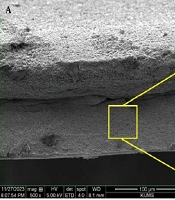
Our results show that 50% of the peptide from the alginate sulfate gel was released during the first week and peptide release continued over a 3-week period, whereas 100% of the peptide from the alginate gel was released before the first week; this demonstrates the suitable effects of gel sulfation on the delay in peptide release. The antimicrobial assay demonstrated the antibacterial effects of the peptide against S. aureus. However, for MBC concentration log reduction was above 1 with more than 90% bacteria killing while this parameter for 2 × MBC and 4 × MBC concentrations were above 3 and 4 respectively which showing > 99% bacteria killing. In this study, we used the hydrogel containing peptide with 4 × MBC to increase the time-dependent release of peptide.
The results show that wound infection completely healed in the positive control and test groups over the 8-day and 12-day periods, respectively; therefore, wounds treated with mupirocin healed faster than those treated with gel containing peptide. Lee et al. (29) determined the MIC of HG1 for an MRSA strain (4 µg/mL) and showed that HG1 administration onto the skin wound showed antimicrobial effects and successfully healed the infection site. Demidova-Rice et al. (30) reported that the use of a combination of 2 peptides, i.e. UN3 and comb1, stimulated wound healing in mouse models. Further advancement of these peptides could prompt another treatment for endless and intense wounds. Finally, with attendance to antibacterial efficacy of peptides with high potential therapeutic it seems that in the futures peptides used as alternative agents for treatment of infection diseases.