
Full Text
Full text is available in PDF
Jundishapur Journal of Microbiology
Ahvaz Jundishapur University of Medical Sciences
Authors
Introduction and objective: Legionella are the causative agents of pneumonia in human and it is reported that up to 90% cases of legionnaires` disease are due to Legionella pneumophila. These organisms are ubiquitous distributed in natural and man made water sources. They are spread to human by inhalation or aspiration of contaminated aerosols of these sources. We studied some of man made water sources in view of the presence of Legionella, by two methods of culture and PCR.
Materials and methods: One hundred and fifty water samples collected from different man made water sources were examined. After acidic treatment of samples, water pellet was inoculated onto buffered charcoal yeast extract agar (BCYE) and BMPA (BCYE supplemented with three antibiotics) media. Isolated colonies were identified by morphological and biochemical tests. DNA was extracted from the bacteria and was used for PCR technique. DNA pattern of Legionella were identified after electrophoresis of PCR products.
Results: Survey of water samples collected from different sources resulted in isolation of Legionella pneumophila (7.3%) by culture, and identification of them (15.3%) by PCR. The highest isolates of L. pneumophila were from fish ponds in rates of 6.6% by culture and 13.3% by PCR method. Sensitivity and specificity of PCR in this survey were 100% and 95%, respectively.
Conclusion: This study showed that legionnaires` disease agents were widely spread in our examined water sources and compared with culture; PCR method has suitable sensitivity and specificity for rapid detection of these organisms in environmental water sources.
Significance and impact of the study: The results of this study will increase physicians and microbiologists awareness about spreading of Legionella and this will be useful for control of legionellosis agents.
© 2011, Author(s). This open-access article is available under the Creative Commons Attribution 4.0 (CC BY 4.0) International License (https://creativecommons.org/licenses/by/4.0/), which allows for unrestricted use, distribution, and reproduction in any medium, provided that the original work is properly cited.
Khosroshahi N, Moosavian S. Isolation and identification of Legionnaire’s disease agents from the medical equipments and environmental water sources. J Inflamm Dis. 2024;7(5):e155011. doi:
Mirmohammadlo A, Ghanizadeh G, Esmaeili D, Sepandi M, Avakh P. Legionelle pneumophila water contamination in three military hospitals of Tehran in 2013. J Kermanshah Univ Med Sci. 2014;18(7):e74079. doi: https://doi.org/10.22110/jkums.v18i7.1974
Moosavian M, Khoshkholgh Sima M, Haddadzadeh Shoushtari M, Alavi SM, Fazeli Naserabad MA, et al. Detection of the Legionnaires’ Disease Agent in Patients With Respiratory Symptoms by Culture, Detection of Urinary Antigen and Polymerase Chain Reaction of the 16S rRNA Gene in Ahvaz, Iran. Jundishapur J Microbiol. 2017;10(4):e41611. doi: https://doi.org/10.5812/jjm.41611
Ebrahimi M, Nemati E, Esmaeili D. Detection of Legionella Pneumophila MIP and 16srRNA Genes in Kidney Transplant and Dialysis Wards by Polymerase Chain Reaction. Middle East J Rehabil Health Stud. 2022;9(2):e123006. doi: https://doi.org/10.5812/mejrh-123006
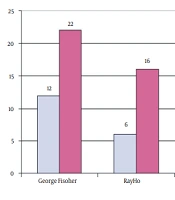
Barzegar L, Ghanizadeh G, Esmaeili D. Study of Gorge Fisher Plumbing System Effects on Growth Inhibition and Amplification of Legionella pneumophila by Culture and PCR Based on 16sRNA and mip Genes. Middle East J Rehabil Health Stud. 2022;9(3):e122683. doi: https://doi.org/10.5812/mejrh-122683
Last Update: 2 weeks ago
Last Update: 2 weeks ago
Last Update: 2 weeks ago
Last Update: 4 hours ago
Last Update: 7 hours ago
Last Update: 4 days ago