Full Text
Full text is available in PDF
Jundishapur Journal of Microbiology
Ahvaz Jundishapur University of Medical Sciences
Authors
Introduction and objective: Oral metronidazole is reported before as effective treatment of cutaneous leishmaniasis. The aim of the present study was to evaluate the efficacy of intralesional metronidazole injection versus intralesional meglumine antimoniate (Glucantim®) in the treatment of cutaneous leishmaniasis.
Materials and methods: The 36 patients with clinical and parasitologic diagnosis of cutaneous leishmaniasis participated in this study. The patients were randomly divided into two groups. Group one, 18 patients were treated with weekly intralesional of Glucantim injections, and group two, 18 patients were treated with weekly intralesional injections of metronidazole. Intralesional injections was administered enough to blanch the lesions surfaces (0.5-2ml for each lesion in both groups).
Results: Twenty eight patients completed the study. Sixteen patients in group one and 12 patients in group two. In group one, 13 patients recovered with eight injections (81%). and of group two, only three patients recovered with eight injections (16.6%). The pain of intralesional injections of metronidazole was much more than the Glucantim injections.
Conclusions: Intralesional metronidazole injections have little effect for the treatment of cutaneous leishmaniasis.
© 2010, Author(s). This open-access article is available under the Creative Commons Attribution 4.0 (CC BY 4.0) International License (https://creativecommons.org/licenses/by/4.0/), which allows for unrestricted use, distribution, and reproduction in any medium, provided that the original work is properly cited.
Shahidi Dadras M, Mirzaei A, Kazemi B, Nabai L, Sharifian A. A Comparative Study of Aminosidine Sulfate, Meglomine Antimoniate, Combination of both and Glucantime in Murine Leishmaniasis Treatment of Cutaneous Leishmaniasis, Caused by Leishmania tropica, with Topical Application of Paromomycin 20% in BALB-c Mice. Iran J Pharm Res. 2022;6(3):e128334. doi: https://doi.org/10.22037/ijpr.2010.723
Nilforoushzadeh MA, Jaffary F, Derakhshan R, Haftbaradaran E. Comparison Between Intralesional Meglumine Antimoniate and Combination of Trichloroacetic Acid 50% and Intralesional Meglumine Antimoniate in the Treatment of Acute Cutaneous Leishmaniasis: A Randomized Clinical Trial. J Skin Stem Cell. 2014;1(1):e16633. doi: https://doi.org/10.17795/jssc16633
Beheshti M. Therapeutic and Adverse Effects of Glucantime Used for Treatment of Cutaneous Leishmaniasis.. Shiraz E-Med J. 2007;8(4):. doi:
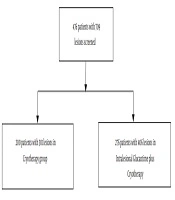
Shirzadi MR, Hamta A, Zanjirani Farahani L, Saghafipour A, Rahi S. Comparative Assessment of Topical Glucantime® Injection Plus Cryotherapy and Cryotherapy Alone for Treatment of Anthroponotic Cutaneous Leishmaniasis. Arch Clin Infect Dis. 2021;16(3):e112222. doi: https://doi.org/10.5812/archcid.112222
Abtahi-Naeini B, Hadian S, Sokhanvari F, Hariri A, Varshosaz J, et al. Effect of Adjunctive Topical Liposomal Azithromycin on Systemic Azithromycin on Old World Cutaneous Leishmaniasis: A Pilot Clinical Study. Iran J Pharm Res. 2021;20(2):e124526. doi: https://doi.org/10.22037/ijpr.2020.113710.14445
Last Update: 3 weeks ago
Last Update: 3 weeks ago
Last Update: 3 weeks ago
Last Update: 7 hours ago
Last Update: 1 day ago
Last Update: 4 days ago