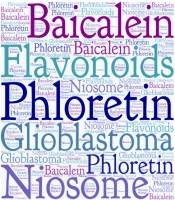
Cover image of the article: Flavonoids in the Treatment of Glioblastoma Using Niosomal Nanocarrier

Image Credit:Jundishapur J Nat Pharm Prod

Flavonoids in the Treatment of Glioblastoma Using Niosomal Nanocarrier

Authors

Mahmoud GharbaviMahmoud Gharbavi ORCID1, Ayyub MojaddamiAyyub Mojaddami ORCID2, 3,*
1Nanotechnology Research Center, Ahvaz Jundishapur University of Medical Sciences, Ahvaz, Iran
2Toxicology Research Center, Medical Basic Sciences Research Institute, Ahvaz Jundishapur University of Medical Sciences, Ahvaz, Iran
3Department of Medicinal Chemistry, School of Pharmacy, Ahvaz Jundishapur University of Medical Sciences, Ahvaz, Iran
*Corresponding Author: Toxicology Research Center, Medical Basic Sciences Research Institute, Ahvaz Jundishapur University of Medical Sciences, Ahvaz, Iran. Email: mojaddami.a@gmail.com

Jundishapur Journal of Natural Pharmaceutical Products:Vol. 18, issue 1; e135027
Published online:Feb 15, 2023
Article type:Editorial
Received:Jan 17, 2023
Accepted:Jan 31, 2023
How to Cite:Gharbavi M, Mojaddami A. Flavonoids in the Treatment of Glioblastoma Using Niosomal Nanocarrier. Jundishapur J Nat Pharm Prod. 2023;18(1):e135027. doi: https://doi.org/10.5812/jjnpp-135027

Cancer is a disorder in which certain cells in the body grow out of control and spread to other parts of the body as the disease progresses. According to the National Cancer Institute (NCI), in 2022, there were 1,918,040 new cancer cases and 609,360 cancer deaths in the United States (1). Among the types of cancers, glioblastoma (GBM) multiforme is the most aggressive and destructive brain tumor that cannot be cured despite modern treatment methods, including radiotherapy and chemotherapy. The average life expectancy of these patients is about 14.6 months, and less than 5% of the patients can survive more than five years. A concerted effort is urgently needed to identify and characterize more effective therapies to alleviate this devastating loss of human life (2, 3).
Flavonoids, as polyphenolic compounds, found in fruits, vegetables, flowers, chocolate, tea, wine, and other plant sources are the most common polyphenols found in nature (4). Flavonoids are a diverse family of compounds with over 9000 members, including flavones, flavanols, isoflavones, flavonols, flavanones, and flavanonols. The safety profile of flavonoids has been described as excellent (no toxicity at 140 g/day) with no known significant side effects (5). Flavonoids have a wide range of pharmacological effects, including antioxidant, anti-inflammatory, cardioprotective, hepatoprotective, antimicrobial, and cancer properties (6).
The ability of flavonoids to scavenge free radicals, regulate cellular metabolism, and prevent oxidative stress-related diseases have been demonstrated by numerous studies (7). Among different types of flavonoids, baicalein and phloretin as polyphenol compounds have strong antioxidant and anti-inflammatory properties (8). They also show promising therapeutic effects on glioblastoma.
Baicalein and phloretin, however, need to cross the blood-brain barrier to exert their effects. It has been revealed that lipophilicity, solubility, and topological polar surface area, among other physicochemical factors, face significant challenges despite having extremely important therapeutic effects. Therefore, adopting new drug delivery methods to transfer therapeutic agents is needed more than ever.
The application of nanotechnology may facilitate formulating of chemotherapeutic drugs and the development of new therapies that can overcome their solubility, stability, and side effect problems present in their conventional forms. The application of nanotechnology in drug delivery has many advantages, such as improving pharmacokinetic properties, reducing toxicity, and increasing the half-life of the drugs. Therefore, using nanocarriers provides researchers and practitioners with a great opportunity to overcome the problems in drug delivery. Pharmaceutical nanocarriers are classified into different categories, including metal, polymer, hydrogel, and ceramic nanoparticles, as well as lipid-based carriers, such as liposomes and niosomes.
Nano-sized drug carriers have a higher surface-to-volume ratio, which improves pharmacokinetic properties, reduces toxicity through the concentration of drug at the targeted site, facilitates intracellular uptake, and increases drug stability. One of the promising nanocarriers is niosomes, a bilayer structure made by self-association of nonionic surfactants and cholesterol in aqueous phases. As a biodegradable and biocompatible nanocarrier, niosomes have high stability and enable sustained and controlled drug delivery at target sites (9, 10). Generally, niosomal structures are influenced by a variety of factors, including preparation methods, surfactant types, quantities, lipid hydration temperatures, and reaction durations. By altering and optimizing these factors, the performance of niosomes could be enhanced for drug delivery. The sizes of niosomes range from 10 to 1000 nm. The amphiphilic nature of these nanocarriers makes them compatible with both hydrophilic and hydrophobic drugs. Hydrophilic drugs can be entrapped inside the core cavity while hydrophobic drugs can be trapped outside it, in the non-polar region (11). They prevent the elimination of poorly-absorbed drugs from circulation and protect them against the biological environments, in addition to improving their oral bioavailability. As a result, these niosomal nanocarriers encapsulated with baicalein and phloretin can be used as therapeutic agents for treating glioblastoma.
Footnotes

  • Authors' Contribution: Ayyub Mojaddami wrote the manuscript. Mahmoud Gharbavi revised the manuscript. All authors read and approved the final manuscript.

  • Conflict of Interests: The corresponding author is one of the editorial board members.

References

Copyright

Copyright © 2023, Author(s). This is an open-access article distributed under the terms of the Creative Commons Attribution-NonCommercial 4.0 International License (http://creativecommons.org/licenses/by-nc/4.0/) which permits copy and redistribute the material just in noncommercial usages, provided the original work is properly cited.

Similar Articles

23
Dec
2025
Design, Preparation, and ex vivo Skin Permeation of Naringenin Liposomal Formulation for Topical Delivery

Design, Preparation, and ex vivo Skin Permeation of Naringenin Liposomal Formulation for Topical Delivery

Ali Javadiyeh,
Hossein Heidari Kaydan,
Farid Bagheri,
Sarina Goodarzi,
Anayatollah Salimi

Javadiyeh A, Heidari Kaydan H, Bagheri F, Goodarzi S, Salimi A. Design, Preparation, and ex vivo Skin Permeation of Naringenin Liposomal Formulation for Topical Delivery. Jundishapur J Nat Pharm Prod. 2026;21(1):e168429. doi: https://doi.org/10.5812/jjnpp-168429

31
Jan
2020
Comprehensive Evaluation of Gene Expression in Negative and Positive Trigger-based Targeting Niosomes in HEK-293 Cell Line

Comprehensive Evaluation of Gene Expression in Negative and Positive Trigger-based Targeting Niosomes in HEK-293 Cell Line

Mahmood Barani,
Masoud Torkzadeh-Mahani,
Mohammad Mirzaei,
Mohammad Hadi Nematollahi

Barani M, Torkzadeh-Mahani M, Mirzaei M, Nematollahi MH. Comprehensive Evaluation of Gene Expression in Negative and Positive Trigger-based Targeting Niosomes in HEK-293 Cell Line. Iran J Pharm Res. 2020;19(1):e124440. doi: https://doi.org/10.22037/ijpr.2019.112058.13507

16
Jun
2026
Deciphering the Anticancer Effects of Baicalein in Human Gastric Cancer Cells: Computational Chemistry, Bioinformatics, Network Pharmacology Insights, and in vitro Experimental Validation

Deciphering the Anticancer Effects of Baicalein in Human Gastric Cancer Cells: Computational Chemistry, Bioinformatics, Network Pharmacology Insights, and in vitro Experimental Validation

Bai Jing,
Ren Hui,
Li Xiao

Jing B, Hui R, Xiao L. Deciphering the Anticancer Effects of Baicalein in Human Gastric Cancer Cells: Computational Chemistry, Bioinformatics, Network Pharmacology Insights, and in vitro Experimental Validation. Iran J Pharm Res. 2026;25(1):e171172. doi: https://doi.org/10.5812/ijpr-171172

31
Jul
2018
Phytoniosome: a Novel Drug Delivery for Myrtle Extract

Phytoniosome: a Novel Drug Delivery for Myrtle Extract

Mahboobeh Raeiszadeh,
Abbas Pardakhty,
Fariba Sharififar,
Mehrnaz Mehrabani,
Hojjat Nejat-mehrab-kermani,
Mitra Mehrabani

Raeiszadeh M, Pardakhty A, Sharififar F, Mehrabani M, Nejat-mehrab-kermani H, et al. Phytoniosome: a Novel Drug Delivery for Myrtle Extract. Iran J Pharm Res. 2018;17(3):e124800. doi: https://doi.org/10.22037/ijpr.2018.2263

31
Jan
2020
Antioxidant Activity and Hemocompatibility Study of Quercetin Loaded Plga Nanoparticles

Antioxidant Activity and Hemocompatibility Study of Quercetin Loaded Plga Nanoparticles

Serap Derman,
Deniz Uzunoglu,
Tayfun Acar,
Tulin Arasoglu,
Samet Ucak,
V Cengiz Ozalp
,et al.

Derman S, Uzunoglu D, Acar T, Arasoglu T, Ucak S, et al. Antioxidant Activity and Hemocompatibility Study of Quercetin Loaded Plga Nanoparticles. Iran J Pharm Res. 2020;19(1):e124436. doi: https://doi.org/10.22037/ijpr.2020.1101000

More by these authors

Mahmoud GharbaviPubMedScholar
Ayyub MojaddamiPubMedScholar
Share
Cited by
Metrics