1. Background
Rice farming is a major livelihood and food security activity in Ebonyi State, southeastern Nigeria. Agricultural production in this region is predominantly smallholder-based and relies heavily on chemical herbicides for weed control because of limited access to mechanized farming and integrated weed management strategies (1). Consequently, occupational exposure to herbicides is widespread and frequently occurs under conditions of inadequate safety training and minimal use of personal protective equipment (2, 3).
Prolonged pesticide exposure has been associated with an increased risk of cardiovascular and metabolic disorders, including hypertension, diabetes, heart disease, and stroke (4-7). These clinically apparent conditions are often preceded by extended periods of subclinical physiological stress, during which cumulative low-dose pesticide exposure may contribute to disease development through chronic inflammatory activation and sustained cardiovascular strain (8, 9). In agricultural populations, such effects may remain undetected until overt disease manifests (10, 11).
The three herbicides examined in this study—oxadiazon (a pre-emergence oxadiazole derivative), pendimethalin (a pre-emergence dinitroaniline), and butachlor (a post-emergence chloroacetanilide)—were selected based on preliminary needs assessment data indicating that they constitute > 75% of herbicide products sold and applied in Ebonyi State rice farming systems. No pre-existing evidence was available to suggest differential cardiovascular effects among these formulations; rather, their selection reflects real-world exposure patterns in the study population.
In Nigeria, weak regulatory enforcement and limited agricultural extension services further exacerbate unsafe pesticide-handling practices (3). Lifestyle factors such as tobacco smoking and alcohol consumption, which are prevalent in some farming communities, may act synergistically with occupational pesticide exposure to accelerate the progression of cardiovascular and metabolic disease (4, 8, 12). Despite these combined risks, few studies have comprehensively examined pesticide use patterns, lifestyle behaviors, and health outcomes among rice farmers in southeastern Nigeria (3, 13).
Laboratory inflammatory markers and electrocardiographic parameters have been evaluated in this study population and are reported in separate companion manuscripts currently under review (Chukwu et al., "Electrocardiographic Abnormalities Among Pesticide-Exposed Rice Farmers in Southeast Nigeria," and "Biomarkers Profile of Subclinical Cardio-Metabolic Dysfunction in Pesticide-Exposed Rice Farmers"). The present manuscript provides a secondary analysis that recontextualizes these biomarker and electrocardiographic (ECG) findings within broader patterns of herbicide use, safety practices, and self-reported health conditions (14-16).
2. Objectives
This study sought to characterize patterns of herbicide use, safety practices, and lifestyle risk factors among rice farmers in Ebonyi State and to descriptively stratify previously collected inflammatory and electrocardiographic parameters by specific herbicide formulation to support exposure characterization and inform priority areas for intervention.
3. Methods
3.1. Study Design and Setting
A cross-sectional comparative study was conducted between March and April 2025 in Ebonyi State, southeastern Nigeria, an area characterized by intensive, year-round rice cultivation and frequent herbicide application.
3.2. Study Population and Sampling Strategy
Eighty-seven adults participated in the study, comprising 48 pesticide-exposed rice farmers and 39 nonfarming controls. Farmers were eligible if they had been routinely involved in pesticide application for at least 2 consecutive years. Controls were recruited from urban and periurban communities within the same geographic region and were frequency-matched for age and sex.
3.3. Inclusion and Exclusion Criteria
Participants aged 18 to 55 years who provided written informed consent were included. Individuals with known chronic inflammatory conditions, acute infections, or current use of medications affecting cardiovascular conduction or inflammatory status were excluded to minimize confounding.
3.4. Sample Size Determination
The sample size was estimated using G*Power software (effect size r = 0.3, α = 0.05, power = 0.80), yielding a minimum of 34 participants per group. Oversampling was performed to improve statistical robustness.
3.5. Data Collection Procedures
Structured interviewer-administered questionnaires were used to collect information on sociodemographic characteristics, pesticide use history, lifestyle behaviors, and self-reported physician-diagnosed health conditions (hypertension, diabetes, and cardiovascular disease). Farmers reported all herbicides used routinely over the preceding 24 months. For the stratified analysis in the companion studies, each farmer's primary herbicide, defined as the product used most frequently or in the largest quantity, was identified; the percentages in Table 1 reflect these primary assignments. Co-use of multiple herbicides is reported separately in the text, with 83.3% of farmers using ≥ 2 products. Because many farmers reported using multiple products, the percentages in Table 1 reflect the proportion of farmers reporting routine use of each product as their primary herbicide in the companion study; co-use is acknowledged in the Discussion.
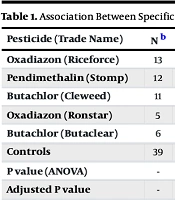
Table 1.
Association Between Specific Pesticides and Cardiovascular/Inflammatory Markers a
| Pesticide (Trade Name) | N b | % of Farmers Exposed c | CRP (ng/mL) | IL-6 (pg/mL) | TNF-α (pg/mL) | PR Interval (ms) | QRS Duration (ms) | T-Axis (°) |
|---|---|---|---|---|---|---|---|---|
| Oxadiazon (Riceforce) | 13 | 28.09 | 12.3 ± 1.2 | 14.1 ± 0.8 | 14.8 ± 0.9 | 241.2 ± 14.3 | 148.7 ± 15.2 | 152.5 ± 27.1 |
| Pendimethalin (Stomp) | 12 | 24.72 | 11.7 ± 1.4 | 13.7 ± 0.6 | 14.4 ± 1.1 | 236.8 ± 13.7 | 147.2 ± 14.9 | 150.3 ± 25.9 |
| Butachlor (Cleweed) | 11 | 22.47 | 10.9 ± 1.1 | 13.4 ± 0.7 | 13.5 ± 0.8 | 224.6 ± 12.9 | 141.5 ± 13.7 | 147.1 ± 24.6 |
| Oxadiazon (Ronstar) | 5 | 11.24 | 9.8 ± 1.0 | 13.1 ± 0.5 | 13.0 ± 0.7 | 210.7 ± 15.3 | 138.9 ± 12.1 | 142.8 ± 23.3 |
| Butachlor (Butaclear) | 6 | 13.48 | 10.2 ± 1.2 | 13.2 ± 0.6 | 13.2 ± 0.9 | 218.1 ± 13.5 | 139.7 ± 14.0 | 144.2 ± 24.8 |
| Controls | 39 | - | 5.4 ± 0.9 | 8.2 ± 0.5 | 7.9 ± 0.6 | 158.3 ± 12.1 | 98.4 ± 10.3 | 62.5 ± 15.2 |
| P value (ANOVA) | - | - | < 0.001 | < 0.001 | < 0.001 | < 0.001 | < 0.001 | < 0.001 |
| Adjusted P value | - | - | < 0.001 | < 0.001 | < 0.001 | < 0.001 | < 0.001 | < 0.001 |
a Values are expressed as mean ± standard deviation unless otherwise indicated. Electrophysiological parameters (PR interval, QRS duration, and T-axis) were obtained from standard 12-lead ECG recordings. Abbreviations: CRP, C-reactive protein; IL-6, interleukin 6; TNF-α, tumor necrosis factor α.
b N: number of farmers reporting each herbicide as their primary product (based on percentage of 48 farmers; because of rounding, n values are approximate).
c Percentage of farmers exposed reflects the proportion reporting routine use of each herbicide as their primary product in the companion studies. Percentages sum to 100% across all 5 products, representing mutually exclusive primary herbicide assignment for the companion studies; however, many farmers reported using multiple products over the growing season, as noted in the Methods.
Inflammatory markers (CRP, IL-6, and TNF-α) and electrocardiographic parameters (PR interval, QRS duration, and T-axis) were measured using standardized protocols, as described in the companion manuscripts by Chukwu et al. (15, 16). These data were reanalyzed to examine descriptive patterns across specific herbicide exposures.
3.6. Statistical Analysis
Data were analyzed using IBM SPSS Statistics version 24. Continuous variables were summarized as means ± standard deviations. One-way analysis of variance with post hoc Tukey tests was used to compare inflammatory and ECG parameters across herbicide exposure groups and controls. Analysis of covariance was performed to adjust for potential confounders, including age, sex, body mass index (BMI), smoking status, alcohol use, and years of farming. Herbicide-specific biomarker and ECG values were described according to reported routine exposure. Statistical significance was set at P < 0.05.
4. Results
4.1. Participant Characteristics
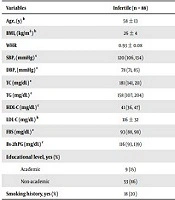
Among 48 rice farmers, the mean age was 41.3 ± 9.2 years (range, 22 - 54 years), and 75.0% were male. The mean farming duration was 12.4 ± 6.8 years, and the mean duration of pesticide application experience was 8.7 ± 5.2 years. Among 39 controls, the mean age was 40.8 ± 8.9 years, and 71.8% were male (P > 0.05 for both comparisons). Lifestyle factors were more prevalent among farmers, including current tobacco smoking (20.8% vs 10.3%; P = 0.18) and regular alcohol consumption (47.9% vs 23.1%; P = 0.02). The use of personal protective equipment during pesticide application was reported by only 22.9% of farmers.
4.2. Self-Reported Cardiovascular and Metabolic Conditions
Among 48 farmers, self-reported physician-diagnosed conditions included hypertension (n = 14, 29.2%), diabetes (n = 5, 10.4%), and any cardiovascular condition (hypertension, diabetes, or heart disease; n = 17, 35.4%). Among 39 controls, the corresponding prevalences were hypertension (n = 6, 15.4%), diabetes (n = 2, 5.1%), and any cardiovascular condition (n = 8, 20.5%). These differences did not reach statistical significance for individual conditions (P = 0.12 for hypertension; P = 0.44 for diabetes; P = 0.11 for composite cardiovascular conditions by chi-square test).
4.3. Herbicide Use Patterns
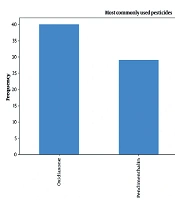
Oxadiazon-based products (Riceforce and Ronstar formulations) were used by 28.09% and 11.24% of farmers, respectively. Pendimethalin (Stomp) was used by 24.72%, and butachlor-based products (Cleweed and Butaclear) were used by 22.47% and 13.48%, respectively. These percentages reflect the primary herbicide reported for each farmer in the companion study; however, many farmers reported using multiple products over the growing season.
4.4. Inflammatory and Electrocardiographic Markers by Herbicide Exposure
Table 1 presents descriptive statistics for inflammatory markers (CRP, IL-6, and TNF-α) and electrocardiographic parameters (PR interval, QRS duration, and T-axis) stratified by reported herbicide exposure, along with values for nonfarming controls. These laboratory and ECG data were originally reported in the companion manuscripts by Chukwu et al. (15, 16). Farmers exposed to oxadiazon (Riceforce) had the highest mean concentrations of CRP, IL-6, and TNF-α, along with longer PR intervals and QRS durations, compared with other herbicide groups and controls. Farmers exposed to pendimethalin and butachlor showed similar patterns but comparatively lower inflammatory and electrophysiological values. All comparisons between the aggregated farmer groups and controls were statistically significant after adjustment for age, sex, BMI, smoking, alcohol use, and years of farming (analysis of covariance; all P < 0.001). Direct comparisons among herbicide exposure groups are descriptive only.
5. Discussion
This secondary analysis provides insight into the cardiovascular and metabolic health burden among rice farmers in Ebonyi State, Nigeria, in the context of intensive herbicide use, limited safety practices, and prevalent lifestyle risk factors. By integrating newly collected data on exposure patterns and self-reported health conditions with previously collected inflammatory and electrocardiographic data from companion manuscripts (Chukwu et al., "Electrocardiographic Abnormalities Among Pesticide-Exposed Rice Farmers in Southeast Nigeria," and "Biomarkers Profile of Subclinical Cardio-Metabolic Dysfunction in Pesticide-Exposed Rice Farmers," under review), the present analysis contributes to a more comprehensive understanding of occupational health risks in smallholder farming communities (4-7).
The findings indicate that rice farmers reported a higher prevalence of cardiovascular and metabolic health conditions than nonfarming controls; however, these differences did not reach statistical significance, likely because of the modest sample size. This pattern is consistent with previous studies in agricultural populations that have reported elevated rates of hypertension, diabetes, and cardiovascular morbidity among individuals chronically exposed to pesticides (4, 10, 15). Although the cross-sectional design precludes causal inference, the observed health disparities underscore the potential cumulative impact of long-term occupational exposure in settings characterized by minimal regulatory oversight and limited access to preventive health care (14).
5.1. Comparison With Existing Literature on Specific Herbicides
Evidence regarding the cardiovascular effects of oxadiazon remains limited. In mammalian systems, pendimethalin exposure has been associated with elevated serum inflammatory cytokines in occupational cohorts elsewhere, with CRP elevations of a magnitude similar to those observed in our pendimethalin-exposed farmers (11.7 ± 1.4 ng/mL) (12).
No prior human study has reported ECG parameters stratified by specific chloroacetanilide or dinitroaniline herbicides. Our observation of PR interval prolongation (> 220 ms) among oxadiazon-exposed farmers exceeds the American Heart Association threshold for first-degree atrioventricular block (200 ms) and is notable given the absence of such findings in controls (158 ± 12 ms). This finding suggests potential herbicide-induced conduction slowing, a hypothesis that requires mechanistic investigation. Comparable ECG changes, including prolonged QTc intervals and nonspecific ST-T wave abnormalities, have been documented in pesticide-exposed agricultural workers in other settings (13), further supporting the plausibility of herbicide-associated cardiac effects.
5.2. Lifestyle Factors as Contributory Risk Modifiers
Lifestyle behaviors emerged as additional factors likely contributing to the observed health burden. Tobacco smoking and alcohol consumption were more prevalent among farmers than controls, consistent with reports from other rural agricultural settings (4, 10). These behaviors are well-established risk factors for cardiovascular and metabolic disease and may act synergistically with occupational pesticide exposure to accelerate disease development (15, 16). The coexistence of chemical and behavioral risk factors highlights the multifactorial nature of cardiovascular risk in farming communities and emphasizes the importance of integrated intervention strategies (1, 3).
5.3. Potential Mechanisms Linking Herbicide Exposure to Cardiovascular Dysfunction
Several biologically plausible mechanisms may explain the observed associations. First, herbicide-induced oxidative stress, well documented for pendimethalin and butachlor in animal models, can activate nuclear factor κB signaling, leading to the upregulation of proinflammatory cytokines, including IL-6 and TNF-α (5). Chronic low-grade inflammation, in turn, promotes endothelial dysfunction, arterial stiffening, and autonomic dysregulation, any of which could manifest as altered cardiac conduction or repolarization. Second, chloroacetanilide herbicides, including butachlor, have been shown to inhibit gap junction intercellular communication in cardiomyocyte cultures, potentially slowing impulse propagation and prolonging QRS duration. Third, oxadiazon metabolites may interfere with cardiac sodium channel function, although direct human evidence remains absent. These mechanistic pathways are not mutually exclusive and may operate synergistically with lifestyle factors such as tobacco smoking, which independently induces oxidative stress and inflammation.
Important caveat: The study design cannot distinguish among these mechanisms or exclude confounding by correlated agricultural practices, such as the co-application of fertilizers or other pesticides that were not measured. The mechanistic discussion is intended to generate hypotheses for future toxicological and longitudinal human research, not to assert causality.
5.4. Limitations
The study has several limitations that warrant consideration. Health conditions were assessed primarily through self-report, which may be subject to recall bias or underdiagnosis, particularly in rural settings with limited access to medical services (3, 14). Pesticide exposure was characterized based on reported use rather than quantitative exposure measurements, such as biomonitoring or environmental sampling, and many farmers reported using multiple herbicides over time, which complicates attribution to specific formulations (13, 15, 16). In addition, the relatively small sample size and cross-sectional design limit the ability to assess temporal relationships or dose-response patterns. The secondary analysis nature of this study means that inflammatory and ECG data were collected for the companion manuscripts and were not specifically powered for herbicide-stratified comparisons; therefore, the descriptive patterns by herbicide should be interpreted as hypothesis-generating rather than confirmatory. Finally, the companion manuscripts by Chukwu et al. (15, 16) have not yet completed the peer-review process, and their data should be considered preliminary until published. Despite these limitations, the study provides important descriptive data from an underrepresented population and offers a foundation for future longitudinal and biomonitoring research (3, 13).
Overall, the findings highlight the intersection of occupational exposure, lifestyle factors, and cardiovascular health in smallholder rice farming systems. By situating exposure patterns and self-reported disease prevalence alongside subclinical cardiovascular indicators, this study reinforces the need for early risk identification and preventive strategies in agricultural communities (1, 15, 16).
5.5. Conclusions
Rice farmers in Ebonyi State face a high burden of cardiovascular and metabolic conditions amid frequent herbicide use, limited safety training, and prevalent lifestyle risk factors. Reliance on oxadiazon-, pendimethalin-, and butachlor-based herbicides highlights the potential for sustained occupational exposure. Descriptive stratification of inflammatory and electrocardiographic data from companion manuscripts suggests varying cardiovascular stress across herbicide types, underscoring the importance of exposure-specific risk assessment. These findings emphasize the need for improved pesticide safety education, access to personal protective equipment, integrated weed management, and routine health screening. Interventions targeting modifiable behaviors, such as smoking and alcohol use, are also critical. Future longitudinal studies with quantitative exposure assessment, such as urinary metabolite measurements, are needed to guide policy and reduce the occupational health burden in rice-farming communities.