
1. Context
Rheumatoid arthritis (RA) is a chronic systemic autoimmune disease characterized by persistent synovial inflammation, progressive joint destruction, and significant extra-articular involvement (1). It affects approximately 0.5% - 1% of the global population, is more common in females than in males, and typically presents between 30 and 60 years of age (1, 2). When not adequately controlled, RA leads to substantial morbidity, disability, and reduced quality of life. Historically, RA was considered a relentlessly progressive and disabling condition with limited therapeutic options. However, advances in immunology and molecular medicine have transformed its management. The current paradigm emphasizes early diagnosis, prompt initiation of therapy, and tight disease control aimed at achieving remission or low disease activity, thereby preventing irreversible joint damage (3, 4). Importantly, early therapeutic intervention within the so-called “window of opportunity” has been shown to significantly improve long-term functional outcomes and reduce radiographic progression (3, 4). Delayed treatment initiation is strongly associated with irreversible structural damage and a poorer response to disease-modifying therapies. In addition, RA is increasingly recognized as a systemic inflammatory condition associated with elevated cardiovascular risk, contributing to increased long-term morbidity and mortality (5).
1.1. Rationale and Objectives
This narrative review aims to provide an updated overview of contemporary rheumatoid arthritis management, with an emphasis on conventional disease-modifying therapies, biologic and targeted synthetic agents, treat-to-target strategies, and recent therapeutic advances. The review also highlights major challenges affecting RA care in resource-limited settings, particularly in Pakistan, and discusses evolving approaches that may improve long-term patient outcomes.
2. Evidence Acquisition
This study is a narrative literature review summarizing current evidence on the management of rheumatoid arthritis, including conventional, biologic, and targeted synthetic therapies. A structured literature search was conducted using major electronic databases, including PubMed/MEDLINE, Google Scholar, and the Cochrane Library, to identify relevant peer-reviewed publications. The search included studies published in English from 2010 to 2026, with priority given to recent systematic reviews, clinical guidelines, randomized controlled trials, and high-quality observational studies. Keywords used in various combinations included “rheumatoid arthritis,” “DMARDs,” “biologic therapy,” “JAK inhibitors,” “treat-to-target,” and “management guidelines.”
Studies were selected based on their relevance to rheumatoid arthritis management, treatment strategies, and clinical outcomes. Articles focusing on pathophysiology without therapeutic relevance or lacking peer-reviewed validation were excluded. Additional relevant studies were identified by manually screening the reference lists of included articles. Data extraction and synthesis were performed qualitatively. Evidence was thematically organized into sections covering pathophysiology, clinical features, pharmacological management, nonpharmacological interventions, and recent advances. Given the narrative nature of the review, no formal risk-of-bias assessment or meta-analysis was performed.
3. Results
3.1. Pathophysiology of Rheumatoid Arthritis
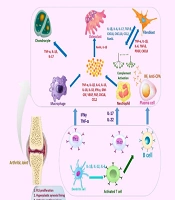
The pathogenesis of rheumatoid arthritis is multifactorial, involving genetic susceptibility and environmental triggers such as smoking, infections, and hormonal influences (1, 2). The disease process begins with activation of CD4+ T lymphocytes, which orchestrate a cascade of immune responses. This cascade includes B-cell activation, leading to the production of autoantibodies such as rheumatoid factor and anti-cyclic citrullinated peptide (anti-CCP) antibodies (6). These immune complexes contribute to chronic inflammation within the synovial membrane. Proinflammatory cytokines, including tumor necrosis factor-alpha (TNF-α), interleukin-1 (IL-1), and interleukin-6 (IL-6), play a central role in sustaining inflammation and promoting tissue damage (2, 6). The synovium undergoes hyperplasia, forming pannus tissue that invades cartilage and bone, ultimately leading to erosions, deformities, and functional impairment (6, 7). Over time, systemic inflammation also contributes to cardiovascular disease and other extra-articular complications.
3.2. Clinical Features of Rheumatoid Arthritis
Rheumatoid arthritis typically presents as a symmetrical inflammatory polyarthritis that predominantly affects small joints, such as those of the hands and feet (2, 8). Patients commonly experience prolonged morning stiffness lasting more than one hour, along with joint swelling, tenderness, warmth, and a progressive reduction in mobility (6, 8). As the disease advances, deformities such as ulnar deviation, swan-neck, and boutonnière deformities may develop. In addition to joint involvement, several extra-articular manifestations are associated with RA, including rheumatoid nodules, interstitial lung disease, pleuritis, vasculitis, and ocular inflammation (1, 8). Cardiovascular disease is also a major concern because chronic systemic inflammation accelerates atherosclerosis and increases long-term mortality risk (1, 9).
3.3. Initial Management of Rheumatoid Arthritis
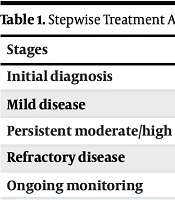
Initial management of RA focuses on rapid symptom control while simultaneously initiating disease-modifying therapy to prevent irreversible joint damage. Current treatment strategies emphasize early initiation of conventional disease-modifying antirheumatic drugs (DMARDs), particularly methotrexate, within the first few months of symptom onset as part of a treat-to-target approach, as shown in Table 1. Symptomatic therapies such as nonsteroidal anti-inflammatory drugs (NSAIDs) and corticosteroids are used primarily for temporary relief of pain and inflammation and do not prevent long-term structural disease progression.
Table 1.
Stepwise Treatment Approach in Rheumatoid Arthritis
| Stages | Preferred Strategy |
|---|---|
| Initial diagnosis | Early methotrexate ± short corticosteroid bridging |
| Mild disease | cDMARD monotherapy |
| Persistent moderate/high activity | Combination cDMARDs |
| Refractory disease | bDMARD or tsDMARD |
| Ongoing monitoring | Treat-to-target with DAS28 assessment |
3.3.1. Nonsteroidal Anti-Inflammatory Drugs
NSAIDs are widely used for their analgesic and anti-inflammatory properties (10). They help reduce joint pain, stiffness, and swelling, thereby improving short-term quality of life (1, 11). However, NSAIDs do not alter the underlying disease process or prevent joint damage. Therefore, they are used as adjunctive therapy rather than as primary disease-modifying agents. Long-term use may be associated with gastrointestinal toxicity, renal impairment, and cardiovascular risks, necessitating careful patient monitoring (10, 11).
3.3.2. Corticosteroids
Corticosteroids are potent anti-inflammatory agents that provide rapid symptom relief in RA (10). They are commonly used during acute disease flares and as bridging therapy until DMARDs achieve full therapeutic effect (9). Despite their efficacy, long-term corticosteroid use is limited by significant adverse effects, including osteoporosis, diabetes mellitus, hypertension, weight gain, and increased susceptibility to infections (1, 10). Consequently, current treatment strategies recommend corticosteroids at the lowest effective dose and for the shortest possible duration, primarily as bridging therapy during DMARD initiation or for short-term control of acute disease flares rather than long-term maintenance therapy (1, 10). Long-term corticosteroid exposure should be minimized because cumulative toxicity is associated with osteoporosis, metabolic complications, cardiovascular disease, and increased infection risk (12, 13).
3.4. Disease-Modifying Antirheumatic Drugs in Rheumatoid Arthritis
DMARDs form the cornerstone of RA management by targeting the underlying immune-mediated disease process and preventing structural joint damage.
3.4.1. Conventional Disease-Modifying Antirheumatic Drugs
Conventional DMARDs include methotrexate, sulfasalazine, hydroxychloroquine, and leflunomide (1, 14). Among these agents, methotrexate is considered first-line therapy for most patients because of its established efficacy, long-term safety profile, and cost-effectiveness. Current treatment guidelines recommend early initiation of methotrexate, either as monotherapy or in combination with short-term corticosteroids, to rapidly suppress disease activity and reduce radiographic progression (14, 15). In patients with persistent moderate-to-high disease activity despite optimized methotrexate therapy, combination conventional DMARD therapy or escalation to biologic or targeted synthetic DMARDs may be considered, depending on disease severity, prognostic factors, comorbidities, and treatment response.
3.4.2. Biologic Disease-Modifying Antirheumatic Drugs
Biologic DMARDs have revolutionized rheumatoid arthritis management by selectively targeting key immune pathways involved in disease pathogenesis (15, 16). Major biologic classes include tumor necrosis factor (TNF) inhibitors such as infliximab, adalimumab, and etanercept; interleukin-6 receptor inhibitors such as tocilizumab; B-cell depletion therapy such as rituximab; and T-cell costimulation inhibitors such as abatacept (15, 17). These agents are generally reserved for patients who do not respond adequately to conventional DMARDs, particularly those with persistent active disease, progressive structural damage, unfavorable prognostic features, or treatment intolerance (14, 15). Biologic DMARDs have demonstrated substantial benefits in reducing disease activity, preventing radiographic progression, and improving functional outcomes. However, their effectiveness must be balanced against risks such as serious infections and high treatment costs, which remain major barriers in low-resource settings (16, 18, 19).
Careful pretreatment evaluation is essential, including screening for latent tuberculosis and chronic viral infections such as hepatitis B and C, because of the increased risk of opportunistic infections during immunosuppression (18, 19). Selection of a specific biologic agent should be individualized based on comorbidities, infection risk, disease severity, route of administration, and patient preference. Ongoing monitoring with periodic clinical assessment, complete blood counts, liver function tests, and vigilance for infection-related symptoms is recommended throughout therapy. In addition, factors such as age, cardiovascular disease, chronic lung or renal disease, prior malignancy, and financial constraints should be incorporated into shared treatment decision-making to optimize safety and accessibility (20, 21).
3.4.3. Targeted Synthetic Disease-Modifying Antirheumatic Drugs
Targeted synthetic DMARDs are typically considered in patients with an inadequate response to conventional DMARDs or biologic therapies, particularly when oral administration is preferred or when specific biologic agents are contraindicated (15, 22). Janus kinase (JAK) inhibitors such as tofacitinib, baricitinib, and upadacitinib offer the advantage of oral administration and a relatively rapid onset of action, making them an important option in refractory disease management. However, careful patient selection and risk assessment are necessary because JAK inhibitors have been associated with serious infections, herpes zoster reactivation, venous thromboembolism, malignancy risk, and major adverse cardiovascular events in susceptible individuals (23, 24). Baseline and periodic monitoring of complete blood counts, liver function tests, lipid profile, and cardiovascular risk factors is recommended during therapy (22). Factors such as advanced age, smoking history, prior thromboembolic events, cardiovascular disease, chronic kidney disease, and infection risk should be considered when selecting these agents.
3.5. Treat-to-Target Strategy in Rheumatoid Arthritis
Modern RA management follows a treat-to-target strategy aimed at achieving sustained remission or low disease activity through regular monitoring and timely treatment adjustment (1, 15). Disease activity is commonly assessed using validated scoring systems such as DAS28, CDAI, or SDAI (25, 26). Methotrexate-based therapy is usually initiated early and reassessed within 3 - 6 months. If treatment targets are not achieved, therapy escalation may include combination conventional DMARDs, biologic DMARDs, or targeted synthetic DMARDs, depending on disease severity, prognostic factors, and patient-specific considerations (14, 15). Frequent clinical assessment allows early identification of persistent inflammation and enables timely modification of therapy before irreversible structural joint damage occurs (27, 28). Shared decision-making between clinicians and patients is also an important component of the treat-to-target approach, helping to improve treatment adherence and long-term disease control. In addition to symptom improvement, this strategy aims to preserve physical function, reduce disability, and minimize extra-articular complications associated with chronic systemic inflammation (27, 28). This structured and proactive approach has significantly improved long-term functional outcomes, radiographic progression, and overall quality of life in patients with rheumatoid arthritis.
3.6. Nonpharmacological Management of Rheumatoid Arthritis
Nonpharmacological interventions play an essential role in comprehensive RA care and should be integrated with pharmacological treatment throughout the disease course. Physiotherapy and regular exercise help maintain joint mobility, preserve muscle strength, reduce stiffness, and improve overall physical function (29-31). Low-impact aerobic exercise, stretching programs, and strength-training exercises have also been shown to improve fatigue and functional capacity in patients with RA. Occupational therapy assists patients in adapting daily activities, using assistive devices, and applying joint-protection techniques to reduce mechanical stress and maintain independence. Patient education is equally important for improving treatment adherence, self-management skills, and understanding of disease progression. Psychological support and counseling may further help patients cope with chronic pain, anxiety, depression, and reduced social functioning associated with long-term disease (31-33). Lifestyle modifications such as smoking cessation, weight management, balanced nutrition, and cardiovascular risk reduction strategies further contribute to improved disease control and overall health outcomes (29, 30). Collectively, these interventions enhance quality of life, support long-term functional preservation, and complement pharmacological therapy in modern RA management.
3.7. Recent Advances in Rheumatoid Arthritis Management
Recent years have witnessed significant advances in RA management driven by scientific and technological progress.
3.7.1. Precision Medicine
Precision medicine aims to tailor treatment strategies based on individual genetic, molecular, and clinical profiles (34). Advances in biomarker discovery and genomics are enabling more personalized therapeutic approaches, improving response rates and minimizing unnecessary drug exposure (34, 35). Emerging research on cytokine signatures, autoantibody profiles, and pharmacogenomics may further help predict treatment response and disease progression. This individualized approach has the potential to optimize therapeutic efficacy while reducing adverse effects and healthcare costs.
3.7.2. Biosimilars
Biosimilars are biologic products that are highly similar, but not identical, to existing reference biologics (36). They offer comparable efficacy and safety at significantly reduced costs, thereby improving access to advanced therapies in resource-limited settings such as Pakistan and other developing countries (36, 37). Increasing availability of biosimilars may help reduce healthcare expenditure and expand access to biologic therapy for patients with refractory disease. Their growing use is expected to play an important role in improving equitable access to modern RA treatment worldwide.
3.7.3. Early Aggressive Therapy
Early aggressive treatment during the so-called “window of opportunity” in the early stages of RA has been shown to significantly improve long-term outcomes (1, 15). Early initiation of DMARDs reduces irreversible joint damage, increases remission rates, and enhances overall functional prognosis. Timely disease control also reduces long-term disability, work impairment, and extra-articular complications associated with chronic inflammation (1, 15). Current treatment guidelines strongly support early diagnosis and prompt initiation of disease-modifying therapy as a key principle of modern RA management.
3.8. Healthcare Challenges in Pakistan
Despite major advances in rheumatoid arthritis management, implementation of optimal treat-to-target care remains challenging in Pakistan. Delayed presentation is common because of limited disease awareness, delayed referral to rheumatologists, socioeconomic barriers, and restricted access to specialized healthcare services, particularly in rural and underserved areas (38, 39). As a result, many patients present with established joint damage, persistent inflammation, and functional impairment, reducing the likelihood of achieving sustained remission and limiting the benefits of early therapeutic intervention. Limited availability of rheumatology specialists and diagnostic facilities further delays timely initiation and escalation of disease-modifying therapy (38). In many settings, conventional DMARDs such as methotrexate remain the most practical and accessible long-term treatment option because the high cost of biologic therapies and targeted synthetic DMARDs restricts widespread use. Optimization of affordable conventional DMARD strategies, including early methotrexate initiation and combination DMARD therapy, may therefore play a particularly important role in resource-constrained healthcare systems. Limited availability of routine infectious disease screening, monitoring facilities, and specialist follow-up may further complicate the safe use of biologic agents and JAK inhibitors in resource-constrained healthcare settings (38, 39).
Improving patient outcomes in Pakistan will require strengthening early referral pathways, increasing awareness among primary care physicians, expanding rheumatology training programs, and improving patient education regarding treatment adherence and long-term disease monitoring (38, 39). Greater availability of biosimilars may also improve access to advanced therapies by reducing treatment costs (36, 40). However, safe implementation of biologic and targeted therapies also depends on adequate infection screening, laboratory monitoring, and specialist follow-up infrastructure, which remain limited in many low-resource settings (36, 40). Collectively, these healthcare-system and socioeconomic challenges highlight the need for context-specific strategies to improve early diagnosis, treatment accessibility, and long-term disease control in Pakistani patients with rheumatoid arthritis.
3.9. Future Perspectives
Future advancements in rheumatoid arthritis management are expected to focus on more personalized and accessible therapeutic strategies. The integration of precision medicine, including genetic, serological, and molecular biomarkers, may enable earlier identification of disease subtypes and more targeted selection of therapies, improving treatment response and minimizing unnecessary drug exposure. Expansion of biosimilar availability is likely to play a key role in improving affordability and access to biologic therapies, particularly in low- and middle-income countries such as Pakistan. In addition, ongoing research into novel intracellular signaling pathways, including Janus kinase and other emerging molecular targets, may further expand the range of therapeutic options for refractory disease. Strengthening healthcare infrastructure, improving early referral systems, and increasing awareness among primary care providers will also be essential to achieving earlier diagnosis and timely initiation of disease-modifying therapy. Collectively, these developments have the potential to reduce long-term disability and improve overall disease outcomes in rheumatoid arthritis.
3.10. Study Limitations
This narrative review has several inherent limitations. As a nonsystematic review, it did not follow a predefined protocol or employ exhaustive database searches with formal quality appraisal, which may introduce selection bias in the included studies. Although major databases were consulted and recent high-quality literature was prioritized, the possibility of omission of relevant studies cannot be excluded. In addition, the synthesized evidence is largely derived from published studies in international populations, which may limit the direct applicability of some findings to local healthcare systems, particularly in Pakistan, where resource constraints, delayed diagnosis, and limited access to biologic therapies significantly influence treatment outcomes. Furthermore, variations in study designs, populations, and outcome measures across the included literature may affect the consistency and comparability of the findings. Therefore, the conclusions should be interpreted as a qualitative synthesis of current evidence rather than a definitive or exhaustive appraisal of all available data.
4. Conclusions
The management of RA has evolved from purely symptomatic treatment to a sophisticated, targeted therapeutic approach that focuses on early intervention and disease modification. The introduction of conventional, biologic, and targeted synthetic DMARDs has markedly improved patient outcomes and quality of life. However, challenges including cost, accessibility, and healthcare disparities continue to limit optimal care in resource-constrained settings. Ongoing research in precision medicine, biomarker development, and novel therapeutic targets may enable more effective and potentially curative strategies in the future.