
Fulltext
Full-text is available in PDF format.
Journal of Motor Control and Learning
An International Journal of Movement Science
Authors
Background: Having an additional impairment similar to Down Syndrome (DS) might increase defects in motor development in people with intellectual impairments (II) and, therefore, affect their physical fitness and body composition. Thus, this study compared the physical fitness and body composition of people with II who did not have additional impairments with those who had additional impairment.
Methods: This cross-sectional study included N= 272 young people with II, aged 18 to 30 (19.67 ± 2.66 years). According to Wechsler Intelligence Test, their IQ was in the range of 55 to 70. Participants were allocated purposefully to three different II groups, including II without additional disabilities (n= 90), II with DS (n= 89), and II with other disabilities such as Cerebral Palsy (CP), ADHD, Hydrocephaly, Microcephaly, Speech Disorders, or Behavioral Disorders (n= 93). Eurofit Battery Tests assessed physical fitness, and body composition was measured by Biospace (In Body 230).
Results: The results of one-way ANOVA showed significant differences in all physical fitness factors among the three groups (P ≤ 0.05), except for the endurance of abdominal muscles (P= 0.463). There were significant differences in BMI, body fat percentage, and body fat mass among the three II groups (P≤0.05), but not in skeletal muscle mass nor in the waist to hip ratio (WHR) among groups (P>0.05).
Conclusion: People with II who also have DS have the lowest physical fitness and exhibit a weaker body composition than their peers with other impairments or without additional impairment. Improving and maintaining physical fitness have to become a critical part of care and support for these people.
2022 The Authors.This is an open access article under the CC BY license. (http://creativecommons.org/licenses/by/4.0/)
Kashi A, Dawes H, Mansoubi M, Sarlak Z. The Effect of a Physical Exercise Package on the Motor Proficiency of Students with Down Syndrome. Inn J Pediatr. 2023;33(1):e120408. doi: https://doi.org/10.5812/ijp-120408
Heidari Beni F, Karamali Esmaili S, Pashmdarfard M, Kalantari M, Pashazadeh Azari Z, et al. How Executive Function Predicts Participation in Activities Outside of School in Children with Specific Learning Disability. Iran J Psychiatry Behav Sci. 2025;19(3):e161747. doi: https://doi.org/10.5812/ijpbs-161747
Ahmadi N, Peyk F, Hovanloo F, Hemati Garekani S. Effect of Functional Strength Training on Gait Kinematics, Muscle Strength and Static Balance of Young Adults with Down Syndrome. J Motor Control Learn. 2020;2(1):e146472. doi: https://doi.org/10.29252/ijmcl.1.1.1
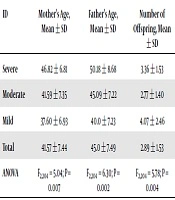
Agha Mohammad Hasani P, Mokhtaree M, Rezaeian M, Jalaladdini A. Investigating the Characteristics of Intelligence Quotient in Individuals with Intellectual Disability in Rafsanjan, 2019. J Adv Immunopharmacol. 2021;1(1):e113794. doi: https://doi.org/10.5812/tms.113794
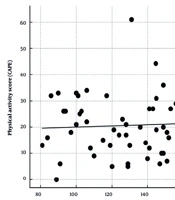
Ahmadi G, Pashazadehazari Z, Karamali Esmaili S, Jamebozorgi A. Investigating the Relationship Between Executive Function and Participation in Leisure Activities in Adolescents Aged 12 - 17 with Specific Learning Disorder. Middle East J Rehabil Health Stud. 2025;12(3):e159183. doi: https://doi.org/10.5812/mejrh-159183
More by these authors
Last Update: 0 months ago
Last Update: 0 months ago
Last Update: 0 months ago
Last Update: 2 hours ago
Last Update: 14 hours ago
Last Update: 4 days ago