
Fulltext
Full-text is available in PDF format.
Journal of Motor Control and Learning
An International Journal of Movement Science
Authors
Background: This article systematically reviews the available literature on biomechanically motivated interventions to improve running economy aside from conventional endurance training. It was aimed to identify the possible mechanisms behind the potential improvements and to extract principles to guide researchers and coaches in how to make use of this potential.
Evidence acquisition: The search strategy yielded 26 intervention papers and four reviews which were suitable for inclusion.
Results: It was concluded that plyometric and strength training protocols were consistently beneficial to reduce the oxygen consumption per distance traveled in steady state running showing an average effect size of 3.8%. Footwear interventions showed smaller effects of 1.9% on average but still may offer considerable improvements which can potentially be applied immediately.
Conclusions: It was suggested that the energy consumption savings achieved by footwear interventions are not realizable by energy return mechanisms of the footwear alone. It is most likely that footwear assists to improve RE by optimizing energy storage and return mechanisms within the biological system. Future research should aim at verifying this interplay to provide more efficient training programs as well as footwear which ameliorates the utilization of the mechanisms embedded within the human locomotor system.
© 2022, Journal of Motor Control and Learning. This open-access article is available under the Creative Commons Attribution-NonCommercial 4.0 (CC BY-NC 4.0) International License (https://creativecommons.org/licenses/by-nc/4.0/), which allows for the copying and redistribution of the material only for noncommercial purposes, provided that the original work is properly cited.
Alghannam AF. Metabolic Limitations of Performance and Fatigue in Football. Asian J Sports Med. 2012;3(2):34699. doi: https://doi.org/10.5812/asjsm.34699
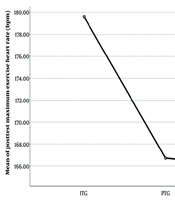
Mesfen A, Melkamu Z. Effects of Interval and Power Training on the Physical, Physiological, and Training Characteristics of Trained Distance Runners. Asian J Sports Med. 2024;15(4):e149375. doi: https://doi.org/10.5812/asjsm-149375
ketabi S, Kersting UG, de Souza Castelo Oliveira A. The Effects of Heel Spring on Lower Limb Muscular Activity and Running Economy. J Motor Control Learn. 2022;4(1):e144309. doi: https://doi.org/10.52547/ijmcl.4.1.19
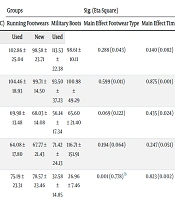
Piran Hamlabadi M, Jafarnezhadgero AA, Anvari M, Hossienpour K. Comparison of Muscular Activity During Running with New and Used Military Boots and Running Footwears in Healthy Individuals: A Clinical Trial Study. J Arch Mil Med. 2024;12(2):e147217. doi: https://doi.org/10.5812/jamm-147217
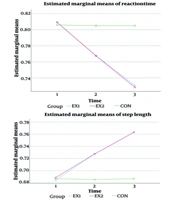
Al-Bahadili Z, Shahrbanian S, Gharakhanlou R, Al-Tamimi A. Integrating Specific Training with C4 Supplementation to Enhance Sport-Specific Performance in Futsal Players. J Motor Control Learn. 2026;8(1):e166166. doi: https://doi.org/10.69107/jmcl-166166
Last Update: 1 month ago
Last Update: 1 month ago
Last Update: 1 month ago
Last Update: 6 days ago
Last Update: 11 hours ago
Last Update: 4 days ago