Journal of Motor Control and Learning
An International Journal of Movement Science
Effects of Limb-Specific Fatigue on Motor Learning during an Upper Extremity Proprioceptive Task
Authors
Abstract
Background: The effects of limb-specific fatigue on motor skill acquisition and retention are not clear.
Objective: To investigate the impact of limb-specific fatigue on the acquisition and retention of an upper extremity proprioceptive task.
Methods: Twenty-two right-handed participants were randomly and equally assigned to either fatigued or non-fatigued protocols. Acquisition phase for the upper extremity task consisted of 5 blocks each with 12 trials. After 48 hours, all participants performed 1 block retention test (12 trials) with the left arm followed by 1 block transfer test (12 trials) with the right arm. Performance for each block was analyzed using a one-way analysis of variance (ANOVA). Performance differences between groups for the acquisition was analyzed using a 2 x 5 (group x block) ANOVA with repeated measures on the blocks. The performance on retention-transfer was analyzed by separate ANOVAs. Statistical significance set at p < .05.
Results: The fatigued condition displayed significantly more E than the non-fatigue group (p < .05). During retention and transfer, the fatigue group again displayed higher E compared to the non-fatigued group (p < .05).
Conclusion: The results of this study support that limb-specific fatigue may produce performance deficits during acquisition and interfere with motor skill retention.
Highlights
Copyright
© 2024, Journal of Motor Control and Learning. This open-access article is available under the Creative Commons Attribution-NonCommercial 4.0 (CC BY-NC 4.0) International License (https://creativecommons.org/licenses/by-nc/4.0/), which allows for the copying and redistribution of the material only for noncommercial purposes, provided that the original work is properly cited.
Similar Articles
The Effect of Proprioceptive Neuromuscular Facilitation on Learning Fine Motor Skills: A Preliminary Study
Shahabi Kaseb MR, Mehranian A, Rezaei K. The Effect of Proprioceptive Neuromuscular Facilitation on Learning Fine Motor Skills: A Preliminary Study. J Kermanshah Univ Med Sci. 2016;20(2):e69701. doi: https://doi.org/10.22110/jkums.v20i2.2922
The comparison between unilateral and bilateral movement training on upper limb function in hemiplegic patients
Mohammadi A, Talebi M, Havaei N. The comparison between unilateral and bilateral movement training on upper limb function in hemiplegic patients. J Kermanshah Univ Med Sci. 2013;17(2):e77124. doi:
Training with Non-dominant Limb: A Helpful Strategy for Motor Function and Dual-task Cost in Multiple Sclerosis Patients
Tahmasebi Boroujeni S, Abbasnia A, Doosti M. Training with Non-dominant Limb: A Helpful Strategy for Motor Function and Dual-task Cost in Multiple Sclerosis Patients. J Motor Control Learn. 2023;5(3):e143465. doi: https://doi.org/10.61186/ijmcl.5.3.24
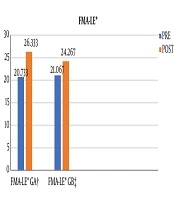
Effect of Adding Motor Imagery to Task Specific Training on Facilitation of Sit to Stand in Hemiparetic Patients
Helmy H, Elrewainy RM, Elbalawy Y, Sabbah A. Effect of Adding Motor Imagery to Task Specific Training on Facilitation of Sit to Stand in Hemiparetic Patients. Arch Neurosci. 2020;7(3):e102053. doi: https://doi.org/10.5812/ans.102053
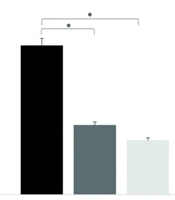
Motor Correlation Between Upper and Lower Limbs in a Throwing Task: The Effect of Fatigue and Distance
Parhizmeymandi N, Azimi R, Sanjari MA, Farsi A. Motor Correlation Between Upper and Lower Limbs in a Throwing Task: The Effect of Fatigue and Distance. J Motor Control Learn. 2026;8(1):e166980. doi: https://doi.org/10.69107/jmcl-166980
- Scopus by DOI: 0
Last Update: 1 month ago
- Scopus by Title: 0
Last Update: 1 month ago
- Scopus by Title (Ref): 2
Last Update: 1 month ago
- CrossRef: 0
Last Update: 6 days ago
- OpenAlex: 3
Last Update: 6 hours ago
- OpenCitations: 1
Last Update: 4 days ago