Journal of Motor Control and Learning
An International Journal of Movement Science
Comparison the Effect of High and Low Contextual Interference Training on Performance Accuracy
Authors

Abstract
Objective: The aim of this study was to determine the differences between different methods of contextual interference (High and Low) on accuracy.
Methods: The subjects were 51 people from Shiraz Mental Health Park Rehabilitation Center who were purposefully selected and after the pre-test, they were randomly divided into three groups. The High and Low interference groups performed 180 Frisbee attempts (backhand, forehand, and hammer) and the control group played a team game at the same time as the intervention groups. Then, acquisition, retention and immediate transfer tests were taken. Accuracy was measured using a researcher-made test.
Results: The results of repeated measures test showed no significant difference in the phase of acquisition and there was a significant difference between the groups in the phases of transfer (P = 0.011) and retention (P = 0.026).
Conclusion: It seems that the results of this study can be effective in reducing researchers' concerns in simultaneous training of several motor skills by emphasizing the movement pattern and achieving the goal of movement (accuracy). Findings indicate that the use of contextual interference methods, at high levels, leads to time savings and stabilizes the pattern of movement in the learning phases.
Highlights
Copyright
© 2024, Journal of Motor Control and Learning. This open-access article is available under the Creative Commons Attribution-NonCommercial 4.0 (CC BY-NC 4.0) International License (https://creativecommons.org/licenses/by-nc/4.0/), which allows for the copying and redistribution of the material only for noncommercial purposes, provided that the original work is properly cited.
Similar Articles
The Effect of Contextual Interference on the Acquisition and Learning of Motor Skill with an Emphasis on Cognitive Flexibility
Tahmasebi Boroujeni S, Biglari M, Mohagheghi M. The Effect of Contextual Interference on the Acquisition and Learning of Motor Skill with an Emphasis on Cognitive Flexibility. J Motor Control Learn. 2024;6(3):e150567. doi: https://doi.org/10.5812/jmcl-150567
High-Intensity Interval Training and Exergaming Can Improve Inhibitory Control in Female Primary School Students
Ahmadpour A, Shahviesi N, Norouzi Seyed Hassani E. High-Intensity Interval Training and Exergaming Can Improve Inhibitory Control in Female Primary School Students. J Motor Control Learn. 2026;8(3):e170356. doi: https://doi.org/10.69107/jmcl-170356
Effect of an Acute Bout of Low-, Moderate-, and High-Intensity Aerobic Exercise on Immediate and Delayed Fractionated Response Time
Martineau DR, Croce RV, Smith W. Effect of an Acute Bout of Low-, Moderate-, and High-Intensity Aerobic Exercise on Immediate and Delayed Fractionated Response Time. J Motor Control Learn. 2023;5(3):e143463. doi: https://doi.org/10.61186/ijmcl.5.3.1
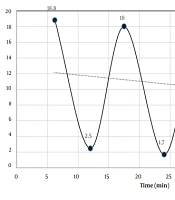
Comparison of Two Types of High-Intensity Interval Training: Heart Rate Based vs. Speed/Time Based
Nazari Radgiglou S, Safarzade A, Shirinbayan V. Comparison of Two Types of High-Intensity Interval Training: Heart Rate Based vs. Speed/Time Based. Asian J Sports Med. 2022;13(3):e123355. doi: https://doi.org/10.5812/asjsm-123355
The Influence of Dual N-back Training on Fluid Intelligence, Working Memory, and Short-Term Memory in Teenagers
Tayeri N, Habibi M, Zandian P. The Influence of Dual N-back Training on Fluid Intelligence, Working Memory, and Short-Term Memory in Teenagers. Iran J Psychiatry Behav Sci. 2016;10(4):e5009. doi: https://doi.org/10.17795/ijpbs-5009
- Scopus by DOI: 0
Last Update: 1 month ago
- Scopus by Title: 0
Last Update: 1 month ago
- Scopus by Title (Ref): 0
Last Update: 1 month ago
- CrossRef: 0
Last Update: 6 days ago
- OpenAlex: 1
Last Update: 10 hours ago
- OpenCitations: 0
Last Update: 4 days ago