
Fulltext
Background: One of the most important disorders in children is developmental coordination disorder. In this disorder, motor problems affect children's daily activities, academic achievement, and health in the absence of any known medical condition or neurological disorder.
Objective: This study aimed to investigate the effect of self-modeling with mobile phone on overarm throwing skill in 7-9 years old children with developmental coordination disorder.
Method: Twenty-four children with DCD were selected as purposeful sample and randomly divided into two experimental and one control group. Experimental groups conducted self-modeling with mobile phone under the supervision of a trainer and their parents. The control group trained overarm throwing skill without self-modeling. Training protocol consisted of 5 weeks, three sessions per week and each session included 40 minutes. The process and the product of overarm throwing were measured by the Ulrich test of gross motor development, the second edition, and the accuracy of the throw test.
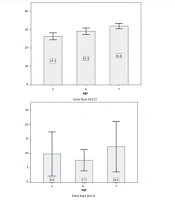
Results: Covariance test and Bonferroni’s post hoc test showed that there was a significant improvement in the process of overarm throwing skill in the two experimental groups (P<0.05). Comparison of the groups showed that there was no significant difference between the two groups in the throwing process (P>0.05), but both groups had a significant difference with the control group (P<0.05). Comparison of the groups in the product of the throwing skill showed that there was no significant difference between the groups (P>0.05).
Conclusion: In general, the results of this study showed that that self-modeling with mobile phone improves the process of overarm throwing skill in children with developmental coordination disorders. Self-modeling probably facilitates the process of performing and learning skill in these children by creating a representation of the task.