Fulltext
The body of the article can be found in the PDF file.
Journal of Medical Education for Future Demands
Former Title: Journal of Medical Education | The Official Journal of School of Medical Education and Learning Technologies
Image Credit:J Med Edu
Authors
Background and purpose: Medical professional behavior includes the characteristics of devotion, integrity, compassion, good communication skills, respect, responsibility, excellence and leadership. Evaluation plays an important role in identifying the professionalism of people and training. Thus, this study was conducted to evaluate the professional behavior of clinical residents.Methods: In this descriptive study, 50 clinical attending physicians were randomly selected as the study population. Each attending physician completed assessment forms for two residents with whom they had rounds for more than one month. P-MEX was used for data collection and data analysis was done through descriptive method using one-sample t-test.Results: Based on the results, the professional behaviors of residents were as follows: 8.9% under the expected level, 57.4% at the expected level, 32.7% over the expected level and no residents were at an unacceptable level.Conclusions: The present study was conducted for the first time considering the fact that no professionalism assessment tool was provided for clinical departments. The study had useful results and some important steps can be taken in the future by localization of the P-MEX tool, adding items accepted by professionals and doing a 360-degree assessment.
© 2015, Author(s). This open-access article is available under the Creative Commons Attribution 4.0 (CC BY 4.0) International License (https://creativecommons.org/licenses/by/4.0/), which allows for unrestricted use, distribution, and reproduction in any medium, provided that the original work is properly cited.
Yamani N, Liaghatdar M, Adibi P, Changiz T. Professional Behaviours Among Internal Medicine and Surgery Interns: A Professionalism Assessment. J Med Edu. 2009;13(4):e105410. doi: https://doi.org/10.22037/jme.v13i4.4525
Bigdeli S, Taghavinia M, Soltani Arabshahi K, Ahmadi S. Quality Assessment of Internal Residents in Tehran University of Medical Sciences (Hemmat Campus) in 2010-2011. Educ Res Med Sci. 2013;2(1):e77210. doi:
Dabbagh A, Fadaeizadeh L, Gharaei B, Ghasemi M, Kamranmanesh M, et al. The Role of Entrustable Professional Activities in Competency-based Medical Education for Anesthesiology Residents: A Pilot Phase. Anesth Pain Med. 2022;12(5):e130176. doi: https://doi.org/10.5812/aapm-130176
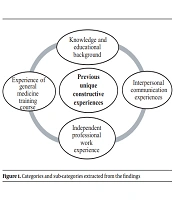
Ahmadinia F, Khakbazan Z, Ahmady S. Explaining the Role of Experiences in Shaping the Professional Identity of Medical Residents of Tehran University Medical Sciences. J Med Edu. 2022;21(1):e129212. doi: https://doi.org/10.5812/jme-129212
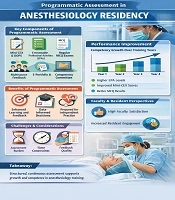
Madadi F, Maziar A, Shahghadami R, Bonakchi H, Dabbagh A. From Isolated Exams to Longitudinal Judgment: Implementing Programmatic Assessment with Multisource Data and Portfolio-Based Educational Decisions in Anesthesiology Residency. J Cell Mol Anesth. 2026;11(1):e169631. doi: https://doi.org/10.5812/jcma-169631
Last Update: 6 days ago
Last Update: 6 days ago
Last Update: 6 days ago
Last Update: 6 days ago
Last Update: 10 hours ago
Last Update: 5 days ago