Fulltext
The body of the article can be found in the PDF file.
Journal of Medical Education for Future Demands
Former Title: Journal of Medical Education | The Official Journal of School of Medical Education and Learning Technologies
Image Credit:J Med Edu
Authors
Background: Clinical reasoning plays an important role in the ability of physicians to make diagnoses and decisions. It is considered the physician’s most critical competence, but it is an ambiguous conceptin medicine that needs a clear analysis and definition. Our aim was to clarify the concept of clinical reasoning in medicine by identifying its components and to differentiate it from other similar concepts.It is necessary to have an operational definition of clinical reasoning, and its components must be precisely defined in order to design successful interventions and use it easily in future research.Methods: McKenna’s nine-step model was applied to facilitate the clarification of the concept of clinical reasoning. The literature for this concept analysis was retrieved from several databases, including Scopus, Elsevier, PubMed, ISI, ISC, Medline, and Google Scholar, for the years 1995– 2016 (until September 2016). An extensive search of the literature was conducted using the electronic database. Accordingly, 17 articles and one book were selected for the review. We applied McKenna’s method of concept analysis in studying clinical reasoning, so that definitional attributes, antecedents, and consequences of this concept were extracted.Results: Clinical reasoning has nine major attributes in medicine. These attributes include: (1) clinical reasoning as a cognitive process; (2) knowledge acquisition and application of different types of knowledge; (3) thinking as a part of the clinical reasoning process; (4) patient inputs; (5) contextdependent and domain-specific processes; (6) iterative and complex processes; (7) multi-modal cognitive processes; (8) professional principles; and (9) health system mandates. These attributes are influenced by the antecedents of workplace context, practice frames of reference, practice models of the practitioner, and clinical skills. The consequences of clinical reasoning are the metacognitive improvement of reasoning and tacit knowledge production.Conclusion: The present concept analysis tries to clarify the concept of clinical reasoning in medicine and reduces the ambiguity of this concept to design successful interventions and use it easily in future research.
© 2017, Author(s). This open-access article is available under the Creative Commons Attribution 4.0 (CC BY 4.0) International License (https://creativecommons.org/licenses/by/4.0/), which allows for unrestricted use, distribution, and reproduction in any medium, provided that the original work is properly cited.
Matinpour M, Sedighi I, Monajemi A, Jafari F, Momtaz HE, et al. Clinical Reasoning and Improvement in the Quality of Medical Education. Shiraz E-Med J. 2014;15(4):e18667. doi: https://doi.org/10.17795/semj18667

Dadgostarnia M, Gholami Renani V, Ashoorion V, Esmaeili A, Shams B, et al. Multistage Problem-Based Case Discussion For Medical Students. J Med Edu. 2003;4(1):e105044. doi: https://doi.org/10.22037/jme.v4i1.853
Ghasemi A, Naeimaeyi aali M. Clinical Reasoning and Artificial Intelligence. Ann Mil Health Sci Res. 2023;21(1):e134440. doi: https://doi.org/10.5812/amh-134440

Iranfar S, Sepahi V, Khoshay A, Rezaei M, Karami Matin B, et al. Critical Thinking Disposition among Medical Students of Kermanshah University of Medical Sciences. Educ Res Med Sci. 2012;1(2):e77189. doi:
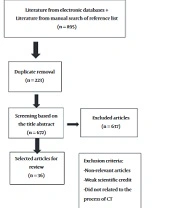
Gheshlaghi Azar N, Yazdani S, Khoshgoftar Z. The Critical Thinking Process: A Holistic View to Promote Critical Problem-solving in Health Profession Education. J Med Edu. 2023;22(1):e135024. doi: https://doi.org/10.5812/jme-135024
Last Update: 1 day ago
Last Update: 1 day ago
Last Update: 1 day ago
Last Update: 6 days ago
Last Update: 9 hours ago
Last Update: 4 days ago