Fulltext
The body of the article can be found in the PDF file.
Journal of Medical Education for Future Demands
Former Title: Journal of Medical Education | The Official Journal of School of Medical Education and Learning Technologies

Image Credit:J Med Edu
Authors
Background: Over the last two decades, the focus of curricula has shifted from the acquisition of knowledge to the achievement of competence. The challenge is to improve the assessment scheme to formatively support the development of competence in an integrated, coherent, and longitudinal fashion, and assess them in a summative fashion.Objectives: To investigate the students’ and staff’s perception towards the implementation process of the portfolio in the clinical years at Faculty of Medicine, Suez Canal University.Methods: Two different questionnaires were used to explore the students’ and staff’s perception towards portfolio assessment process.Results: The students’ response rate was 70%. 46.8% of the students agreed on the portfolio’s complementary role to clinical teaching during rotations. They agreed that portfolio stimulated their problem solving and clinical reasoning skills by 38.5%, and 38.2% respectively. 41.1% agreed that it helped them in preparation for their future practice. However, 41% agreed that portfolio workload and time required were excessive. There was no chance to improve those aspects assessed as deficient in feedback. One of the threatening problems is copying the portfolio from others, unfortunately. 34.7% of the students agreed that this was a problem among them. Regarding the staff, they agreed that portfolio helped them to assess students’ competencies and permitted multiple episodes of teaching more effectively than single observations did (75%, and 72.2%, respectively). However, 38.9% felt that it was an exhausting and time-consuming assessment process. They thought that it would be better to have enough time for review the portfolio in detail before the oral discussion, and that was fair if two examiners evaluated it rather than one (64%, and 75%, respectively).Conclusion: The portfolio helps the faculty in assessment of students’ clinical competencies in a continuous manner but for both it was exhausting and time-consuming assessment process.
© 2018, Author(s). This open-access article is available under the Creative Commons Attribution 4.0 (CC BY 4.0) International License (https://creativecommons.org/licenses/by/4.0/), which allows for unrestricted use, distribution, and reproduction in any medium, provided that the original work is properly cited.

Dolatshahi M, Sohrabi S, Kazemi N, Mahmoudi S. The Effect of Portfolio on Nursing Students’ Learning and Satisfaction from Clinical Evaluation. J Med Edu. 2019;18(4):e105696. doi: https://doi.org/10.22037/jme.v18i4.27799
Katebi MS, Arabahmadi A, Jahani H, Mohalli F, Rahimi M, et al. The effect of portfolio training and clinical evaluation method on the clinical competence of nursing students. J Nurs Midwifery Sci. 2020;7(4):e140770. doi: https://doi.org/10.4103/jnms.jnms_2_20
Batool H, Mumtaz A, Ali S, Chughtai A. Positive trend shifting to Online Assessments: A Review of using Socrative in Medical College, its Advantages and Challenges faced. J Med Edu. 2018;17(3):e105641. doi: https://doi.org/10.22037/jme.v17i3.21694

Hossini M, Sarchami R. Attitude of students of Qazvin Medical University towards priorities in teachers assessment. J Inflamm Dis. 2024;6(2):e154874. doi:
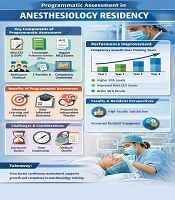
Madadi F, Maziar A, Shahghadami R, Bonakchi H, Dabbagh A. From Isolated Exams to Longitudinal Judgment: Implementing Programmatic Assessment with Multisource Data and Portfolio-Based Educational Decisions in Anesthesiology Residency. J Cell Mol Anesth. 2026;11(1):e169631. doi: https://doi.org/10.5812/jcma-169631
Last Update: 1 month ago
Last Update: 1 month ago
Last Update: 1 month ago
Last Update: 6 days ago
Last Update: 9 hours ago
Last Update: 4 days ago