
J Med Edu

Image Credit:J Med Edu

From Lesson Plan to On-the-Spot Scaffolding

Author(s):
Masoumeh Sadat AbtahiMasoumeh Sadat AbtahiMasoumeh Sadat Abtahi ORCID1, Mahdi AghabagheriMahdi AghabagheriMahdi Aghabagheri ORCID2,*
1Department of Curriculum Planning, Islamic Education School, Science and Research Branch, Islamic Azad University, Tehran, Iran
2Department of Artificial Intelligence, Medicine School, Shahid Sadoughi University of Medical Sciences, Yazd, Iran
*Corresponding Author: Department of Artificial Intelligence, Medicine School, Shahid Sadoughi University of Medical Sciences, Yazd, Iran. Email: [email protected]

Journal of Medical Education for Future Demands:Vol. 23, issue 1; e150553
Published online:Aug 27, 2024
Article type:Letter
Received:Jul 02, 2024
Accepted:Aug 05, 2024
How to Cite:Abtahi MS, Aghabagheri M. From Lesson Plan to On-the-Spot Scaffolding. J Med Edu. 2024;23(1):e150553. doi: https://doi.org/10.5812/jme-150553

Dear Editor,
Regarding paradigm shifts in the education domain, and particularly in medical and health professions education, the focus of the teaching-learning-assessment triangle has increasingly shifted towards personalized curricula (1). This shift requires moving from teacher dominance to learner autonomy. Personalizing the learning process is crucial for fostering learner autonomy. Learning is an experiential process, and the role of the learner is vital; an active learner today can become a genuine facilitator tomorrow. If a learner is passive today, they may become an obstacle rather than a facilitator in the future. Learning is a cooperative effort, not a competition; all learners are players on a football team, with the instructor serving as a coach who can also participate, and the goal is to win together (2).
In the Iranian education system, the lesson plan is commonly used as a behavioral tool to predict the flow of teaching, learning, and assessment. However, this approach may not align with personalizing the teaching-learning-assessment triangle, as each learner's needs and trends are unique. Personal trend analysis and the use of e-portfolios, for example, may be more meaningful approaches (3).
The challenge is even more significant for higher education learners, specifically Ph.D. candidates. These learners, being mature enough to chart their own course, prefer to navigate their path according to their own pace and interests, embodying the true essence of autonomous learning (4).
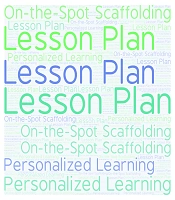
This letter aims to highlight the challenge of on-the-spot scaffolding compared to traditional lesson planning and proposes designing a hermeneutic phenomenological study to explore the in-depth experiences of Ph.D. candidates, especially those in medical education, across various universities in the country (5). This study could also compare experiences between graduates and current candidates regarding the identified challenges.
Footnotes

  • Authors' Contribution: Both authors were involving in all the process of designing, writing and revising.

  • Conflict of Interests Statement: Authors declared no conflict of interests.

  • Funding/Support: There has not been any grant allocated regarding the piece.

References

  • 1.
    Baker LR, Phelan S, Woods NN, Boyd VA, Rowland P, Ng SL. Re-envisioning paradigms of education: towards awareness, alignment, and pluralism. Adv Health Sci Educ Theory Pract. 2021;26(3):1045-58. [PubMed ID: 33742339]. [PubMed Central ID: PMC8338841]. https://doi.org/10.1007/s10459-021-10036-z.
  • 2.
    Vassallo S. Critical Pedagogy and Neoliberalism: Concerns with Teaching Self-Regulated Learning. Stud Philos Educ. 2013;32(6):563-80. https://doi.org/10.1007/s11217-012-9337-0.
  • 3.
    Li KC, Wong BTM. Features and trends of personalised learning: a review of journal publications from 2001 to 2018. Interact Learn Environ. 2021;29(2):182-95. https://doi.org/10.1080/10494820.2020.1811735.
  • 4.
    Betts GT, Kercher JJ. The Autonomous Learner Model for the Gifted & Talented. In: Renzulli BS, Jean Gubbins E, McMillen KS, Eckert RD, Little CA, editors. Systems and Models for Developing Programs for the Gifted and Talented. New York: Routledge; 2023. p. 49-103. https://doi.org/10.4324/9781003419426-3.
  • 5.
    Aghabagheri M, Mehrmohammadi M, Bagheri Noaparast K. On the Spot Scaffolding as the Hermeneutic Phenomenology Action Field: Critical Thinking Case for Medical Students in Iran. Med J Islam Repub Iran. 2024;38(1):28-34. https://doi.org/10.47176/mjiri.38.6.

Copyright

Copyright © 2024, Abtahi and Aghabagheri. This open-access article is available under the Creative Commons Attribution 4.0 (CC BY 4.0) International License (https://creativecommons.org/licenses/by/4.0/), which allows for unrestricted use, distribution, and reproduction in any medium, provided that the original work is properly cited.

Similar Articles

11
Mar
2009

The effect of educational workshops on appropriate design of lesson plan & application of different levels of cognitive domain in faculty staff of (shaheed sadooghi's) yazd university of medical sciences. In 2000-2001: an iranian experience

S.K. Soltani Arabshahi,
H Karimi,
A Ghaderi

Soltani Arabshahi S, Karimi H, Ghaderi A. The effect of educational workshops on appropriate design of lesson plan & application of different levels of cognitive domain in faculty staff of (shaheed sadooghi's) yazd university of medical sciences. In 2000-2001: an iranian experience. J Med Edu. 2003;4(1):e105033. doi: https://doi.org/10.22037/jme.v4i1.852

1
Oct
2005

Academic Staff’s View Points on the Implementation of Lesson Plan

Leila Bazrafkan,
N Shokrpour

Bazrafkan L, Shokrpour N. Academic Staff’s View Points on the Implementation of Lesson Plan. J Med Edu. 2005;8(1):e105241. doi: https://doi.org/10.22037/jme.v8i1.753

18
Mar
2009

Medical Faculty Members' Attitude On Lesson Planning Semnan University Of Medical Sciences

Masoomeh Saberian,
Saeed Aghajani,
Raheb Ghorbani,
Mojtaba Malek

Saberian M, Aghajani S, Ghorbani R, Malek M. Medical Faculty Members' Attitude On Lesson Planning Semnan University Of Medical Sciences. J Med Edu. 2003;2(2):e105001. doi: https://doi.org/10.22037/jme.v2i2.879

30
Sep
2006

Academic culture in focus

S Asefzaseh

Asefzaseh S. Academic culture in focus. J Inflamm Dis. 2006;10(2):e155207. doi:

19
May
2024
Educ Res Med Sci

Creativity Accreditation Has Potential to Motivate Students with Low Grades to Improve Their Results: A Letter to Editor

Gholamreza Abdouli,
Fateme Sayyahi

Abdouli G, Sayyahi F. Creativity Accreditation Has Potential to Motivate Students with Low Grades to Improve Their Results: A Letter to Editor. Educ Res Med Sci. 2023;12(2):e142326. doi: https://doi.org/10.5812/ermsj-142326

Download PDF66.21 KB

Crossmark

Crossmark

Checking

Share on
Cited by
Metrics

Ordering Reprints

Articles are published under the Creative Commons license stated on each article. No permission or royalty fee is required for uses permitted by that license. CCC handles optional bulk and customized reprint orders. Any quotation covers production and delivery services only, not copyright permission. > Request Reprints from CCC 

Search Relations

Author(s):

Related Articles