
Fulltext
Full-text is available in the PDF file.
Journal of Nursing and Midwifery Sciences
The Official Journal of Mazandaran University of Medical Sciences
Authors
Context: Academic procrastination leads to dysfunctional learning outcomes in terms of patient care skills, and consequently, the nursing students’ knowledge and awareness declines, which is known as a deterrent to their success. On the other hand, perceived competence, self efficacy, and self esteem significantly influence the students’ health and proper functioning of the study. Hence, it is important to examine the relationship between the mentioned variables with procrastination.
Aims: This study was designed to determine the relationship between perceived competence, self‑esteem, and self‑efficacy with academic procrastination among the nursing students of Mazandaran University of Medical Sciences.
Settings and Design: This was a descriptive‑analytical study. It was conducted in three nursing schools of Sari, Amol, and Behshahr in the north of Iran in 2020.
Materials and Methods: The sample size included 299 nursing students selected by stratified random sampling out of all undergraduate and graduate students. The research tools included the Demographic Characteristics Questionnaire, Williams and Desi’s Perceived Competence Scale, Rosenberg Self‑Esteem Scale, Schwarzer and Jerusalem Self‑Efficacy, and Tuckman Procrastination Scale.
Statistical Analysis: The descriptive statistics (frequency and mean ± standard deviation [SD], median, and quartiles) and Spearman’s rank correlation coefficient were used for statistical analysis.
Results: According to the results, the mean and SD of the scores for academic procrastination, perceived competence, self‑esteem, and self‑efficacy was 26.05 ± 6.10, 25.77 ± 2.93, 9.84 ± 1.86, and 8.31 ± 11.85, respectively. Spearman’s correlation coefficient revealed a positive significant correlation between academic procrastination and perceived competence (r = 0.56, P = 0.001) and a negative meaningful correlation with self‑esteem (r = −0.30, P = 0.001) and self‑efficacy (r = −0.43, P = 0.001).
Conclusion: According to the findings, academic procrastination displayed a positive relationship with perceived competence and a negative relationship was found with self‑esteem and self‑efficacy. Therefore, it is necessary to take the variables, namely, self‑esteem, perceived competence, and self‑efficacy into account in order to reduce academic procrastination.
© 2022, Author(s). This open-access article is available under the Creative Commons Attribution 4.0 (CC BY 4.0) International License (https://creativecommons.org/licenses/by/4.0/), which allows for unrestricted use, distribution, and reproduction in any medium, provided that the original work is properly cited.
Hajloo N. Relationships between Self-Efficacy, Self-Esteem and Procrastination in Undergraduate Psychology Students. Iran J Psychiatry Behav Sci. 2014;8(3):. doi:
Hayat AA, Jahanian M, Bazrafcan L, Shokrpour N. Prevalence of Academic Procrastination Among Medical Students and Its Relationship with Their Academic Achievement. Shiraz E-Med J. 2020;21(7):e96049. doi: https://doi.org/10.5812/semj.96049
Badri Gargari R, Sabour H, Norzad F. Academic Procrastination: The Relationship between Causal Attribution Styles and Behavioral Postponement. Iran J Psychiatry Behav Sci. 2011;5(2):. doi:
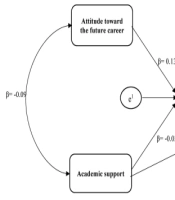
Mohammadi OA, Heidari A, Eftekhar Saadi Z, Johari Fard R. Relationships of Academic Support and Attitude Towards Future Career with Academic Procrastination in Students: The Mediating Role of Academic Burnout. J Clin Res Paramed Sci. 2023;12(1):e138612. doi: https://doi.org/10.5812/jcrps-138612
Sadeghi H, Hajloo N, Babayi K, Shahri M. The Relationship between Metacognition and Obsessive Beliefs, and Procrastination in Students of Tabriz and Mohaghegh Ardabili Universities, Iran. Iran J Psychiatry Behav Sci. 2014;8(1):. doi:
Last Update: 3 weeks ago
Last Update: 3 weeks ago
Last Update: 3 weeks ago
Last Update: 6 days ago
Last Update: 1 day ago
Last Update: 4 days ago

