Fulltext
Full text is available in the PDF.
IJ Psychiatry and Behavioral Sciences
IJPBS is the Official Journal of Mazandaran University of Medical Sciences
Image Credit:Iran J Psychiatry Behav Sci
Authors
Objective: The aim of the current study is to investigate the relationship between metacognition and obsessive beliefs, and procrastination.
Methods: 285 students of Tabriz and Mohaghegh Ardabili Universities, Iran, were selected by random sampling, and completed the metacognition (MCQ-30) questionnaire, obsessive beliefs questionnaire (OBQ-44), and General Procrastination Scale. The research method was descriptive. Data was implemented by structural equation modeling, using Amos software (version 19) and Anderson and Greenberg’s (1988) two-step approach was followed. First, the model measurement, and then the structural model were examined.
Results: Results showed that obsessive beliefs and metacognitive beliefs, directly and indirectly, predict the behavior of procrastination. Cognitive confidence, need for control of thoughts, and positive beliefs about worry from metacognitive beliefs were positively and significantly correlated with procrastination. In addition, cognitive self-consciousness was inversely correlated with procrastination. Perfectionism/certainty from obsessive beliefs was inversely correlated with procrastination. Moreover, the relationship between obsessive beliefs and metacognitive beliefs were positive and significant.
Conclusion: Our findings show a significant relationship between obsessive and metacognitive beliefs and procrastination. To reduce behaviors of procrastination, control of obsessive beliefs and metacognition seems to be necessary. Moreover, controlling and shaping metacognitive beliefs can be effective in reducing compulsive behavior.
Declaration of interest: None.
Citation: Sadeghi H, Hajloo N, Babayi K, Shahri M. The relationship between metacognition and obsessive beliefs, and procrastination in students of Tabriz and Mohaghegh Ardabili Universities, Iran. Iran J Psychiatry Behav Sci 2014; 8(1): 42-50.
© 2014, Author(s). This open-access article is available under the Creative Commons Attribution 4.0 (CC BY 4.0) International License (https://creativecommons.org/licenses/by/4.0/), which allows for unrestricted use, distribution, and reproduction in any medium, provided that the original work is properly cited.
Hajloo N. Relationships between Self-Efficacy, Self-Esteem and Procrastination in Undergraduate Psychology Students. Iran J Psychiatry Behav Sci. 2014;8(3):. doi:
Arefnia R, Haji Alizadeh K, Seddigh SH. Cross-sectional Study of Obsessive Beliefs, Perfectionism, Responsibility, and Metacognitive Beliefs on OCD Symptoms in an Iranian Population. Iran J Psychiatry Behav Sci. 2026;20(2):e158631. doi: https://doi.org/10.5812/ijpbs-158631
Talebian F, Hesamzadeh A, Hosseinnataj A, AzimiLolaty H. Relationship between academic procrastination and perceived competence, self-esteem and general self-efficacy of nursing students. J Nurs Midwifery Sci. 2022;9(4):e134523. doi: https://doi.org/10.4103/jnms.jnms_121_21
Badri Gargari R, Sabour H, Norzad F. Academic Procrastination: The Relationship between Causal Attribution Styles and Behavioral Postponement. Iran J Psychiatry Behav Sci. 2011;5(2):. doi:
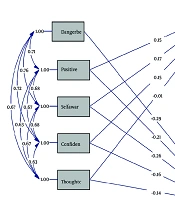
Salajegheh A, Sanjari S, Mohammadi Soliemani MR. Metacognitive Beliefs, Academic Expectations Stress, and Achievement: A Path Analysis Among Iranian Upper Secondary Students. Middle East J Rehabil Health Stud. 2026;13(3):e169742. doi: https://doi.org/10.5812/mejrh-169742
Last Update: 1 week ago
Last Update: 1 week ago
Last Update: 1 week ago
Last Update: 9 hours ago
Last Update: 12 hours ago
Last Update: 5 days ago