
Fulltext
Full-text is available in PDF format.
Journal of Nursing and Midwifery Sciences
The Official Journal of Mazandaran University of Medical Sciences
Authors
Context: Following the increase in cesarean section rate in Iran, the Ministry of Health and Medical Education has planned a program for the promotion of normal birth. The plan named as “physiologic birth” that is equal with “spontaneous labor.”
Aims: This study aims to explain factors affecting the implementation of “physiologic birth plan from stakeholders” view.
Setting and Design: In this qualitative study, purposive samples of 21 health-care stakeholders (2 men and 19 women) were interviewed in 2016. The participants included three obstetricians and gynecologists, six midwives, three managers and experts in charge of the plan at the Mazandaran University of Medical Science, and nine women who gave birth under the physiological delivery (Spontaneous Labor) plan.
Materials and Methods: Face-to-face semi-structured interviews and one focus group discussion were employed to collect the study data.
Statistical Analysis Used: Qualitative content analysis method was used. Results: From the data analysis, the main theme “integrity of designing and implementation” and five subthemes as the influencing factors, namely, The “inadequate resources,” “ambiguity in tasks and roles,” “attention to psychosocial atmosphere,” “considering of the delivery culture,” and “incomprehensive training and updating the plan,” were extracted.
Conclusion: This research suggests that the success behind implementing a plan in health-care system including the physiological delivery plan depends on the factors that are requiring should be identified and investigated from the designing stage to the implementation stage and after that. Thus, health system policymakers and planners are required to pay attention to diverse above-mentioned aspects in its designing and implementation.
© 2019, Author(s). This open-access article is available under the Creative Commons Attribution 4.0 (CC BY 4.0) International License (https://creativecommons.org/licenses/by/4.0/), which allows for unrestricted use, distribution, and reproduction in any medium, provided that the original work is properly cited.
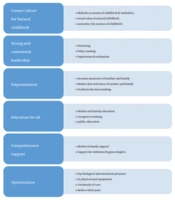
Hashemi Z, Zaboli R, Khalesi N, Fakhr-Movahedi A. Designing a Model for Effective Implementation of Promoting Natural Childbirth Program: A Mixed Study. Med Surg Nurs J. 2020;9(4):e113127. doi: https://doi.org/10.5812/msnj.113127
Uludag E, Cerit E. The women’s emotions about experience of vaginal birth based on the metaphors: A phenomenological study. J Nurs Midwifery Sci. 2022;9(4):e134537. doi: https://doi.org/10.4103/jnms.jnms_114_21
Bagheri A, Alavi Masoudi N, Abbaszadeh F. The effective factors on physician decision for choosing delivery method: a qualitative study. J Kermanshah Univ Med Sci. 2013;16(7):e77290. doi:
Mehrnoush N, Ashktorab T, Heidarzadeh M, Momenzadeh S, Khalafi J. Factors Influencing Neonatal Pain Management from the Perspectives of Nurses and Physicians in a Neonatal Intensive Care Unit: A Qualitative Study. Inn J Pediatr. 2018;28(1):e10015. doi: https://doi.org/10.5812/ijp.10015
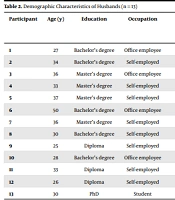
RezaeiAbhari F, Hesamzadeh A. Experience of Husbands on Barriers of Active Participation in Their Wives’ Physiological Childbirth: A Conventional Content Analysis Study. J Nurs Midwifery Sci. 2023;10(1):e132206. doi: https://doi.org/10.5812/jnms-132206
Last Update: 1 month ago
Last Update: 1 month ago
Last Update: 1 month ago
Last Update: 6 days ago
Last Update: 2 days ago
Last Update: 4 days ago
